Candidate expectations in the modern job market have undergone a significant transformation, driven by advancements in technology and a growing demand for more engaging and personalized recruitment experiences. What was once considered innovative—recorded, one-way video interviews—is increasingly being perceived by candidates as a step backward, a dated approach in a rapidly evolving talent acquisition landscape. The benchmark for effective AI-driven interviewing has shifted dramatically, moving from the question of whether a candidate can be assessed asynchronously to a more sophisticated demand: can a candidate engage in a real, responsive conversation, at any time, and in their preferred language?
For over a decade, the concept of an AI-native interview was largely defined by the one-way video format. In this model, candidates would record their responses to a predetermined set of questions, with recruiters reviewing these asynchronous submissions at a later time. This approach, pioneered by companies like HireVue, represented a substantial improvement over traditional phone screens for large-scale hiring initiatives, offering efficiency and consistency. However, the inherent limitations of this format are becoming increasingly apparent as candidate expectations evolve, creating a gap that emerging technologies are now poised to fill.
Eightfold AI, a leader in talent intelligence, has developed its AI Interviewer to directly address this evolving demand. The platform aims to bridge the divide between outdated, asynchronous assessment methods and the contemporary need for dynamic, real-time candidate interactions. This strategic development signifies a pivotal shift in how organizations can leverage artificial intelligence to not only streamline hiring processes but also to enhance the candidate experience, a critical factor in attracting and retaining top talent.
From Recorded Playback to Fluid, Real-Time Dialogue
The fundamental difference between legacy one-way video systems and the new generation of AI interviewers lies in the nature of the interaction. Traditional platforms, such as those historically offered by HireVue, typically pair a pre-recorded video submission with a separate, validated assessment to evaluate candidate skills. The review and scoring process occurs after the candidate has completed their recording, creating a detached and often lengthy evaluation cycle.
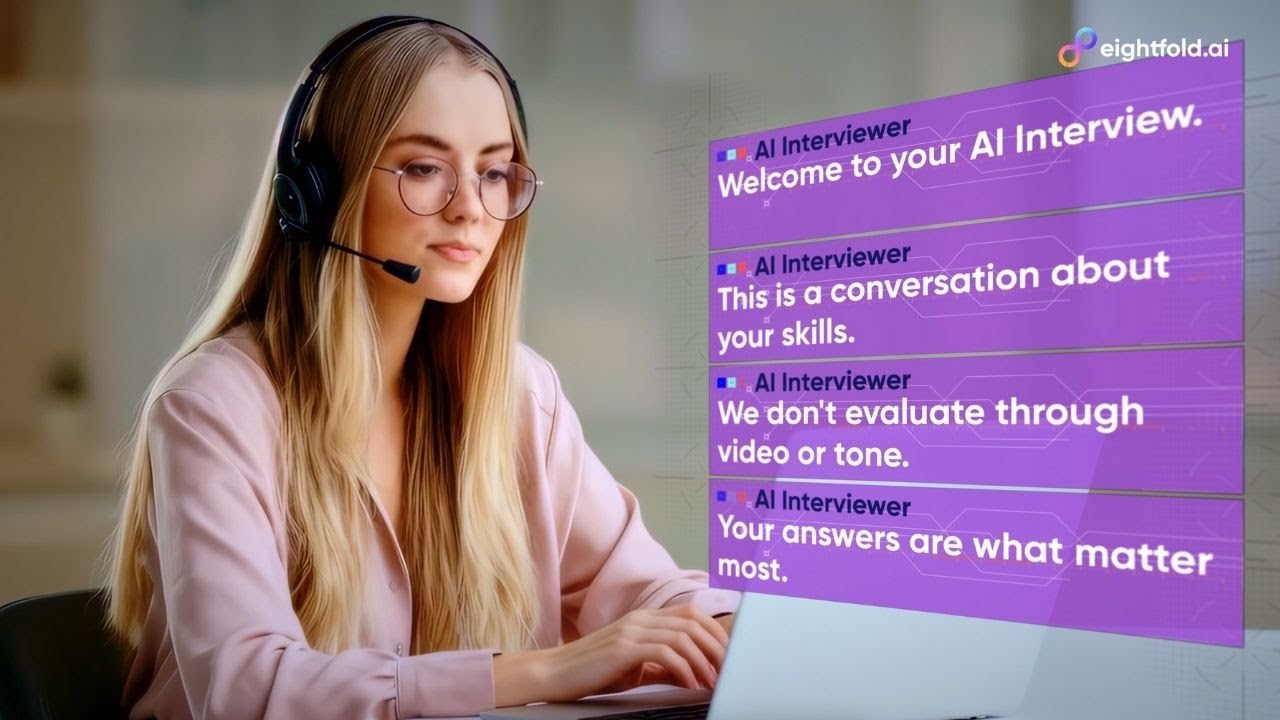
In contrast, Eightfold AI’s Interviewer facilitates a more authentic and immediate interview experience. It engages candidates in a real-time, conversational exchange. The AI interviewer is designed to dynamically respond to candidate answers. If a candidate provides an incomplete response or does not elaborate sufficiently on a particular point, the AI is programmed to ask intelligent, follow-up questions. This adaptive approach ensures that candidates have the opportunity to fully articulate their thoughts and demonstrate their capabilities, rather than simply moving on to the next fixed prompt. This capability allows the AI to seamlessly transition between technical inquiries, functional knowledge assessments, and reasoning-based questions within a single, fluid conversation. The underlying intelligence powering this conversational AI is the same robust engine that drives Eightfold’s broader platform, which encompasses talent matching and internal mobility initiatives across an organization’s workforce.
This shift from a passive recording to an active dialogue offers several key advantages. It provides a more nuanced understanding of a candidate’s communication skills, critical thinking abilities, and problem-solving approaches, elements that are often difficult to fully gauge through a static, pre-recorded response. The adaptive nature of the conversation also ensures that candidates are evaluated on their ability to think on their feet and articulate complex ideas in real-time, mirroring the demands of many modern professional roles.
Strategic Applications Across Diverse Hiring Needs
The impact of this advanced AI interviewing technology is particularly pronounced across various hiring scenarios, addressing specific challenges faced by organizations:

-
High-Volume and Hourly Hiring: For roles requiring rapid recruitment, such as those in retail, hospitality, or logistics, candidates can initiate interviews the moment they apply, 24 hours a day, 7 days a week. The system’s support for over 22 languages, coupled with integrated CEFR-based language proficiency assessments, ensures accessibility and inclusivity. This contrasts sharply with one-way video interviews, which often rely on candidates remembering to return and complete a recording, leading to lower completion rates and extended time-to-hire metrics. The immediate, on-demand nature of conversational AI interviews is critical for meeting the pace of high-volume hiring.
-
Early Career and Campus Hiring: Students and recent graduates, often juggling academic commitments and multiple job applications, can benefit immensely from the flexibility offered by AI Interviewer. They can schedule interviews according to their own availability, eliminating the need to coordinate with recruiter schedules or compete for limited slots at campus recruitment events. Furthermore, the adaptive conversational format provides entry-level candidates with a more supportive environment to elaborate on their skills and potential, even when their resumes may lack extensive professional experience. This allows employers to identify promising talent based on inherent capabilities and learning potential, rather than solely on past employment history.
-
Technical Hiring: For roles demanding specialized technical expertise, the AI Interviewer integrates the assessment of coding abilities, reasoning skills, and functional knowledge directly into the conversational flow. Instead of treating these as separate, often disjointed, testing phases, the AI can weave them into a cohesive interview experience. This not only streamlines the process but also provides a more holistic view of a candidate’s technical aptitude in a practical, applied context.
The Oracle Recruiting Cloud Integration Advantage
For organizations already utilizing Oracle Recruiting Cloud, the integration of Eightfold AI’s Interviewer presents a particularly compelling proposition. The AI Interviewer is embedded directly within the existing Oracle Recruiting Cloud workflows, functioning as a native component rather than an external add-on. This seamless integration simplifies deployment and enhances user experience. Procurement can be facilitated through the Oracle Cloud Marketplace, allowing organizations to leverage existing Oracle Universal Credits, thereby circumventing the need for new budget allocations.
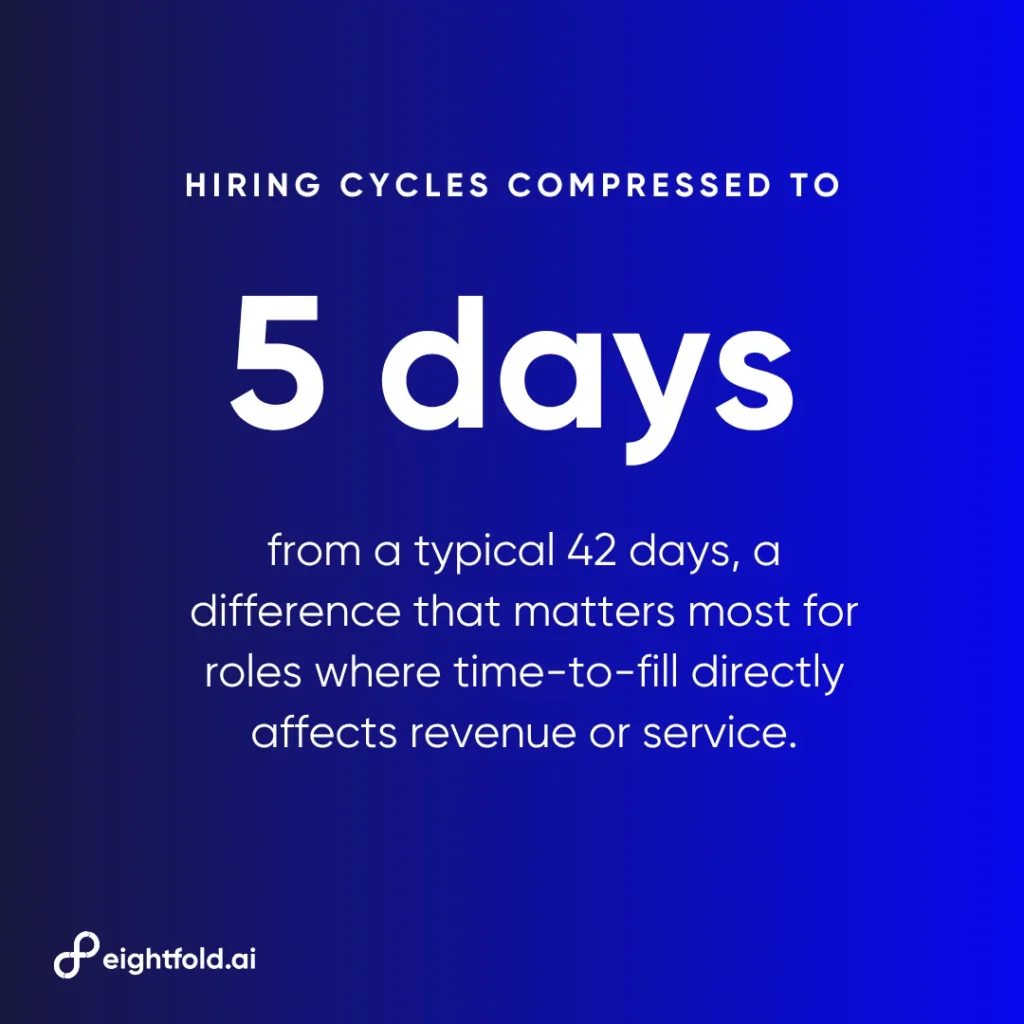
The impact on hiring speed has been demonstrably significant for early enterprise adopters. Hiring cycles that traditionally extended to approximately 42 days have been compressed to as few as five days. This drastic reduction in time-to-fill is especially critical for roles where delays can directly impact revenue generation or service delivery, such as sales positions or customer support functions. This accelerated process allows organizations to secure top talent more rapidly, gaining a competitive edge in the marketplace.
Addressing the Competitive Landscape: Acknowledging HireVue’s Advancements
In recent developments, HireVue has introduced its own voice AI interviewing capabilities, following its acquisition of Hireguide in March 2026. This move signals HireVue’s intent to compete in the evolving AI interview space. HireVue positions its new voice interviewer as a tool for early-stage candidate qualification, aiming to streamline the funnel before the initial recruiter call.
However, Eightfold AI’s AI Interviewer has been in the market as a more comprehensive, multimodal interviewing solution, deeply integrated with talent matching and assessment across the entire hiring lifecycle. The distinction lies in the depth of integration and the proven capabilities of the underlying AI. Organizations evaluating these solutions are advised to scrutinize the maturity and integration of the AI agent, rather than focusing solely on the existence of a particular feature. The true value lies in how effectively and seamlessly the AI can be incorporated into existing talent acquisition strategies to deliver tangible results.
Eightfold’s Position in the AI Interviewing Arena
While validated, static assessments continue to hold value in evaluating specific skills, Eightfold AI’s approach distinguishes itself by adding a crucial layer: a live, adaptive conversation powered by a continuously learning engine. This engine is built upon a foundation of over one billion career profiles, providing an unparalleled depth of data for talent intelligence. The synergy between static assessments and dynamic AI conversations offers talent teams a more comprehensive and nuanced understanding of a candidate’s potential, surpassing the limitations of either method in isolation.
The breadth of language support is an important consideration, but the depth of engagement is ultimately more critical. A truly adaptive, two-way conversation is far more effective at revealing a candidate’s suitability, communication finesse, and problem-solving capabilities than a one-way recorded monologue, regardless of the number of languages the monologue is offered in. This emphasis on genuine interaction ensures that the assessment is not merely a translation exercise but a robust evaluation of a candidate’s core competencies.
Furthermore, governance and responsible AI practices are paramount in enterprise hiring. Eightfold AI holds ISO 42001 certification for its AI management systems, underscoring its commitment to ethical and secure AI deployment. The platform also facilitates integration with identity verification partners like CLEAR and incorporates measures to detect potential interview cheating, including tab-switching detection. These robust controls are essential for meeting the stringent demands of modern enterprise hiring, ensuring fairness, security, and integrity throughout the recruitment process.
Data-Driven Insights into Hiring Efficiency
While the provided text lacks specific numerical data points to populate a "What the numbers show" section, industry trends and case studies provide a strong indication of the impact of advanced AI interviewing. Reports from various talent acquisition technology providers, including those focused on AI-driven interviewing, consistently highlight improvements in key performance indicators such as:
- Reduced Time-to-Hire: Organizations implementing AI-powered conversational interviews have reported significant reductions, often by 30-50% or more, in the average time it takes to fill open positions. This is directly attributable to the speed and efficiency of AI-driven initial screenings and assessments.
- Increased Candidate Completion Rates: As noted in the article, the on-demand and responsive nature of conversational AI leads to higher engagement and completion rates compared to asynchronous, one-way video interviews, particularly for high-volume hiring.
- Improved Quality of Hire: By enabling deeper, more nuanced assessments of candidate skills and cultural fit through adaptive conversations, companies can experience a measurable increase in the quality of hires, leading to improved employee performance and retention.
- Enhanced Candidate Experience Scores: A more engaging, personalized, and efficient interview process contributes directly to higher candidate satisfaction scores, strengthening the employer brand and attracting future talent.
The Bottom Line: Embracing the Future of Candidate Engagement
Recorded video interviews addressed a critical need at a specific juncture in the evolution of recruitment. However, the landscape has shifted. Today’s candidates expect an experience that mirrors a genuine conversation, and talent acquisition teams require systems that can deliver this effectively and efficiently. This paradigm shift is driving enterprises running legacy systems to re-evaluate their current technology stacks and explore the transformative potential of real-time, conversational AI interviewers.
For organizations seeking to modernize their talent acquisition processes, understand the impact of a switch to an AI Interviewer on hiring volume and timeline is crucial. By embracing technologies that offer dynamic, adaptive, and responsive candidate interactions, companies can not only streamline their recruitment efforts but also significantly enhance the candidate experience, ultimately leading to better hiring outcomes and a stronger competitive position in the war for talent.
To witness the capabilities of Eightfold AI’s Interviewer firsthand, prospective users are encouraged to request a demo. This will provide a practical understanding of how this innovative technology can revolutionize their hiring process and address the evolving expectations of modern job seekers.