For decades, the human resources profession has grappled with a recurring narrative: that it is "useless," a "waste of time," or "going away." This perception often stems from a misunderstanding by many managers who believe they possess inherent expertise in managing people, overlooking the complex strategic and operational demands of HR. This sentiment was recently amplified by a statement from a prominent CEO at this month’s SHRM (Society for Human Resource Management) conference, who, according to Bloomberg, declared that "the field of HR faces extinction," urging HR professionals to adapt. However, this stark prediction stands in contrast to emerging research and robust job market data, which suggest a more nuanced reality: HR is not disappearing, but rather evolving into a more critical and in-demand function within organizations.

The roots of this misconception can be traced to the industrial era, where HR functions were largely administrative, focused on record-keeping, payroll, and basic compliance. These tasks, often perceived as transactional, are indeed ripe for automation, leading to the perception that HR as a whole is vulnerable to technological displacement. However, this perspective fails to acknowledge the significant transformation HR has undergone, particularly in recent years with the advent of advanced technologies like Artificial Intelligence (AI).
Data Challenges the Narrative of HR’s Demise
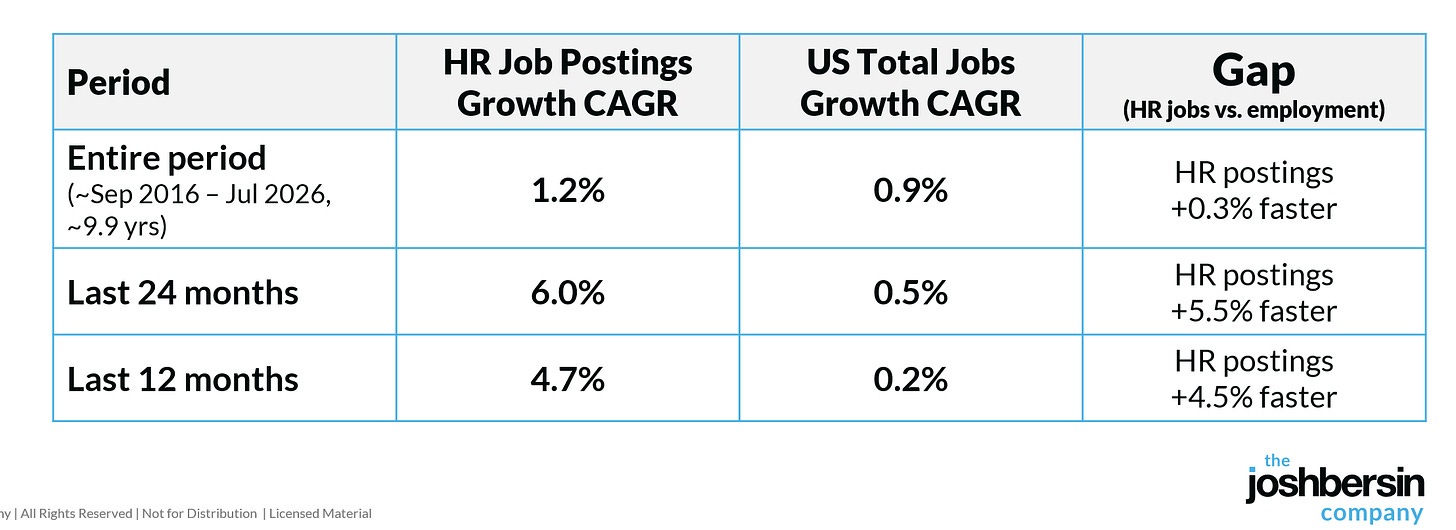
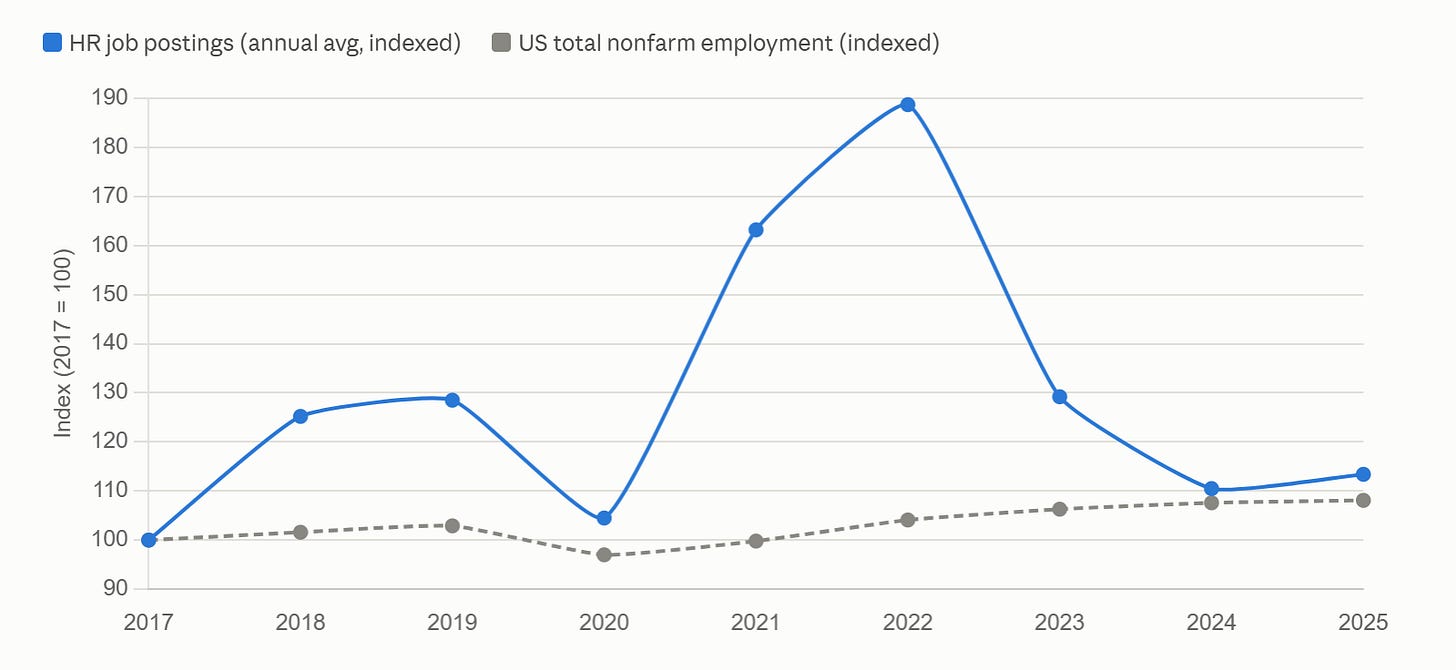
Contrary to the doom-and-gloom predictions, recent analyses of job market data paint a picture of a growing and increasingly vital HR sector. Research conducted by Josh Bersin, a leading industry analyst, and corroborated by Lightcast job posting data, reveals a steady increase in HR-related job postings over the past two decades. While the compound annual growth rate of HR job postings has been around 1.2% over this period, a more recent examination focusing on the last 24 months – a period marked by significant AI integration – shows a substantial acceleration. During this time, HR job postings have grown at an impressive rate of 6%.
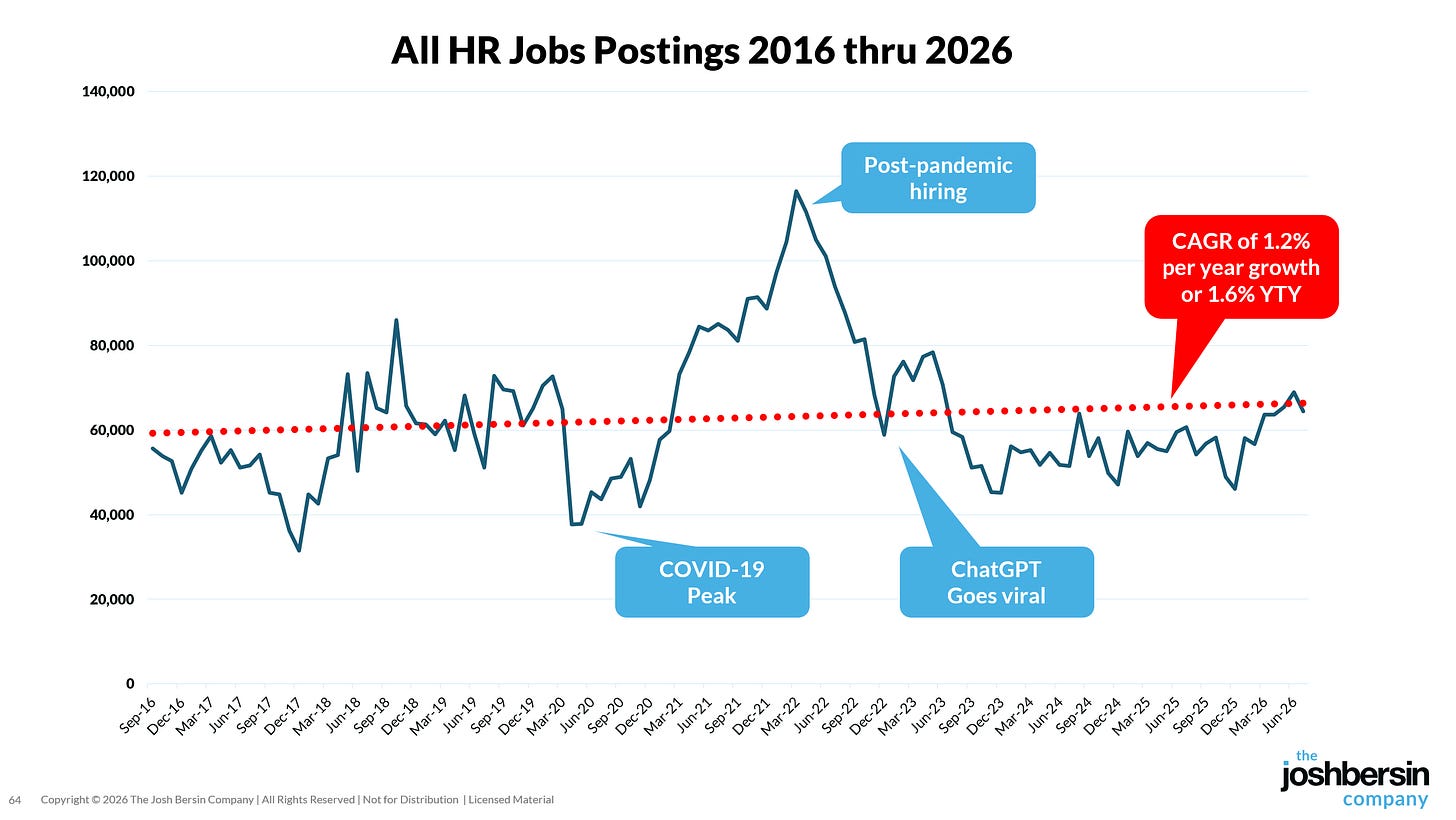
This growth is not merely keeping pace with overall employment; it is exceeding it. When compared to the growth of the total U.S. workforce, the increase in HR-related positions indicates a strengthening demand for specialized human capital management expertise. This trend suggests that organizations are recognizing the indispensable role HR plays in navigating the complexities of the modern workplace, from talent acquisition and development to employee engagement and organizational design.
Visualizing the Trend: Job Postings and Workforce Growth
The visual representation of this data, as presented in industry reports, starkly contrasts the narrative of HR’s decline. Charts illustrating the compound annual growth rate of HR job postings alongside the growth of the overall U.S. workforce demonstrate a clear upward trajectory for HR roles. This visual evidence supports the assertion that HR is not only surviving but thriving, adapting to technological advancements and evolving business needs.
The Evolving Landscape of HR Roles and Compensation
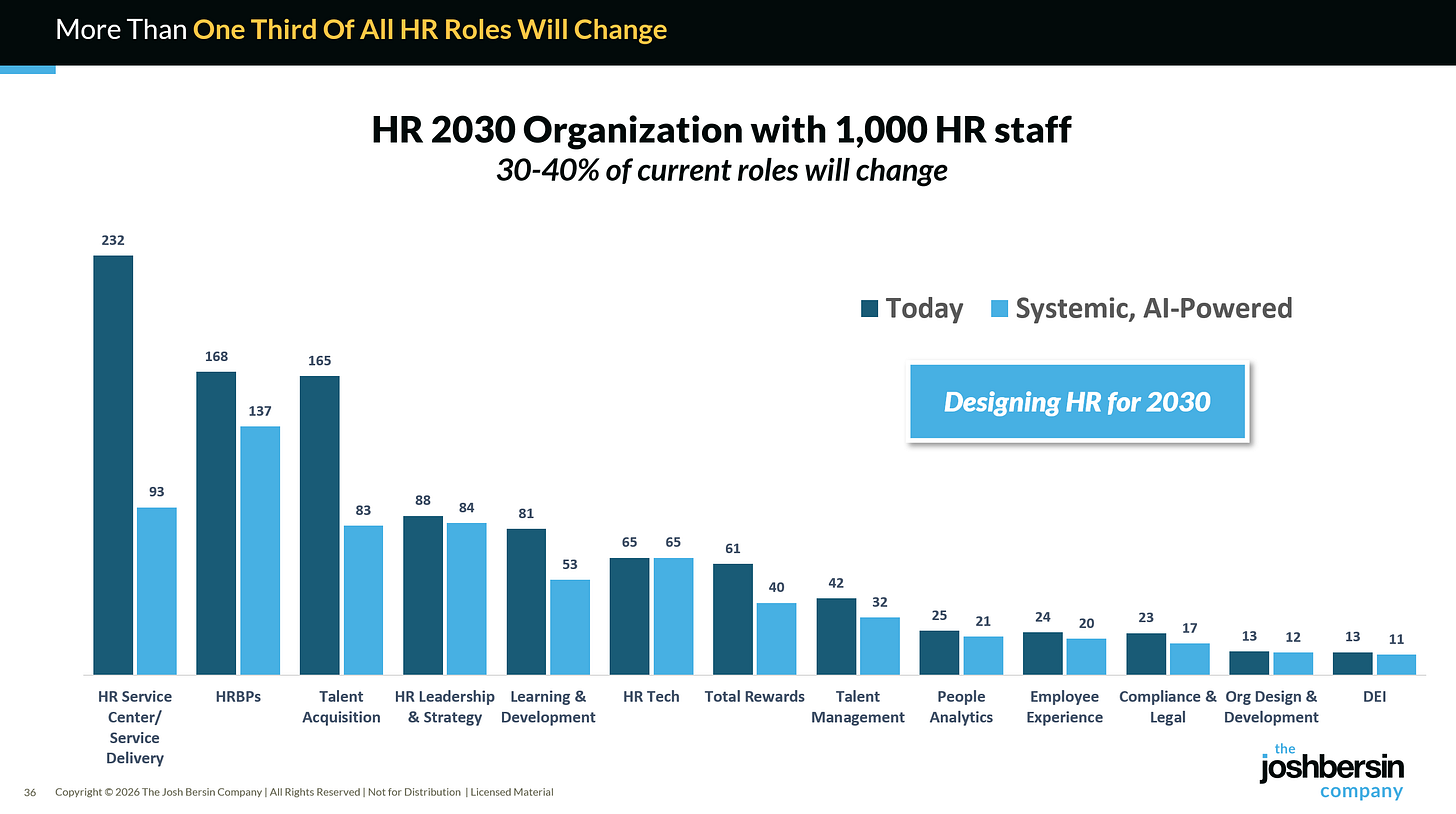
Beyond the sheer number of job postings, the nature of HR roles is also undergoing a significant transformation. The positions most susceptible to automation are typically those with a high degree of administrative or transactional work. These include titles such as HR administrator, HR assistant, recruiting coordinator, and training administrator. These roles, often characterized by their focus on process management in areas like hiring, payroll, and basic employee support, historically constituted a substantial portion – estimated at 30-40% – of the HR workforce.
As AI and other automation technologies become more sophisticated, these administrative tasks are increasingly being handled by intelligent systems. However, this displacement is not leading to a net loss of HR professionals. Instead, it is creating opportunities for individuals to transition into more strategic and impactful roles. The focus is shifting from "administering the process" to "solving complex problems" and "driving business outcomes."
The Rise of the Strategic HR Professional
The new landscape sees HR professionals moving "in the business" to collaborate more closely with operational leaders. For instance:
- HR Service Centers and Business Partners: These roles are evolving to handle more complex issues, such as intricate employee performance challenges, nuanced family support needs, and strategic talent development initiatives. This shift allows for deeper, more impactful engagement with employees.
- Learning & Development (L&D) and Instructional Design: Instead of solely authoring lengthy courses, L&D professionals are becoming "Superworkers," developing dynamic simulations and real-time support tools. Companies are leveraging these skills to create immediate, practical content – such as concise videos – that sales, support, and engineering teams can utilize effectively.
- Talent Acquisition: Recruiting coordinators and schedulers are being upskilled to focus on real-time interviewing, data analysis to identify top candidates, and enhancing the candidate experience. The demand for recruiters remains high, with a renewed emphasis on in-person interviews to mitigate candidate fraud and secure higher-quality talent. Notably, AI interviewers have not met initial expectations, underscoring the continued importance of human judgment in talent acquisition.
- Internal Analytics and Employee Engagement: Professionals in these areas are moving away from traditional survey design and benchmark analysis. They are increasingly focused on interpreting real-time data from within their own organizations to proactively address issues of employee disengagement and turnover.
- HR Business Partners (HRBPs): At leading organizations, HRBPs are being elevated to senior consultant roles. Tools like Galileo are being deployed to automate administrative support for leaders and employees, freeing up HRBPs to focus on strategic advisory functions.
This transformation is not unique to specific industries or company sizes. Companies like Walmart, Standard Chartered, Travelers, Polestar, Panasonic, and Accenture are all actively redefining their HR functions, leveraging technology to enhance human capital management.
Compensation Reflects Growing Value
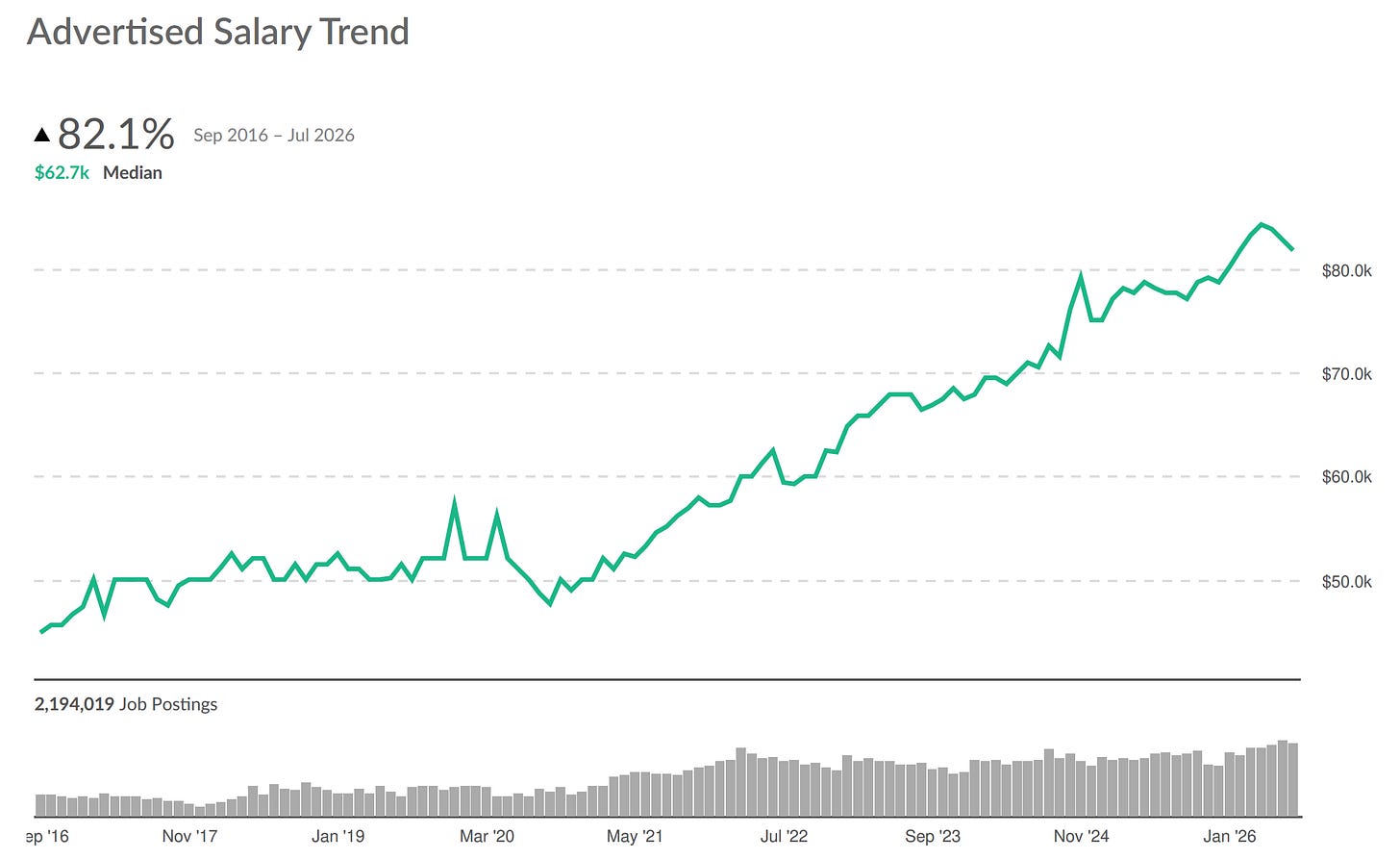
The increasing strategic importance and evolving skill requirements of HR roles are also reflected in compensation trends. Data indicates that HR salaries have seen a significant increase of 82% over a 20-year period, averaging a compound annual growth rate of 3.1%. This growth outpaces U.S. inflation, which has been approximately 2.1% annually over the same period. This suggests that HR professionals are not only seeing their roles become more dynamic and impactful but also more financially rewarding, a clear indicator of their enhanced value to organizations.
The Role of AI in HR’s Evolution, Not Extinction
The assertion that AI will lead to HR’s extinction is a significant oversimplification. As industry expert Josh Bersin highlights, AI is not primarily about eliminating jobs; it is about empowering individuals to perform more complex and strategic tasks. In the context of HR, AI can automate repetitive administrative duties, freeing up human professionals to focus on areas that require uniquely human skills: empathy, critical thinking, strategic foresight, and complex problem-solving.
The key takeaway is that HR is not becoming obsolete; it is becoming more sophisticated and more essential. The profession is undergoing a necessary evolution, moving from an administrative function to a strategic business partner. This evolution requires HR professionals to embrace continuous learning, develop new skills in areas like data analytics, AI integration, and change management, and cultivate a deep understanding of their organization’s business objectives.
The future of HR lies in its ability to leverage technology as a tool for human enablement, driving talent strategies that foster innovation, employee well-being, and organizational resilience. The persistent myth of HR’s demise is being actively debunked by data, demonstrating a profession that is not only adapting but actively shaping the future of work. As HR professionals continue to demonstrate their expertise in change management, employee development, and work redesign, their role in the modern enterprise will only grow in significance.