The Evolution of AI in Corporate Learning: A Brief Chronology
The integration of AI within the L&D sector has moved through several distinct phases since the early 2020s. Initially, the focus was largely on recommendation engines and basic automation within Learning Management Systems (LMS). However, the surge in generative AI (GenAI) in 2023 and 2024 shifted the conversation toward content creation and automated tutoring. By the start of 2026, the market entered what analysts call the "Evaluation Era."

In this current phase, the novelty of generating a course in minutes has been replaced by more rigorous questions regarding data privacy, the accuracy of AI-generated content, and the long-term impact on learner retention. The survey data indicates that L&D leaders are no longer satisfied with "AI-powered" as a marketing buzzword; they are now demanding specific proof of how these tools integrate into existing ecosystems and solve perennial business challenges such as skill gaps and employee engagement.
The Information Disconnect: How Buyers and Vendors Perceive Education
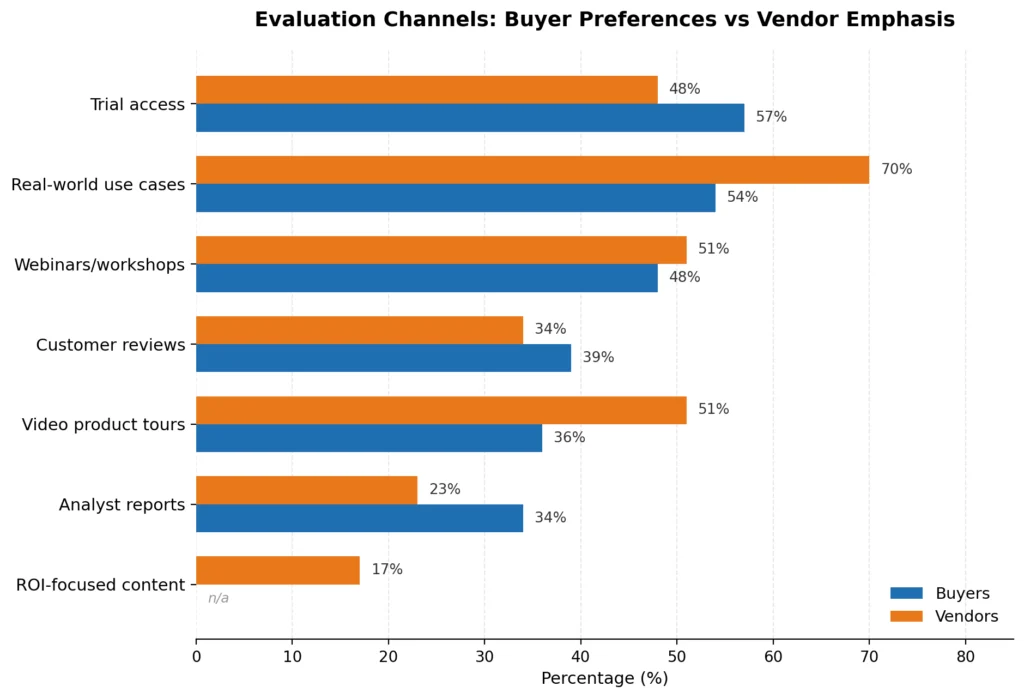
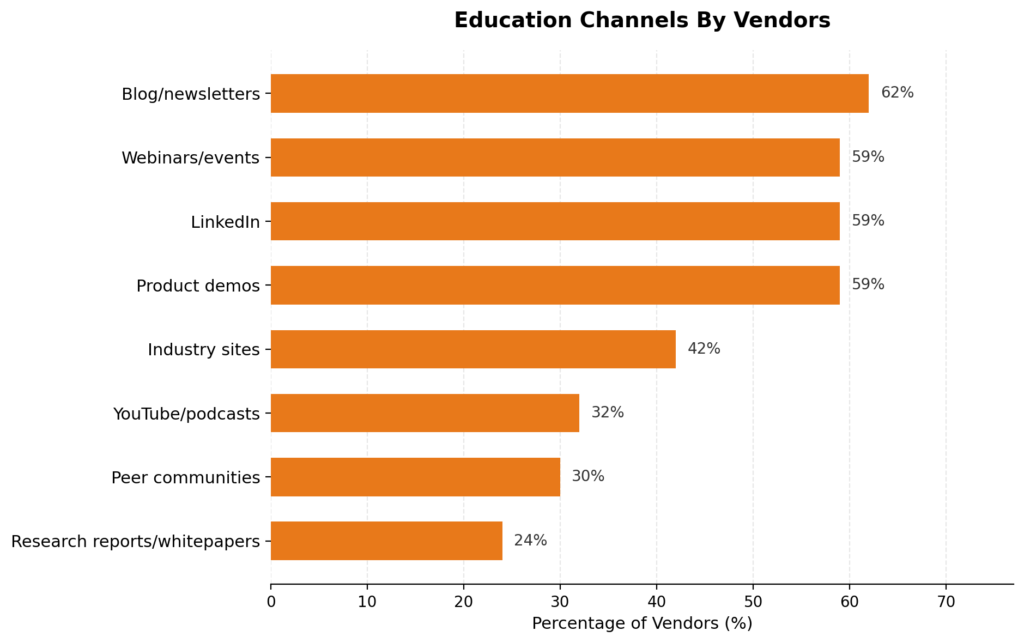
A significant finding in the report is the discrepancy between where L&D buyers seek information and where vendors focus their marketing efforts. This gap suggests that many providers may be missing opportunities to influence key decision-makers by over-investing in the wrong communication channels.
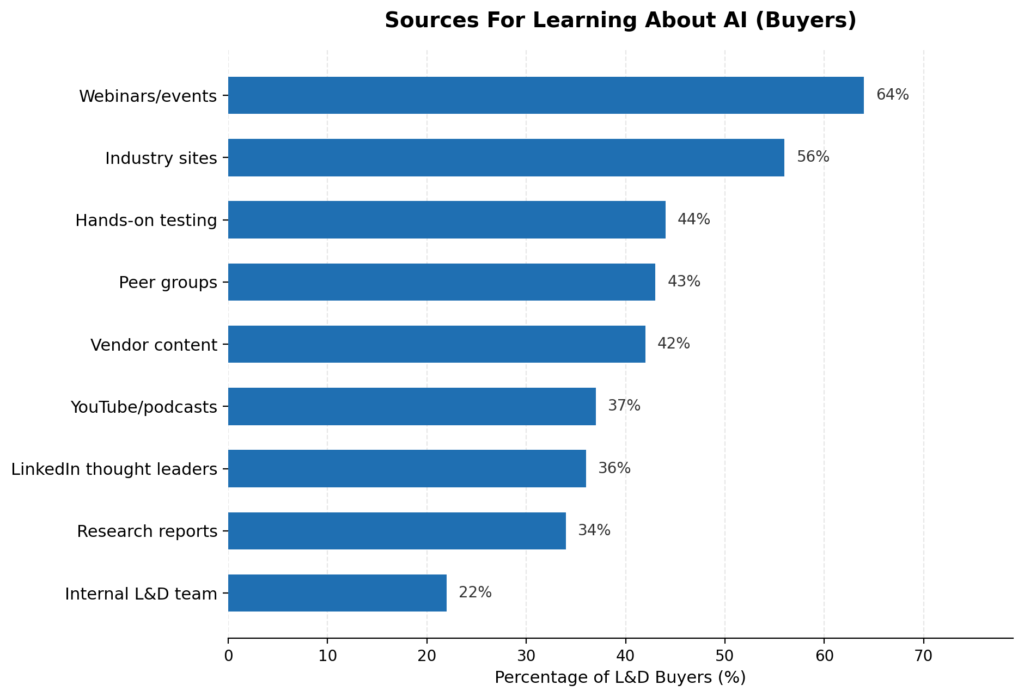
According to the data, 64% of L&D buyers prefer webinars and live events as their primary source of AI education. This is followed by industry websites at 56%. Perhaps most telling is the high value placed on hands-on testing (44%) and peer groups (43%). These figures indicate that L&D professionals are increasingly skeptical of polished marketing and prefer to learn through direct experimentation and community validation.
Conversely, vendors rely heavily on owned channels such as blogs, newsletters, and LinkedIn. While these are efficient for broad-reach content delivery, they often lack the interactive, experiential elements that buyers crave. The market signal is clear: there is a demand for more collaborative learning environments where buyers can discuss the limitations—not just the benefits—of AI with their peers and technical experts.
Strategic Priorities: What Buyers Are Actually Asking
When the dialogue moves from general education to specific product inquiries, the focus turns sharply toward utility. Analysis of open-ended vendor responses reveals that buyer requests are grounded in five core themes:
- Content Creation and Efficiency: Reducing the manual labor involved in course development remains a top priority.
- Personalization at Scale: Buyers want AI that can tailor learning paths to individual employee needs without requiring constant manual oversight.
- Security and Data Governance: As AI tools process more proprietary corporate data, the demand for robust security protocols has become a non-negotiable requirement.
- Integration and Ecosystem Compatibility: Organizations are looking for AI that acts as a "glue" between their various HR and learning tools, rather than another siloed platform.
- Measurable Outcomes: There is an increasing pressure on L&D teams to prove that AI investments lead to better performance, not just faster completion rates.
This practical focus reinforces the idea that the "futuristic" allure of AI is fading in favor of business-value evaluation. Vendors that focus their messaging on integration and security, rather than just "creative" potential, are finding more resonance with enterprise-level buyers.
The Format Gap in AI Training
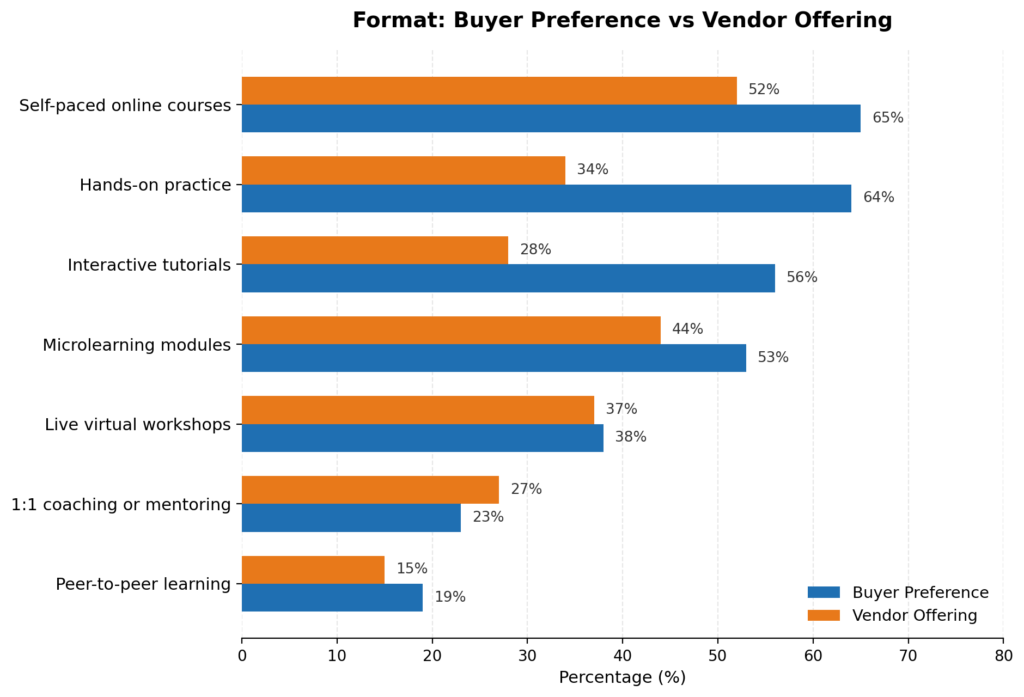
The report highlights a stark misalignment in how AI training is delivered versus how it is consumed. Buyers show a clear preference for self-paced learning (65%) and hands-on practice (64%). Interactive tutorials (56%) and microlearning (53%) also rank highly, suggesting that L&D teams want to learn about AI in the same way they expect their employees to learn: through flexible, bite-sized, and practical application.
However, the supply side of this equation is lagging. While vendors are proficient at providing microlearning and webinars, they significantly under-deliver on hands-on practice opportunities and interactive tutorials. This lack of "sandbox" environments—where L&D pros can test AI tools without risk—remains a major barrier to adoption. Market experts suggest that providing these practical experiences will be the next major differentiator for learning tech providers.
Economic Realities and the ROI Mandate
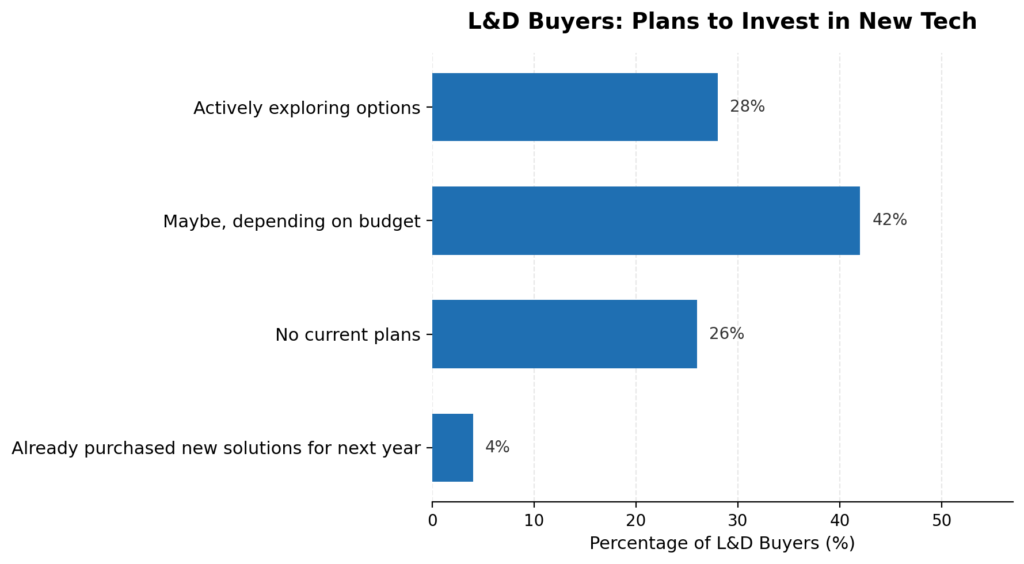
Investment sentiment within the L&D space remains cautiously optimistic but heavily dependent on proof. The survey indicates that while 28% of organizations are actively seeking new AI-enabled technologies, the largest segment (42%) is waiting for a clear demonstration of value before committing their budgets.
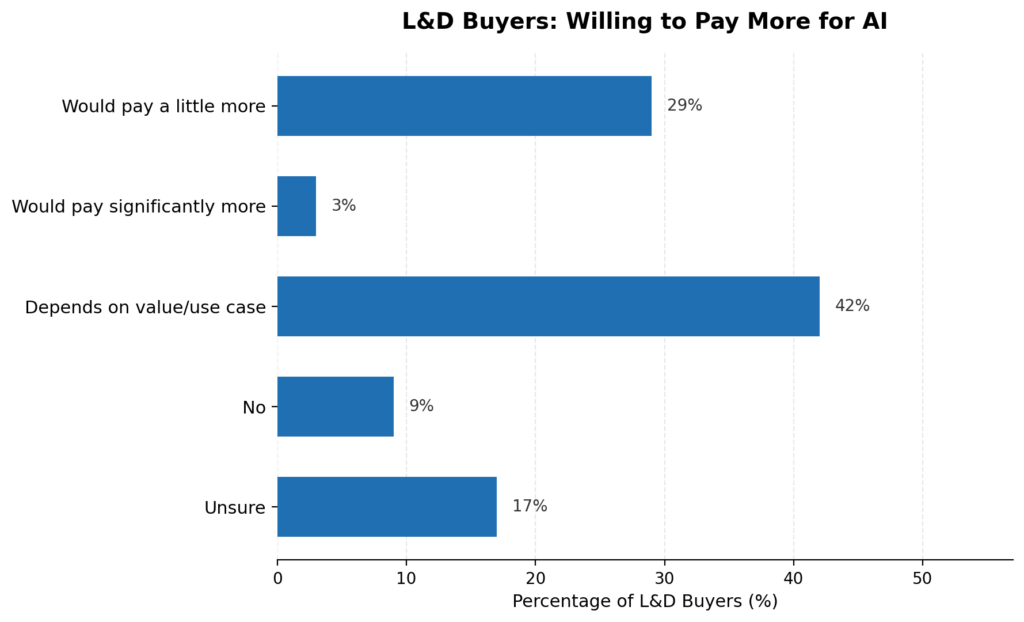
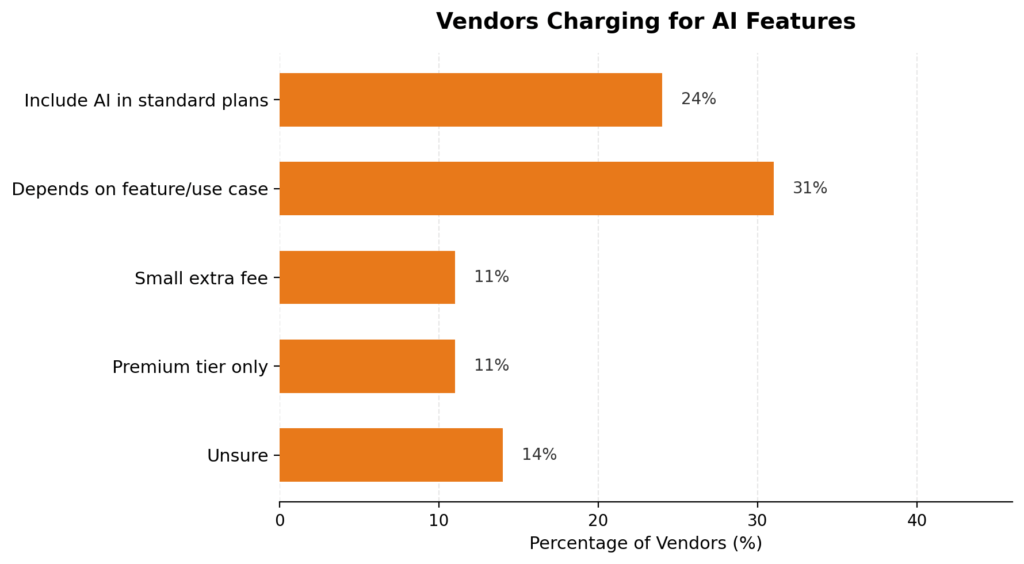
This financial caution is even more evident in pricing expectations. Only 3% of respondents expressed a willingness to pay a significant premium for AI features. Instead, 42% of buyers believe that any increase in cost must be directly tied to proven use cases and measurable outcomes. On the vendor side, pricing models remain fragmented; some are attempting to treat AI as a high-end add-on, while others are absorbing the cost into standard subscriptions to gain market share. This suggests that the market has not yet reached a consensus on the "monetary value" of AI, and "AI for AI’s sake" is no longer a viable sales strategy.
The Reskilling Mandate: Preparing Teams for the AI Era
Perhaps the most critical section of the report deals with the human element of the AI transition. The data suggests that most L&D teams are currently in a state of "active exploration." While 59% of teams are testing tools, only 37% have moved to full implementation, and a mere 24% are providing internal training on AI usage.
Interestingly, the skills prioritized by both buyers and vendors are not exclusively technical. Critical thinking was identified as the most important skill for the AI era, selected by 67% of buyers and 61% of vendors. This is followed closely by adaptability. These results suggest a widespread recognition that while AI can handle data processing and content generation, the human ability to judge, verify, and adapt is more valuable than ever.
Emerging Skill Discrepancies
There are, however, notable differences in how buyers and vendors view specific skills. Buyers place a much higher emphasis on "prompt engineering" (59% vs. 41% for vendors), as well as data literacy and ethical reasoning. This likely stems from the fact that L&D professionals are the ones who must actually "drive" the AI tools and manage the ethical implications of their output within a corporate environment.
Vendors, on the other hand, appear more focused on broad adoption and operational efficiency. This discrepancy highlights a potential risk: if vendors do not support the development of ethical reasoning and data literacy, their customers may struggle with the governance and "hallucination" risks associated with GenAI, leading to a breakdown in trust.
Broader Impact and Industry Implications
The findings of the 2026 report signal a shift toward a "Human-AI Hybrid" model of learning. The data confirms that the fear of AI replacing L&D professionals has largely been replaced by a realization that AI will redefine their roles. The future of learning technology is being shaped by a demand for transparency, control, and human oversight.
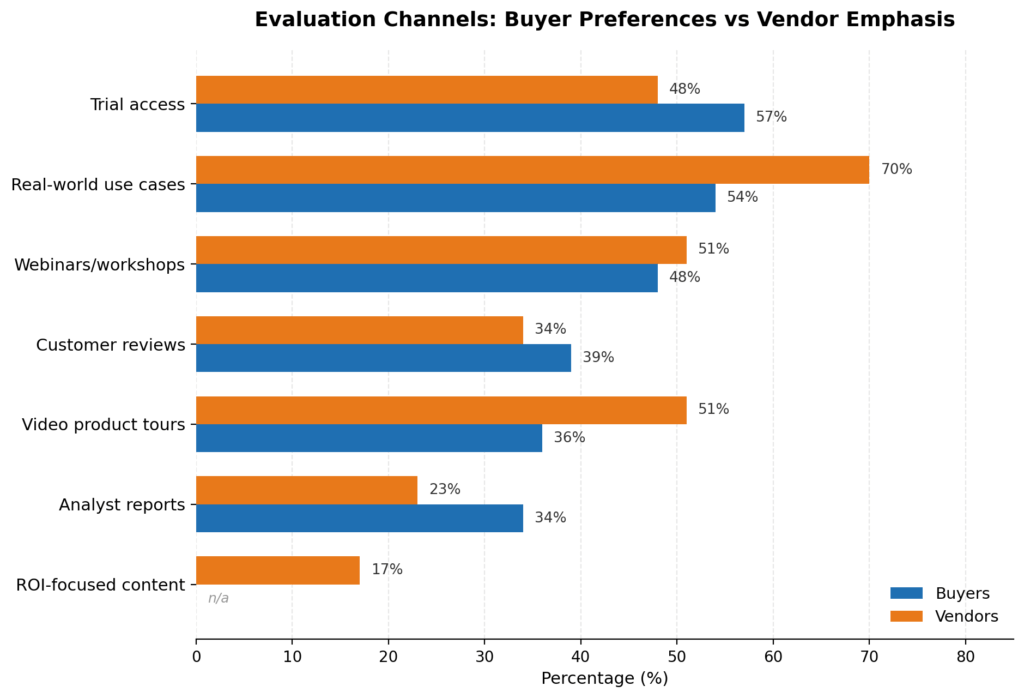
For vendors, the path forward involves moving away from feature-focused marketing and toward a partnership-based approach. This includes providing better validation assets, such as independent analyst reports, customer case studies, and clear ROI calculators. For L&D leaders, the challenge lies in moving from "curiosity" to "strategy"—developing formal frameworks for AI use that prioritize ethical standards and critical thinking.
Ultimately, the 2026 data shows that the "Expectation Gap" is not an insurmountable hurdle, but a roadmap. By aligning educational channels, focusing on practical integration, and prioritizing human-centric skills, the L&D industry can bridge this gap. The transition to AI is not merely a technical upgrade; it is a fundamental shift in how organizations cultivate knowledge, and those who balance technology with human judgment will be the ones to thrive in this new era.