The contemporary business arena is characterized by an unprecedented confluence of complexity, rapid change, and frequent crises. This dynamic environment demands a heightened level of organizational agility, a trait that, while crucial for short-term survival, is insufficient for long-term prosperity and competitive differentiation. Merely reacting to evolving circumstances is no longer a viable strategy for sustained success. Instead, organizations must proactively cultivate unique strengths that set them apart, a pursuit that intrinsically links to the development of specific leadership behaviors and mindsets. Navigating this landscape is further complicated by pervasive ambiguity, making it challenging to discern the precise connection between leadership actions and overarching strategic objectives.
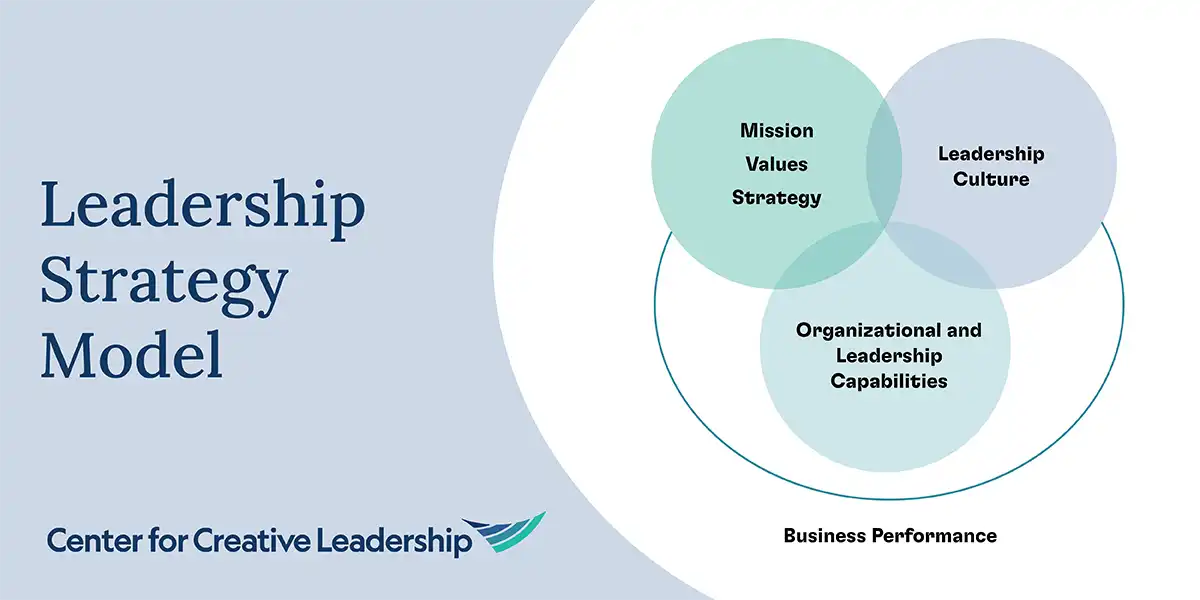
Recognizing this critical need for a more robust framework, extensive research and decades of practical experience have culminated in the development of a robust Leadership Strategy Model. This model elucidates a clear pathway that connects the daily practices of leaders to enduring organizational success. At its core, the model comprises five interconnected elements, with organizational capabilities serving as the pivotal link that bridges strategic intent with the development of essential leadership behaviors.
The Foundational Pillars: Strategy, Culture, and Capabilities
The strategic bedrock of any organization is formed by its mission, values, and overarching strategy. However, equally vital is the cultivation of a strong leadership culture – the collective beliefs, norms, and shared understanding that dictate how leadership is enacted and recognized on a daily basis. It is within this framework that organizational capabilities emerge as the defining characteristics that grant a business its competitive identity. These capabilities, in turn, are nurtured and sustained by leadership capabilities, effectively translating strategic aspirations into tangible actions and market realities.
A common pitfall observed in many organizations is the direct leap from business strategy to individual leader behaviors, bypassing the crucial step of defining what the organization needs to be collectively exceptional at. Organizational capabilities act as this indispensable bridge. By first achieving clarity on these capabilities, subsequent decisions regarding which leadership behaviors to prioritize become significantly more purposeful and precise, ensuring alignment across the entire enterprise.
Defining Organizational Capabilities: The Heartbeat of Competitive Distinction
Organizational capabilities represent the collective knowledge, skills, and practices that an organization possesses – encompassing both its areas of strength and its developmental needs. They serve as a powerful indicator of the customer segments a business is best positioned to serve and the strategies it can most effectively execute. These capabilities are not abstract concepts; they are manifested in observable leadership behaviors that can be tracked and measured. Crucially, organizational capabilities are intrinsically tied to the people within the organization, requiring the right combination of skills, knowledge, and attributes to be brought to bear on the work. Consequently, it is impossible to divorce collective organizational capabilities from the individual behaviors of leaders.
The absence of clearly defined organizational capabilities before embarking on strategy implementation creates a critical disconnect. Leaders lack the necessary context to prioritize the most impactful behaviors, and the organization suffers from a lack of coherence in its execution. Conversely, when organizational capabilities are well-defined, they foster a synergistic alignment between the business and human systems, enabling the organization to create value in ways that are inherently difficult for competitors to replicate.
While the concept of organizational capabilities is not novel, its application and understanding have evolved significantly. Business thinkers in the 1990s began shifting the focus from purely external market analysis to an inward examination of an organization’s core competencies. This perspective necessitated deliberate trade-offs and strategic investment decisions. In the 21st century, the imperative to adapt these capabilities amidst perpetual disruption has become paramount.

For decades, the Organizational Leadership practice has leveraged a research-based framework of organizational capabilities to guide clients through large-scale change and transformation initiatives. This work has been underpinned by a deep understanding of leadership as a social process, and the profound influence of leadership culture in demonstrating and embedding these capabilities. Through extensive study of executive teams over twenty years, a comprehensive set of capabilities crucial for successful organizational transformations has been identified.
More recently, this foundational research has been revisited and refined to account for the profound impact of technological advancements, globalization, and other significant external influences. This update includes a more detailed articulation of the behavioral components within each capability, enhancing clarity and facilitating a more precise connection to leadership capabilities.
The Comprehensive Framework: Eleven Pillars of Organizational Excellence
The extensive research has identified a set of eleven core organizational capabilities, each intrinsically linked to an organization’s strategic and cultural identity, and clearly defined by its observable actions:
- Fostering Innovation: The ability to generate novel ideas, develop new products and services, and embrace creative problem-solving.
- Driving Productivity: The capacity to optimize processes, enhance efficiency, and achieve high output with optimal resource utilization.
- Customer Centricity: A deep understanding of customer needs and a commitment to delivering exceptional customer experiences.
- Strategic Agility: The ability to anticipate and respond effectively to market shifts and evolving competitive landscapes.
- Talent Development: A focus on attracting, retaining, and developing high-potential individuals and fostering a culture of continuous learning.
- Operational Excellence: The commitment to achieving superior quality, reliability, and efficiency in all operational processes.
- Digital Transformation: The capability to leverage technology to reimagine business models, processes, and customer interactions.
- Global Mindset: The ability to understand and navigate diverse international markets and cultural nuances.
- Ethical Governance: A strong commitment to integrity, transparency, and responsible business practices.
- Collaborative Integration: The capacity to foster seamless teamwork and knowledge sharing across different departments and functions.
- Leading Transformation: The ability to guide and manage significant organizational change initiatives effectively.
While all these capabilities contribute to a high-performing organization, the strategic imperative lies in identifying a focused subset, typically three to four, that will become the organization’s primary areas of excellence. This carefully selected group of capabilities articulates a clear narrative about how the organization intends to confront strategic challenges and achieve its unique definition of success.
Consider, for instance, a services firm aiming to transition into an AI-driven organization, making artificial intelligence the cornerstone of its operations and client offerings. If the organization already possesses robust capabilities in "Fostering Innovation" and "Driving Productivity," its executive team might decide to further enhance these by emphasizing behaviors such as rapidly developing and launching new products and services, and continuously optimizing organizational structures and workflows. Concurrently, given the transformative nature of becoming an AI-driven entity, the organization might recognize the need to build a "Leading Transformation" capability. This might also involve a strategic reframing of their focus on "Determining Performance" to better align with the new operational paradigm.
The process of narrowing down to the most critical three to four organizational capabilities is not merely a matter of consensus; it demands rigorous consideration of numerous factors, including where to strategically invest resources and what constitutes acceptable performance levels for the remaining capabilities.
The greater the alignment among the executive team and other key stakeholders regarding these essential capabilities, the clearer and more streamlined the path to establishing and sustaining them becomes. Decades of experience in guiding executive teams through this process have yielded a well-established methodology that fosters direction, alignment, and commitment – the foundational elements for effectively translating organizational capabilities into both individual and collective leadership behaviors that bring them to life.
A Phased Approach to Mobilizing Organizational Capabilities
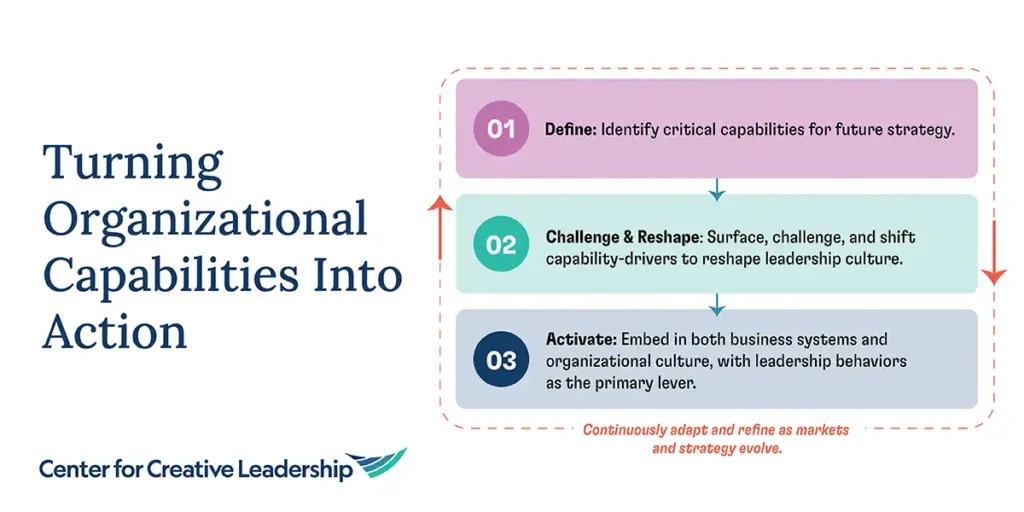
Translating defined organizational capabilities into tangible action requires a forward-looking perspective coupled with a deep understanding of the organization’s internal dynamics. This dual focus forms the basis of a proven three-phase approach designed for executive teams:
Phase 1: Diagnosis and Design
This initial phase involves a comprehensive assessment of the organization’s current capabilities, its strategic imperatives, and its leadership culture. Through in-depth analysis and stakeholder engagement, key strengths, weaknesses, opportunities, and threats are identified. This diagnostic work informs the design of a targeted set of organizational capabilities that will serve as the engine for future success. The output of this phase is a clear, prioritized list of capabilities that align with the organization’s strategic vision.
Phase 2: Capability Development and Integration
Once the core capabilities are identified, the focus shifts to actively developing and embedding them within the organization. This involves designing and implementing specific initiatives aimed at building the necessary skills, knowledge, and processes. Simultaneously, efforts are made to integrate these capabilities into the organization’s existing systems and workflows, ensuring they become a natural part of how the business operates. This phase also emphasizes the critical role of leadership culture in reinforcing and rewarding the desired capabilities.
Phase 3: Activation and Sustainment
The final phase focuses on activating the developed capabilities and ensuring their long-term sustainment. This includes implementing mechanisms for continuous monitoring, measurement, and feedback. Strategies for ongoing reinforcement, such as performance management systems, training programs, and leadership development initiatives, are put in place. The goal is to ensure that the organization’s capabilities remain relevant, adaptive, and continue to drive competitive advantage in an ever-changing environment.
Bridging Strategy and Leadership Practice for Enduring Success
As organizations chart their course for the future, envisioning the evolving needs of their leaders and the enterprise, organizational capabilities emerge as a crucial bridging mechanism. By concentrating efforts on defining and cultivating the organization’s distinctive strengths, these capabilities position the enterprise for strategic success and provide invaluable clarity on the specific leadership behaviors that are essential for excelling in the chosen strategic direction.
The future will undoubtedly bring further change, necessitating adaptations to strategy and, consequently, to the roles and responsibilities of leaders. However, by aligning mission, values, strategy, and leadership culture around a focused set of organizational capabilities, an organization not only strengthens its execution in the present but also enhances its capacity to adapt and thrive in the future. This integrated approach ensures that every element of the Leadership Strategy Model, and indeed every individual within the organization, remains aligned and on the optimal trajectory for sustained success.
Ready to Forge a Competitive Identity?
Identifying the organizational capabilities that will transform your strategy into a distinct competitive identity, and cultivating the leadership culture necessary to sustain them, represents a consequential undertaking for any executive team. Organizations that navigate this process successfully position themselves for enduring business performance. Partnering with experts in this field can provide the guidance and framework necessary to embark on this transformative journey. Exploring specialized organizational leadership consulting services can illuminate pathways to help executive teams define, align, and activate the most critical capabilities for sustained business excellence.