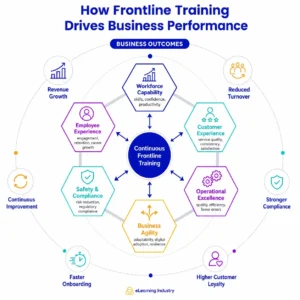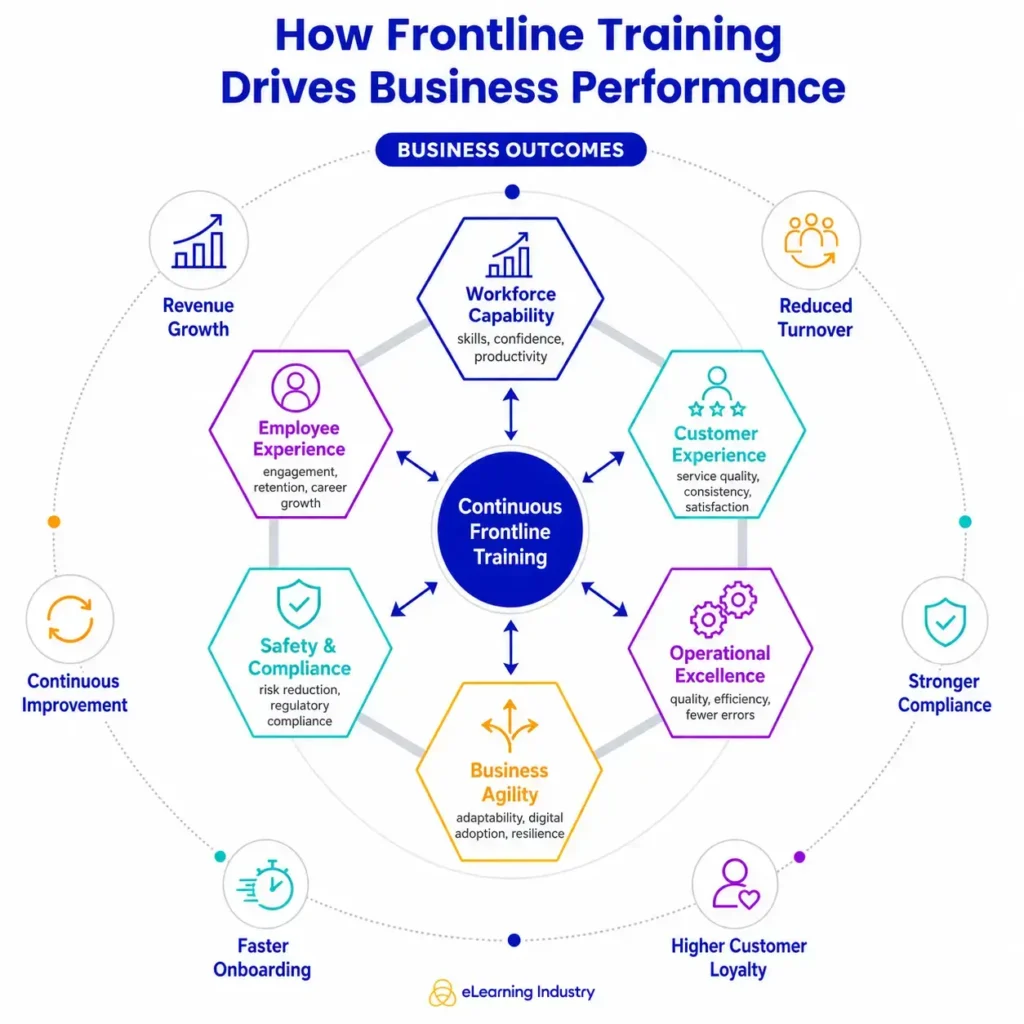
The modern global economy relies heavily on the 2.7 billion people who make up the "deskless" workforce, a demographic that accounts for approximately 80% of all workers worldwide. Frontline training has transitioned from a secondary operational expense to a primary strategic priority for enterprises across the retail, healthcare, manufacturing, and logistics sectors. These employees—nurses, warehouse operators, retail associates, and field technicians—serve as the face of their respective brands and the primary drivers of operational efficiency. As labor shortages persist and consumer expectations for seamless service reach record highs, the methodology behind how these workers are onboarded, upskilled, and retained has undergone a radical transformation. Moving beyond the traditional "one-off" orientation session, organizations are now implementing continuous, tech-enabled learning ecosystems designed to foster long-term resilience and brand consistency.
The Shift from Compliance to Competence: A Chronological Overview
Historically, frontline training was often treated as a bureaucratic necessity rather than a competitive advantage. In the late 20th and early 21st centuries, training for operational roles was largely characterized by "shadowing" experienced workers or attending long, classroom-style seminars that took employees away from their stations. This model was often inefficient, leading to "knowledge leakage" where standard operating procedures were diluted as they were passed from one worker to another.
The mid-2010s saw the initial integration of Digital Learning Management Systems (LMS), yet these platforms were frequently designed for office-based employees with consistent computer access. Frontline workers, who rarely sit at a desk, found these systems cumbersome. The true catalyst for change arrived with the 2020 global pandemic, which highlighted the extreme vulnerability of supply chains and healthcare systems. During this period, the need for rapid cross-training and safety compliance became a matter of survival. This period marked the beginning of the "Mobile-First" era, where training began to move directly into the pockets of the workforce via smartphones and tablets.
Today, the landscape is defined by the "Deskless Revolution." In 2024, the focus has shifted toward hyper-personalization and data-driven training. Companies are no longer just asking if a worker completed a module; they are measuring how that training correlates with specific Key Performance Indicators (KPIs) such as reduced accident rates, higher Net Promoter Scores (NPS), and decreased turnover.
Supporting Data: The Economic Reality of Frontline Development
The push for better frontline training is supported by a growing body of economic data. According to recent industry reports, the cost of replacing a single frontline worker can range from $1,500 to $5,000, factoring in recruitment, lost productivity, and onboarding. In industries with high turnover rates, such as hospitality or retail—where annual churn can exceed 70%—the financial drain of poor retention is staggering.
Furthermore, research from Gallup indicates that organizations with highly engaged workforces see a 21% increase in profitability. For the frontline, engagement is directly tied to the feeling of being equipped to handle the job. A 2023 survey of frontline workers revealed that nearly 40% felt they had not received adequate training to keep up with the new technologies introduced at their workplace over the last three years. This "skills gap" is not just a HR issue; it is a bottleneck for national productivity. In the United States alone, the manufacturing sector faces a potential shortage of 2.1 million skilled jobs by 2030, a gap that experts argue can only be closed through aggressive, modernized frontline training initiatives.
Core Skill Sets for the Modern Frontline Professional
To build a future-ready team, organizations are diversifying their training curricula. While technical proficiency remains the baseline, the "soft skills" of the past are being rebranded as "durable skills" essential for complex problem-solving.
Technical and Operational Mastery
In the age of Industry 4.0, a warehouse picker is no longer just moving boxes; they are interacting with automated retrieval systems and sophisticated inventory software. Technical training must now include digital literacy. This ensures that employees can troubleshoot basic equipment issues and navigate the digital tools that define modern logistics. Continuous technical training prevents the "drift" from standard procedures that often leads to operational bottlenecks.

Human-Centric Communication
For workers in healthcare and retail, the ability to practice empathy and conflict de-escalation is vital. As automated checkouts and AI chatbots handle routine tasks, the interactions that remain for human workers are often the most complex and emotionally charged. Training programs now incorporate active listening and "service recovery" techniques—the art of turning a negative customer experience into a positive one through effective communication.
The Compliance and Safety Mandate
In high-stakes environments like chemical manufacturing or surgical units, compliance is the difference between safety and catastrophe. Modern training utilizes "spaced repetition"—a learning technique that reinforces safety protocols at increasing intervals—to ensure that high-stakes information is moved from short-term to long-term memory. This approach helps companies avoid the multi-million dollar fines associated with OSHA or HIPAA violations.
Autonomous Decision-Making
The modern frontline worker is often required to act as a "manager of one." When a field technician encounters an unexpected fault in a remote area, they must have the critical thinking skills to make a decision that aligns with company values without immediate oversight. Training programs are increasingly using "branching scenarios" where learners must choose a path and see the consequences of their decisions in a risk-free digital environment.
Delivery Innovations: Reaching the Deskless Worker
The primary challenge of frontline training is time. A nurse on a 12-hour shift or a driver on a tight delivery schedule cannot spend hours in a computer lab. This has led to several innovative delivery methods:
- Microlearning: This method involves breaking down complex topics into three-to-five-minute "bursts" of information. Research shows that microlearning improves knowledge retention by up to 20% compared to traditional long-form training.
- Mobile-First Accessibility: By utilizing QR codes placed directly on machinery or in breakrooms, companies allow workers to access "just-in-time" learning. If a worker forgets how to calibrate a machine, they can scan a code and watch a 60-second instructional video instantly.
- Augmented Reality (AR): Some forward-thinking logistics and manufacturing firms are using AR headsets to overlay digital instructions onto physical objects. This allows for hands-on training that is both immersive and safe.
- Peer-to-Peer Mentorship: While digital tools are essential, the human element remains irreplaceable. Structured mentorship programs ensure that the "tribal knowledge" of veteran workers is captured and passed down, fostering a culture of community and shared success.
Addressing Structural Challenges and Barriers
Despite the clear benefits, implementing an effective frontline training program is fraught with obstacles. High turnover remains a "chicken or egg" problem: companies are hesitant to invest in training workers who might leave, yet workers often leave because they feel undervalued and undertrained. To break this cycle, industry leaders are adopting "continuous onboarding"—a strategy where the learning process never truly ends, providing workers with a clear career path from day one.
Language and literacy barriers also present a significant hurdle in globalized supply chains. Multilingual training content is no longer a luxury but a necessity for maintaining safety and quality standards across diverse regions. Furthermore, the "digital divide" means that some workers may be less comfortable with new technologies; therefore, training must be intuitive and accessible to all, regardless of their prior tech experience.
Expert Perspectives and Future Implications
Industry analysts suggest that we are entering an era of "Adaptive Learning," where AI-driven platforms will analyze a worker’s performance in real-time and automatically assign training modules to address specific weaknesses. For example, if a retail associate’s point-of-sale data shows a high number of voided transactions, the system might automatically push a three-minute refresher on checkout procedures to their mobile device.
The broader implications of these advancements extend beyond corporate profits. Well-trained frontline workers experience higher job satisfaction, greater economic mobility, and increased physical safety. On a macroeconomic level, a highly skilled frontline workforce is a prerequisite for national competitiveness in an increasingly automated world.
In conclusion, frontline training has emerged as a cornerstone of modern business strategy. It is the mechanism through which companies translate their high-level goals into daily operational reality. By investing in the growth and development of those closest to the customer and the product, organizations are not merely checking a compliance box; they are building a more resilient, efficient, and human-centric future for the global economy. The companies that succeed in the coming decade will be those that view their frontline not as a cost to be managed, but as an asset to be empowered.