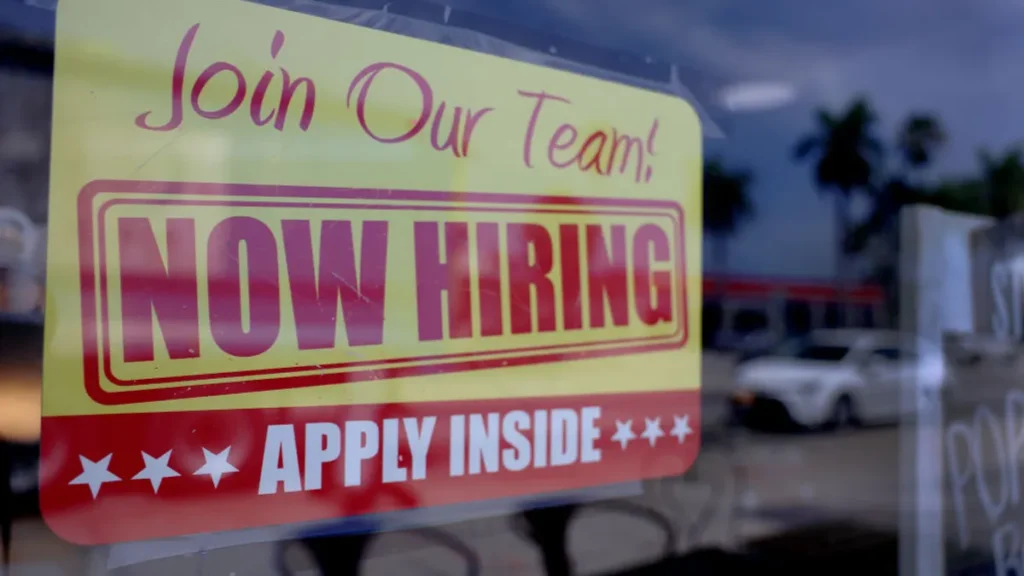
The landscape of talent acquisition is experiencing a notable shift, with a significant portion of employers reporting a deceleration in their hiring processes. According to a comprehensive survey conducted by ManpowerGroup, a quarter of employers observed a slowdown in their time-to-hire during the fourth quarter of 2026 when compared to the same period a year prior. This trend, captured in data published on September 15, 2026, signals a more cautious and potentially complex environment for both recruiters and job seekers alike, reflecting a blend of economic prudence and persistent talent challenges.
The survey, which gathered insights from nearly 40,000 public and private sector employers across 42 countries, including over 6,000 U.S. businesses, serves as a critical barometer for anticipated employment trends. While organizational growth remains a primary driver for expanding workforces, a confluence of economic headwinds and persistent skill shortages appears to be lengthening the journey from job posting to onboarding. This extended recruitment cycle has wide-ranging implications, affecting everything from operational efficiency and project timelines to candidate experience and employer brand.
The Evolving Landscape of Talent Acquisition
The observed slowdown in time-to-hire is not merely a statistical anomaly but a reflection of deeper currents within the global labor market. Time-to-hire, a crucial metric in human resources, measures the duration from when a job requisition is opened to when a candidate accepts an offer. A longer cycle can signify various underlying issues, including increased competition for top talent, more rigorous screening processes, or a scarcity of qualified applicants. For a quarter of surveyed employers to report such a slowdown in Q4 2026 compared to Q4 2025 suggests a move away from the rapid hiring pace seen in earlier post-pandemic recovery phases, indicating a maturation or even a slight cooling of certain segments of the job market.
This elongation of the hiring timeline can lead to increased costs for companies, as open positions remain unfilled for longer, potentially impacting productivity, innovation, and existing employee workloads. Furthermore, a protracted hiring process can deter high-quality candidates, who may grow impatient and accept offers from competitors with more agile recruitment strategies. The candidate experience, increasingly vital in a competitive talent market, can suffer significantly if applicants perceive delays or a lack of responsiveness.
Underlying Economic Currents and Business Strategies
Despite the observed caution in hiring speed, the impetus for workforce expansion remains strong for many organizations. The ManpowerGroup report highlights that nearly two-fifths (39%) of firms planning to add employees cited organizational growth as their primary motivation. This suggests that despite broader economic uncertainties, businesses are still pursuing expansion strategies, whether through market penetration, product diversification, or scaling existing operations. Additionally, 24% of employers indicated plans to branch out into new areas, underscoring an ongoing drive for innovation and market diversification. This proactive approach to growth, even in a cautious environment, demonstrates resilience and a forward-looking perspective among a significant segment of businesses.
Conversely, the report also sheds light on the factors driving workforce reductions. A substantial 37% of companies planning staff cutbacks attributed these decisions to economic challenges. This statistic serves as a stark reminder of the persistent global economic volatility, characterized by fluctuating inflation rates, interest rate adjustments by central banks, and geopolitical uncertainties. These challenges compel businesses to optimize their operational costs, often leading to workforce adjustments to maintain profitability and sustainability.
Ger Doyle, Regional President at ManpowerGroup North America, provided an insightful perspective on these dual trends. In a recent statement, Doyle remarked, "While employers are approaching hiring more cautiously than last quarter, growth remains firmly on the agenda. Companies continue to hire in critical areas, particularly for highly skilled roles supporting AI, technology, and infrastructure investments. With skills shortages continuing to constrain hiring, businesses that combine innovation with a strong talent strategy will be better equipped to meet their long-term goals." Doyle’s statement underscores a nuanced reality: a general slowdown in the overall hiring velocity coexists with targeted, strategic recruitment in specialized, high-demand sectors, particularly those pivotal to future technological advancement and economic development. This strategic focus indicates a shift towards quality over sheer quantity in hiring for specific roles.
The Persistent Challenge of Skills Gaps
A significant contributor to the extended time-to-hire and overall recruitment difficulties stems from pervasive skills gaps. Employers surveyed identified multiple factors hindering their hiring processes, all pointing to a fundamental mismatch between talent supply and demand. Foremost among these challenges is a critical shortage of candidates possessing the necessary skills for open positions. This issue is often compounded by an insufficient number of qualified candidates available within local markets, forcing companies to broaden their search geographically or invest more heavily in relocation packages.
Furthermore, "mismatches between candidate expectations and job requirements" emerged as a notable hurdle. This can manifest in various ways, from salary expectations that exceed company budgets to candidates seeking specific work arrangements (e.g., fully remote) that do not align with the employer’s operational model. This divergence highlights a need for greater transparency in job descriptions and a more realistic understanding on both sides of the hiring equation. The report also pointed to a decline in applicants sourced through referrals and professional networks, historically a highly effective and cost-efficient recruitment channel. This could indicate a less fluid movement of talent, a decrease in direct networking opportunities, or a greater reliance on traditional job boards and digital platforms.
The ramifications of these skills gaps are profound. They not only prolong the hiring process but also escalate recruitment costs, potentially leading to compromises in hiring quality if positions need to be filled urgently. Addressing these gaps necessitates a multi-pronged approach, including investing in upskilling and reskilling programs for existing employees, fostering stronger partnerships with educational institutions, and rethinking job requirements to focus on transferable skills rather than rigid qualifications.
Spotlight on Entry-Level Talent
Amidst the general caution and challenges, one area of the labor market demonstrates robust growth: entry-level hiring. The survey revealed that 52% of employers in both the manufacturing and information sectors expected to increase their number of early career staffers in the fourth quarter of 2026 compared to 2025. This surge in demand for entry-level talent is a noteworthy development. It could signal several trends: a strategic investment by companies in building talent pipelines from the ground up, a recognition that specific skills can be developed internally, or a response to the higher cost and scarcity of experienced professionals.
For the manufacturing sector, the emphasis on entry-level hiring might be linked to the ongoing resurgence of domestic production and advanced manufacturing initiatives, requiring a new generation of skilled workers trained in modern industrial processes. In the information sector, the continuous evolution of technology and the rapid pace of innovation necessitate a steady influx of fresh perspectives and adaptable learners, even if they require initial training. This trend offers a beacon of opportunity for recent graduates and those looking to enter these dynamic industries, suggesting a willingness by employers to invest in foundational talent.
Broader Labor Market Context and Trends

The ManpowerGroup findings unfold against a backdrop of a complex and dynamic U.S. labor market. In August 2026, the U.S. total nonfarm payroll saw a modest increase of 162,000 jobs, a figure that, while positive, suggested a more tempered growth compared to earlier periods of rapid expansion. This growth was primarily driven by gains in the "food services and drinking places" category, according to the U.S. Bureau of Labor Statistics. This concentration of job creation in hospitality and service sectors often reflects consumer spending patterns and a resilient leisure economy. Simultaneously, the national unemployment rate remained stable at 4.1%, indicating a relatively tight labor market where most individuals seeking employment are able to find it, albeit potentially after a longer search.
This stability in unemployment, coupled with slower payroll growth and extended time-to-hire, paints a picture of a labor market that is neither booming nor contracting sharply, but rather adjusting to new economic realities. The resilience of the service sector, often a leading indicator of consumer confidence, contrasts with the more cautious approach seen in broader hiring trends. This divergence suggests that while certain parts of the economy continue to expand, others are either facing headwinds or adopting a more strategic, less aggressive growth trajectory.
The AI Revolution in Recruitment
In response to these evolving challenges, human resources departments are increasingly turning to technological solutions, particularly artificial intelligence. A recent report from HR technology provider Paylocity revealed that a remarkable 91% of HR leaders actively utilize AI in their recruitment processes. Furthermore, the remaining HR leaders indicated plans to implement some form of AI within the next 18 months, signaling a near-universal adoption trajectory for AI in talent acquisition.
AI’s integration into recruitment spans various applications: from automating resume screening and candidate matching to powering chatbots for initial candidate engagement and utilizing predictive analytics to identify optimal talent pools. The promise of AI is multifold: to enhance efficiency, reduce bias, and ultimately shorten the time-to-hire by streamlining laborious tasks. However, the paradox of AI’s widespread adoption coexisting with a reported slowdown in time-to-hire suggests that while AI may be improving the quality and efficiency of certain recruitment stages, it is not necessarily overriding the larger systemic challenges such as skills shortages or economic caution that are prolonging the overall cycle. It could also mean that AI is enabling HR teams to conduct more thorough, data-driven evaluations, which, while beneficial for long-term hiring quality, might inherently add steps or complexity to the process, contributing to longer timelines in some cases. The ongoing refinement and ethical considerations surrounding AI in HR also add layers of complexity that require careful management.
Historical Context and Previous Trends
To fully appreciate the current slowdown in time-to-hire, it is beneficial to consider the recent historical context of the labor market. The period immediately following the initial COVID-19 pandemic lockdowns, particularly from late 2021 through early 2023, witnessed an unprecedented hiring frenzy. Fueled by pent-up demand, government stimulus, and the "Great Resignation" phenomenon, employers faced immense pressure to fill vacancies rapidly. This era was characterized by highly competitive compensation packages, signing bonuses, and a significant reduction in time-to-hire as companies vied for a limited pool of active job seekers.
As 2023 progressed into 2024 and 2025, the market began to stabilize, and in some sectors, cooled. Economic uncertainties, including persistent inflation and rising interest rates, prompted many companies to adopt a more conservative stance. Layoffs, particularly in the technology sector, became more common, and hiring managers grew more discerning. This period saw a gradual increase in time-to-hire as employers became less reactive and more strategic in their recruitment efforts, prioritizing fit and long-term value over speed. The current report’s findings of a continued slowdown in Q4 2026 thus represent a continuation of this trend towards a more deliberate and perhaps more challenging hiring environment, moving further away from the frantic pace of the immediate post-pandemic boom.
Implications for Employers and Job Seekers

The implications of a prolonged recruitment cycle are significant for all stakeholders. For employers, this trend necessitates a re-evaluation of their talent acquisition strategies. It underscores the importance of a robust employer brand, agile recruitment technologies (including optimized AI tools), and proactive talent pipelining. Companies must also invest in comprehensive workforce planning, identify critical skill needs early, and explore alternative talent sources, such as internal mobility and contingent workers, to mitigate the impact of longer hiring timelines. Enhancing the candidate experience, even through extended processes, becomes paramount to retaining interest from top talent. This might involve more frequent communication, clearer expectations, and efficient interview scheduling.
For job seekers, adapting to a slower hiring pace requires patience and resilience. Candidates may need to broaden their job search, meticulously tailor applications, and be prepared for multiple interview rounds and longer decision-making periods. Networking and demonstrating a clear understanding of an employer’s needs become even more critical. Developing in-demand skills, particularly in areas like AI, technology, and specialized infrastructure roles, as highlighted by ManpowerGroup, can also significantly improve a candidate’s marketability and potentially shorten their personal job search duration.
Expert Perspectives and Future Outlook
Industry analysts suggest that the current trends reflect a maturing labor market that is increasingly segmented. While highly specialized roles will continue to be fiercely competitive and may still command premium salaries, generalist positions or those in less critical sectors might face more scrutiny and longer hiring cycles. Economists infer that the caution among employers, especially those citing economic challenges for staff reductions, indicates ongoing vigilance regarding the broader economic outlook, which could impact investment decisions and hiring plans well into 2027.
The widespread adoption of AI in recruitment, while not a panacea for extended hiring times, is expected to continue evolving. Future advancements in AI could potentially streamline processes further, offering more precise candidate matching and reducing the administrative burden on HR teams. However, the ethical implications of AI, including algorithmic bias and data privacy, will require continuous oversight and regulation. The long-term success of businesses in this environment will hinge on their ability to integrate technological innovation with sound human capital strategies, focusing on both efficiency and the human element of talent acquisition.
In conclusion, the reported slowdown in time-to-hire among a quarter of employers in Q4 2026 signals a complex and evolving talent landscape. It is a period marked by strategic growth in critical areas alongside economic caution and persistent skills gaps. The pervasive adoption of AI in recruitment offers tools for navigating these complexities, yet the fundamental challenges of aligning talent supply with demand continue to shape the pace and dynamics of hiring. As the labor market continues to adapt, flexibility, strategic planning, and a deep understanding of both economic forces and technological capabilities will be crucial for employers and job seekers alike.