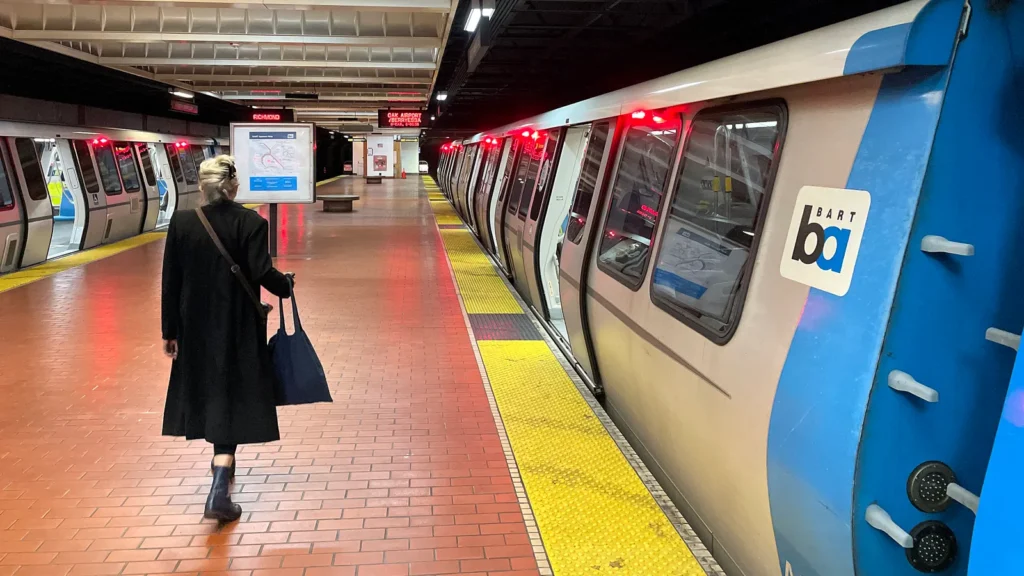
The Ninth U.S. Circuit Court of Appeals has affirmed a federal jury’s verdict against the Bay Area Rapid Transit (BART) system, siding with former employees who alleged religious discrimination after being denied exemptions from the agency’s COVID-19 vaccine mandate. This pivotal decision, which follows the Supreme Court’s landmark 2023 ruling in Groff v. DeJoy, further refines the legal landscape for religious accommodations under Title VII of the Civil Rights Act, emphasizing that employers must demonstrate a "substantial" hardship to deny such requests. The appellate court’s analysis underscores the critical need for individualized assessments of accommodation requests, particularly when evaluating potential safety risks.
The ruling, delivered in the months preceding this September 2026 report, adds to the Ninth Circuit’s extensive body of jurisprudence on vaccine mandates and religious freedom, reinforcing a higher bar for employers seeking to deny accommodations. It highlights that general appeals to safety, without specific evidence of substantial burden within the context of the employer’s operations, are insufficient to justify refusal. This outcome is poised to have significant implications for public and private sector employers across the Ninth Circuit’s jurisdiction, influencing how organizations approach religious exemption policies in future public health crises or similar workplace requirements.
The 9th Circuit’s Affirmation in the BART Case
The case centered on a group of former BART employees who sought religious exemptions from the transit agency’s mandatory COVID-19 vaccination policy, implemented during the height of the pandemic. Upon denial of their accommodation requests, these employees faced adverse employment actions, leading to a lawsuit alleging religious discrimination under Title VII. A federal jury initially found in favor of the former employees, a verdict that BART subsequently appealed.
In its review, the Ninth Circuit meticulously applied the standards established by the Supreme Court in Groff v. DeJoy. BART, like many employers during the pandemic, argued that accommodating unvaccinated employees would pose an undue hardship, primarily citing safety concerns related to disease transmission. However, the appellate court found that BART failed to sufficiently demonstrate how the proposed accommodations—such as masking or regular testing—would create a "substantial" burden on its operations. Crucially, the court noted that none of the plaintiffs held positions requiring frequent, close contact with the public or even the majority of their co-workers. This distinction proved vital in the court’s assessment, as it suggested that less restrictive alternatives could have effectively mitigated any perceived risks without fundamentally altering BART’s business operations or imposing significant costs.
The appellate court’s decision did not dismiss the concept of safety risks entirely, but rather clarified that such risks, like any other category of potential hardship, must be capable of justification and demonstrate a substantial burden. The ruling implicitly challenges employers to move beyond generic safety claims and provide concrete evidence of how a specific accommodation would genuinely disrupt operations or impose significant costs, in line with the heightened standard set by Groff.
Reshaping Religious Accommodation: The Groff v. DeJoy Precedent
The legal framework for religious accommodation in the American workplace underwent a significant transformation with the Supreme Court’s unanimous decision in Groff v. DeJoy in June 2023. Prior to Groff, the prevailing standard for "undue hardship" under Title VII, largely influenced by the 1977 Trans World Airlines, Inc. v. Hardison ruling, was interpreted by many courts to mean anything more than a "de minimis" (minimal) cost or burden to the employer. This low bar often made it relatively easy for employers to deny religious accommodation requests.
Groff v. DeJoy involved a U.S. Postal Service employee, Gerald Groff, who sought a religious exemption from working on Sundays due to his evangelical Christian beliefs. The Supreme Court, in overturning the "de minimis" standard, clarified that "undue hardship" requires an employer to show that granting an accommodation would result in "substantial increased costs in relation to the conduct of the employer’s particular business." This new, higher standard mandates a more rigorous analysis, compelling employers to evaluate accommodation requests more thoroughly and to expend greater effort to find reasonable solutions before resorting to denial. The Court emphasized that this assessment must consider the "overall context of an employer’s business," including its size, operating costs, and the nature of its specific operations. The Groff decision fundamentally shifted the balance, placing a greater burden on employers to justify denials of religious accommodation requests.
The Ninth Circuit’s application of Groff in the BART case exemplifies this paradigm shift. Where BART might previously have successfully argued undue hardship based on a minimal impact or a general safety concern, the post-Groff standard demanded a more robust demonstration of substantial increased costs or operational disruption. The court’s detailed examination of the employees’ roles and the feasibility of alternatives like masking and testing directly reflects the Groff mandate for a contextual and substantial hardship analysis.
Navigating "Undue Hardship" and Workplace Safety
The Ninth Circuit’s ruling provides crucial guidance on how "undue hardship" interacts with workplace safety, a paramount concern for employers, particularly during public health emergencies like the COVID-19 pandemic. The court explicitly stated that "common sense dictates that safety risks, like any other category of risk, are capable of justification." This declaration means that while safety remains a legitimate consideration, employers cannot simply invoke "safety" as a blanket reason to deny an accommodation. Instead, they must articulate precisely how a religious accommodation would create a substantial safety risk that cannot be mitigated by reasonable alternatives and would indeed impose significant costs or operational burdens.
This nuance was starkly illustrated by the Ninth Circuit’s contrasting decision in a 2025 case involving a group of firefighters in Washington state who also sought religious exemptions from a COVID-19 vaccine mandate. In that instance, the court sided with the fire department, recognizing that firefighters provide essential emergency and life-saving services that necessitate constant, close interface with the public and co-workers in high-stakes situations. The department also faced serious financial and operational hardships, including staffing shortages and compromised emergency response capabilities, had it accommodated the plaintiffs. The inherent nature of emergency services, where even a single unvaccinated individual could pose a significant and immediate risk to public safety and departmental capacity, met the "substantial hardship" threshold.
The distinction between the BART case and the firefighter case is critical for employers. It underscores that the "substantial hardship" analysis is highly fact-specific. For employees in roles with limited public interaction or where alternative mitigation measures (like masking, testing, or even remote work) are feasible, the employer’s burden to prove undue hardship is significantly higher. Conversely, for front-line workers in critical public services, healthcare, or roles demanding unavoidable close contact, the bar for demonstrating undue hardship due to safety concerns may be met more readily, provided the employer can clearly articulate the substantial impact.

A Broader Look at Religious Accommodation in the 9th Circuit
The Ninth Circuit has been a particularly active venue for litigation concerning COVID-19 vaccine mandates and religious accommodation, offering several other notable rulings that shape the interpretation of Title VII. These decisions highlight not only the "undue hardship" component but also other critical aspects of religious discrimination law.
One such aspect involves the requirement that an employee’s beliefs, practices, or observances be both "religious in nature" and "sincerely held." In a separate decision, the Ninth Circuit held that a plaintiff’s objection to a vaccine mandate was "personal and secular" rather than a bona fide religious belief. This case serves as a reminder that not every deeply held conviction qualifies for religious accommodation under Title VII; the belief must genuinely stem from a religious tenet or practice. Employers, therefore, have a limited but important role in assessing the religious nature and sincerity of a belief, though they must do so cautiously and without probing the theological validity of the belief itself.
Another significant ruling from the Ninth Circuit, handed down in July 2026, clarified that an employee’s "previous vaccinations did not necessarily bar" her religious accommodation request with respect to a COVID-19 vaccine mandate. This decision addressed a common employer argument that an individual’s prior vaccination history (e.g., for measles or polio) negated the sincerity of a current religious objection to a new vaccine. The court’s stance acknowledges that religious beliefs can evolve or be applied differently in various contexts, preventing employers from using past medical decisions as an automatic disqualifier for current religious accommodation requests. This adds another layer of complexity to the individualized assessment process, requiring employers to focus on the current belief and its sincerity rather than making assumptions based on historical data.
Aggressive Enforcement: The EEOC’s Role
Beyond appellate court rulings, federal regulators have demonstrated an aggressive posture in pursuing penalties against employers alleged to have improperly denied COVID-19 vaccination accommodation requests. The U.S. Equal Employment Opportunity Commission (EEOC), the federal agency responsible for enforcing anti-discrimination laws, has been particularly active in this area.
In the past year alone, the EEOC has secured two multi-million-dollar settlement agreements stemming from claims of religious discrimination related to vaccine mandates. One significant settlement amounted to $15 million, while another exceeded $4 million, compensating numerous employees who claimed their religious exemption requests were unlawfully denied. These substantial figures underscore the EEOC’s commitment to holding employers accountable and signal the significant financial risks associated with non-compliance.
Furthermore, the EEOC has explicitly cited vaccine religious accommodation as one of many planks in its broader efforts to address anti-Christian workplace bias. The agency’s presidential task force has published reports and initiatives aimed at eradicating various forms of religious discrimination, with a particular emphasis on protecting Christian employees from bias. This strategic focus indicates that religious accommodation claims, especially those related to vaccine mandates, are not isolated incidents but part of a larger enforcement agenda, ensuring continued scrutiny of employer practices in this domain. These actions reinforce the message that employers must take religious accommodation obligations seriously, backed by the threat of considerable financial penalties and reputational damage.

The Ongoing Dialogue: Religious Freedom, Public Health, and Employer Responsibilities
The ongoing legal battles surrounding COVID-19 vaccine mandates and religious accommodation underscore a fundamental tension between an employer’s responsibility to maintain a safe workplace, public health imperatives, and an individual’s right to religious freedom. During the peak of the pandemic, employers, often under immense pressure from public health authorities and internal safety concerns, implemented mandates aimed at curbing disease transmission and protecting their workforce and customers. These policies, while rooted in legitimate public health goals, invariably clashed with the religious beliefs of some employees, leading to a wave of litigation across various sectors.
The evolution of case law, from the "de minimis" standard to the "substantial hardship" threshold established by Groff v. DeJoy, reflects society’s grappling with how to balance these competing interests. Courts are progressively demanding more from employers, requiring them to engage in a robust, individualized, and well-documented interactive process to explore all reasonable accommodation options. The public health context adds a unique layer of complexity, as employers must weigh the scientific consensus on disease prevention against the statutory protections for religious exercise. This dialogue is not merely legal; it reflects broader societal values regarding individual autonomy, collective well-being, and the role of faith in the public sphere.
Implications for Employers and the Future Landscape
The Ninth Circuit’s affirmation in the BART case, combined with the Groff v. DeJoy precedent and the EEOC’s aggressive enforcement, carries significant implications for employers across all sectors:
- Heightened Burden of Proof: Employers now face a substantially higher burden to justify the denial of religious accommodation requests. General claims of operational inconvenience, administrative burden, or even unquantified safety risks are unlikely to suffice.
- Mandatory Individualized Assessment: A one-size-fits-all approach to vaccine mandates or other potentially conflicting workplace policies is legally perilous. Employers must engage in an individualized, interactive process with each employee seeking accommodation, thoroughly exploring all potential reasonable accommodations and documenting the analysis of any claimed undue hardship.
- Rigorous Documentation: Comprehensive documentation of the interactive process, the specific reasons for any denial, and the analysis of "substantial hardship" is critical. This documentation will be paramount in defending against future discrimination claims.
- Increased Litigation Risk and Costs: The shift in the legal standard and the EEOC’s active enforcement suggest an increased risk of litigation and significant financial penalties for non-compliant employers. Settlement amounts in recent EEOC cases demonstrate the high cost of failing to adequately accommodate religious beliefs.
- HR Department Challenges: Human Resources professionals will require enhanced training on religious accommodation law, particularly the nuances of Groff v. DeJoy and its application to specific job roles and workplace contexts. Developing robust and legally compliant accommodation policies will be a priority.
- Impact on Future Public Health Crises: These rulings will undoubtedly influence how employers respond to future public health emergencies requiring similar mandates. The focus will be on tailoring policies to specific job functions and demonstrating substantial hardship for each denial, rather than implementing broad, undifferentiated requirements.
- Legal Clarity, Yet Remaining Complexity: While Groff provided much-needed clarity on the "undue hardship" standard, the application of this standard to the myriad of workplace scenarios remains complex. Distinguishing between a sincerely held religious belief and a personal preference, and accurately assessing the "substantiality" of hardship in diverse operational contexts, will continue to be areas of legal challenge and ongoing development.
As the legal landscape continues to evolve, employers must remain vigilant, proactive, and thoroughly informed to navigate the intricate balance between maintaining a productive and safe work environment and upholding the religious freedom rights of their employees. The BART decision serves as a powerful reminder that an employer’s obligations under Title VII demand meticulous attention and a genuine commitment to accommodation.