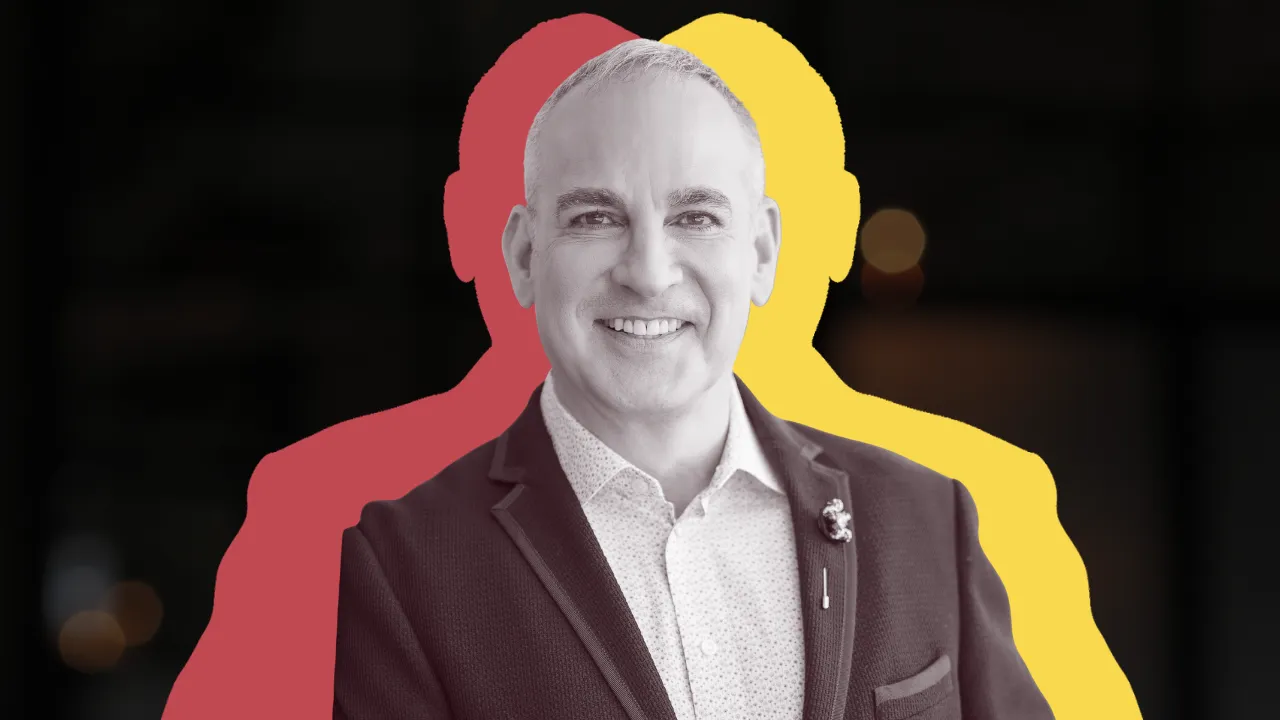
The prevailing leadership challenge of our era is not necessarily the presence of overtly poor management, but rather the widespread existence of leaders who, while performing adequately in stable times, are now ill-equipped to navigate the profound uncertainty their employees are experiencing. This critical insight was a cornerstone of a recent discussion with David Grossman, founder and CEO of The Grossman Group, a renowned executive coach and expert in leadership and change communication. Grossman articulated his views during an episode of the Future of Work® Podcast, where he explored the evolving demands on leadership, particularly in the context of accelerating AI integration within the professional landscape. His central thesis underscores a widening and increasingly consequential chasm between what constitutes merely "good" leadership and what is now required to be "exceptional."
This discourse stems from the broader context of a rapidly transforming global economy, where technological advancements, geopolitical shifts, and evolving workforce expectations have created an environment of perpetual flux. The traditional models of leadership, often built for predictable environments, are proving insufficient to address the anxieties and demands of a workforce grappling with constant change. The podcast episode, recorded in late 2026, sought to unpack these challenges and offer actionable insights for leaders aiming to thrive amidst this dynamic environment.
The Peril of "Good Enough" Leadership
Research conducted by The Grossman Group in collaboration with The Harris Poll has illuminated the distribution of leadership effectiveness within organizations. The findings reveal a concerning landscape: 16% of leaders are categorized as outdated, 30% as exceptional, and a substantial 54% as "good." While a majority of leaders falling into the "good" category might initially appear as a positive indicator, Grossman’s analysis uncovers a significant deficit in this seemingly stable majority. Under the stewardship of these "good" leaders, less than 20% of employees report feeling truly seen, heard, or that they are achieving their full potential.
This disparity represents a critical blind spot for many organizations. While the challenges posed by demonstrably ineffective leaders are typically addressed through performance improvement plans, coaching, or senior management intervention, the larger opportunity lies in elevating the capabilities of competent leaders. These individuals, often trained for more predictable operational environments, now face the complex task of managing teams experiencing unprecedented levels of change, uncertainty, and heightened emotional strain. The implication is that organizations must proactively invest in developing these "good" leaders, equipping them with the foresight and adaptive skills necessary for the modern workplace.
AI: A Catalyst for Enhanced Personal Leadership
Artificial intelligence, in particular, presents a complex challenge, often perceived differently by employees than by the executive leadership framing its implementation. From an organizational perspective, AI can be viewed through the lens of technological adoption, productivity enhancement, or strategic cost-saving measures. However, for the individual employee, AI often triggers more deeply personal questions about their future role and relevance within the company. Inquiries such as "Do I still matter?" and "Where do I fit?" become paramount. This makes the integration of AI not merely a technological undertaking but a profound change management initiative.
Unlike a traditional software rollout with a clearly defined launch date, AI is characterized by its continuous evolution. The emergence of new tools, capabilities, and applications creates an ongoing stream of change, rather than a discrete transition that employees can eventually move beyond. This persistent evolution demands a leadership approach that is agile and responsive, capable of guiding employees through perpetual adaptation.
A common organizational misstep, as highlighted by Grossman, is the communication of AI initiatives primarily in terms of their benefits to the organization – increased efficiency, cost reduction, or competitive advantage. This top-down framing can inadvertently steer employee focus towards concerns about job security, overshadowing the potential for AI to augment their roles, foster new skill development, and create novel opportunities. The lack of a clear employee-centric narrative can lead to apprehension and resistance, undermining the intended benefits of AI adoption.

The "AI Cover Story" and the Erosion of Trust
Grossman further identifies a phenomenon he terms the "AI cover story." This refers to the tendency for some organizations to attribute workforce reductions or restructuring efforts to AI, rather than taking direct accountability for business decisions, market shifts, or strategic realignments. When an organization needs to downsize its workforce, the opportunity exists to communicate the rationale transparently, accept responsibility for the decision, and treat affected employees with dignity and respect. Crucially, leaders must also articulate the implications of these changes for the remaining workforce.
This is where the alignment between communication and action becomes critical. Employees are more likely to place their trust in leaders when their words about the future are consistently reflected in their deeds. When AI is used as a convenient, albeit disingenuous, justification for workforce changes, it can erode employee trust and create a climate of suspicion. The long-term consequence of such a practice is a diminished capacity for open communication and a weakened foundation for organizational resilience. The historical context of workforce adjustments often involves difficult decisions, but the manner in which these decisions are communicated and enacted profoundly impacts employee morale and loyalty. For instance, during the economic downturns of the early 2020s, many companies faced significant layoffs, and the transparency of their communication strategies was widely scrutinized. The current era, with AI as a new technological frontier, presents a similar, albeit technologically nuanced, challenge for leadership accountability.
Exceptional Leadership: The Foundation of Personal Connection
Grossman’s research pinpoints six key qualities that differentiate exceptional leaders from their "good" counterparts, with gratitude emerging as the paramount trait. The distinction between "good" and "exceptional" leadership in this regard is subtle yet profound. While good leaders may acknowledge an employee’s contributions, exceptional leaders recognize both the work performed and the individual behind it. This requires a deep understanding of employees, enabling appreciation to be genuinely meaningful. A perfunctory "great job" lacks the impact of acknowledging the specific effort, prevailing circumstances, or personal commitment that fueled an employee’s success.
For Grossman, this translates to leaders needing to understand each employee’s unique narrative – their motivations, values, aspirations, and career goals. This personalized approach fosters a stronger sense of connection and loyalty. Furthermore, gratitude is most effective when integrated as a consistent leadership habit, rather than an infrequent gesture. The more regularly leaders acknowledge and celebrate meaningful contributions, the more authentic and ingrained this behavior becomes, creating a positive feedback loop of recognition and engagement. The evolution of employee engagement strategies over the past decade has increasingly emphasized personalized recognition, moving beyond generic acknowledgments to more tailored forms of appreciation.

The Ascendancy of Human Skills in Leadership
Further analysis from Grossman’s research indicates that nine out of the top ten qualities associated with exceptional leaders are intrinsically human-centric, with transparency being the sole exception. This places skills such as active listening, empathy, the ability to inspire, and the cultivation of a shared sense of purpose at the very core of effective leadership. Crucially, these are not innate talents but learnable competencies.
Organizations can actively foster the development of these skills through structured training programs, targeted coaching, and by ensuring that senior leadership visibly models these behaviors. Leaders can also play a pivotal role in helping employees identify their inherent strengths and providing opportunities for them to leverage these talents. Moreover, creating clear developmental pathways for continuous learning and career progression is essential.
A significant weakness identified in the research is the pervasive feeling among employees that they are not reaching their full potential. This sentiment, when left unaddressed, can lead to disengagement, reduced productivity, and increased attrition. Exceptional leaders actively work to mitigate this by understanding individual career aspirations and aligning them with organizational needs and opportunities.
AI’s Role: Elevating, Not Replacing, Leadership
As AI continues to reshape the operational landscape of businesses, its implementation and the leadership guiding it will become increasingly critical differentiators. The true competitive advantage may lie not in the AI technology itself, but in how effectively leaders help employees understand their evolving roles, their unique contributions, and the growth trajectories available to them within a changing work environment.

This necessitates a communication strategy that extends far beyond a simple announcement of an AI rollout. It requires providing employees with a clear vision of the organization’s future direction, articulating what that future means for them individually, and identifying concrete opportunities for learning and professional development along the way. While AI may fundamentally alter the nature of work, the human element of leadership remains indispensable in helping individuals navigate these transformations, make sense of their evolving roles, and find meaning in their contributions.
Ultimately, David Grossman posits that the central challenge of modern leadership lies in managing inherent uncertainty. Since this uncertainty is unlikely to dissipate, the variable that leaders can most effectively control is their response to it. Exceptional leadership, therefore, is defined by the cultivation of human skills that empower employees to feel seen, heard, and capable of realizing their full potential, even as the organization undergoes continuous change. This requires a paradigm shift from managing tasks to nurturing individuals, fostering an environment where technological advancement is coupled with robust human support and development. The implications for organizational strategy are clear: investing in human-centric leadership development is no longer a secondary concern, but a primary driver of success in the age of AI and perpetual change.