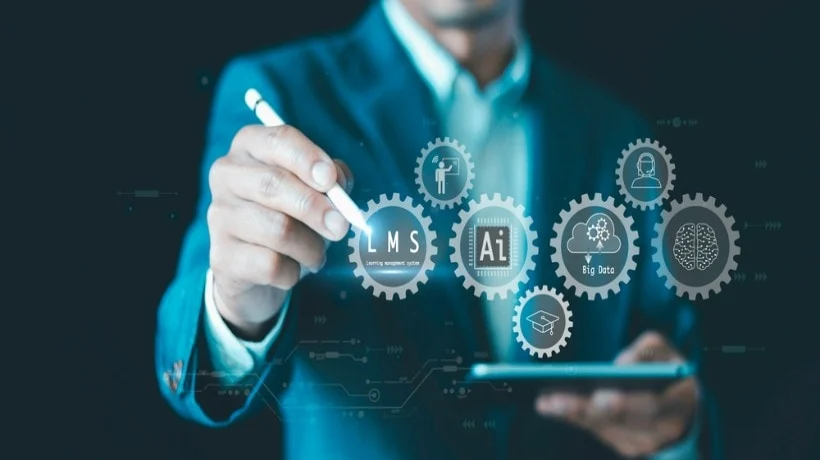
The global corporate training market is undergoing a fundamental structural shift as artificial intelligence transitions from a speculative luxury to the core engine of workforce development. For decades, the Learning Management System (LMS) functioned as a digital filing cabinet—a centralized repository designed primarily for administrative oversight, compliance tracking, and record-keeping. However, the rise of the Learning Experience Platform (LXP) in the late 2010s signaled a move toward user-centricity, prioritizing content discovery and social learning over mere completion metrics. Today, the integration of Generative AI (GenAI) and machine learning is not just adding new features to these platforms; it is dismantling the traditional boundaries between them and redefining how organizations cultivate human capital.
The Evolution of Learning Technology: A Chronological Perspective
To understand the current AI-driven disruption, one must examine the historical trajectory of the industry. In the late 1990s and early 2000s, the LMS emerged as the "system of record." Its primary purpose was to ensure that employees met regulatory requirements. The focus was on "push" learning—assigning specific modules to specific people at specific times.
By 2015, the limitations of the LMS became apparent. Employees found the interfaces clunky and the content irrelevant to their daily tasks. This birthed the LXP era, led by innovators who sought to mirror the consumer experience of platforms like Netflix or Spotify. The LXP introduced "pull" learning, where algorithms suggested content based on user interest.
Starting in 2023, the "Intelligence Era" began. The focus shifted from merely hosting or recommending content to generating it, personalizing it in real-time, and mapping it to granular organizational skills. We are now seeing a convergence where LMS vendors are adding "experience" layers and LXP vendors are adding "compliance" and "administrative" backbones, all powered by a unified AI fabric.
Accelerating Production: The Efficiency Dividend
The most immediate and measurable impact of AI in the learning sector is the radical compression of the content development lifecycle. Historically, creating one hour of high-quality e-learning content could take anywhere from 40 to 180 hours of manual labor, involving instructional designers, graphic artists, and subject matter experts.
Recent industry data underscores a massive shift in this dynamic. A 2026 industry survey of over 400 Learning and Development (L&D) professionals revealed that 87% of practitioners are already leveraging AI tools in their daily workflows. The primary drivers are not high-concept pedagogical shifts but practical production efficiencies. Voice generation, automated quiz drafting, video synthesis, and instant translation have become standard.
The survey noted that 84% of respondents cited "increased speed of production" as the most significant benefit. For an organization, this means the ability to respond to market changes in days rather than months. If a new safety regulation is passed or a new software tool is launched, AI can ingest the source documentation and output a multi-language training suite almost instantly. However, this efficiency creates a new challenge: the risk of content bloat. As the cost of production drops to near zero, the role of the L&D professional shifts from "creator" to "curator and editor," ensuring that the deluge of AI-generated material remains accurate and pedagogically sound.
The Death of the Search Bar: Conversational Discovery
The traditional method of finding learning—typing keywords into a search bar and scrolling through a list of course titles—is being replaced by natural language processing (NLP). In the legacy LMS model, a user had to understand the organization’s specific "taxonomy." If a user searched for "how to talk to my boss" but the course was titled "Vertical Communication Strategies," the search might fail.
AI-driven discovery removes this friction. Modern LXPs now utilize Large Language Models (LLMs) that allow users to describe their problems in plain language. A manager facing a difficult performance review can ask, "I have an employee who is underperforming but reacts defensively to feedback; what should I do?" The AI does not just point to a course; it can extract specific insights from various videos, documents, and podcasts, providing a synthesized answer immediately while suggesting deeper modules for later study.
This "just-in-time" learning model shifts the platform from a destination one visits occasionally to a performance support tool integrated into the flow of work. The data suggests that this accessibility significantly increases engagement rates, as learners are more likely to interact with a system that provides immediate utility.
From Recommendation to Adaptation: The New Personalization
Personalization in the LXP space has historically been limited to "collaborative filtering"—the "people who liked this also liked that" approach. AI is pushing this into the realm of "adaptive learning."
While a recommendation engine suggests a different course, an adaptive system changes the content within the course based on the learner’s performance. If an employee demonstrates mastery of a particular concept during an initial assessment, the AI skips the introductory material and moves directly to advanced applications.
Furthermore, AI can now provide "contextual personalization." By integrating with an employee’s calendar, email, or project management tools, a learning platform can recognize that an employee has a project management deadline approaching and proactively suggest a 5-minute refresher on "Gantt Chart Optimization." This level of integration represents the holy grail for L&D teams: delivering the right knowledge at the exact moment of need.
The Shift Toward a Skills-Based Economy
Perhaps the most significant strategic change is the transition from "course-based" tracking to "skills-based" intelligence. Traditional LMS reporting focuses on completion rates and test scores. However, executive leadership is rarely interested in how many people finished a course; they want to know if the organization has the capabilities required to compete.
AI is uniquely capable of building "Skills Graphs." By analyzing job descriptions, resumes, and project outcomes, AI can map the latent skills within a workforce and identify "skills gaps." Instead of reporting that "500 people completed the Digital Transformation course," an AI-enabled LMS can report that "the organization has increased its proficiency in Python and Data Visualization by 15% this quarter."
This shift requires a robust data infrastructure. For AI to accurately map skills, organizations must maintain a consistent "skills taxonomy"—a common language for what a skill is and how it is measured. Vendors are increasingly competing on their ability to provide these pre-built, AI-maintained taxonomies that evolve as the market changes.
The LMS as a Decentralized Ecosystem
The dominance of the LMS as the "backbone" of the corporate tech stack is being challenged. The 2026 Synthesia survey found that only 47% of L&D professionals expect the LMS to remain the central hub of their ecosystem over the next three years. The remaining 53% anticipate a future where learning is decentralized.
In this vision, the "learning system" becomes an invisible layer. An employee might ask a question in Microsoft Teams or Slack, and an AI agent—connected to the company’s LXP—provides the answer and records the "learning event" in the background. The LMS still exists to handle the heavy lifting of compliance and audit trails, but it is no longer the primary interface for the user.
For LMS vendors, this is an existential threat. To remain relevant, they must move beyond being "databases of record" and become "engines of integration," capable of pushing and pulling data across a vast array of productivity tools.
Governance, Privacy, and the UNESCO Framework
As these systems become more "intelligent," they require more data. To provide a truly personalized experience, an AI needs to know an employee’s role, their past performance, their career aspirations, and perhaps even their communication style. This raises significant concerns regarding data privacy and ethical AI use.
UNESCO’s recent guidance on Generative AI in education highlights the necessity of human agency and data protection. In a corporate context, an AI that incorrectly assesses an employee’s skills could unfairly limit their career progression or lead to biased hiring and promotion decisions.
Industry analysts suggest that the next wave of competition in the LMS/LXP market will not be about who has the best AI, but who has the most "transparent" and "governable" AI. Organizations are increasingly demanding "Explainable AI" (XAI)—systems that can show the reasoning behind a recommendation or a skill assessment to ensure fairness and compliance with labor laws.
Conclusion: The Competition for Usefulness
The hype surrounding AI in the learning sector is reaching a fever pitch, but the long-term winners will be those who prioritize utility over novelty. The "revolution" is not found in a chatbot that can write a poem about corporate compliance; it is found in the subtle, high-impact improvements to the user and administrator experience.
The real competition in the LMS and LXP landscape is now a race toward three goals:
- Relevance: Delivering information that solves immediate problems.
- Clarity: Providing leaders with a clear view of organizational capabilities.
- Efficiency: Reducing the friction between needing a skill and acquiring it.
As AI continues to mature, the distinction between "management" (LMS) and "experience" (LXP) will likely vanish, leaving behind a single, intelligent "Learning and Performance Ecosystem." For the L&D professional, the challenge is no longer just managing a platform, but managing the data and the ethical frameworks that allow these platforms to function effectively. The future of the industry lies not in the technology itself, but in how that technology is harnessed to foster a culture of continuous, verifiable, and meaningful growth.