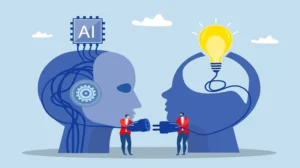
The global corporate landscape is currently undergoing a seismic shift in how workforce competencies are developed, maintained, and scaled. As the half-life of professional skills continues to shrink—now estimated by industry analysts to be less than five years in many technical sectors—organizations are increasingly turning to a tripartite synergy of Artificial Intelligence (AI), sophisticated pedagogical frameworks, and modern Learning Management Systems (LMS). This convergence is no longer a luxury for early adopters but a strategic necessity for enterprises seeking to maintain a competitive edge in a volatile economic environment. By integrating these technologies, companies are reporting a drastic reduction in the time required to move from educational concept to functional deployment, transforming the traditional Learning and Development (L&D) department from a cost center into a primary driver of operational agility.
The Technological Integration of AI in Instructional Design
The integration of Artificial Intelligence into the Instructional Design (ID) workflow represents the most significant change to educational methodology since the advent of the internet. Rather than replacing the human element, AI acts as a force multiplier for instructional architects. By utilizing Large Language Models (LLMs) and generative media tools, L&D teams can now automate the most labor-intensive aspects of the ADDIE (Analysis, Design, Development, Implementation, and Evaluation) and SAM (Successive Approximation Model) frameworks.
In the analysis phase, AI tools can process vast amounts of internal data, including performance reviews and project outcomes, to identify specific skill gaps within a workforce. During the development phase, what once took months can now be achieved in days. AI-driven platforms assist in generating comprehensive storyboards, technical scripts, and even interactive assessments. This acceleration is critical; according to recent industry benchmarks, the time required to produce one hour of high-quality e-learning content has historically ranged from 40 to 150 hours. Early data from firms adopting AI-assisted workflows suggests a reduction in these timelines by as much as 40% to 60%, allowing organizations to respond to market shifts in real-time.
A Chronological Evolution of Corporate Learning Systems
To understand the current state of AI-driven training, it is necessary to examine the timeline of corporate education development over the last four decades. This progression illustrates a move from static, centralized instruction to dynamic, decentralized, and personalized ecosystems.
- The 1980s – 1990s (The Analog and Early Digital Era): Training was primarily conducted through in-person seminars, paper manuals, and later, basic computer-based training (CBT) delivered via CD-ROMs. Learning was linear, expensive to scale, and difficult to measure.
- The 2000s (The Rise of the LMS): The first generation of Learning Management Systems emerged, allowing companies to host content online. However, these systems were often criticized for poor user interfaces and a "check-the-box" approach to compliance training.
- The 2010s (Social and Mobile Learning): The proliferation of smartphones and social media led to the "Learning Experience Platform" (LXP). Training became more bite-sized (microlearning) and accessible on the go, though it often lacked a cohesive pedagogical structure.
- 2020 – Present (The AI and Personalization Era): The COVID-19 pandemic accelerated the digital transformation of L&D by necessity. Post-pandemic, the focus has shifted to the "Strategic Learning Architect" model, where AI, data analytics, and cloud-based LMS platforms create a hyper-personalized, continuous learning loop.
The Science of Learning: Grounding Technology in Andragogy
Despite the rapid advancement of technology, industry experts emphasize that tools are only as effective as the pedagogical foundations upon which they are built. For corporate training to be successful, it must adhere to the principles of andragogy—the theory of adult learning pioneered by Malcolm Knowles. Unlike children (pedagogy), adult learners require a sense of autonomy, a clear understanding of the "why" behind the training, and the ability to apply new knowledge immediately to real-world problems.
Strategic instructional design now focuses on creating "active" rather than "passive" environments. This involves the use of scenario-based learning where AI can simulate complex workplace challenges, allowing employees to practice decision-making in a risk-free digital space. By respecting the existing experience of the adult learner and providing high-relevance content, organizations see significantly higher engagement rates and better long-term retention of information.
Gamification, Social Mechanics, and Engagement Data
To combat "digital fatigue," modern instructional design incorporates gamification and social learning strategies. These are not merely decorative elements but are based on neuroscientific principles of dopamine-driven reward systems. Data from recent L&D surveys indicate that gamified training modules can increase employee engagement by up to 60% compared to traditional video-based lectures.
Key tactics being deployed by global enterprises include:
- Dynamic Leaderboards and Badging: Encouraging healthy competition and providing social proof of competence.
- Branching Scenarios: Creating "choose-your-own-adventure" styles of learning that reward critical thinking.
- Collaborative Cohorts: Using the LMS to facilitate peer-to-peer feedback and social knowledge sharing, which mimics the natural way humans learn in social settings.
Technical Deployment and the Importance of User Experience (UX)
The technical infrastructure of a Learning Management System is the bridge between educational content and the learner. Even the most scientifically sound curriculum will fail if the delivery platform is cumbersome. Current trends in LMS deployment focus heavily on User Experience (UX) and User Interface (UI) design to minimize "cognitive load"—the amount of mental effort required to navigate the system itself.
Modern LMS platforms are now designed with a "mobile-first" philosophy, ensuring that training is accessible to frontline workers who may not have regular access to a desktop computer. Furthermore, the integration of Application Programming Interfaces (APIs) allows the LMS to communicate with other corporate tools like Slack, Microsoft Teams, or CRM software. This allows for "learning in the flow of work," where an employee receives a micro-learning prompt or a "how-to" video exactly when they are performing a specific task within their professional software suite.
Measuring Training Impact and Economic ROI
One of the most significant shifts in the L&D sector is the move toward rigorous, data-driven evaluation. For decades, training was viewed as an intangible asset. However, by applying the Kirkpatrick Model of Evaluation, organizations can now quantify the impact of their educational investments across four levels:
- Level 1 (Reaction): How the learners felt about the training.
- Level 2 (Learning): The increase in knowledge or capability.
- Level 3 (Behavior): The extent to which the training is applied on the job.
- Level 4 (Results): The impact on business outcomes, such as increased sales, reduced safety incidents, or improved production efficiency.
According to a 2023 report on corporate training trends, companies that utilize AI to track these metrics are 2.5 times more likely to report a positive Return on Investment (ROI) than those using traditional methods. When educational objectives are tied to Key Performance Indicators (KPIs), L&D leaders can present clear financial justifications for their budgets to C-suite executives.
Industry Reactions and Expert Analysis
The reaction from the global business community has been one of cautious optimism. Human Resources leaders note that while AI provides speed, the role of the Senior Instructional Designer has become more complex. "We are moving away from being ‘content creators’ and toward being ‘learning experience curators,’" says one industry analyst. "The challenge is no longer about finding information; it’s about filtering the noise and ensuring the AI-generated content is accurate, ethical, and aligned with company culture."
Furthermore, there is a growing consensus that the "democratization" of content creation through AI will lead to a surge in internal subject matter expertise. Employees who are experts in their fields, but perhaps not in educational theory, can now use AI tools to help them structure their knowledge into digestible formats for their colleagues, further fostering a culture of continuous learning.
Broader Implications and the Future of Enterprise Learning
Looking ahead, the future of corporate training lies in hyper-personalization. Future iterations of AI-driven LMS platforms will likely include "Adaptive Assessment Engines" that change the difficulty of a course in real-time based on the learner’s performance. Real-time AI tutoring, available 24/7, will provide employees with instant answers to technical questions, reducing the burden on human managers and trainers.
The broader implication for the global economy is a more resilient and agile workforce. As industries are disrupted by automation and changing trade patterns, the ability to rapidly reskill thousands of employees will be the defining characteristic of successful 21st-century organizations. The fusion of pedagogical expertise, AI-driven efficiency, and robust digital infrastructure is creating a new paradigm where learning is not a discrete event, but a continuous, integrated part of the professional experience.
Conclusion
The evolution of corporate training through AI and modern LMS platforms represents a fundamental shift in organizational strategy. By combining the speed of artificial intelligence with the proven principles of adult learning and the accessibility of high-UX digital platforms, corporations can finally bridge the gap between theoretical knowledge and practical performance. As these technologies continue to mature, the focus will remain on the human element—ensuring that technology serves to enhance, rather than overshadow, the growth and development of the global workforce. This strategic approach ensures that training is no longer a mere administrative requirement but a high-return investment that drives measurable business success and long-term sustainability.