The human resources profession, often subject to skepticism and predictions of its demise, is not only surviving but is demonstrably growing and evolving, according to recent analyses of labor market data. Despite ongoing discussions, including a notable statement at a recent SHRM conference suggesting the field faces "extinction," empirical evidence indicates a contrary trend: HR roles are in increasing demand, salaries are outpacing inflation, and the nature of HR work is transforming rather than disappearing. This analysis delves into the data to provide a comprehensive overview of the current landscape and future trajectory of human resources.
Shifting Perceptions and the SHRM Conference
For decades, human resources professionals have contended with the perception that their roles are "useless," a "waste of time," or destined for obsolescence. This sentiment is often attributed to a common managerial belief that HR competencies are innate and universally possessed. This perception was recently amplified by a declaration at the Society for Human Resource Management (SHRM) conference, as reported by Bloomberg, where a CEO reportedly stated that "the field of HR faces extinction." Such pronouncements have spurred a dialogue within the HR community about the necessity for adaptation and the potential impact of emerging technologies, particularly artificial intelligence (AI).
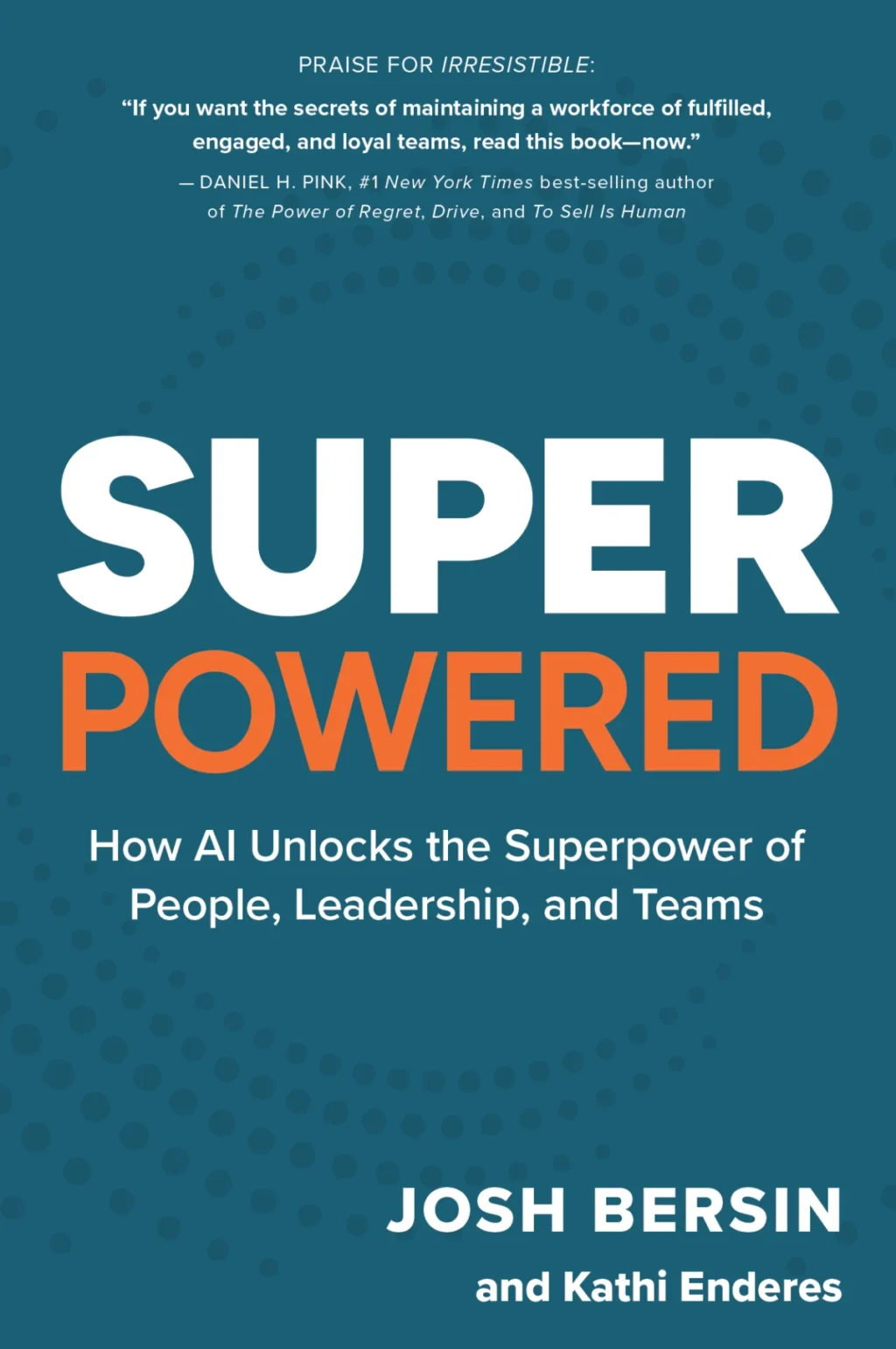
However, research and labor market data present a more nuanced and optimistic outlook. A study conducted for "HR 2030," a research initiative focused on the future of HR, suggests that while the field is indeed undergoing significant change, its importance is actually increasing. This transformation is characterized by a shift in responsibilities and a growing demand for skilled HR professionals. Further insights from forthcoming research and publications, such as the book "Superpowered," indicate a positive trend in HR job growth. A recent podcast episode dedicated to this topic elaborates on the factors driving this unexpected expansion of the HR workforce.

Unpacking the Data: HR Job Postings and Growth Trends
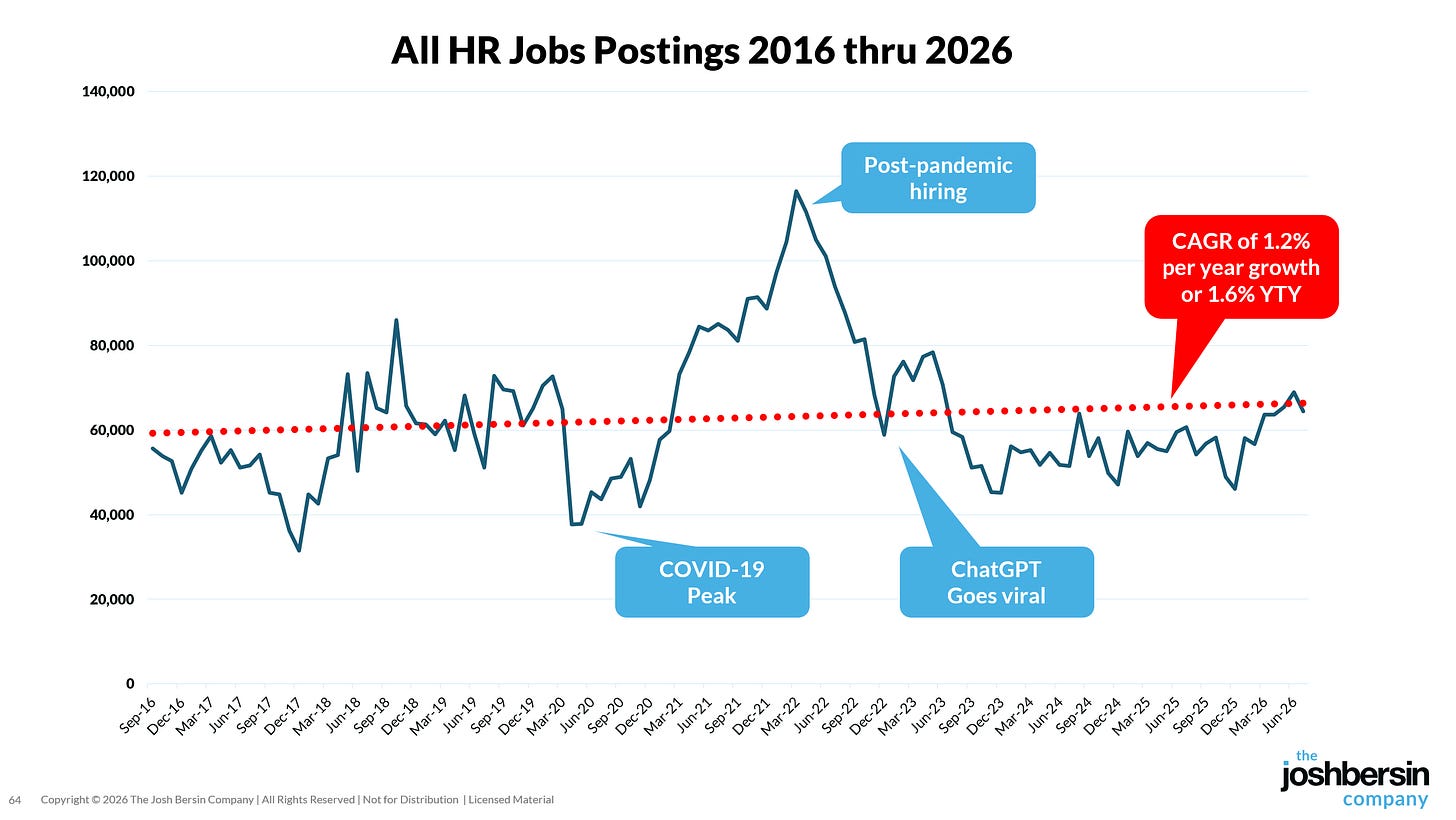
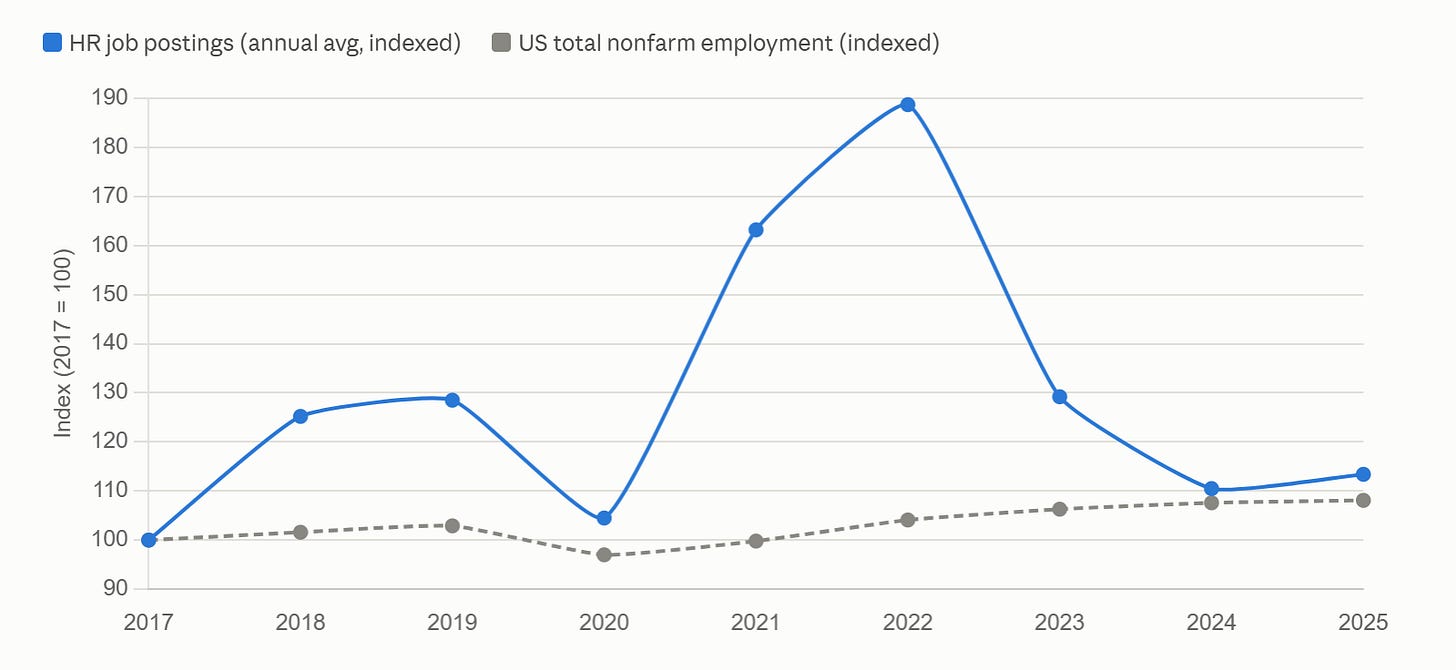
To counter the narrative of decline, an examination of real-world job market data reveals a robust and growing demand for HR professionals. Analysis of job posting data, sourced from platforms like Lightcast, which tracks a wide array of HR-related positions—including recruiters, training specialists, HR technology experts, and general HR professionals—demonstrates a consistent upward trend over the past two decades.
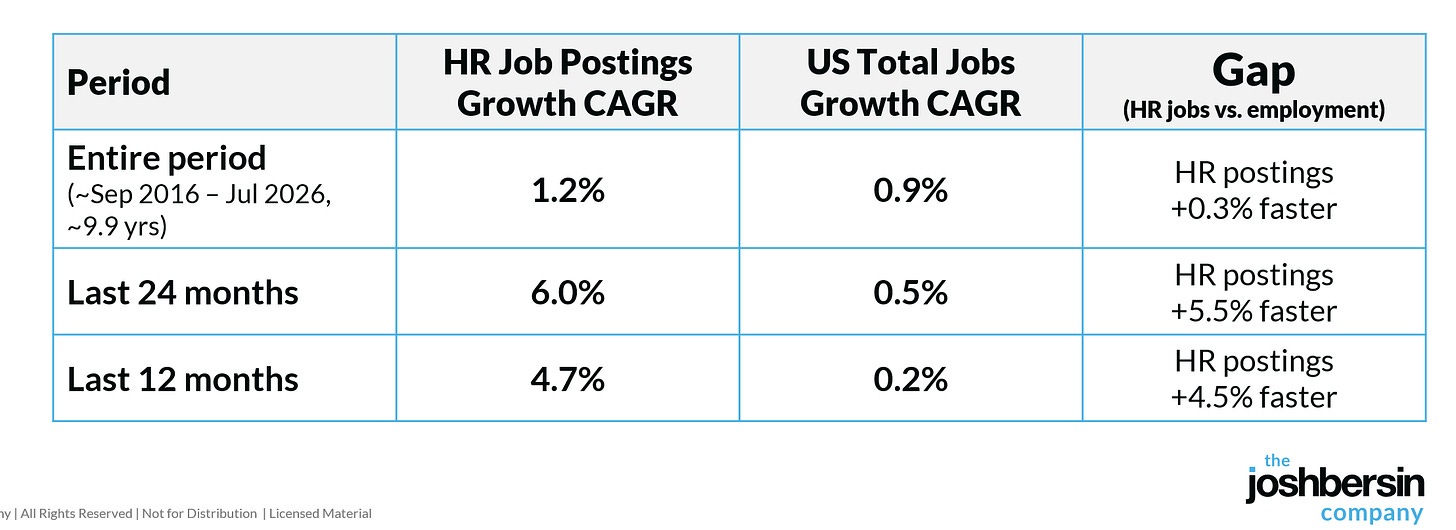
Over a 20-year period, the compound annual growth rate (CAGR) for HR job postings has been approximately 1.2% per year. This steady growth suggests a foundational and persistent need for HR functions within organizations. More strikingly, the data indicates an accelerated growth rate in recent years, particularly within the last 24 months, a period marked by significant advancements and widespread adoption of AI technologies. During this timeframe, the growth rate in HR job postings has surged to an impressive 6% per year. This recent acceleration is particularly noteworthy, occurring precisely when AI is theoretically positioned to automate many HR tasks.
Comparative Analysis: HR Job Growth vs. Total Employment
The significance of the growth in HR job postings becomes even more apparent when compared to the overall growth of the U.S. workforce. The data reveals a clear trend: HR jobs are expanding at a faster pace than total employment in the United States. This divergence suggests that companies are not only maintaining their HR departments but are actively investing in and expanding them relative to their overall workforce size.
This comparative analysis provides critical context. While the total number of jobs in the U.S. may see fluctuations, the proportional increase in HR roles indicates a deepening reliance on specialized human capital management functions. This trend challenges the assumption that automation will lead to a net reduction in HR positions. Instead, it suggests a recalibration of roles and an increased emphasis on strategic HR contributions.
The Evolution of HR Roles: From Administration to Strategic Partnership
The question then arises: what is driving this expansion, and how is the HR profession adapting to technological advancements, particularly AI? The explanation lies in a fundamental transformation of the HR role itself. The positions that are indeed declining are primarily those focused on administrative and transactional tasks—roles that are susceptible to automation. These include titles such as HR administrator, HR assistant, recruiting coordinator, and training administrator. These "industrial age" positions were primarily concerned with the process management of hiring, compensation, training, and employee support. Historically, these administrative roles constituted approximately 30-40% of the HR function, as indicated by detailed analyses of HR positions in research like HR2030 and through platforms like Galileo.
Not Disappearing, But Transforming: The Rise of Strategic HR
Instead of being eliminated, these administrative functions are being augmented or replaced by technology, freeing up HR professionals to engage in more strategic, complex, and value-added activities. The jobs that are growing and becoming more important are those that require human judgment, strategic thinking, empathy, and complex problem-solving skills.
Key Areas of Transformation:
-
HR Service Centers and Business Partners: Professionals in these roles are increasingly tasked with handling more complex employee relations issues, performance management, and nuanced employee support that goes beyond simple policy inquiries. For instance, at large organizations like Walmart and Standard Chartered, HR personnel who previously handled routine onboarding or benefits questions are now dedicating more in-depth time to critical areas such as employee performance development and addressing complex family-related needs, requiring a higher level of human interaction and problem-solving.
-
Learning & Development (L&D) and Instructional Design: The focus is shifting from the lengthy creation of traditional courses to the development of dynamic and immediate learning solutions. L&D managers and instructional designers are becoming "Superworkers," creating simulations and real-time support tools. Companies like Travelers and Polestar are leveraging these professionals to generate useful videos and content that sales, support, and engineering teams can utilize instantly, rather than spending months on extensive course development. This signifies a move towards agile and responsive learning strategies.
-
Talent Acquisition: Recruiting teams are evolving from purely administrative coordinators and schedulers to more strategic roles. This includes conducting real-time, in-depth interviews, analyzing data to better identify top candidates, and enhancing the candidate experience. The demand for recruiting jobs remains high, with a notable shift towards more in-person interviews to mitigate candidate fraud and secure higher-quality talent. Interestingly, initial expectations for AI interviewers have not fully materialized, underscoring the continued importance of human evaluation in talent acquisition.
-
Internal Analytics and Employee Engagement: HR analytics teams are moving beyond basic survey design and benchmark analysis. They are now focused on leveraging real-time internal data to gain deeper insights into employee engagement, retention drivers, and organizational health. This proactive approach reduces reliance on external consultants for fundamental analysis, empowering HR to address issues like employee disengagement and turnover more effectively.
-
HR Business Partners (HRBPs) and Leadership Support: HRBPs are increasingly being elevated to senior consultant roles, providing strategic guidance to leadership and management. Tools like Galileo are emerging to automate administrative support for leaders and employees seeking information on policies or advice, allowing HRBPs to concentrate on higher-level strategic initiatives and organizational development.
The Role of AI in Augmenting, Not Replacing
The narrative that AI will lead to mass job elimination in HR is proving to be an oversimplification. As previously explored in research on the impact of AI on employment, AI is not necessarily eliminating jobs but rather empowering individuals to perform more complex and impactful tasks. In the context of HR, AI is serving as a powerful tool to automate routine processes, analyze vast amounts of data, and provide insights, thereby augmenting the capabilities of HR professionals. This allows them to focus on the intrinsically human aspects of their roles: fostering employee well-being, driving organizational culture, developing talent, and navigating complex interpersonal dynamics.
Financial Indicators: Growing Salaries and Inflation
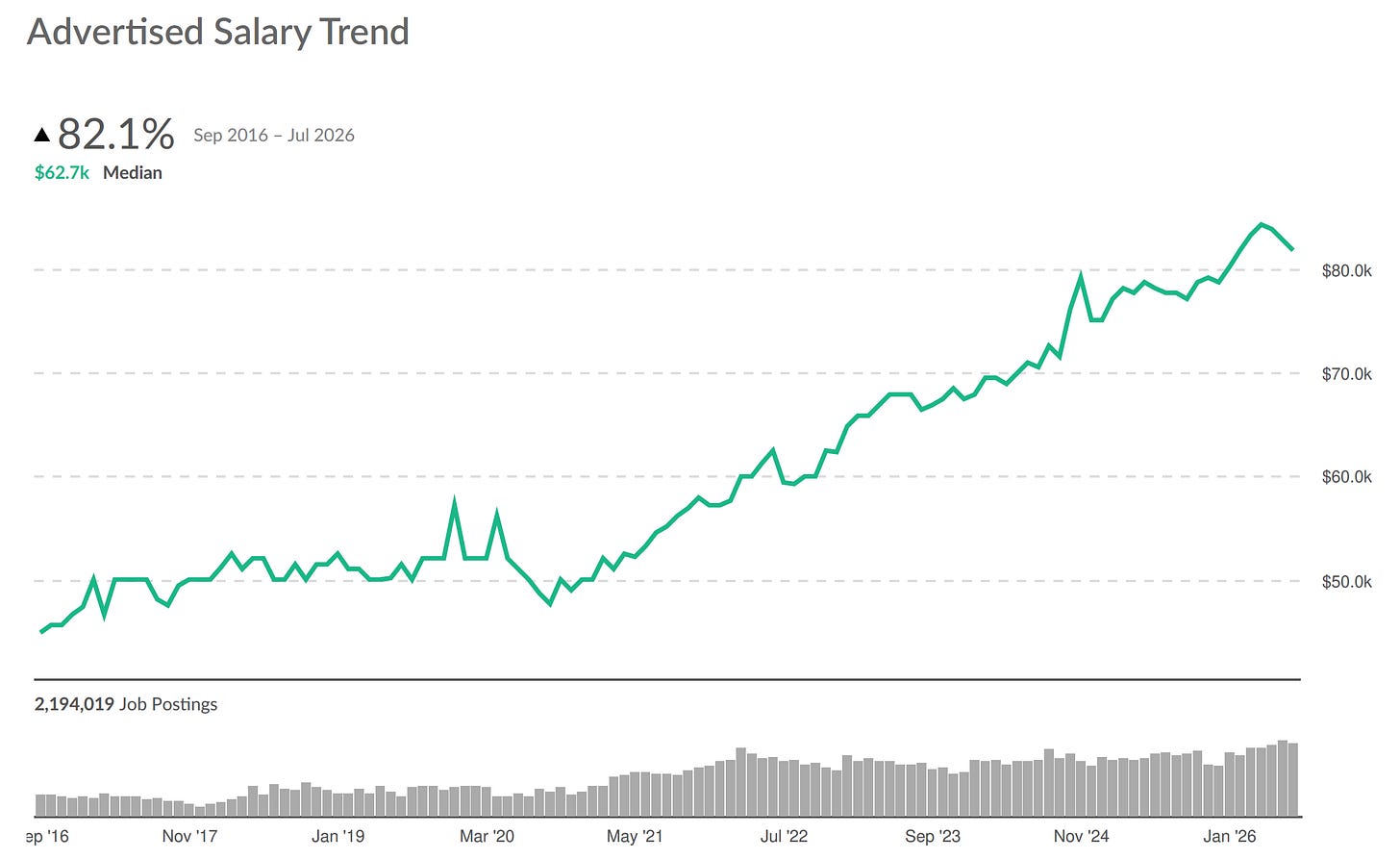
Beyond job numbers, the financial valuation of HR professionals also reflects the increasing importance and demand for their expertise. Data indicates a significant rise in HR salaries. Over the analyzed period, HR salaries have increased by approximately 82%, representing a compound annual growth rate of 3.1%. This growth rate is particularly impressive when contrasted with the U.S. inflation rate during the same period, which stood at 66% or a compound annual rate of 2.1%.
The fact that HR salaries are growing faster than inflation signifies a tangible increase in the economic value placed on HR expertise. This trend is not common across all professions and suggests that organizations are recognizing the strategic contributions of HR and are willing to invest accordingly. This financial uplift further counters the notion that HR is a low-value or dispensable function.
The Future of HR: Adaptability and Strategic Importance
The HR profession is at a critical juncture, undergoing a profound transformation driven by technological advancements and evolving business needs. The perception of HR as an administrative back-office function is rapidly fading, replaced by a vision of HR as a strategic partner integral to organizational success. The data clearly indicates that HR professionals who embrace these changes, develop new skills in areas like data analytics, AI utilization, and strategic consulting, will find themselves in high demand.
The core competencies of HR—understanding human behavior, facilitating change, fostering talent development, and ensuring a positive employee experience—are becoming even more critical in today’s complex and rapidly changing business environment. As organizations navigate the challenges of workforce planning, talent management, employee engagement, and the ethical implementation of AI, the role of skilled and strategic HR professionals will be indispensable. The future of HR is not one of extinction, but of evolution and elevated importance, positioning HR as a key driver of organizational resilience and growth.
The ongoing research and forthcoming book, "Superpowered," aim to further illuminate these trends, providing a deeper understanding of how HR professionals can harness these changes to excel in their careers and contribute meaningfully to their organizations. The Josh Bersin Institute also offers resources and certifications to support HR professionals in developing the skills needed for this evolving landscape.