In the highly competitive landscape of global talent acquisition, a robust diversity recruiting strategy is no longer merely a beneficial practice but a fundamental imperative. At the heart of this strategy lies the corporate diversity page, a dedicated digital showcase of an organization’s commitment to Diversity, Equity, and Inclusion (DE&I). A comprehensive review of over 200 such pages reveals that while many companies acknowledge the importance of DE&I, a select few distinguish themselves through exemplary content, transparency, and a genuine portrayal of their inclusive culture. This analysis delves into the critical role of these pages, examines the characteristics that make them effective, and highlights leading examples from global industry giants that are setting new benchmarks.
The Strategic Imperative of Diversity Pages in Modern Recruitment
A diversity page, often hosted on a company’s main corporate or career site, serves as a vital recruiting microsite specifically focused on DE&I. Its primary function is to articulate an organization’s values, initiatives, and progress in fostering an inclusive environment. In an era where candidates increasingly scrutinize potential employers’ social responsibility and ethical frameworks, a well-crafted diversity page acts as a powerful beacon, signaling an authentic commitment that extends beyond mere rhetoric.
The benefits of maintaining an optimized diversity page are multifaceted, impacting both talent attraction and employer branding. Firstly, it enhances a company’s employer brand, portraying it as a progressive and desirable workplace for a diverse pool of talent. Secondly, it directly addresses the evolving expectations of job seekers; numerous studies indicate that a significant percentage of candidates, particularly millennials and Gen Z, actively research a company’s DE&I policies before applying. Thirdly, these pages can serve as a repository for internal DE&I programs, employee resource groups (ERGs), and partnerships, providing tangible evidence of an organization’s efforts. Ultimately, an effective diversity page reduces unconscious bias in the hiring process by proactively showcasing an inclusive culture, thereby attracting a broader and more qualified candidate pipeline.
The Evolution of Diversity, Equity, and Inclusion in the Corporate Sphere
The corporate focus on DE&I has undergone a significant transformation over the past two decades. Initially, diversity initiatives were often driven by compliance requirements and focused primarily on representation metrics. However, a growing body of research began to demonstrate the tangible business benefits of diverse teams, including enhanced innovation, improved problem-solving, better decision-making, and superior financial performance. Reports from institutions like McKinsey & Company, for instance, have consistently linked diversity in executive teams to higher profitability. This shift moved DE&I from a peripheral HR function to a strategic business imperative, recognized by leadership as crucial for long-term success and resilience.
Parallel to this, societal shifts and increased awareness of social justice issues have amplified the demand for corporate accountability regarding DE&I. The rise of digital platforms has also empowered individuals to share experiences and scrutinize corporate claims, making transparency paramount. Consequently, companies began to invest more heavily in dedicated DE&I resources, including specialized roles, comprehensive training programs, and, critically, transparent communication channels such as diversity pages. These pages evolved from static statements of intent to dynamic platforms featuring real employee stories, data-driven progress reports, and interactive content, reflecting a deeper, more integrated approach to inclusion.
Leading Practices: A Deep Dive into Exemplary Diversity Pages
An examination of top-tier corporate diversity pages reveals several recurring best practices that distinguish them. These include robust data transparency, authentic employee testimonials, clear articulation of programs and initiatives, and a commitment to continuous improvement.
Adidas Diversity Page: Adidas leverages its global brand identity and commitment to sport to articulate a broad vision of diversity. Its page, accessible via careers.adidas-group.com/life-here/diversity, emphasizes an inclusive culture that celebrates individuality and teamwork, drawing parallels between the diversity of athletes and the diversity of its workforce. The visual language often features diverse models and employees, reinforcing a message of global unity and opportunity within the brand.
AT&T Diversity Page: AT&T’s approach has significantly evolved, as evidenced by its 2021 update. The current att.jobs/diversity page effectively puts "real employee faces to underrepresented groups." This move towards personalization is crucial, allowing prospective candidates to see themselves reflected in the company’s workforce. The ability to click on individual employee profiles to access dedicated landing pages for various demographic groups demonstrates a sophisticated level of detail and a commitment to showcasing authentic voices, moving beyond generic stock imagery to genuine representation.
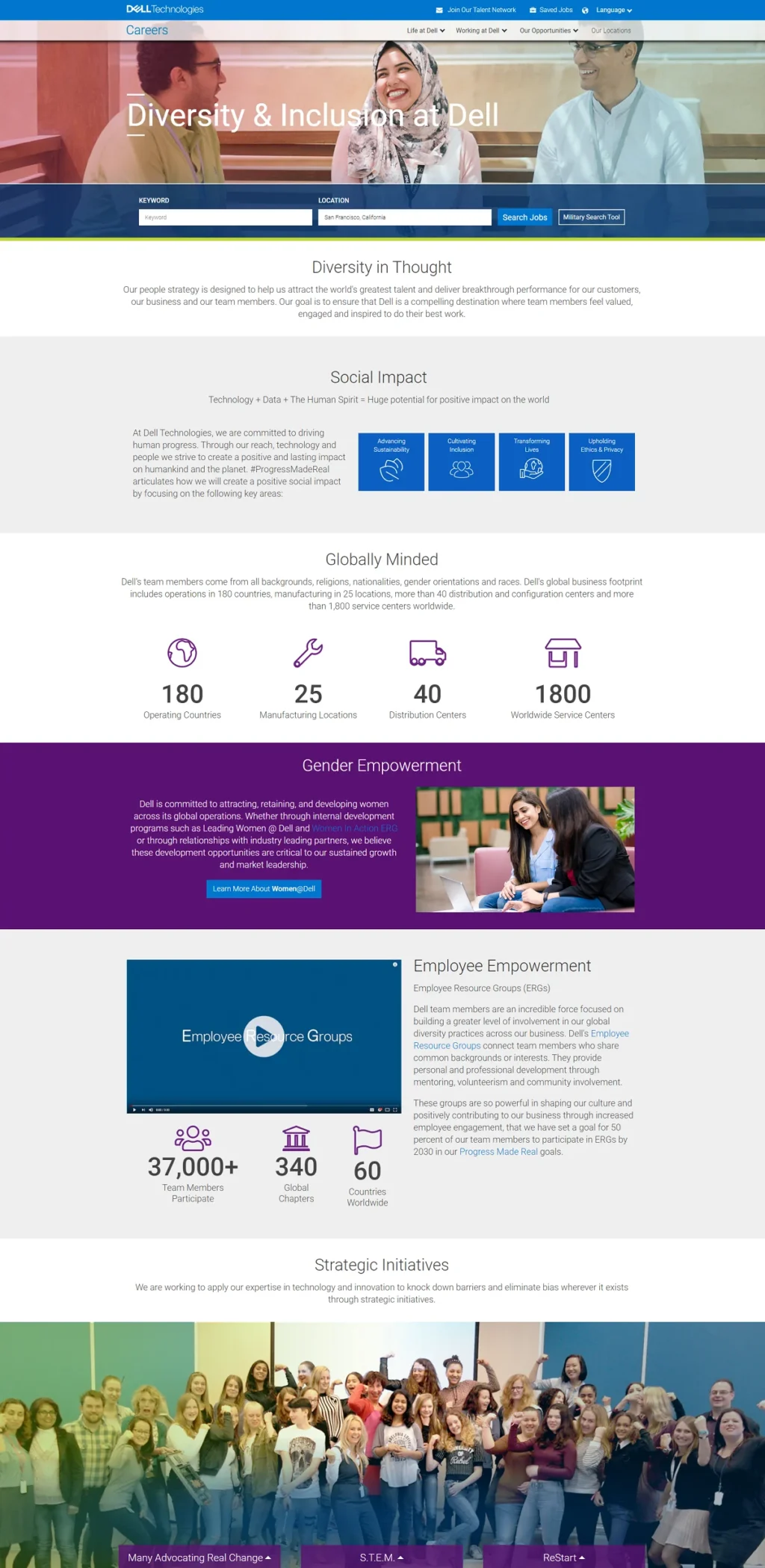
Dell Diversity Page: Located at jobs.dell.com/diversity-and-inclusion, Dell’s page effectively integrates video content to convey its DE&I narrative. The inclusion of an embedded YouTube video speaks volumes, offering dynamic and engaging insights into their inclusive culture, programs, and employee experiences. This multimedia approach makes the information more accessible and impactful, appealing to a wider audience that consumes content visually.
Netflix Diversity Page: Netflix stands out for its transparency and thought leadership in DE&I, particularly highlighted by its 2021 update on jobs.netflix.com/diversity. The page prominently features its annual Inclusion Report, offering detailed insights into its diversity metrics and strategic initiatives. This commitment to publishing comprehensive reports underscores a data-driven approach and a willingness to be held accountable, a trend increasingly valued by stakeholders and prospective employees alike. The insights from their first-ever ‘Inclusion Report’ provide unique ideas for broader inclusion and diversity strategies.
HubSpot Diversity Web Site: HubSpot’s diversity presence at hubspot.com/diversity emphasizes "Inclusion & Belonging." Its website often features a vibrant and welcoming design, reflecting its company culture. The focus on belonging is particularly significant, as it moves beyond mere presence to ensuring that all employees feel valued, respected, and psychologically safe within the organization. This nuanced approach resonates strongly with candidates seeking genuinely inclusive workplaces.
IBM Diversity Page: IBM’s recent overhaul of its diversity website (ibm.com/impact/be-equal) represents a paradigm shift in corporate DE&I communication. The site’s visually compelling design, featuring "movement filled with inclusive colors" and the central "Be Equal" tagline, immediately conveys a strong message. Further engagement reveals a creative presentation of underrepresented groups through sections like "Be You," "Be Yourself," "Be Valued," and "Be Proud." This innovative method personalizes the DE&I message, emphasizing individual identity and contribution rather than just demographic categories, showcasing a sophisticated understanding of inclusive language.
Procter & Gamble Diversity Page: P&G’s page at us.pg.com/diversity-and-inclusion/ is lauded for its "colorful and clean" layout and its commitment to data transparency. The 2021 update prominently features 2020 diversity statistics, broken down by gender, race, ethnicity, and even board representation. This granular level of data, presented in an easily digestible format, demonstrates a clear, measurable commitment to DE&I, building trust and credibility with potential employees who seek evidence of progress.
ViacomCBS Diversity Website: ViacomCBS, through paramount.com/news/creating-an-inclusive-workplace-at-viacomcbs, focuses on fostering an inclusive workplace within the dynamic media industry. Their page likely highlights initiatives related to content diversity, representation in media, and internal programs that support a wide range of employee backgrounds, reflecting the unique cultural influence of a media conglomerate.
Apple Diversity Page: Apple’s diversity page (apple.com/diversity/) is notable for its frankness and data-driven approach. The company provides "hard data on their diversity hiring" and notably "admit they have a ways to go." This level of transparency and self-awareness is powerful, as it builds credibility and demonstrates a genuine commitment to improvement rather than presenting a flawless image. It appeals to candidates who value honesty and progressive action.
Google Diversity Page: Google’s diversity.google/ page is a comprehensive resource, reflecting its extensive and long-standing DE&I efforts. Known for its detailed annual diversity reports, Google’s page likely offers in-depth data, outlines numerous employee resource groups (ERGs), and details various programs aimed at fostering an inclusive and equitable environment across its global operations. Their scale and influence often make their D&I initiatives benchmarks for the tech industry.
Accenture Diversity Page: As a global professional services firm, Accenture’s diversity page (accenture.com/us-en/company-diversity) emphasizes its worldwide commitment to DE&I. Their approach typically highlights broad diversity metrics, global initiatives, and programs designed to support employees across diverse cultural and professional backgrounds. The page reflects a strategic imperative to build a diverse workforce that mirrors the global clientele they serve.
GoPro Diversity Page: GoPro’s jobs.gopro.com/diversity#/ page is expected to align with its brand image – dynamic, adventurous, and inclusive. While the original snippet is brief, it implies a focus on action and creating an environment where diverse perspectives contribute to innovation. The visual elements likely showcase a diverse group of employees engaged in dynamic activities, connecting their brand ethos with their inclusive culture.
Broader Implications and Future Trends
The continuous evolution of corporate diversity pages underscores a significant trend: DE&I is no longer a static policy but a dynamic, evolving commitment. Companies are recognizing that authenticity and transparency are paramount. Generic statements are being replaced by tangible evidence: hard data, employee stories, and detailed reports. The "2021 Updates" seen across multiple leading companies highlight an ongoing investment in refining and enhancing these digital assets, reflecting a competitive race to attract and retain the best talent.
The implications for employers are clear. An optimized diversity page serves as a critical differentiator in a crowded talent market. It signals a company’s values, builds trust, and actively engages candidates who prioritize inclusive workplaces. Conversely, a neglected or inauthentic diversity page can deter top talent and damage employer brand reputation.
Looking ahead, the trend suggests that diversity pages will become even more interactive, personalized, and integrated with broader Environmental, Social, and Governance (ESG) reporting. Expect to see more real-time data dashboards, AI-driven tools to assess and improve inclusive language, and deeper integration with virtual reality or augmented reality experiences that allow candidates to virtually "experience" a company’s inclusive culture. The emphasis will remain on proving, not just proclaiming, a commitment to DE&I, ensuring that these digital showcases are true reflections of an organization’s internal reality.
Ultimately, the exemplars in this space demonstrate that a well-executed diversity page is an indispensable component of a modern, effective talent acquisition strategy. It is a powerful statement of intent, a window into organizational culture, and a critical tool for building a workforce that is truly representative of the global community it serves.