Employee survey tools are indispensable instruments for modern organizations seeking to foster a thriving and productive work environment. These platforms empower companies to proactively identify communication breakdowns, detect emerging workplace issues before they escalate, and gain crucial insights into whether employees feel informed, supported, and connected. The urgency of these tools is underscored by alarming statistics: data from the 2026 State of Recognition Report reveals that a mere 18% of 2,500 surveyed employees feel adequately informed when changes impact their roles or the company. Furthermore, only 23% report clear communication during periods of uncertainty. Effective employee survey tools equip leaders with the ability to pinpoint communication deficiencies, monitor trends over time, and address potential retention risks before they materialize.

What Constitutes an Employee Survey Tool?
At its core, an employee survey tool is sophisticated software designed to facilitate the collection, analysis, and subsequent action based on employee feedback. These platforms are leveraged by organizations to measure a wide spectrum of employee experience facets, including engagement levels, the effectiveness of communication strategies, the impact of management styles, and the overall health of the workplace culture. Beyond these core areas, they serve as a vital barometer for a multitude of other critical organizational dynamics.
The Growing Importance of Employee Survey Tools in Today’s Business Climate
The contemporary business landscape, characterized by rapid change, evolving employee expectations, and a persistent focus on talent retention, elevates the significance of employee survey tools. These platforms provide an unfiltered window into how employees perceive their daily work experience, from the clarity of leadership directives to the nuances of company culture. The data generated by these surveys is instrumental for HR departments and people leaders, enabling them to identify nascent issues, gauge employee sentiment with precision, and make data-driven decisions regarding areas requiring strategic improvement.
In recent years, the business world has grappled with unprecedented disruptions, including economic volatility, shifts in work models (remote, hybrid), and an increasing demand for transparency and purpose-driven work. This environment creates fertile ground for misunderstandings, anxiety, and disengagement if not managed proactively. Employee survey tools act as an early warning system, allowing organizations to adapt their strategies and interventions to mitigate these challenges. For instance, a surge in negative feedback regarding remote work policies could prompt a review and adjustment of flexible work arrangements, preventing potential talent drain.
Stakeholder Impact: A Multifaceted Approach
The influence of employee survey tools extends across various levels of an organization, impacting employees, managers, HR teams, and senior leadership in distinct yet interconnected ways.
-
Employees: For employees, these tools represent a voice. They provide a structured channel to express concerns, offer suggestions, and share their overall experience. Feeling heard and seeing tangible actions taken based on their feedback can significantly boost morale, trust, and commitment. Conversely, surveys that yield no visible change can foster cynicism and disengagement.
-
Managers: Managers utilize survey data to gain deeper insights into their team’s dynamics. They can identify specific areas where their leadership might be falling short, understand team morale, and pinpoint developmental needs. This feedback loop is crucial for fostering effective team leadership and driving performance. For example, consistent feedback about a lack of recognition within a team might prompt a manager to implement more regular appreciation gestures.
-
HR Teams: HR departments are central to the employee survey process. They are responsible for selecting and implementing survey tools, designing effective questionnaires, analyzing the data, and collaborating with leadership to develop action plans. Survey data empowers HR to make strategic decisions about talent management, employee development programs, and organizational change initiatives. They can also use this data to demonstrate the ROI of HR initiatives.
-
Senior Leaders: For senior leaders, employee survey insights offer a high-level overview of organizational health and culture. They can identify systemic issues that might impact business objectives, such as low employee engagement affecting customer service or high turnover rates impacting productivity. This information is critical for strategic planning and ensuring alignment between business goals and employee experience.
The Dual Nature of Employee Survey Tools: Successes and Failures
The efficacy of employee survey tools hinges on how organizations choose to implement and act upon them.
When Employee Survey Tools Succeed:
- Consistent Feedback Collection: Regular, scheduled surveys (e.g., quarterly pulse surveys, annual engagement surveys) provide a baseline and allow for tracking changes over time.
- Transparent Communication of Results: Sharing aggregated, anonymized survey results with employees fosters trust and demonstrates a commitment to addressing feedback.
- Visible and Meaningful Action: The most critical factor is demonstrating that feedback leads to tangible changes. This could involve policy adjustments, new training programs, or improvements in communication protocols.
- Accountability: Establishing clear ownership for addressing identified issues and tracking the progress of action plans ensures that feedback doesn’t fall by the wayside.
When Employee Survey Tools Fail:
- Lack of Action or Follow-Through: The most common reason for failure is conducting surveys without any subsequent action or communication about the results. This leads to employee apathy and a belief that their feedback is ignored.
- Infrequent or Ad-Hoc Surveys: Sporadic surveys fail to capture ongoing trends or provide a consistent understanding of employee sentiment.
- Poorly Designed Surveys: Vague questions, biased phrasing, or overly long surveys can lead to unreliable data and employee frustration.
- Lack of Anonymity or Confidentiality: If employees fear repercussions for their honest opinions, the data collected will be skewed and unhelpful.
Ubiquity of Employee Survey Tools Across the Employee Lifecycle
Employee survey tools are not confined to a single HR function; their application spans the entire employee journey. From the initial stages of onboarding, where new hires can provide feedback on their integration experience, to ongoing satisfaction surveys designed to gauge day-to-day sentiment, their utility is broad. They are integrated into performance reviews to capture multi-rater feedback, inform workplace culture initiatives, guide change management processes, and are even utilized in exit interviews to understand reasons for departure. Organizations leverage these tools during significant business transformations to gauge employee sentiment, measure the impact of new policies, and identify any emerging issues that could affect communication, retention, or the overall employee experience.
Practical Implementation: From Data Collection to Actionable Insights
In practice, employee survey tools operate through a systematic process. They begin by collecting feedback from employees, typically through digital platforms. The collected responses are then subjected to robust analysis to identify patterns, trends, and key themes. This analytical phase is crucial for translating raw data into actionable insights. Leaders are then guided to take specific actions based on these insights, addressing the issues that matter most to the organization and its workforce.
Surveys are strategically deployed at critical junctures of the employee lifecycle. This includes the onboarding process to assess the new hire experience, regular engagement check-ins to monitor morale and commitment, during periods of organizational change to gauge employee understanding and adaptation, and as part of exit procedures to capture valuable insights from departing employees. The analysis of responses typically uncovers trends in crucial areas such as the effectiveness of internal communication, the quality of management, the impact of recognition programs, workload management, and the overall health of the company culture.

A Curated Selection: 15 Employee Survey Tools for Enhanced Workplace Connection
In the pursuit of building a more connected and engaged workforce, organizations have a growing array of sophisticated employee survey tools at their disposal. This curated list, compiled through extensive vendor research, analysis of user-verified reviews from platforms like G2 and People Managing People, and direct insights from industry leaders, highlights 15 prominent solutions.
1. Achievers
- G2 Rating: 4.6/5
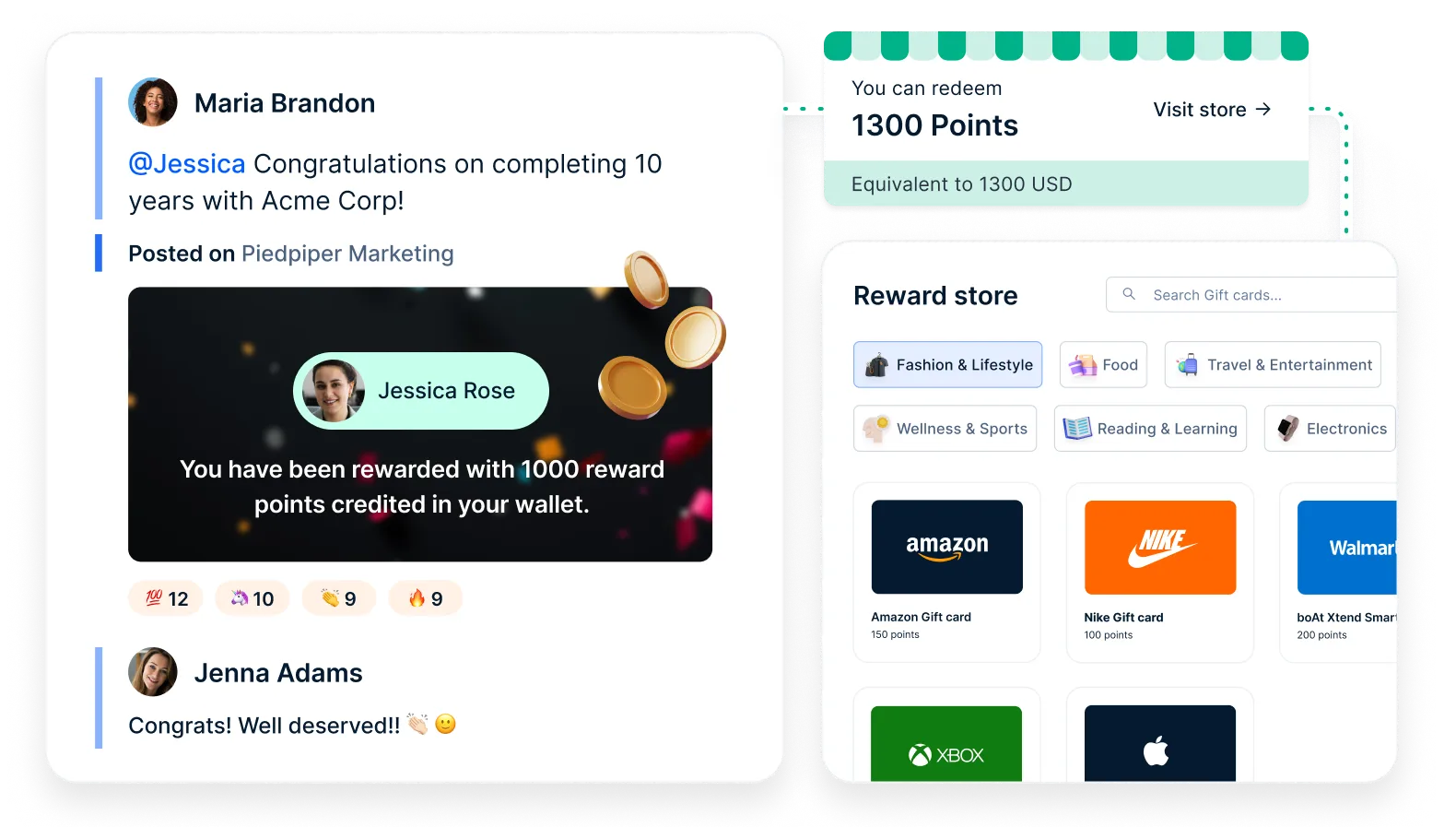
- Strengths: Achievers offers a unified employee experience platform designed for organizations to listen, recognize, and act at scale. Its comprehensive Voice of Employee toolkit includes sentiment surveys, lifecycle feedback, quizzes, and polls, supported by real-time analytics to surface actionable insights. The platform seamlessly integrates recognition and rewards capabilities, a global rewards marketplace, enterprise-grade reporting, and global scalability, with robust integrations into various HRIS and HCM systems. It also adheres to the latest safety and compliance standards.
- Best for: Enterprise and mid-market organizations (500+ employees) seeking an integrated approach to employee experience, encompassing surveys, recognition, rewards, and ongoing listening.
- Weakness: Its breadth might be more than required for organizations seeking only basic polling functionalities.
- Customer Review: "Achievers is honestly one of the most uplifting platforms I’ve ever used! I love how easy it is to celebrate the amazing work happening around me, and sending appreciation feels just as good as receiving it. Every time I read through the recognition others give and receive, I can’t help but feel inspired—it’s like a constant stream of motivation that pushes me to go above and beyond. Achievers doesn’t just highlight great work; it boosts morale, builds connection, and genuinely makes me excited to contribute my best every day." – Kathryn C., via G2
2. ThriveSparrow
- G2 Rating: 4.3/5
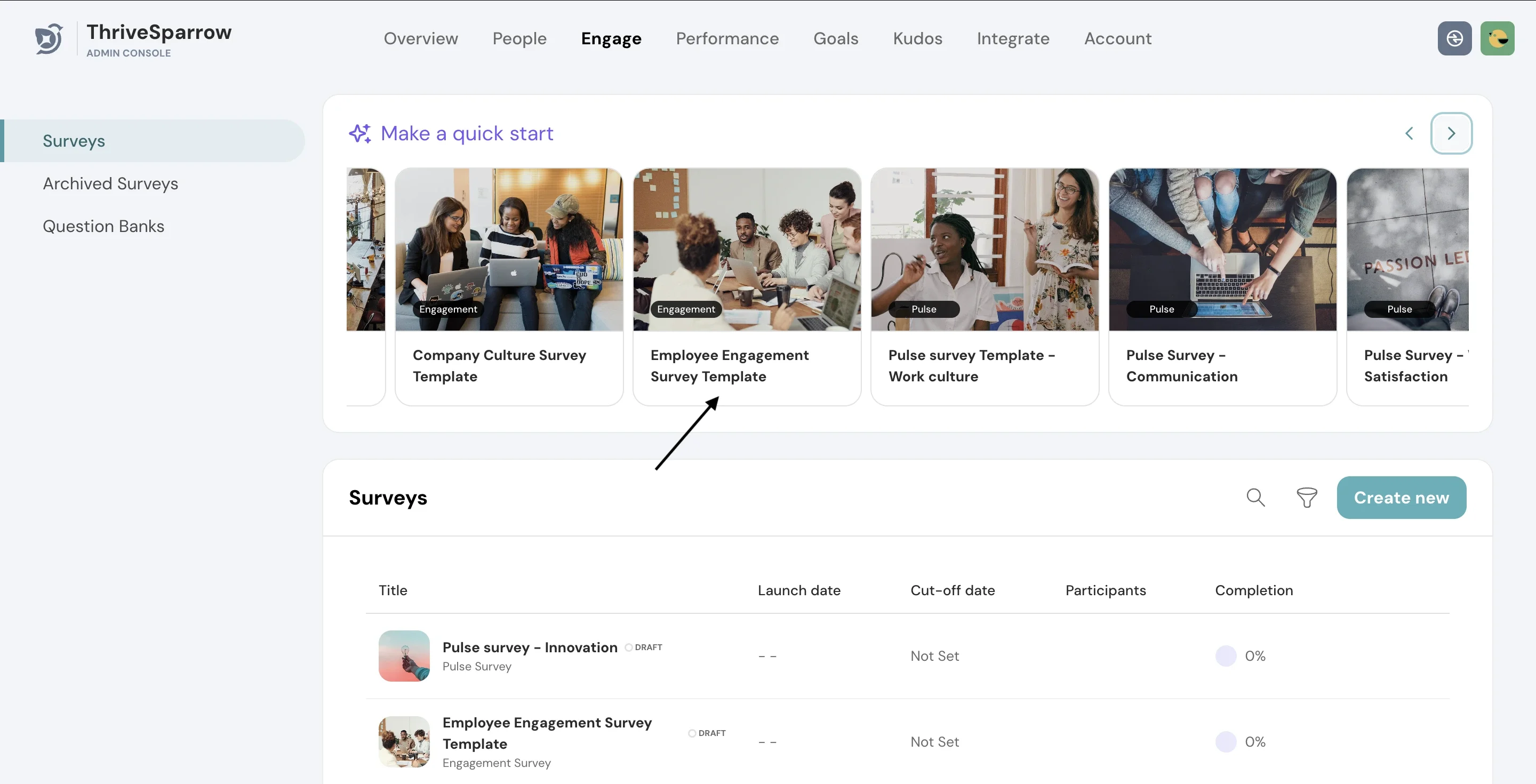
- Strengths: ThriveSparrow integrates employee surveys with performance and engagement tools. It supports continuous listening through pulse surveys and eNPS, leveraging AI for sentiment analysis of open-text feedback. Action plans are directly tied to survey results, and it offers accessibility for deskless teams via QR codes and multilingual options.
- Best for: Teams desiring a single platform for surveys, performance feedback, goal setting, and check-ins.
- Weakness: May present limitations in enterprise-level integrations and advanced reporting customization.
- Customer Review: "The feedback and surveys are easy to track and it helps us to customize the surveys which helps us with the feedback for our company challenges." – Satish V., via G2
3. SurveyMonkey
- G2 Rating: 4.4/5
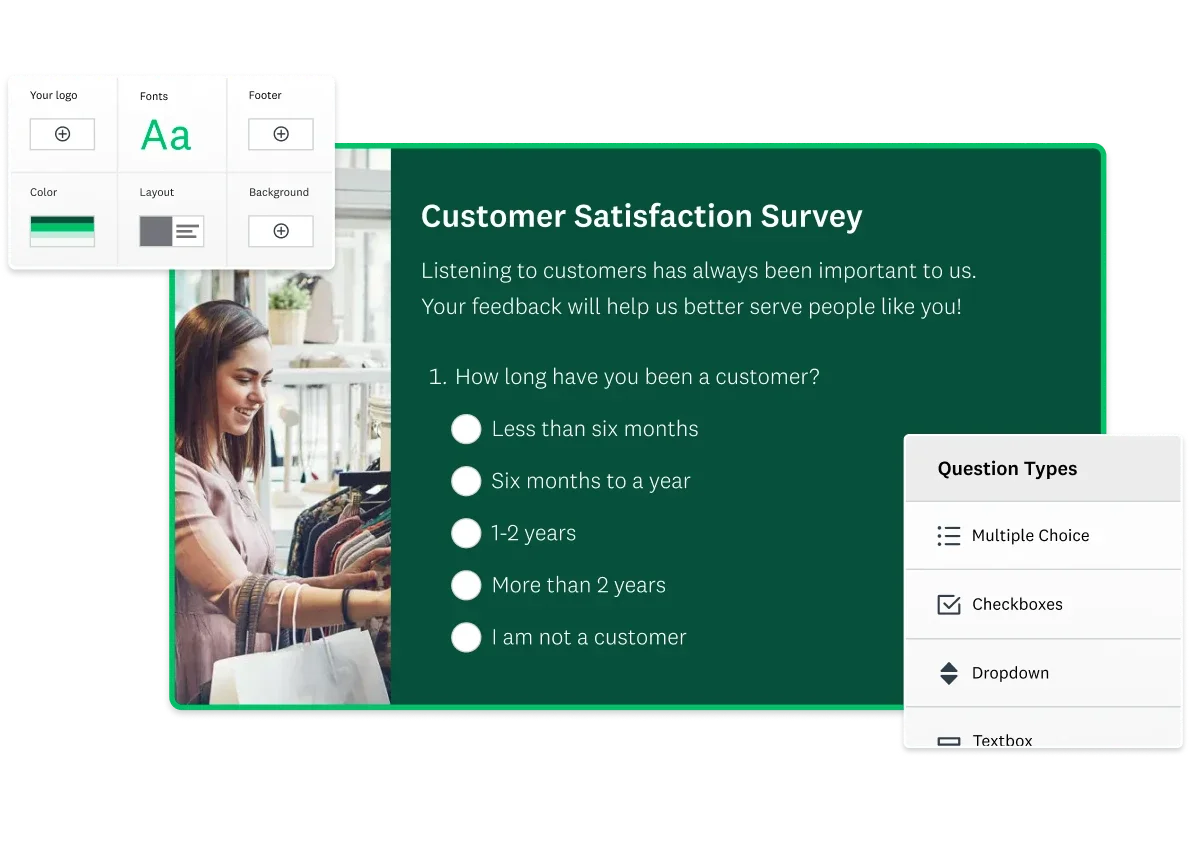
- Strengths: A versatile survey platform supporting employee, customer, market research, and event feedback. It boasts a large template library, an AI-assisted builder, and multiple distribution channels. SurveyMonkey provides analytics tools for trend identification and insight sharing.
- Best for: Teams needing a flexible, general-purpose tool for feedback collection.
- Weakness: May offer fewer built-in tools for directly linking survey results to action planning and recognition.
- Customer Review: "Easy interface for distributing and editing surveys. Feedbacks from surveys are quiet easy to analysis. Customer support is great." – Verified review via Capterra
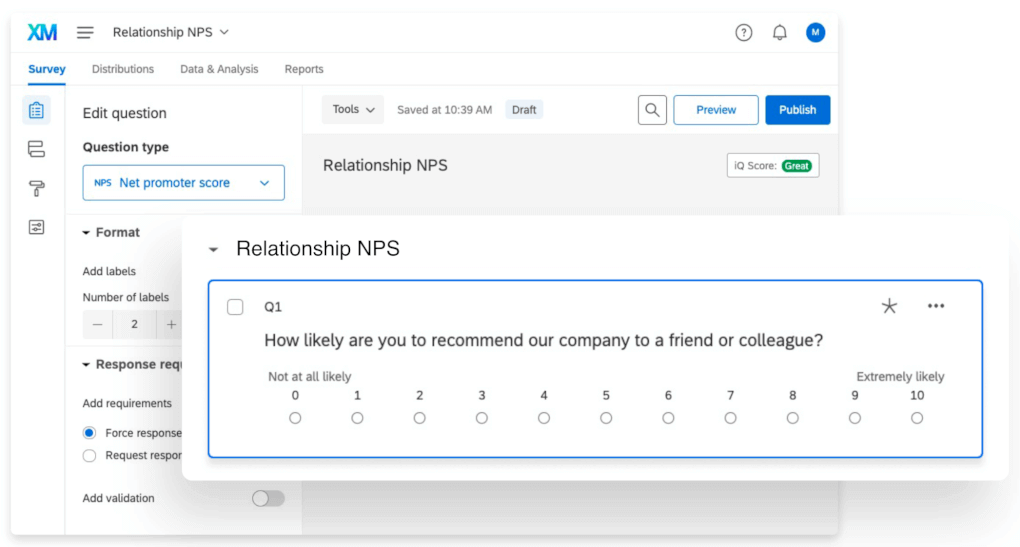
4. Qualtrics
- G2 Rating: 4.4/5
- Strengths: An experience management platform for large-scale employee feedback collection and analysis. It supports engagement, pulse, and lifecycle surveys, with advanced tools for trend tracking and analyzing vast datasets, including open-text comments. Dashboards and guided action planning assist managers in interpreting results.
- Best for: Large organizations seeking a comprehensive listening program with benchmarking, analytics, and manager action planning capabilities.
- Weakness: May offer fewer direct integrations for tying feedback to recognition and rewards.
- Customer Review: "While we definitely see the value in using Qualtrics for our surveys and insights, we had a less than stellar experience with the purchase and onboarding." – Review via Gartner
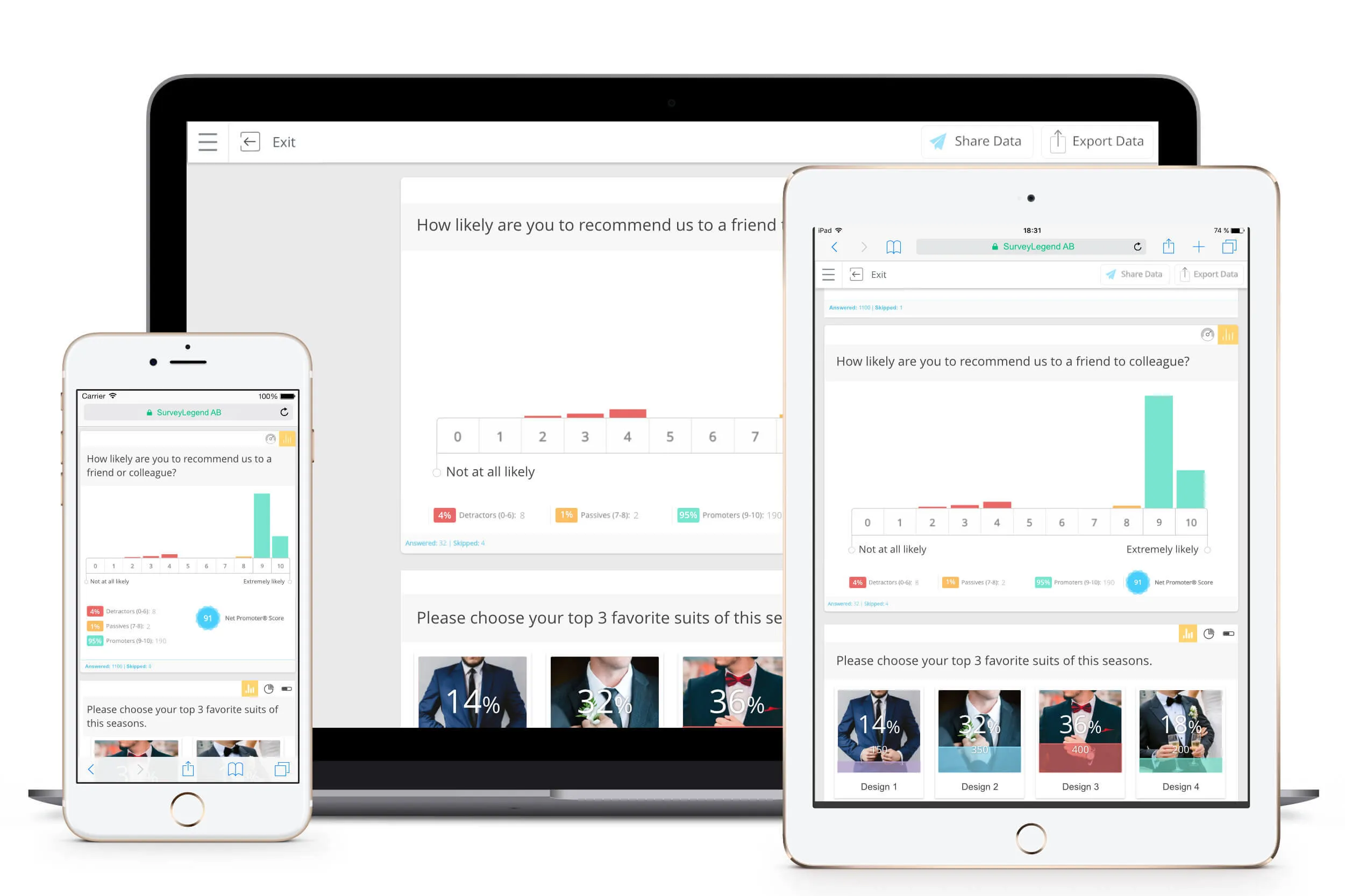
5. SurveyLegend
- G2 Rating: 4.4/5
- Strengths: Focuses on ease of use and visual appeal. Offers drag-and-drop survey creation, diverse question types, and strong customization options, including themes, images, and white-labeling. Supports survey logic and real-time analytics.
- Best for: Teams requiring a straightforward, visually appealing tool for rapid feedback collection and sharing.
- Weakness: Less suited for organizations needing robust tools for ongoing listening programs and scalable action planning.
- Customer Review: "Ease of use and ability to customize. I also liked the ability to access live analytics while the survey is in progress." – Cindy, via Capterra
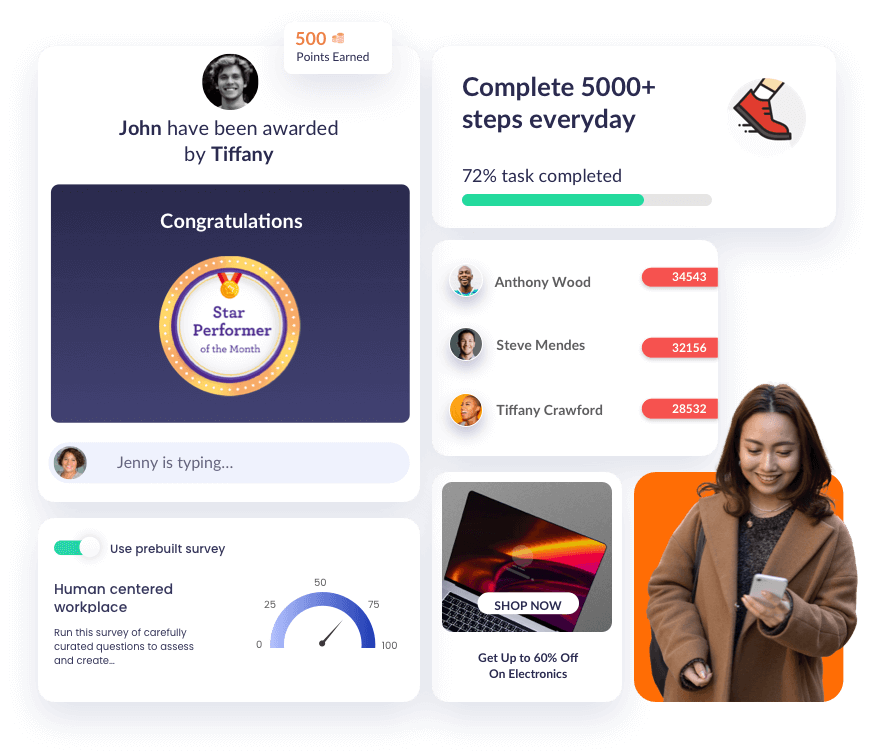
6. Vantage Circle
- G2 Rating: 4.7/5
- Strengths: Combines recognition, rewards, well-being, perks, and employee feedback (Vantage Pulse). Supports pulse surveys, eNPS, lifecycle surveys, and AI-powered sentiment analysis. Includes dashboards and action-oriented insights for HR and leaders.
- Best for: Organizations looking for integrated surveys alongside recognition, wellness, and perks.
- Weakness: May not be ideal for organizations requiring highly advanced analytics and scalable reporting.
- Customer Review: "The overall experience is very good. I have been using the website from more than 3 years. I loved the experience." – Review via Software Advice
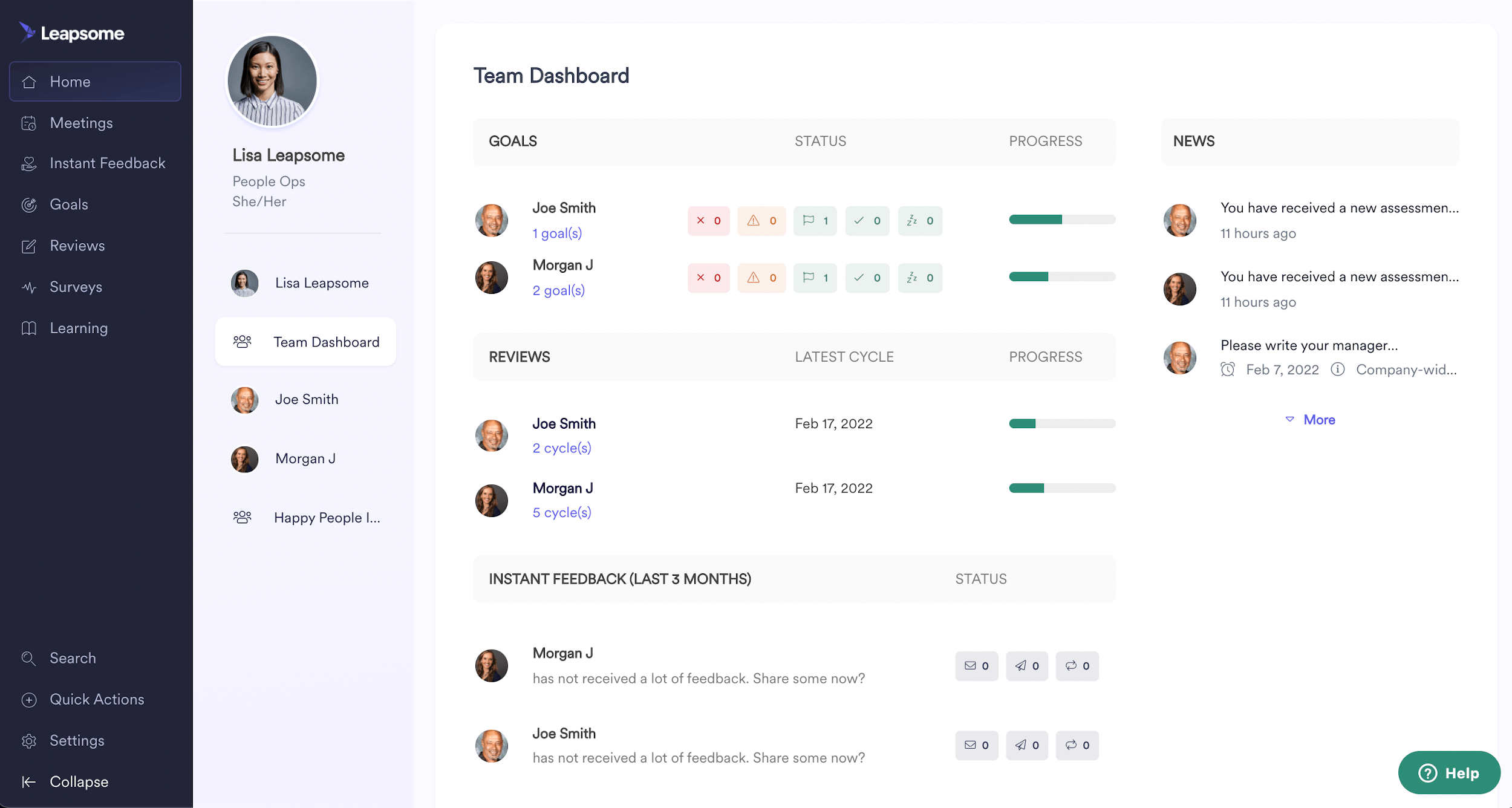
7. Leapsome
- G2 Rating: 4.8/5
- Strengths: Integrates core HR, performance management, and employee surveys. Supports engagement, pulse, onboarding, and lifecycle surveys with AI-powered analysis. Survey insights are directly linked to goals, feedback, and performance workflows, allowing for a holistic view.
- Best for: Organizations prioritizing the connection between employee surveys and performance management, goals, and development.
- Weakness: May necessitate greater internal effort for designing and scaling recognition and feedback programs.
- Customer Review: "The praise system gives everyone a sense of accomplishment and provides a rewarding feeling that makes the overall environment feel more human." – Alan O., via G2
8. Lattice
- G2 Rating: 4.7/5
- Strengths: A people management platform integrating performance management, goals, engagement surveys, and feedback. Its survey tools offer AI-powered insights into employee sentiment. Surveys are closely linked to goals, feedback, and 1:1s, enabling managers to review results within their regular performance conversations.
- Best for: Businesses aiming to align employee surveys with performance management, goal setting, and daily manager workflows.
- Weakness: May be less ideal for organizations seeking a dedicated employee engagement platform to reinforce feedback.
- Customer Review: "It is a great tool to get feedback from colleagues and managers regarding your tasks, objectives and progress." – Paulo G., via Software Advice
9. Xoxoday (Empuls)
- G2 Rating: 4.6/5
- Strengths: Offers a global rewards and incentives platform alongside its employee engagement solution, Empuls. Empuls combines recognition, rewards, surveys, perks, and internal communication, featuring a wide range of global redemption options in its rewards marketplace. Supports pulse surveys, eNPS, lifecycle feedback, and AI-powered sentiment analysis.
- Best for: Teams that want to combine employee surveys with robust rewards and incentive programs.
- Weakness: May lack the advanced capabilities required for consistently running recognition and feedback programs across larger teams.
- Customer Review: "I’ve recently been using it for some employee surveys also. I think, those could be little more improved and, the service experience could also be enhanced." – Palakh K., via G2
10. SurveyLab
- G2 Rating: 4.5/5
- Strengths: A professional online survey platform for customer, employee, and market research. Supports diverse survey types, including engagement, 360 feedback, and lifecycle questionnaires, with features like logic, branching, multi-language support, and mobile-friendly distribution.
- Best for: Teams needing a flexible survey tool for employee feedback, 360 reviews, and research purposes.
- Weakness: May require supplementary tools to manage employee listening as an ongoing, organization-wide program rather than one-off surveys.
- Customer Review: "It offers many predefined, customizable survey templates and saves your time." – Dayanand G., via Capterra
11. Microsoft Forms
- G2 Rating: 4.4/5
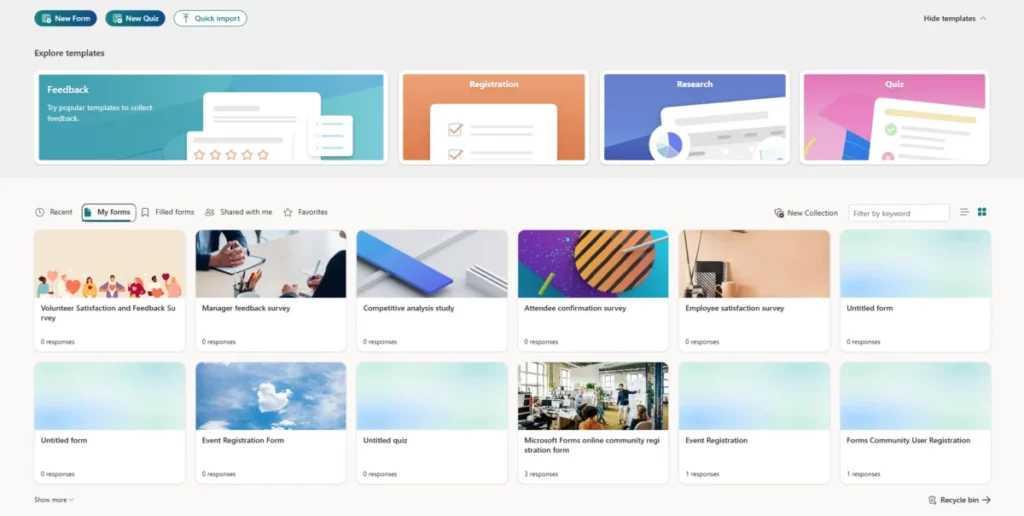
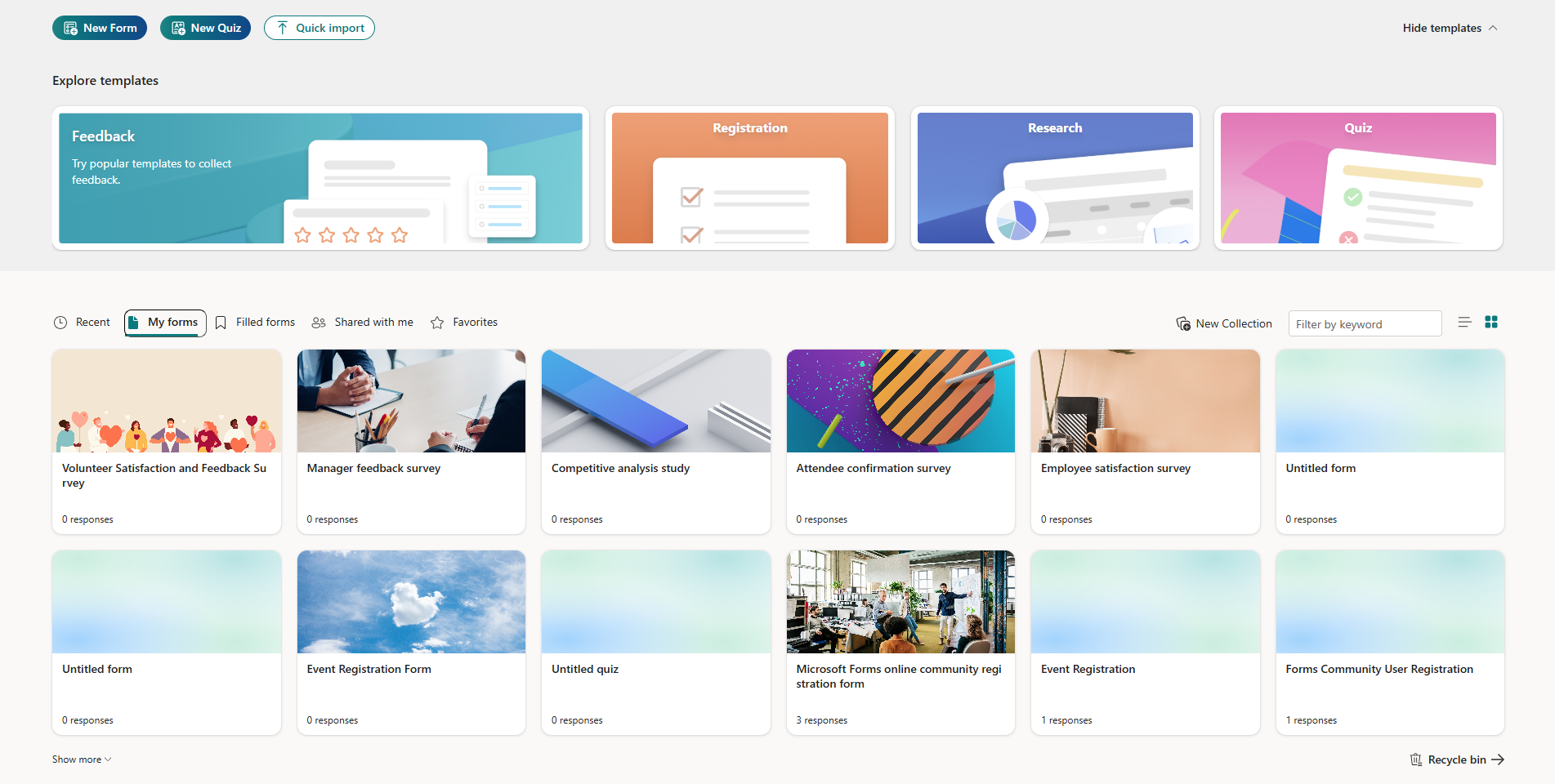
- Strengths: Included with Microsoft 365, it enables quick creation of surveys, polls, and questionnaires using templates and basic logic, with real-time response summaries. Integrates seamlessly with Excel, Teams, SharePoint, and OneDrive.
- Best for: Teams already utilizing Microsoft 365 who need a straightforward feedback collection tool.
- Weakness: Better suited for simple surveys than for structured, ongoing employee listening programs.
- Customer Review: "Microsoft forms is very easy to use, you can set up a basic form or something more complex using the bridge feature within the questions." – Verified review via G2
12. LutherOne
- G2 Rating: 5/5
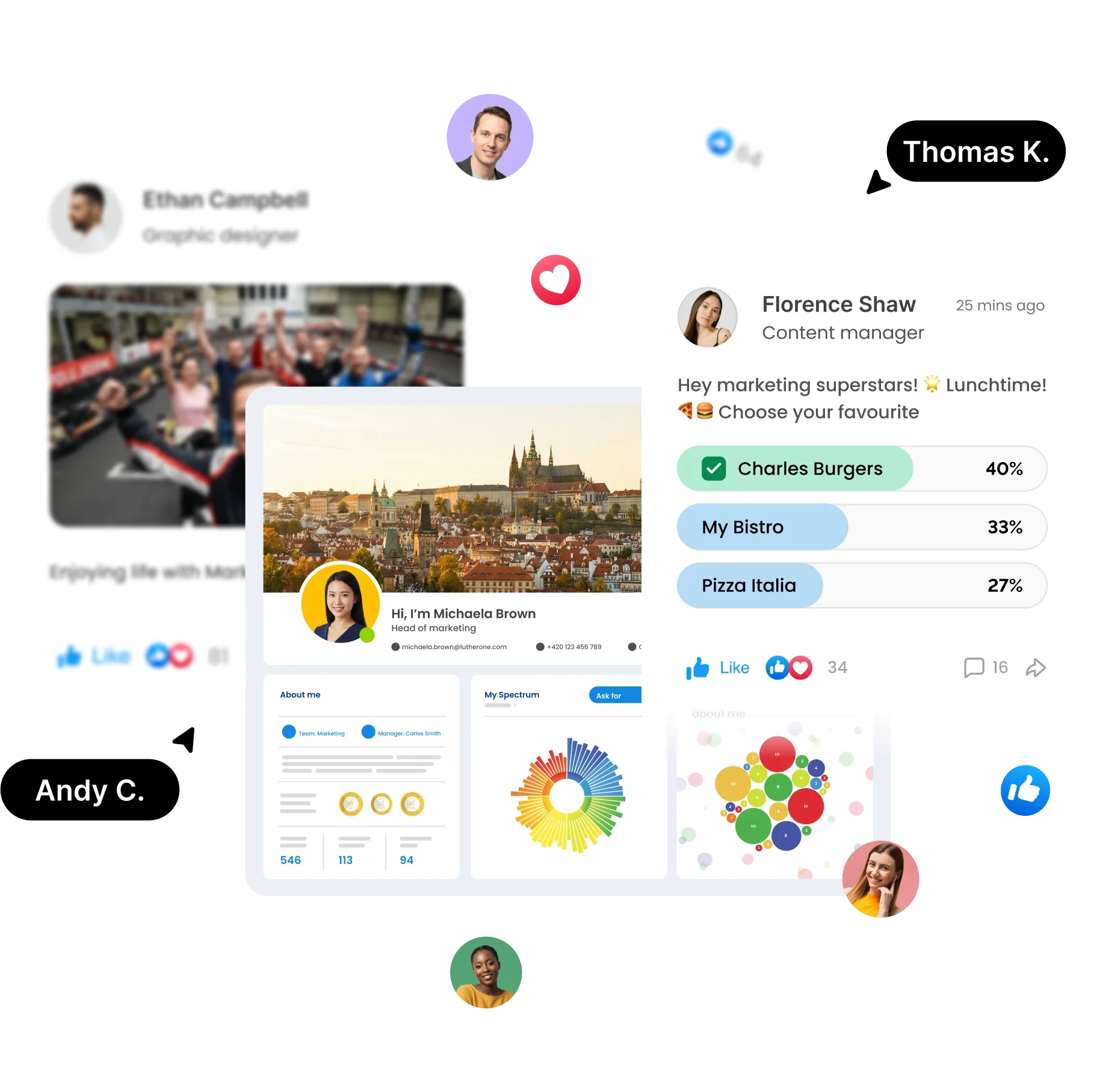
- Strengths: A people analytics and engagement platform focused on continuous listening and real-time insights. Supports pulse surveys, engagement tracking, and 360-degree feedback, with dashboards highlighting trends in engagement, eNPS, and attrition risk.
- Best for: Teams prioritizing regular employee surveys paired with real-time dashboards and analytics.
- Weakness: While offering advanced insights, organizations seeking a more unified engagement solution might require more comprehensive tools.
- Customer Review: "We really like the te tool — it’s new, easy to use, the teams that helps us with the development and implementing is awesome." – Audrone L., via Capterra
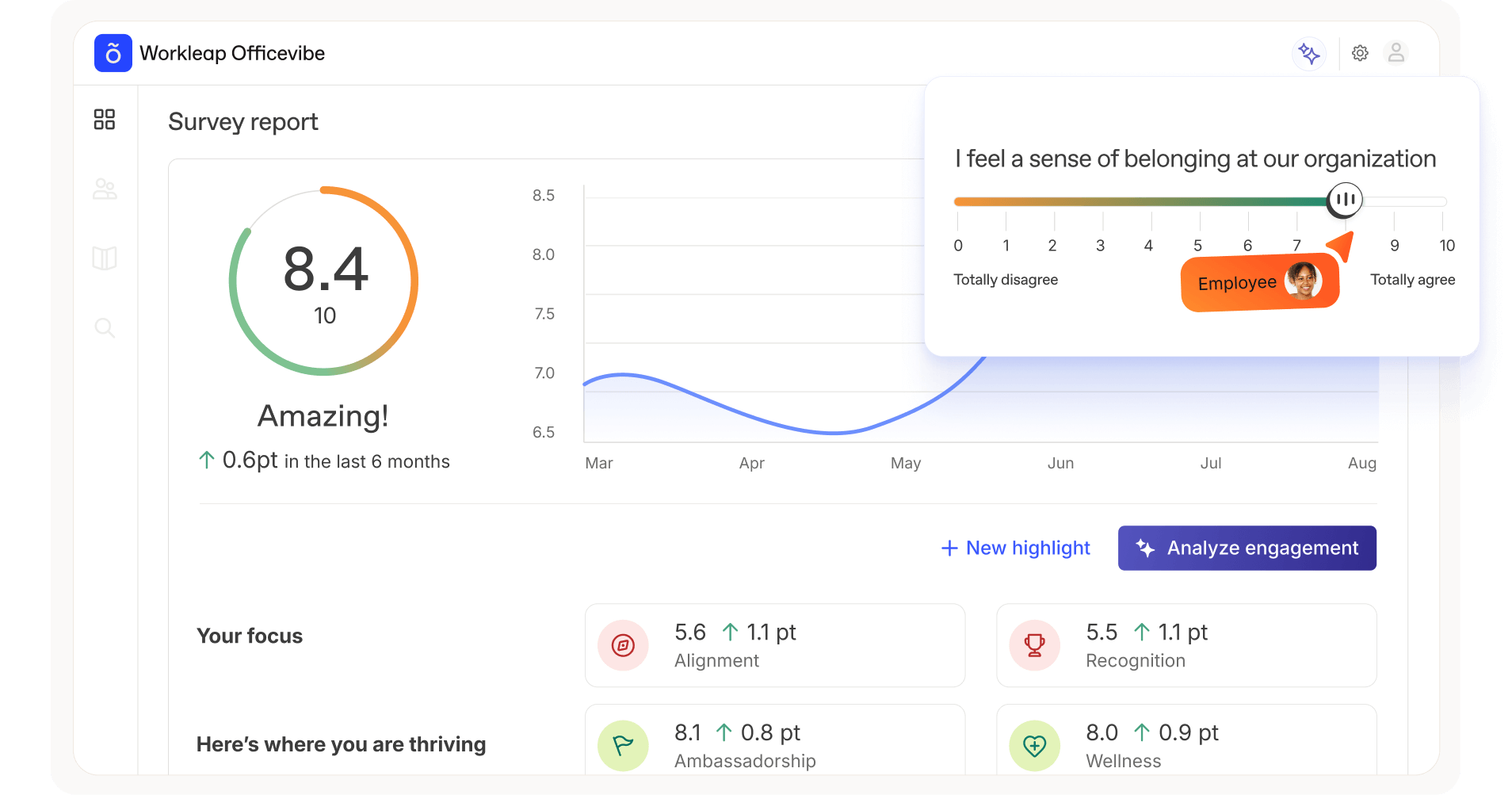
13. Officevibe by Workleap
- G2 Rating: 4.3/5
- Strengths: A people management platform integrating engagement, performance, and compensation. Officevibe focuses on continuous engagement via pulse surveys, anonymous feedback, and reporting that helps managers identify trends. Includes guidance and recommended actions for manager follow-through.
- Best for: Small to mid-sized organizations seeking an engagement and performance platform with built-in manager guidance.
- Weakness: While offering diverse survey capabilities, it may not match the breadth and depth of engagement data found in more specialized tools.
- Customer Review: "There’s room to simplify certain workflows and make the learning curve smoother so teams can adopt and benefit from the platform faster." – Ukendra P., via G2
14. TMA Performance (formerly DecisionWise)
- G2 Rating: 3.9/5
- Strengths: A talent and employee experience platform focused on understanding both the work environment and individual motivations. Offers engagement and lifecycle surveys, competency-based 360 feedback, and talent assessments, emphasizing diagnostic insights through structured models and leadership frameworks.
- Best for: Organizations that want to integrate engagement surveys with talent assessments and competency-based development tools.
- Weakness: While strong in diagnostics, organizations seeking ongoing, real-time engagement signals and faster follow-through may need additional tools.
- Customer Review: "The amount of data that can be obtained from the platform is overwhelming at times. It can be challenging to translate the data into meaningful action items at the individual level." – Fredrick P., via Capterra
15. Rippling
- G2 Rating: 4.8/5
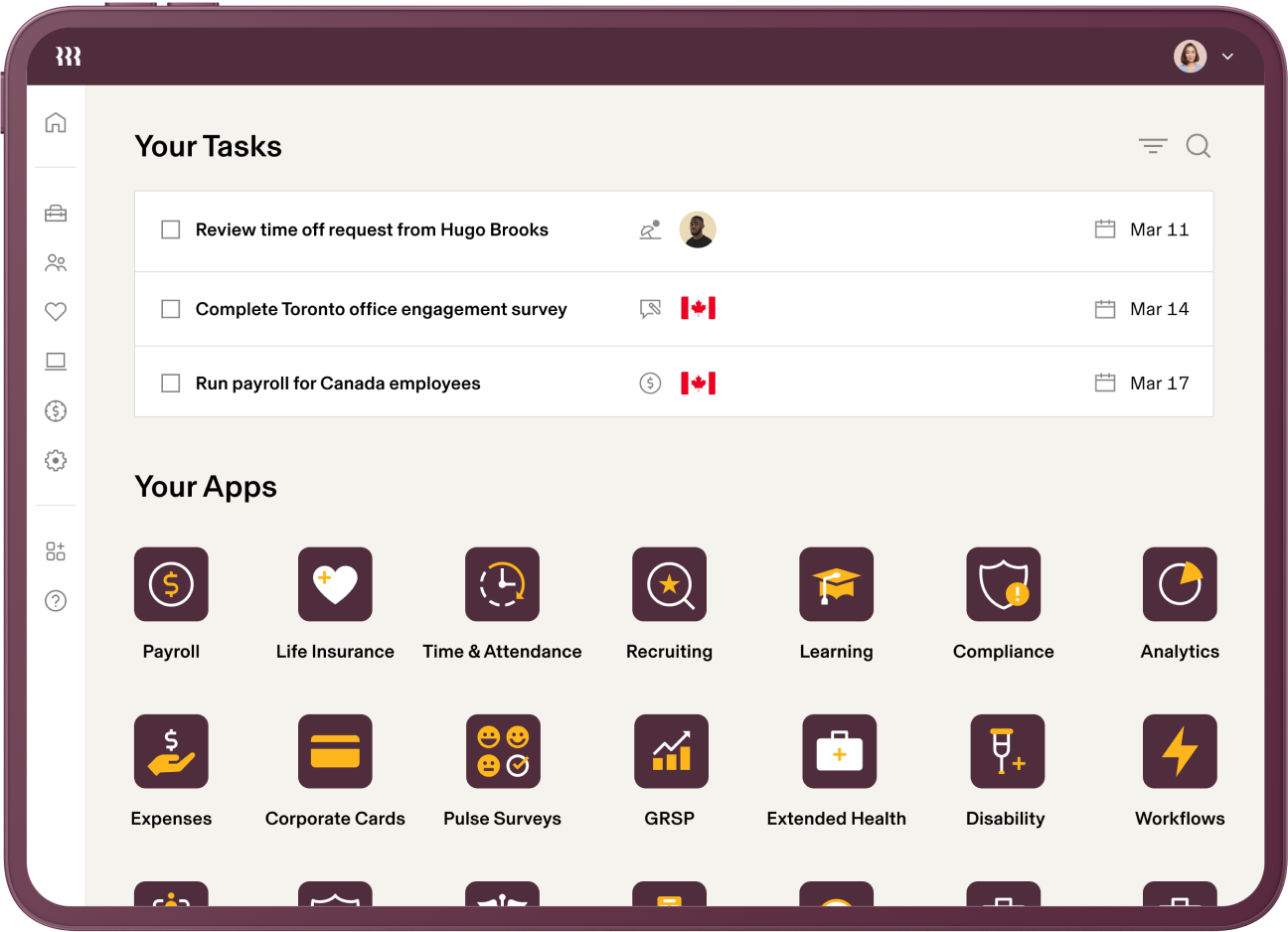
- Strengths: Rippling Surveys is integrated into its broader workforce platform, allowing survey results to be viewed alongside existing employee data. It supports common surveys like engagement, onboarding, exit, and DEI, and can automate surveys based on employee events. Role-based permissions control access to surveys and results.
- Best for: Teams already using Rippling who want employee surveys linked to HR workflows and automated follow-ups.
- Weakness: Teams prioritizing an employee experience-led approach with structured action planning and recognition might find platforms specifically designed for that purpose more suitable.
- Customer Review: "Overall, it provides excellent value for money for startups looking for an integrated HR, payroll, and IT management platform." – Ashwath S. via G2
Key Features to Evaluate in an Employee Survey Tool
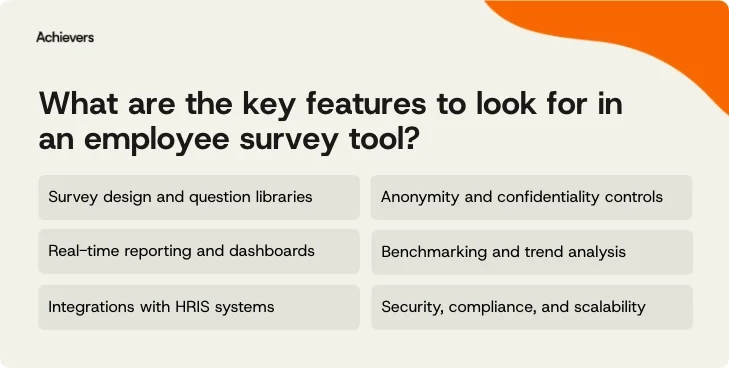
When selecting an employee survey tool, organizations should prioritize features that ensure comprehensive data collection, robust analysis, and effective action planning.
Survey Design and Question Libraries
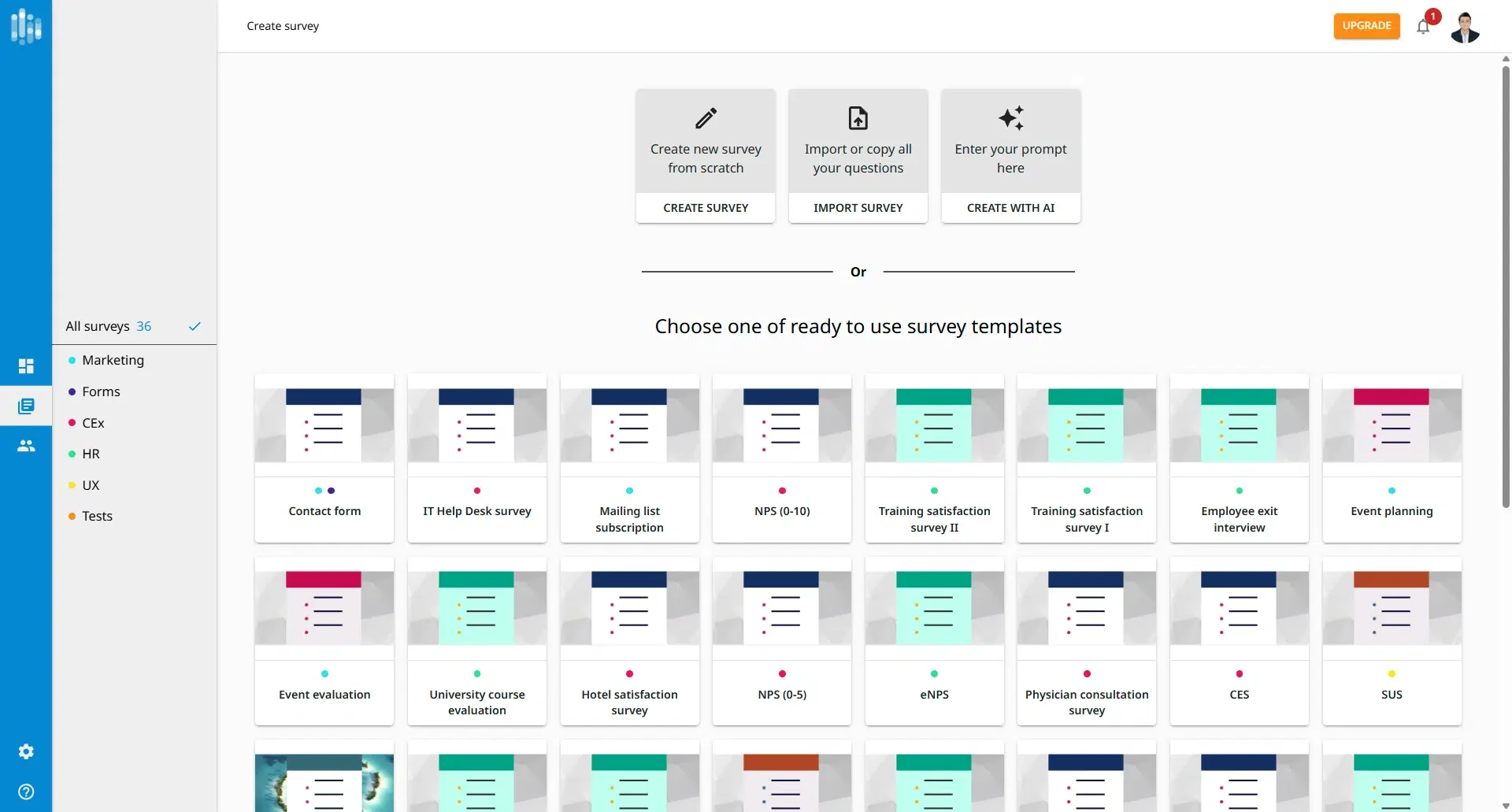
Tools that offer pre-built, research-backed question libraries and flexible templates are invaluable. These resources enable organizations to collect consistent, comparable feedback without the burden of creating surveys from scratch, covering essential areas like engagement, culture, and manager effectiveness.
Anonymity and Confidentiality Controls
The ability for employees to provide honest feedback without fear of reprisal is paramount. Features such as anonymity thresholds, role-based access controls, and robust data encryption ensure that employees feel secure sharing their candid opinions.
Real-Time Reporting and Dashboards
Timely insights are critical for proactive problem-solving. Tools that provide real-time reporting and intuitive dashboards allow leaders to identify emerging issues as they arise, rather than weeks after a survey concludes. Filtering options by team, department, or demographic group enhance the granularity of these insights.
Benchmarking and Trend Analysis
Contextualizing survey results is crucial for understanding progress. The ability to benchmark against industry averages or track trends over time helps organizations assess whether their initiatives are yielding improvements or if adjustments are needed.
Action Planning and Accountability Tools
The ultimate value of surveys lies in their ability to drive change. Features that support task assignment, progress tracking, and the creation of manager-led action plans are essential for translating feedback into tangible improvements and fostering accountability.
Integrations with HRIS, Collaboration, and Recognition Platforms
Seamless integration with existing HR systems (HRIS), collaboration tools (like Slack or Microsoft Teams), and recognition platforms (such as Achievers) streamlines workflows, enhances data accuracy, and provides a holistic view of the employee experience.
Security, Compliance, and Scalability
For long-term success, survey platforms must offer enterprise-grade security, adhere to relevant compliance regulations (e.g., GDPR), and possess the scalability to accommodate growing organizations and evolving listening needs.
How Employee Survey Tools Drive Workplace Improvement
Employee survey tools are instrumental in identifying and resolving workplace issues through a structured, data-driven approach.
Identifying Recurring Workplace Issues
These tools excel at revealing patterns that manifest across different teams, locations, or survey cycles. By focusing on issues that consistently emerge in areas like communication, manager trust, recognition, career growth, and job burnout, organizations can prioritize their efforts effectively.
Assigning Ownership and Tracking Progress
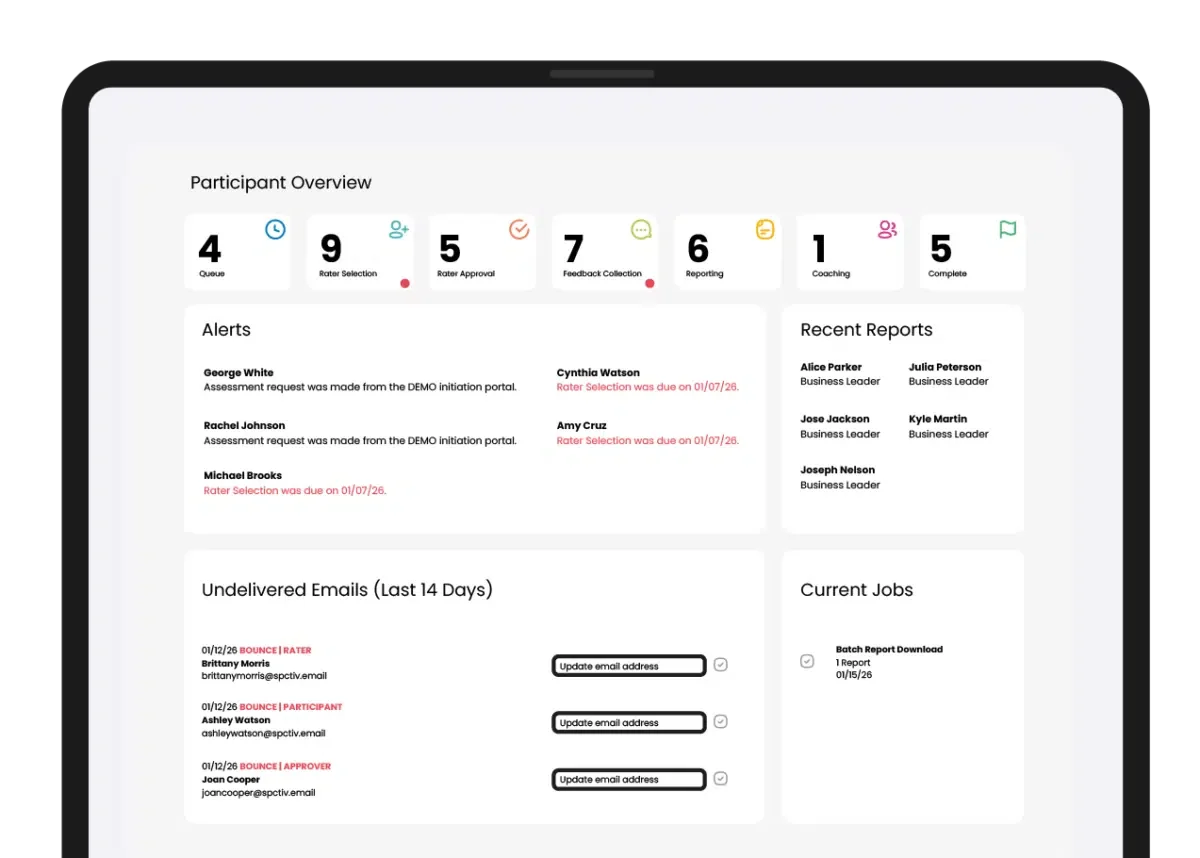
Once issues are identified, survey tools facilitate the assignment of ownership and the establishment of timelines for resolution. This structured approach ensures that leaders follow through on commitments and allows for the measurement of the impact of implemented changes over specific periods.
Measuring Improvement Over Time
A critical function of these tools is their ability to measure the effectiveness of interventions. By comparing survey results across different cycles, organizations can objectively assess whether identified issues are improving, remaining static, or worsening, thereby enabling iterative adjustments to strategies.
Case Study: Organic Valley’s Success with Employee Feedback
Organic Valley, a leading cooperative of organic farmers, faced the challenge of measuring and demonstrating its food safety culture across its diverse facilities. Their previous manual approach to survey management in spreadsheets was inefficient and time-consuming.
The Solution: Organic Valley partnered with Achievers, leveraging the Voice of Employee platform to develop a custom food safety culture survey. This survey assessed employee perceptions across four key areas: values and mission, people systems, adaptability, and consistency. The platform’s capabilities enabled automatic grouping of survey results by facility and provided accessible reporting dashboards.
The Results: The initiative yielded an impressive 86% survey participation rate. Crucially, Organic Valley reported zero audit findings related to food safety culture since the survey’s implementation. The new process established a repeatable methodology for measuring and tracking improvements year over year. The survey data now serves as a vital resource for audit preparation, informs training decisions, and highlights opportunities for ongoing enhancement across the entire organization.
Achievers: Beyond a Survey Tool
While many employee survey tools excel at data collection, Achievers distinguishes itself by focusing on the entire feedback loop: understanding, acting upon, and measuring the impact of employee insights. Its unique value proposition lies in the seamless integration of employee listening with tangible employee experience initiatives. Survey insights are directly connected to recognition, engagement, and action-planning data, providing leaders with an unparalleled view of employee sentiment and enabling targeted interventions. Achievers empowers organizations to cultivate a continuous feedback loop that reinforces effective communication, fosters accountability, and drives sustained improvement across the business.
The increasing complexity of the modern workplace necessitates a proactive and data-informed approach to employee engagement. Employee survey tools, when implemented strategically and with a commitment to action, are no longer a mere HR function but a critical driver of organizational success, talent retention, and a thriving company culture.