Hybrid work, a model that masterfully blends the flexibility of remote operations with the collaborative spirit of in-office presence, is rapidly reshaping the landscape of modern employment. This approach, where employees divide their working hours between their homes and a central office, acknowledges the nuanced needs of both individuals and organizations. By allowing for varied work conditions, hybrid models aim to optimize employee preferences while steadfastly maintaining performance metrics and fostering a robust company culture. This evolution is particularly critical for mid-market firms, where the challenges of scaling operations can often outpace the development of cohesive employee experiences.
The Crucial Benchmarks for Hybrid Work Engagement in Mid-Market Firms
For mid-market companies navigating the complexities of a hybrid workforce, several key engagement benchmarks emerge as paramount: employee connection, recognition, and a pervasive sense of belonging. These indicators serve as vital diagnostics for HR leaders, offering insights into how connected employees feel to their organization, irrespective of their physical location. The imperative to track these metrics is amplified in mid-sized businesses, as rapid growth can inadvertently create communication silos and lead to disparate employee experiences.
According to extensive research conducted by the Achievers Workforce Institute (AWI), a concerning statistic reveals that only 26% of employees globally report being engaged. This figure underscores a significant opportunity for organizations to proactively strengthen interpersonal connections, refine communication strategies, and cultivate a more unified company culture.
Within the context of hybrid teams, employee connection stands out as a particularly critical indicator. AWI’s findings further indicate that employees within highly connected organizations exhibit a significantly higher likelihood of:
- Increased Productivity: Employees who feel a strong sense of connection are more motivated and focused, leading to higher output.
- Enhanced Collaboration: A connected workforce is more inclined to share ideas, support colleagues, and work effectively in teams, regardless of geographical distribution.
- Greater Job Satisfaction: Feeling part of a team and valued by the organization contributes directly to overall happiness and fulfillment in their roles.
- Improved Retention Rates: Employees who feel connected and supported are less likely to seek opportunities elsewhere, reducing costly turnover.
These benchmarks are especially pertinent for mid-market companies. The dynamic nature of growth in these organizations can sometimes outpace the deliberate cultivation of a strong culture. When employees are distributed between home and office environments, the potential for communication breakdowns, feelings of isolation, and inconsistent workplace experiences increases exponentially.
Another indispensable benchmark is employee appreciation. Research consistently demonstrates a powerful correlation between feeling appreciated and finding work meaningful. Employees who feel recognized are twelve times more likely to perceive their work as meaningful and seventeen times more likely to envision a long-term career with their employer. This dual impact on work satisfaction and career commitment serves as a strong indicator of a healthy and sustainable hybrid work culture.
Defining Success: What Constitutes Strong Hybrid Engagement?
For mid-market organizations, robust hybrid engagement is characterized by employees who consistently:
- Feel connected to their colleagues and the company’s mission: This transcends physical proximity, focusing on shared goals and mutual support.
- Receive regular and meaningful recognition for their contributions: Appreciation should be timely, specific, and delivered through channels accessible to all.
- Experience a strong sense of belonging and inclusion: Every employee, regardless of their work location, should feel like an integral part of the team.
- Are empowered to perform at their best: This involves providing the necessary resources, autonomy, and support structures for success in a hybrid environment.
The most successful hybrid workplaces eschew traditional metrics like office attendance as primary indicators of engagement. Instead, they focus on tangible outcomes: connection, belonging, recognition, and performance. The consistent delivery of frequent and meaningful recognition acts as a powerful reinforcement for all these elements, fostering an environment where employees feel genuinely seen, valued, and motivated, no matter where they choose to work.
The Enduring Appeal of Hybrid Work
Hybrid work is not merely a fleeting trend; it represents a fundamental shift in how organizations can operate more intelligently and effectively. It answers the persistent question of whether work can be done "smarter," offering a compelling "yes." Employees gain improved work-life balance, while organizations stand to benefit from enhanced business outcomes. This paradigm shift is driven by several compelling factors, making hybrid work a model poised for sustained adoption:
- Enhanced Employee Well-being and Work-Life Balance: The flexibility to manage personal and professional commitments more effectively leads to reduced stress and improved mental health.
- Increased Productivity and Focus: Employees can leverage the benefits of both environments, choosing the setting that best suits their tasks and concentration needs.
- Access to a Wider Talent Pool: Organizations are no longer geographically constrained, enabling them to recruit top talent from anywhere in the world.
- Cost Savings for Organizations: Reduced need for extensive office space can lead to significant savings on real estate, utilities, and maintenance.
- Improved Employee Retention: Offering flexible work arrangements is a powerful tool for retaining valuable employees who prioritize autonomy and balance.
- Greater Environmental Sustainability: Reduced commuting contributes to a smaller carbon footprint, aligning with corporate social responsibility goals.
Distinguishing Hybrid Work from Remote Work
While often used interchangeably, hybrid work and remote work are distinct models, each with its unique characteristics.
- Remote Work: In a fully remote model, employees exclusively work from a location outside of a traditional office, typically their home. Collaboration and communication are entirely reliant on digital tools.
- Hybrid Work: This model mandates a mix of in-office and remote work. Employees are expected to be present in the office for a predetermined portion of their workweek, allowing for in-person interaction and collaboration.
Both models depend heavily on digital tools to maintain connectivity. However, hybrid work specifically carves out dedicated time and space for face-to-face interaction, brainstorming sessions, and a welcome change of scenery from the home office. It is not an "either-or" proposition but rather a synthesis of the best aspects of both worlds, designed to empower employee flexibility while ensuring teams remain cohesive and connected.
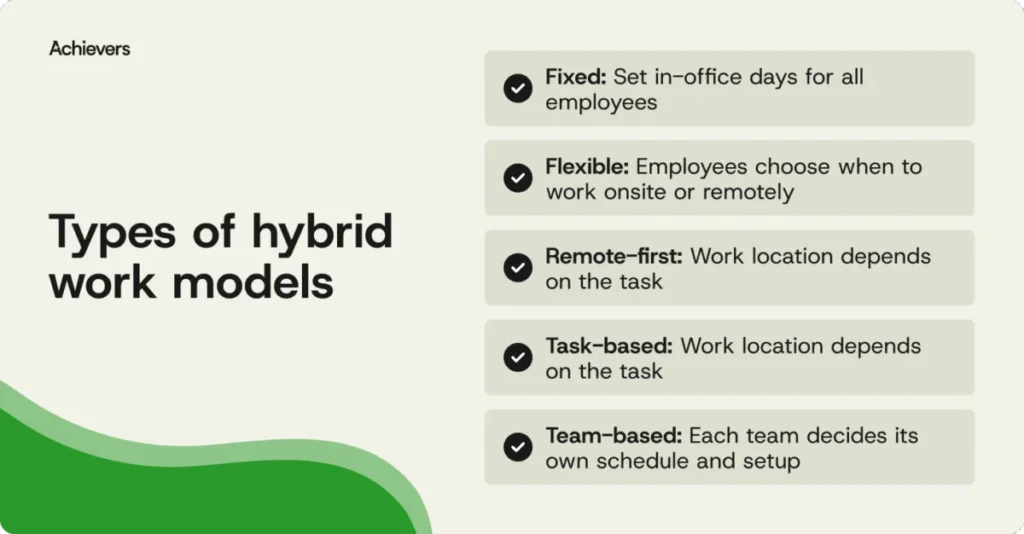
Diverse Models of Hybrid Work Implementation
The adaptability of the hybrid model is further highlighted by its various implementations, catering to different organizational needs and preferences.
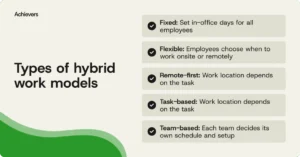
Fixed Hybrid Model
This structured approach designates specific days or weeks for employees to work from the office and others for remote work. Its predictability is beneficial for planning and ensures team members know when to expect one another. However, it offers less flexibility for individual circumstances.

Flexible Hybrid Model
Here, employees have greater autonomy in choosing their work location and hours, within established organizational guidelines. This model is highly favored for its contribution to work-life balance but requires clear communication protocols and robust scheduling tools to manage availability effectively.
Remote-First Model
In this paradigm, working from home is the default. The physical office serves as a hub for occasional team gatherings, collaborative project sprints, or specific events. This model is ideal for organizations with geographically dispersed teams or those prioritizing maximum flexibility. Essential to its success are advanced digital communication and recognition platforms to maintain a strong company culture, even without constant physical presence.
Task-Based Hybrid Model
This pragmatic approach allows employees to select their work environment based on the nature of their tasks. For instance, deep focus work might be best suited for a home office, while intensive brainstorming sessions could necessitate an in-person gathering. This model prioritizes matching the environment to the task for optimal workflow.
Team-Based Hybrid Model
In this decentralized approach, individual teams or departments determine their optimal blend of in-office and remote work. This empowers teams to tailor their work arrangements to their specific needs and workflows, fostering autonomy and adaptability. It acknowledges that no two teams operate identically.
Navigating the Challenges of Hybrid Work
While hybrid work offers significant advantages, its implementation is not without its hurdles. The transition can introduce complexities that, if unaddressed, can transform flexibility into frustration.
- Maintaining Equity and Inclusion: Ensuring that remote employees have the same opportunities for visibility, development, and promotion as their in-office counterparts is crucial. This requires deliberate effort to avoid creating a two-tiered system.
- Combating Isolation and Disconnection: Employees who spend more time working remotely may feel disconnected from their colleagues and the broader organizational culture. Proactive measures to foster social interaction and team building are essential.
- Managing Communication and Collaboration: With teams distributed across different locations and schedules, ensuring seamless communication and effective collaboration can be challenging. Clear communication channels, standardized tools, and established protocols are vital.
- Ensuring Data Security and IT Support: A distributed workforce necessitates robust cybersecurity measures and accessible IT support for all employees, regardless of their location.
- Adapting Management Styles: Leaders must evolve their management approaches to effectively lead hybrid teams, focusing on outcomes rather than physical presence and fostering trust and autonomy.
- Optimizing Office Space Utilization: Companies need to rethink the purpose and design of their physical office spaces to accommodate the needs of a hybrid workforce, potentially transforming them into hubs for collaboration and social interaction rather than traditional individual workspaces.
Strategies for Cultivating a Thriving Hybrid Work Culture
A successful hybrid workplace is a deliberate construct, requiring a strategic blend of flexibility, robust connection mechanisms, and empathetic leadership. By implementing thoughtful strategies, organizations can cultivate an environment where employees feel valued, supported, and empowered to excel, regardless of their work location.
1. Make Recognition a Universal Practice
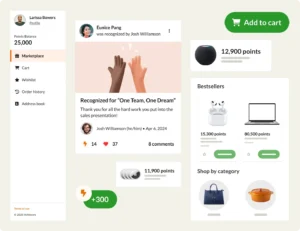
In a hybrid setting, spontaneous hallway thank-yous become less frequent. It is imperative to embed recognition into the daily fabric of work. Organizations should leverage recognition platforms that facilitate easy celebration of achievements, integrate seamlessly with existing digital tools, and offer rewards that genuinely resonate with employees. This ensures that appreciation transcends physical distance and remains a constant motivator.
2. Empower Employees with a Voice
Feedback mechanisms in a hybrid world must extend beyond in-office discussions. Establishing accessible and straightforward channels for employees to share their experiences and suggestions is critical. This can include regular pulse surveys, AI-powered chatbots, and feedback tools that translate input into actionable insights. Genuine listening is only impactful when followed by tangible action.
3. Develop Agile and Inclusive Policies
The inherent flexibility of hybrid work should be mirrored in organizational policies. Offering options such as flexible hours, compressed workweeks, or varied location choices allows employees to tailor their work arrangements to their personal lives. A one-size-fits-all policy approach is no longer effective in today’s dynamic work environment.
4. Deliver Accessible and Adaptable Training
Remote work necessitates the acquisition of new skills, from mastering digital collaboration tools to enhancing time management. Organizations should provide concise, self-paced learning modules and accessible coaching opportunities that meet employees where they are. This commitment to continuous professional development is key to employee growth.
5. Integrate Connection into Daily Routines
Distance can sometimes lead to disengagement, but consistent effort can bridge this gap. Organizing a mix of voluntary, inclusive team activities, both in-person and virtual, can foster genuine connections. Understanding and catering to employee preferences for social interaction is more impactful than simply checking a "team-building" box.
6. Equip Leaders to Navigate Hybrid Environments
Modern leadership demands new competencies. Managers must shift their focus from supervising hours to evaluating outcomes, mastering communication, coaching, and fostering connection across diverse locations. Providing managers with the necessary training and tools is essential for their confidence and effectiveness in leading hybrid teams.
Building a Connected Hybrid Workplace for All
The creation of a flourishing hybrid workplace is not a serendipitous event; it is the outcome of intentional strategies that prioritize genuine connection, consistent recognition, and active listening. Employees need to feel that their contributions are seen, their voices are heard, and their efforts are appreciated, regardless of where they are logging in from.
Achievers, through its comprehensive platform, offers the tools and methodologies to foster this environment. By integrating recognition into daily workflows, providing meaningful rewards, and establishing straightforward channels for feedback and action, organizations can construct a workplace where every individual feels connected, valued, and empowered. This proactive approach to employee engagement is not just a benefit; it is a strategic imperative for sustained success in the evolving world of work.