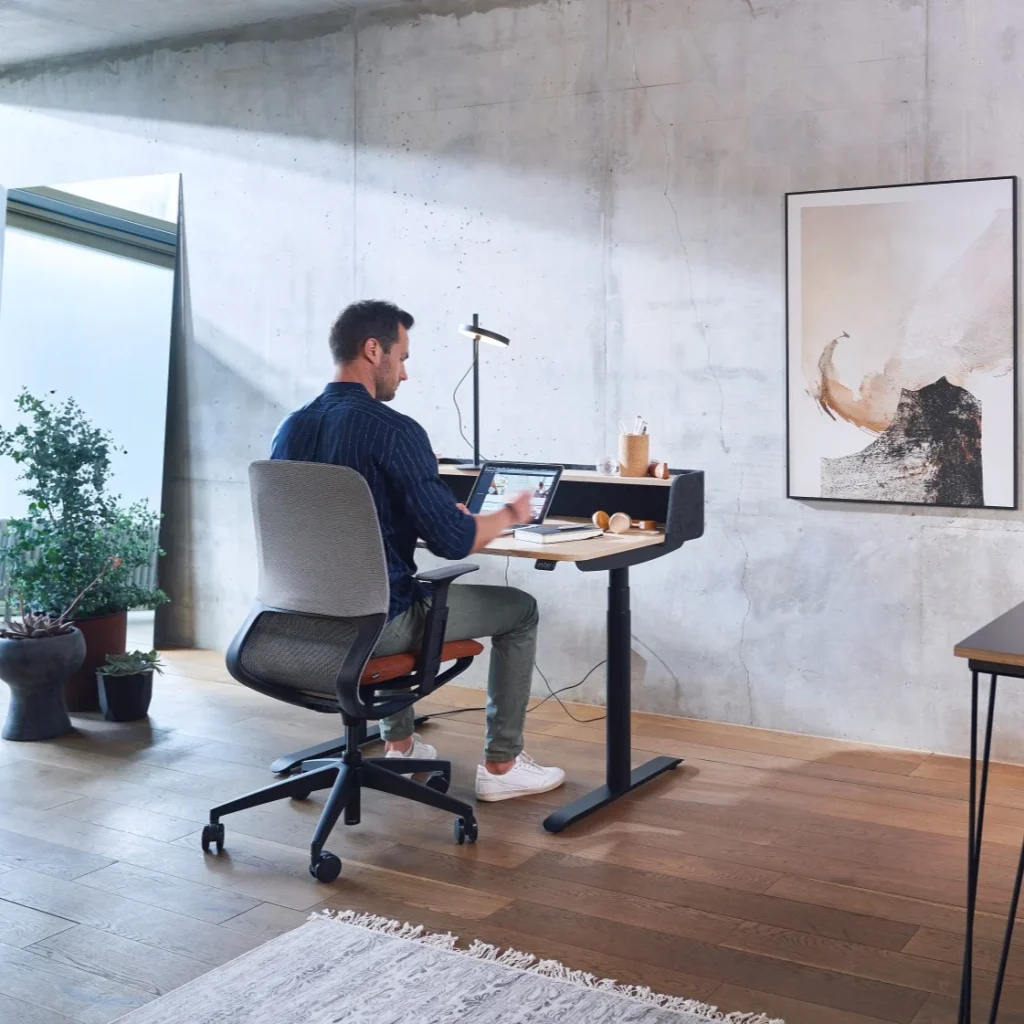
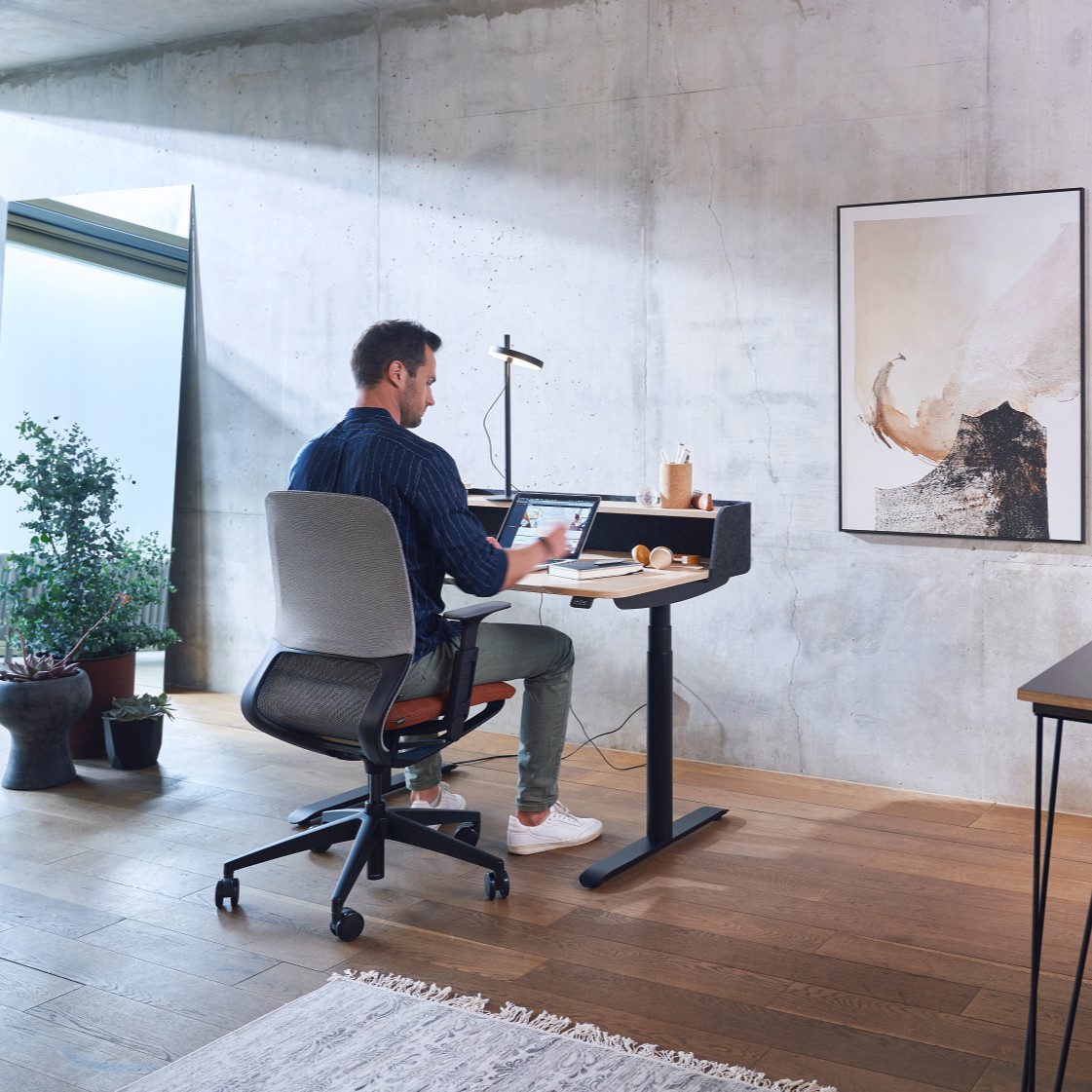
A significant shift in workplace dynamics, accelerated by the global pandemic, has brought flexible working arrangements to the forefront of professional life. However, new research from King’s Business School at King’s College London suggests that the benefits of remote work may not be distributed equally, with men working from home for a substantial portion of the week potentially facing greater career repercussions than their female counterparts when being considered for jobs and promotions. This groundbreaking study, analyzing nearly 13,000 assessments from over 5,300 employed individuals in the UK and Germany, reveals a nuanced landscape of perceptions where the frequency of remote work and parental status intersect to create distinct career penalties.
The research, published in the journal Community, Work & Family, challenges the prevailing narrative that flexible working is primarily an issue for mothers. While mothers in the UK already start from a lower baseline of perceived suitability for office-based roles, the study indicates that men who opt for significant remote work may experience a more pronounced decline in their career prospects compared to women in similar situations. This suggests a subtle yet significant bias that could impact career progression and talent management strategies across the continent.
The Homeworking Penalty: A Deeper Dive into the Data
The core of the study’s findings lies in the direct correlation between the amount of time spent working from home and the perceived career penalty. The research employed a methodology where participants assessed hypothetical candidates, systematically varying factors such as gender, parental status, and the frequency of remote work. The results painted a clear picture: individuals described as working from home were consistently rated less favorably than their office-based counterparts.
Crucially, this penalty escalated significantly with the duration of remote work. Employees working from home for one or two days a week experienced a notable, but less severe, reduction in their ratings. However, those dedicating three or four days to remote work faced a much steeper decline in perceived suitability for roles and promotions.
In the UK, the impact was particularly pronounced. Ratings for individuals working remotely for one to two days a week dropped by an average of 0.56 points on a 10-point scale, compared to those working exclusively in the office. For those working remotely three to four days a week, this penalty almost doubled, falling by 0.94 points.
Germany, while also exhibiting negative perceptions of homeworking, showed a less severe penalty for limited remote work. Here, ratings declined by 0.24 points for one to two days of remote work and 0.74 points for three to four days. This disparity highlights potential cultural or institutional differences in how remote work is perceived and valued in the two countries.
Gender and Parental Status: An Intersectional Analysis
The study’s most striking revelations emerge when examining the intersection of gender and parental status. While fathers and workers without children generally experienced larger declines in their ratings when working remotely compared to their office-based counterparts, the researchers issued a critical caveat: this should not be interpreted as an advantage for mothers.
The data indicated that in the UK, mothers already began with relatively lower ratings even when described as working entirely in the office, particularly when contrasted with women without children. Consequently, the smaller additional homeworking penalty observed for mothers was, at least in part, a reflection of this lower starting point rather than a sign of more favorable treatment due to their homeworking arrangements.
Professor Heejung Chung, a lead author of the study and Professor of Work and Employment at King’s Business School, emphasized the importance of this distinction. "Flexible working has often been seen as a mothers’ issue," Professor Chung stated, "but this study shows that fathers also need protection from career penalties when they use it." She further argued that normalizing flexible working for fathers could have a ripple effect, encouraging a more equitable division of caring responsibilities. "Making flexibility safe and normal for fathers can support mothers’ employment while improving outcomes for fathers and children," she added.
National Differences: UK vs. Germany
The comparative analysis between the UK and Germany offered valuable insights into how national contexts shape perceptions of remote work. For employees working remotely for one or two days per week, the career penalty was significantly less severe in Germany than in the UK. This suggests that limited, or hybrid, remote working arrangements might be more readily accepted or less stigmatized within German professional cultures.
However, when the frequency of remote work increased to three or four days per week, the statistical significance of the difference between the two countries diminished. This could imply that the negative perceptions associated with more extensive remote working become more universal, potentially outweighing national distinctions.
The researchers posited that these differences could be attributed to a combination of national institutions and prevailing workplace cultures. Simply offering the option of homeworking, they argued, does not automatically dismantle ingrained negative assumptions about employees who utilize it. This points to a critical gap between the formal provision of flexible work policies and the informal workplace culture that governs how these policies are perceived and how their use impacts career trajectories.
Implications for Employers and Policy Makers
The findings of this study carry significant implications for employers, human resources professionals, and policymakers seeking to navigate the evolving landscape of work. The research strongly suggests that organizations need to move beyond simply offering flexible working arrangements and actively work to dismantle the stigma associated with them.
The authors recommend that employers critically examine their promotion and performance evaluation processes. A heavy reliance on physical visibility, they argue, may inadvertently penalize remote workers. Instead, organizations should prioritize outcome-based assessments and actively address "proximity bias" – the tendency to favor employees who are physically present.
Furthermore, the study underscores the importance of normalizing flexible working across the entire workforce. Presenting flexibility solely as an arrangement for parents or individuals with caring responsibilities risks reinforcing stereotypes and may deter employees, particularly men, from utilizing these beneficial arrangements for fear of career repercussions. A broader, more inclusive approach to promoting and supporting flexible work is essential to foster genuine equality and maximize its benefits for all employees and the organization.
Context and Chronology of the Research
The research emerged from a period of unprecedented global disruption, with the COVID-19 pandemic acting as a powerful catalyst for the widespread adoption of remote and hybrid working models. While the initial shift was driven by necessity, the subsequent years have seen a complex recalibration of workplace expectations and practices.
The data for this study was collected in the latter half of 2023, a period where many organizations were grappling with the long-term implications of flexible work. This timing is crucial, as it reflects attitudes and perceptions formed after the initial emergency phase of the pandemic, suggesting that these biases are not merely temporary reactions but potentially embedded within professional culture.
The research team, comprising Professor Heejung Chung, Assistant Professor Senhu Wang of the National University of Singapore, and Dr. Yvonne Lott of the Institute of Economic and Social Research at the Hans-Böckler Foundation, meticulously designed their experiment to isolate the impact of homeworking. By presenting participants with fictional candidates whose characteristics were systematically varied, they were able to gather robust data on how perceptions changed based on remote work arrangements.
The paper, titled "Flexibility stigma in the UK and Germany post-pandemic: intersectionality of stigma across gender and parental lines," represents a significant contribution to the growing body of literature on the future of work. Its publication in Community, Work & Family signals its importance to academic and professional discourse surrounding employment relations and social science.
Limitations and Future Directions
It is important to acknowledge the limitations of the study. The research measured hypothetical decisions made by participants, rather than tracking actual recruitment or promotion outcomes. While this provides strong evidence of underlying biases, it does not definitively prove that remote workers are actually less likely to be promoted or hired. The study offers a valuable insight into evaluative perceptions, which are undeniably influential in real-world decision-making.
Future research could build upon these findings by conducting longitudinal studies that track the career progression of individuals in different working arrangements. Further exploration into the specific cultural nuances within different industries and organizations could also yield valuable insights into tailoring strategies for promoting equitable flexible working.
In conclusion, this research serves as a critical wake-up call for organizations worldwide. As the lines between office and home continue to blur, it is imperative that companies foster environments where flexible working is not only permitted but genuinely valued and where career progression is based on merit and performance, not simply on physical presence. The hidden career cost of homeworking, particularly for men, demands immediate attention to ensure a truly equitable and effective future of work.