For nearly three decades, the landscape of organizations, work, and human resources has been a dynamic terrain, marked by a succession of dominant themes: digital transformation, employee wellbeing, hybrid work models, diversity and inclusion initiatives, and most recently, the pervasive influence of Artificial Intelligence (AI). While these trends have individually captured significant attention, a deeper analysis reveals a more profound, underlying shift in the relationship between employers and their workforces – a phenomenon best described as "The Great Decoupling." This evolution is not about making work more "human," but rather about a fundamental redefinition of employment stability, trust, and the long-term commitments that once characterized careers.
The Shifting Sands of Employment Stability
The contemporary workplace is increasingly characterized by a palpable sense of insecurity. Companies, driven by market pressures and the pursuit of efficiency, have adopted a more transactional approach to staffing. Layoffs, once considered significant events requiring careful consideration and communication, are now often executed with swiftness, sometimes conveyed through brief email notifications and minimal notice periods. This abruptness has contributed to a decline in employee morale and a pervasive sense of vulnerability, particularly as the specter of AI-driven job displacement looms large.
This trend is not new, but it has been significantly amplified in recent years. The emphasis on diversity, equity, and inclusion, while critically important, has seen its prominence questioned in some quarters, with discussions around pay equity often overshadowed by the dramatic salary increases commanded by highly specialized roles, such as AI engineers earning upwards of $500,000 annually. This stark disparity fuels anxieties among the broader workforce, who fear being left behind or rendered obsolete by technological advancements.
The Erosion of Trust: A Decades-Long Decline
Underpinning these shifts is a persistent and concerning trend: a steady decline in trust between employees and employers. Decades of research from prominent institutions like Pew Research Center and Edelman have consistently pointed to this widening chasm. A 2024 PwC study revealed that only 67% of employees, in general, trust their employers. This figure drops even more dramatically for frontline workers, who constitute a substantial 72% of the workforce, with less than half expressing overall trust.
The erosion of trust in leadership is even more pronounced. In 2019, approximately 25% of workers reported trusting their company’s leaders. By 2024, this figure had dwindled to around 19% and continues to trend downwards. While there was a temporary surge in employee trust during the initial phases of the COVID-19 pandemic, the recent discourse surrounding AI and potential job cuts has led to a precipitous decline, further fracturing the employer-employee bond.
The Core Trend: "The Great Decoupling"
Beyond the fluctuations in trust and the rise of AI, the most significant and enduring trend identified by labor market analysts is the "decoupling" of workers from their employers. This signifies a fundamental shift away from the traditional model of long-term, stable employment in exchange for loyalty and dedicated service.

Data indicates a substantial increase in ancillary employment and a soaring rate of job changes. Currently, over 65% of workers engage in "side hustles" or supplementary work to supplement their income or pursue personal interests. Simultaneously, the frequency of layoffs and transitions between employers has accelerated dramatically. Research suggests that the average US worker can expect to be laid off approximately 2.5 times during their career, a number that has more than doubled over the past three decades.
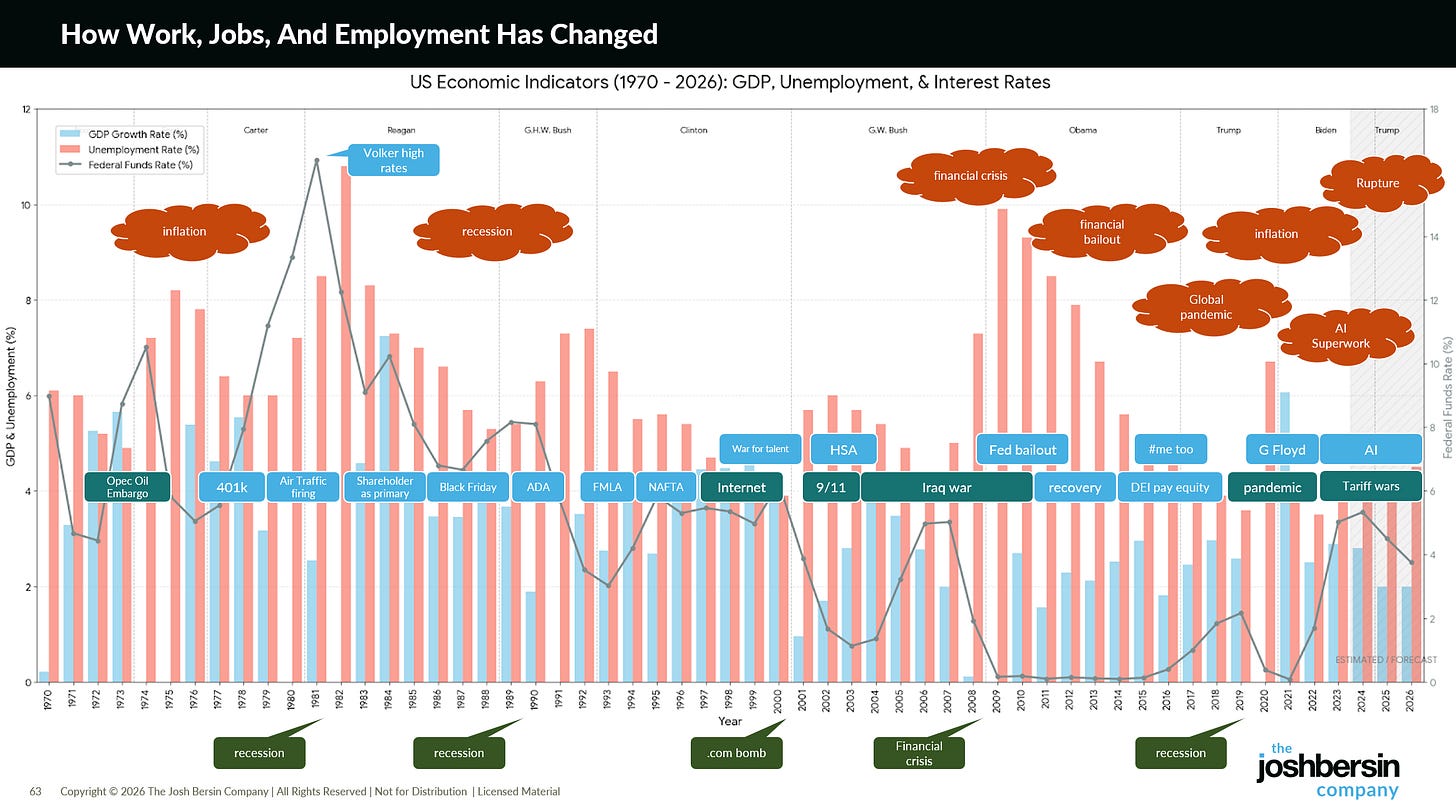
This trend is visually represented by comprehensive data charts that map various economic indicators, including US GDP growth, interest rate fluctuations, presidential administrations, periods of recession, and significant regulatory events. Analysis of these charts consistently highlights a sustained movement away from labor unions, collective bargaining, and legislative protections that historically favored workers. Instead, there has been a gradual institutionalization of what has been termed an "ownership economy." This model shifts the onus of financial security and career development onto the individual, with retirement plans like 401(k)s becoming personalized responsibilities, and benefits like family leave and health savings accounts placing greater financial burden on employees.
Furthermore, global economic forces, such as the North American Free Trade Agreement (NAFTA) and other globalization efforts, have contributed to the outsourcing of many traditionally stable jobs, further fragmenting career paths and reducing long-term employment prospects within single organizations.
The Shrinking Lifespan of Corporations
The instability is not confined to individual careers; it also extends to the corporations themselves. In the 1970s and 1980s, companies enjoyed a longer tenure on major stock indices like the S&P 500, averaging between 12 to 13 years. Today, this average has significantly compressed to approximately 4 to 5 years, a stark reflection of the relentless pace of technological advancement and global competition that continuously challenges established business models. While some view this as a sign of a vibrant and adaptable economy, it undeniably reshapes the nature of work and the concept of a lifelong career.
The AI Anxiety and the "Self-Career Management" Imperative
The current anxieties surrounding AI, while understandable, often overshadow the longer-term structural changes. While some analysts, including those cited in this report, view AI as a potential net positive for workers, the immediate perception is one of threat. This heightened anxiety coincides with a peak in the trend towards "self-career management." The narrative often presented is one of individual agency: "Just go out and get your hands on AI tools, build a website, and become an influencer, entrepreneur, or software guru."
However, this optimistic outlook often fails to acknowledge the precarious financial reality for a significant portion of the American workforce. Over half of the working population in the US lacks more than three weeks of savings. This financial vulnerability means that many workers are essentially living on a treadmill, a situation exacerbated by current economic conditions, including high gas prices and persistent inflation, which have pushed consumer sentiment to a 60-year low, as indicated by metrics like the Michigan US Economic Sentiment index.
Activities that once felt liberating, such as driving for ride-sharing services or food delivery platforms, now increasingly feel like survival tactics. As these platform companies consolidate their market dominance, they tend to exert downward pressure on labor costs. This pervasive feeling of being "labor" susceptible to automation is widespread, even among HR professionals, who are grappling with the implications of AI on their own roles and the broader workforce.
The Inevitability of Decoupling: A Historical Perspective
The decoupling of workers from employers, while amplified by modern technology and AI, has roots that extend back decades. While not necessarily a planned outcome by any single administration, the trend gained momentum under leaders like Ronald Reagan and has been significantly institutionalized by the advent of the internet and subsequent technological advancements. The ease with which companies can now engage contract workers globally, coupled with sophisticated performance-tracking systems, facilitates a more fluid and less committed employment model.
For individuals in highly skilled trades, such as nurses, machinists, plumbers, or electricians, the current economic climate may offer relative stability due to consistent demand. However, for those in roles like accounting or administrative support, the looming specter of automation and the ease of outsourcing can create significant career uncertainty. The satirical suggestion to "just go out and start your own gig" with AI tools like Claude highlights the disconnect between the emerging opportunities and the practical realities for many.
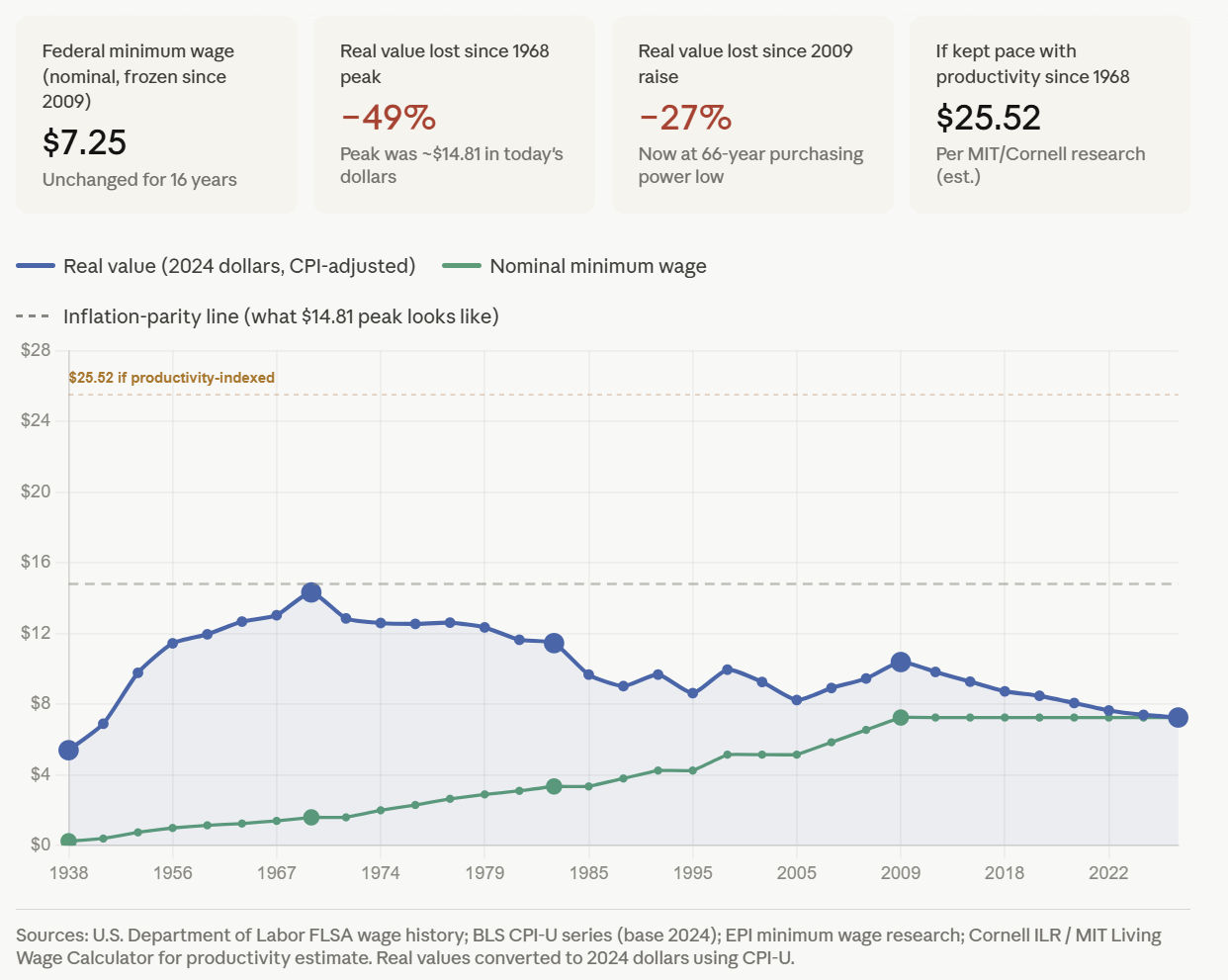
Compounding these challenges is the stagnation of the US federal minimum wage. As of 2026, it will have remained at $7.25 per hour for nearly 17 years, representing the longest period without an increase in US history. This has resulted in a significant loss of purchasing power, diminishing the economic security of the lowest-paid workers. While most individuals do not earn the minimum wage, this legislative inertia reflects a broader governmental stance that places the onus of economic security primarily on the individual rather than on systemic employer or governmental responsibility.
The Impact on Worker Compensation and Living Standards
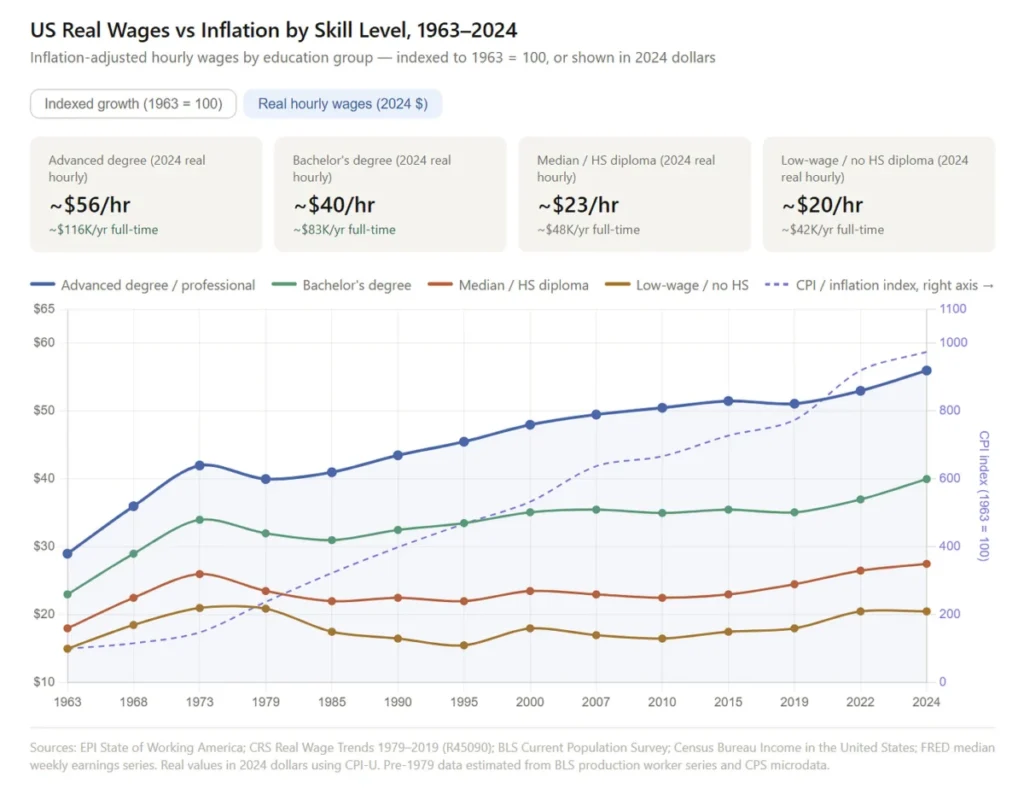
The long-term economic consequences of this decoupling are starkly illustrated by wage trends in relation to inflation. Data from the past several decades reveals a consistent pattern: worker segments have largely failed to keep pace with rising living costs. In the 1960s and 1970s, prior to the significant decoupling, wages generally outpaced inflation. However, the inflation shock of the 1970s marked a turning point, after which wages began to lag behind.
Analysis of wage growth across different educational attainment levels reveals a widening disparity. Low-wage workers and high school graduates experienced a decline in their standard of living starting in the early 1980s. College graduates began to see their wage growth plateau in the late 1990s, and those with advanced degrees, who had enjoyed a period of robust growth, have also seen their economic standing begin to slip in recent years, even as AI has emerged as a dominant economic force. This suggests that the traditional promise of a college degree as a guaranteed path to economic security has diminished significantly over the past two decades.
Addressing the Challenges: Potential Pathways Forward
The "Great Decoupling" presents a complex set of challenges that require multifaceted solutions. While the author of the original text expresses skepticism towards massive income redistribution or "guaranteed income" models, citing failed experiments, the need for proactive interventions is evident.
1. Reskilling and Upskilling Initiatives: A critical area for intervention lies in enhancing workers’ skills and adaptability. The US education system has faced significant challenges over the past six decades, with a substantial portion of adults lacking proficiency in reading comprehension at a 12th-grade level. This deficiency poses a significant hurdle as AI integrates into the workplace, demanding higher levels of critical thinking, inference, and evaluation. Investing in robust reskilling and upskilling programs, supported by both government and employers, is paramount to equip individuals with the "power skills" necessary to navigate an evolving job market. This includes fostering foundational literacy and critical thinking abilities, which are essential for understanding complex information, policy, and multi-step instructions – skills that AI itself cannot fully replicate.
2. Reimagining Talent Management and Workforce Planning: The prevalent practice of frequent layoffs and rapid workforce restructuring indicates a fundamental flaw in current talent management strategies. Many C-suite executives operate under the assumption that labor is a readily available commodity, easily replaced. However, each layoff erodes company culture, leads to the loss of invaluable skills and institutional knowledge, and fosters long-term distrust. A more sustainable approach would involve a shift towards long-term talent planning, emphasizing careful hiring, investing in employee development, and designing business models that prioritize sustainable growth over short-term cost reduction. Companies that view their employees as their most valuable appreciating asset, rather than a mere expense, are better positioned for enduring success.
3. Fostering Long-Term Corporate Responsibility: While the market often rewards companies for layoffs with immediate stock price increases, this short-sighted approach overlooks the detrimental long-term consequences. The shift in corporate accounting that categorizes labor as an expense rather than an investment, a practice rooted in historical economic models, needs re-evaluation. Companies that prioritize long-term stability, invest in their human capital, and avoid unnecessary layoffs demonstrate a commitment to their workforce that can yield significant returns in terms of loyalty, innovation, and sustained growth. Organizations like Nvidia, Microsoft, Apple, and L’Oréal are often cited as examples of companies that balance the pressures of growth and market adaptation with a serious commitment to their human capital.
The Choice for Leaders and Individuals
The "Great Decoupling" is a pervasive trend, but it is not an immutable destiny. Companies have a choice in how they navigate this evolving landscape. Those that embrace a short-term, venture-backed startup mentality, driven by rapid scaling and eventual exit, may perpetuate the cycle of decoupling. Conversely, organizations that adopt a long-term perspective, recognizing the intrinsic value of their people, can foster a more stable and productive environment.
As AI presents unprecedented opportunities for reinvention, leaders are challenged to lean into their existing talent, empowering them to drive innovation and transformation. The most enduring companies understand that investment in long-term employee development, retention, and growth is the true engine of sustained success. In an era characterized by rapid decisions and market volatility, a deliberate focus on taking care of people is not just a matter of corporate social responsibility, but a strategic imperative for fostering growth, value, and enduring organizational strength.