In 2026, the corporate world is witnessing a significant evolution in how organizations approach and articulate their commitment to diversity, equity, and inclusion (DEI). What was once a straightforward public declaration has transformed into a strategic communication challenge, driven by a heightened focus on measurable results, legal scrutiny, and a tactical rebranding of core initiatives. Companies are now prioritizing data-backed claims and compliance, moving away from generic promises to more specific, mission-aligned, and carefully worded commitments designed to withstand both legal review and public skepticism.
The Strategic Shift: Results, Data, and Compliance
A diversity statement, fundamentally, remains a concise public commitment to inclusion and equity, typically displayed on career pages, dedicated DEI sections, or within job descriptions. Its importance lies in its role as a preliminary touchpoint for potential candidates, shaping their perception of a company’s values. However, the landscape has notably shifted. In 2026, the efficacy of inclusion efforts is no longer primarily judged by the eloquence of public pledges but by tangible, verifiable results. This paradigm shift compels organizations to ensure their internal practices and external communications are robust enough to endure rigorous legal evaluations, emphasizing data-driven outcomes and stringent compliance protocols.
A Pivotal Year: Federal Directives and Corporate Reactions in 2025
The catalyst for this transformation can be traced to early 2025, when a series of federal executive orders significantly impacted agency-level DEI programs across the United States. These directives, emerging from a period of intense public and political debate surrounding corporate and governmental DEI initiatives, effectively curtailed many established federal diversity programs. The political climate preceding these orders saw increasing public discourse questioning the efficacy and fairness of certain DEI practices, leading to a demand for greater transparency, accountability, and a re-evaluation of their implementation. This governmental action sent ripples through the private sector, prompting corporations to reassess their own DEI frameworks.
Following these federal mandates, corporate responses were swift and varied, yet a clear trend emerged. According to a report by Gravity Research, approximately 40 major corporations publicly adjusted their DEI strategies in the immediate aftermath of the inauguration and subsequent executive orders. This figure, representing a notable portion of the corporate landscape, underscores the immediate impact of the federal actions. While these adjustments were made, the vast majority—an estimated 80% of these corporations—simultaneously reaffirmed their fundamental commitments to inclusion, belonging, or accessibility in some capacity. This dual response highlights a delicate balancing act: adapting to a changing regulatory and political environment while striving to uphold core organizational values related to workforce diversity.
Tactical Rebranding: The Evolution of Language
A key tactical response observed across the S&P 500 was a deliberate reduction in the use of the acronym "DEI" in their public filings and internal communications. This marked a strategic rebranding effort, aimed at depoliticizing diversity initiatives and framing them in more neutral, business-centric terms. Departments previously labeled "DEI" were frequently renamed to "People & Culture," "Employee Experience," or "Talent & Belonging."
A comprehensive review of 1,000 corporate filings revealed a concerted effort by companies to substitute potentially polarized labels with language perceived as less contentious. The primary motivation behind this linguistic pivot was to safeguard internal programs from escalating legal challenges or political criticism. By reframing these initiatives around concepts like "talent development," "employee well-being," and "organizational effectiveness," corporations sought to underscore their business imperative and move beyond perceived ideological debates. Industry analysts suggested this shift was not an abandonment of DEI principles but rather a sophisticated adaptation, ensuring the continuity of essential inclusion efforts under a more resilient linguistic umbrella. Many corporate leaders, while not publicly disavowing DEI, privately indicated that the rebranding was necessary to maintain focus on the tangible benefits of diversity—such as enhanced innovation, improved decision-making, and stronger financial performance—which studies by firms like McKinsey & Company have consistently linked to diverse leadership teams.
Crafting Effective Diversity Statements in the New Era
In this evolving environment, the art of writing an effective diversity statement has become more nuanced. It requires precision, honesty, and a direct link to an organization’s mission, eschewing generic buzzwords in favor of specific, actionable commitments. Ongig’s Text Analyzer software, along with other diversity tools, has been instrumental in helping companies refine their statements, evaluating them for factors such as masculine versus feminine language, offensive terms, positive/negative word balance, and overall readability.
Several critical elements define an impactful diversity statement in 2026:
- Specificity and Honesty: The most effective statements name real groups, back claims with data where possible, and avoid vague generalities. Candidates are more likely to trust a company that transparently outlines its diversity goals and acknowledges specific communities it aims to support. For instance, mentioning specific employee resource groups (ERGs) like Stanley Black & Decker does, lends credibility to the commitment.
- Mission Alignment: A strong diversity statement is intrinsically tied to the company’s core mission. Google’s statement, "To build products that help billions of people reach their goals, we’re bringing together talented people from everywhere," directly connects diversity to its product development mission. Similarly, Amazon and Uber explicitly link their diversity efforts to their overarching customer-centric and opportunity-igniting missions, respectively.
- Clarity and Readability: In a fast-paced world, busy candidates appreciate brevity and clarity. Research from the Public Relations Society of America (PRSA) indicates that sentences with eight words or fewer achieve 100% comprehension, a rate that drops significantly with longer sentences. Aiming for an 8th-grade reading level or lower ensures broad accessibility and comprehension. Oath’s statements, known for their low-grade level readability, exemplify this principle.
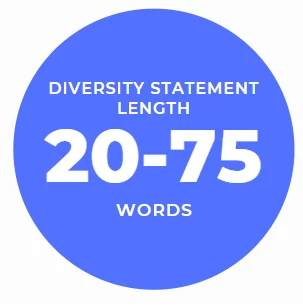
- Conciseness and Impactful Headlines: For main diversity statements on career pages or job descriptions, 20 to 75 words are often ideal. Longer elaborations can be reserved for dedicated diversity pages. Compelling headlines, such as T-Mobile’s "Together, we are unstoppable," immediately grab attention and convey a powerful message before the main body text is even read.
- Positive and Inclusive Language: Employing words proven to evoke positive feelings is crucial. Terms like "belonging," "opportunity," "empower," "celebrate," "innovate," and "thrive" create an inviting and affirming tone.
Leading Examples in a New Landscape
Despite the shifts, many companies continue to lead with robust diversity statements, adapted for the current climate.
- Pfizer’s "Merit-Based Diversity, Equity, and Inclusion": Pfizer’s statement emphasizes meritocracy, stating that "hard work, talent, and contributions drive success, and barriers to opportunity are removed." This framing aligns with the increased focus on measurable contributions and fair access.
- Google’s Mission-Driven Approach: Melonie Parker, VP of Googler Engagement, highlights that "bringing together talented people from everywhere" is essential for building products that serve billions, directly linking diversity to universal product utility.
- Salesforce’s "Equality is a Core Value": Salesforce positions equality as a foundational value, critical for innovation and business success, underscoring its commitment to a workplace where every employee feels "seen, supported, can thrive, and is empowered."
- HubSpot’s Focus on "Belonging": HubSpot’s headline, "We’re all in on Belonging," and subsequent statement emphasize that belonging "fuels trust, sparks creativity, and amplifies ambition," transforming individual brilliance into collective genius. This aligns with the rebranding trend towards "belonging" over the often-politicized "diversity."
- Netflix’s "Stories That Reflect Our World": Netflix explicitly connects internal diversity to external storytelling impact, stating that "better representation on-screen starts with representation in the office." This illustrates the business case for diversity in a highly tangible way.
- United Way’s "Equity Statement": United Way of the National Capital Area’s statement goes further, framing equity as a core principle of social justice, actively working to "expose and dismantle institutional and systemic racism and all forms of injustice," demonstrating a deep, community-focused commitment.
- Workday’s VIBE Initiative: Workday’s "VIBE. Value Inclusion & Belonging for Everyone™" initiative encapsulates the modern approach by creating a memorable acronym for their global vision, directly linking inclusion to innovation and belonging to performance.
- Options Community Services (OCS) Holistic View: OCS highlights its commitment to reflecting the diverse communities it serves, encompassing race, ethnicity, gender identity, sexual orientation, religion, age, and ability, viewing diversity as an organizational asset.
- FedEx’s "Equality, Opportunity, and Diversity: Our values in action": FedEx emphasizes its long-standing commitment to equal opportunity since 1971, showcasing how this has cultivated a diverse workforce across 220 countries, all united by their "Purple Promise" of outstanding experience.
- Target’s "Belonging at the Bullseye": Target directly links belonging to business success, aiming to create a sense of belonging for team members, guests, and communities, believing that "when our communities thrive, our business does too."
These examples demonstrate that while the language and emphasis may have shifted, the underlying commitment to fostering diverse and inclusive environments remains robust, albeit articulated through more strategic and legally sound frameworks.
The Role of Technology: AI and the Authenticity Imperative
The rise of artificial intelligence (AI) tools presents both opportunities and challenges in crafting diversity statements. While AI can assist in refining and editing, generating statements from scratch often results in generic, formulaic prose. Psychology and Marketing research indicates that when audiences perceive diversity representation as artificially generated rather than genuinely intentional, it can trigger a reduced sense of belonging and a negative brand reaction.
The solution lies not in avoiding AI entirely, but in leveraging it as a refinement tool. Authenticity in diversity statements stems from human input: naming specific employee resource groups, explicitly calling out underrepresented communities, articulating measurable metrics or commitments, and crafting headlines unique to the company’s brand and mission. These human elements create a sense of genuine commitment that AI alone cannot replicate.
Broader Implications for Talent, Culture, and Public Trust
The evolving approach to diversity statements has significant implications for talent acquisition, corporate culture, and public trust. For job candidates, the clarity and specificity of a diversity statement can be a crucial differentiator, signaling an organization’s genuine commitment versus mere performative gestures. Companies that successfully navigate this new landscape will likely attract a more diverse and engaged talent pool, as prospective employees seek workplaces where their contributions are truly valued and their identities respected.
Internally, the shift towards results-driven inclusion and robust compliance frameworks necessitates a deeper integration of DEI principles into core business operations. It encourages a move beyond isolated programs to systemic changes that foster equitable opportunities and outcomes. However, this also carries the risk that an overly cautious, compliance-focused approach could dilute the passion and moral imperative often associated with DEI, potentially alienating employees and external stakeholders who value outspoken advocacy.
Ultimately, the trajectory of corporate diversity statements in 2026 reflects a maturation of the conversation around inclusion. It underscores a growing demand for authenticity, accountability, and a clear demonstration of impact. Organizations are learning to communicate their values not just through words, but through actions, data, and a strategic embrace of language that resonates with both legal requirements and the enduring human desire for belonging.