Virginia is transforming its approach to economic development by strategically cultivating a highly skilled workforce through innovative training pipelines, positioning itself as a national leader in supporting critical sectors like aerospace, defense, and maritime industries. This proactive strategy, marked by significant investments and collaborative partnerships, is yielding tangible results, creating pathways to high-demand careers and bolstering the Commonwealth’s economic resilience and national security contributions.
Danville’s Unlikely Maritime Hub: A Testament to Long-Term Vision
More than 200 miles from the nearest ocean, the city of Danville, Virginia, has emerged as an unexpected yet potent center for maritime expertise. This specialization is not a recent development but the culmination of over two decades of dedicated effort in building robust infrastructure for skilled trade and manufacturing workforce development. This foresight has positioned the rural region to attract and sustain new industries, demonstrating a powerful model for how Virginia is meeting the escalating demand for a skilled workforce essential for ambitious aerospace and defense projects.
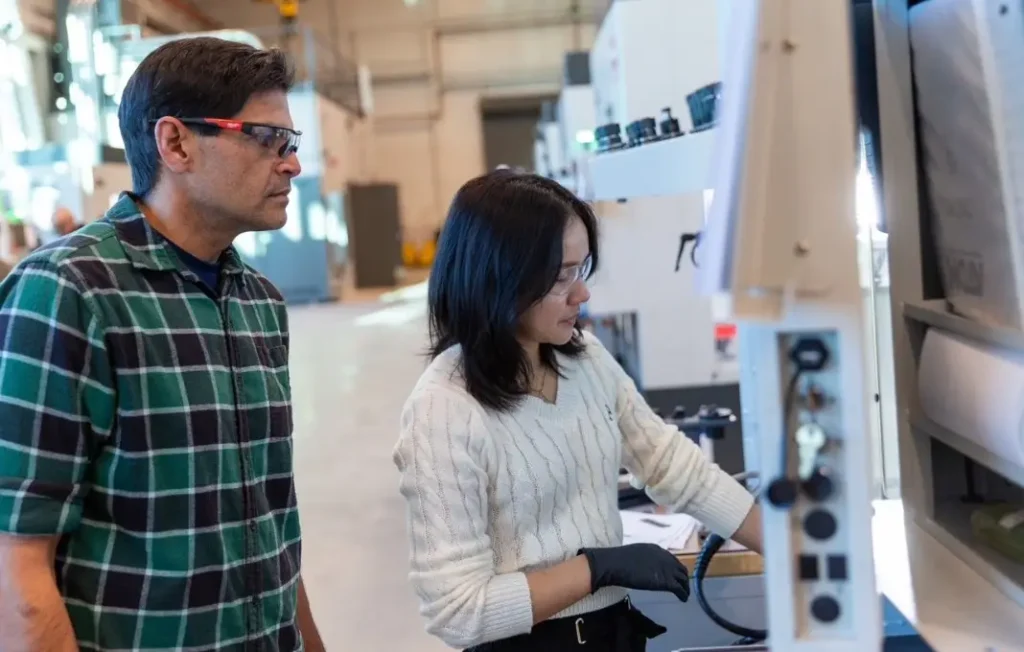
The cornerstone of this initiative is the Accelerated Training in Defense Manufacturing (ATDM) program, a collaborative effort between the U.S. Navy and Danville’s Institute for Advanced Learning and Research (IALR). Launched with significant federal support, the ATDM program is meticulously designed to address the U.S. Navy’s critical workforce needs. The pilot phase of the ATDM program provides trainees with intensive, fundamental skills over a rigorous 16-week period. This concentrated curriculum, comprising over 600 hours of focused instruction, equips graduates with the ability to immediately contribute to defense manufacturing companies upon entry. Graduates emerge from the program with multiple certifications, prepared to fill immediate industry demands.
"Our goal is to reduce the time to talent," stated IALR President Telly Tucker. "Companies have told us we’ve saved them as much as two years in training. This accelerated approach is vital in an era where speed and precision are paramount." The program’s ambition is to matriculate up to 1,000 students annually, serving as a replicable model for similar initiatives across the nation, all aimed at bolstering the Navy’s operational readiness through a skilled and readily available workforce.
Hampton Roads: A National Powerhouse for Maritime Industry Workforce Development
Complementing Danville’s specialized training, the Hampton Roads region, a globally recognized hub for naval operations and shipbuilding, is solidifying its position as a national center for the maritime industry. The Hampton Roads Workforce Council (HRWC) in Norfolk plays a pivotal role in coordinating these efforts through the Hampton Roads Maritime Training System (HRMTS). This integrated system is instrumental in harmonizing diverse skillsets to support the production of critical defense assets within what Shawn Avery, the Council’s president and CEO, aptly describes as "the nation’s military metro." Hampton Roads boasts the largest concentration of shipbuilding and ship repair facilities in the United States, including the renowned Newport News Shipbuilding and numerous other repair yards, making it a strategic nexus for naval readiness.
The HRMTS has benefited from substantial investment and support from the U.S. Navy, its Submarine Industrial Base (SIB) Program Office, and other federal agencies. This backing enables the HRMTS to effectively connect trainees from a spectrum of regional programs, including IALR’s ATDM initiative, to vital jobs within the defense sector. The organization collaborates closely with the region’s three community colleges – Tidewater Community College, Virginia Peninsula Community College, and Paul D. Camp Community College – to offer comprehensive credit and non-credit maritime training programs.
"We’re five years into this endeavor and producing approximately 5,000 to 6,000 individuals annually through this effort," Avery reported. "Within the next two to three years, we anticipate having the capacity to produce up to 10,000 individuals per year, specifically for the maritime industrial base here in Hampton Roads." This projected increase in output underscores the region’s commitment to meeting the burgeoning demands of the defense sector.
The most significant demand within the maritime industrial base has been for skilled professionals in welding, electrical work, pipe fitting, ship fitting, and machining. The HRWC has been particularly proactive in expanding welding training. Five years ago, the region was only meeting about 50 percent of the demand for qualified welders; today, they have achieved a remarkable balance, with one qualified welder available for every open position, a testament to the effectiveness of their targeted training programs.
The AUKUS Partnership: Amplifying Demand and Driving Innovation
Adding a significant layer to the demand for skilled maritime professionals is the trilateral AUKUS partnership between the United States, Australia, and the United Kingdom. This strategic security agreement aims to enhance cohesion in nuclear arsenals among the allied nations and notably includes the Royal Australian Navy’s acquisition of five Virginia-class submarines from the U.S. Newport News Shipbuilding (NNS), Virginia’s largest industrial employer, is a key participant in the AUKUS Workforce Alliance, a partnership forged with three Australian universities. This alliance is dedicated to cultivating a skilled workforce essential for supporting the collaborative technological advancements and defense initiatives under the AUKUS framework. The College of William & Mary in Williamsburg will serve as the U.S. academic anchor for this significant international partnership, further integrating Virginia into global defense innovation.
The implications of the AUKUS partnership extend beyond direct shipbuilding and repair. The development and maintenance of advanced defense systems, including nuclear-powered submarines, require a highly specialized and continuously trained workforce. Virginia’s commitment to developing these deep technical skills ensures its continued relevance and leadership in the global defense landscape. The demand for individuals with expertise in areas such as advanced manufacturing, complex systems integration, cybersecurity, and specialized engineering will only intensify as these collaborative projects progress.
A Timeline of Strategic Investment and Development
The foundation for Virginia’s current workforce development success was laid decades ago. The initial investments in infrastructure and educational frameworks in regions like Danville, though seemingly disparate from maritime operations, were part of a long-term strategy to build a versatile skilled trades workforce.
- Late 1990s/Early 2000s: Regions like Danville began to focus on developing skilled trade and manufacturing capacity, anticipating future industry needs and diversifying their economic base. This included investments in vocational training centers and partnerships with local educational institutions.
- Mid-2000s: The U.S. Navy and Department of Defense began to articulate more clearly their growing workforce challenges, particularly in specialized manufacturing and repair. This awareness spurred increased federal interest in innovative training solutions.
- Early 2010s: The Hampton Roads Workforce Council, recognizing the strategic importance of its maritime cluster, began to formalize and expand its training coordination efforts, laying the groundwork for the HRMTS. Community colleges in the region started to adapt and expand their maritime-related curriculum.
- Mid-2010s: The IALR in Danville, leveraging its established infrastructure and community partnerships, initiated discussions with the Navy to develop a more targeted and accelerated training program for defense manufacturing.
- Late 2010s: The ATDM pilot program in Danville was officially launched, demonstrating early success in rapidly producing job-ready individuals for the defense manufacturing sector. Simultaneously, the HRMTS in Hampton Roads gained significant traction with increased federal and private sector investment.
- Early 2020s: The AUKUS partnership was announced, significantly increasing the strategic demand for skilled personnel in shipbuilding and related defense technologies. Virginia, with its existing robust training infrastructure, was well-positioned to capitalize on this. The AUKUS Workforce Alliance, with NNS and William & Mary’s involvement, solidified Virginia’s role in this international collaboration.
- Present Day: Virginia’s workforce development initiatives are in full swing, with programs like ATDM and HRMTS exceeding their initial capacity targets and serving as national models. The Commonwealth continues to invest in advanced manufacturing technologies, research and development, and collaborative training partnerships to meet evolving industry needs.
Data-Driven Success and Future Projections
The success of Virginia’s workforce development strategy is quantifiable. The ATDM program’s ability to reduce training time by up to two years for defense manufacturing companies directly translates to cost savings and increased productivity for these critical enterprises. With a goal of training 1,000 individuals annually, the ATDM program alone represents a significant contribution to the national defense industrial base.
In Hampton Roads, the HRMTS’s projected capacity to train 10,000 individuals per year by 2025-2026 is a powerful indicator of the region’s ability to meet the substantial labor demands of its maritime sector. The transformation in welding training, from a 50% demand fulfillment rate to parity, exemplifies the targeted effectiveness of these programs. This success is not isolated; similar improvements are being seen across other high-demand trades.
The economic implications are profound. A skilled and readily available workforce is a critical factor for attracting and retaining businesses. For Virginia, this means not only supporting existing industries but also positioning the Commonwealth as a prime location for future investments in advanced manufacturing, aerospace, and defense technologies. The average annual wage for skilled trades in these sectors often significantly exceeds the state average, providing high-paying career opportunities for Virginia residents and contributing to overall economic prosperity.
Broader Impact and National Security Implications
Virginia’s innovative approach to workforce development has far-reaching implications beyond its borders. By creating efficient and effective training pipelines, the Commonwealth is directly contributing to the readiness and capability of the U.S. military and its allies. The ability to rapidly train and deploy skilled personnel for shipbuilding, repair, and advanced manufacturing is crucial for maintaining a technological edge and ensuring national security.
The success of programs like ATDM and HRMTS provides a blueprint for other states facing similar workforce challenges. The collaborative model, involving federal agencies, state educational institutions, and private industry, is proving to be a highly effective way to address complex labor needs. As global geopolitical landscapes evolve, the demand for a robust and adaptable defense industrial base will only intensify. Virginia’s proactive investments in its workforce are therefore not just an economic strategy but a strategic imperative for national security.
The development of specialized expertise, as seen in Danville’s maritime training, demonstrates that innovative solutions can be found even in unexpected locations. This diversification of talent pools and training hubs strengthens the overall resilience of the national defense supply chain. Furthermore, the emphasis on hands-on training and multiple certifications ensures that individuals are not only prepared for entry-level positions but also have the foundational skills to advance and adapt to new technologies throughout their careers.
In conclusion, Virginia is not merely adapting to the demands of a changing economy; it is actively shaping it. Through strategic investments in innovative workforce development, the Commonwealth is building a pipeline of skilled talent that fuels economic growth, attracts cutting-edge industries, and critically, underpins the nation’s defense and security interests. The success stories emerging from Danville and Hampton Roads are powerful testaments to Virginia’s commitment to a future where a highly skilled workforce is a cornerstone of both prosperity and national strength.