
The demand for skilled content marketers is experiencing a significant surge, placing unprecedented pressure on organizations to attract and hire the right talent. This escalating need is a direct reflection of the digital-first era, where content serves as the bedrock of brand communication, customer engagement, and market differentiation. As businesses increasingly rely on compelling narratives and strategic information dissemination across diverse platforms, the role of content professionals has become indispensable, evolving rapidly in scope and complexity.
SEMRush Study Reveals Market Dynamics
A comprehensive study conducted by SEMRush, a leading global online visibility management platform, analyzed over 8,000 content marketing job listings across the United States. This extensive analysis, spanning various industries and company sizes, provided critical insights into the current state and future trajectory of the content marketing job market. The findings underscore a clear trend: the profession is not only expanding in volume but also undergoing a profound transformation in terms of required skill sets and strategic responsibilities.
The study highlighted that the growth in content marketing roles is not merely an incremental increase but a fundamental shift in how companies perceive and invest in their digital presence. From startups to multinational corporations, there is a collective recognition that effective content is a powerful driver for brand awareness, lead generation, and customer loyalty. This recognition translates directly into a competitive hiring landscape, where organizations are vying for professionals who can navigate the intricacies of modern content ecosystems.
A Spectrum of Roles: From Creator to C-Suite
The content marketing field has diversified considerably, giving rise to a wide array of specialized roles, each with distinct responsibilities and strategic contributions. The SEMRush study, alongside broader industry observations, indicates a clear hierarchy and progression within the profession, ranging from foundational entry-level positions to executive leadership roles.
- Content Creator: Often an entry-level or foundational role, focusing on the production of various content types (blog posts, social media updates, website copy) adhering to established guidelines. They are the engine of content output.
- Content Producer: Similar to a creator but often with added responsibilities for overseeing the technical aspects of content production, such as video editing, podcast recording, or graphic design, ensuring content is ready for distribution across specific platforms.
- Content Strategist: This role moves beyond creation to planning and execution. Content strategists are responsible for developing comprehensive content plans aligned with business objectives, identifying target audiences, conducting keyword research, and mapping content to customer journeys. They ensure content is not just produced, but produced with purpose.
- Content Marketing Manager: Oversees the entire content marketing funnel, managing teams, editorial calendars, content distribution, and performance analysis. They are responsible for meeting specific marketing goals through content initiatives. This role often involves cross-functional collaboration with sales, product, and design teams.
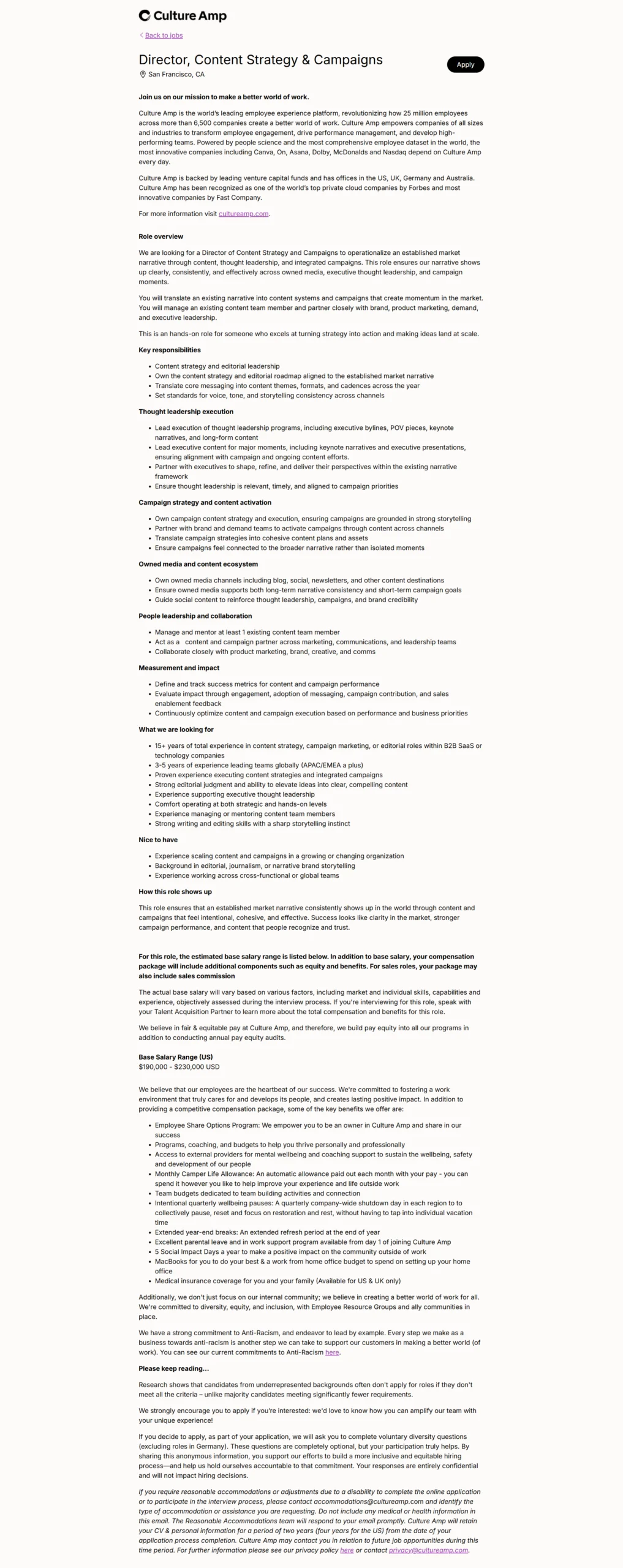
- Content Lead/Director: These senior roles are tasked with defining the overall content vision, strategy, and governance. They build and mentor content teams, establish best practices, manage budgets, and ensure content initiatives support broader organizational goals. They often report to marketing VPs or CMOs.
- Head of Content Marketing / VP of Marketing (Brand, Creative & Content): At the highest echelons, these executives are responsible for integrating content strategy with overarching brand objectives, creative direction, and marketing campaigns. They shape the company’s voice, narrative, and thought leadership, influencing market perception and competitive positioning.
The evolution of these titles signifies a professionalization of the content marketing discipline, moving from an ancillary function to a core strategic pillar within many organizations. Each role demands a unique blend of creativity, analytical prowess, and project management capabilities, all contributing to a cohesive and impactful content ecosystem.
The Cornerstone of Success: Core Content Marketing Skills
The SEMRush analysis meticulously categorized the most sought-after skills in the content marketing job market, providing a clear roadmap for aspiring professionals and hiring managers alike. These skills are broadly segmented into three tiers, reflecting their criticality and strategic importance across different career stages.
Tier 1: Core Skills (Must-Have for Most Roles)
These are the non-negotiable competencies that form the foundation of successful content marketing, regardless of the specific role:
- Data Literacy: The ability to interpret content performance metrics, understand audience behavior, and make data-driven decisions. This includes familiarity with analytics platforms (e.g., Google Analytics, social media insights) to track engagement, conversions, and traffic.
- Narrative Skills: Beyond basic writing, this involves crafting compelling stories that resonate with target audiences, convey brand messages effectively, and persuade readers or viewers. It encompasses storytelling across various formats and channels.
- Search Engine Optimization (SEO) Proficiency: Understanding how search engines rank content, conducting keyword research, optimizing content for discoverability, and staying abreast of algorithm updates are crucial for organic reach.
- Project Management: The capacity to plan, execute, and monitor content projects from conception to completion, often coordinating with multiple stakeholders, managing deadlines, and allocating resources efficiently.
- Audience Understanding: Deep empathy for the target audience, including their pain points, interests, and preferred content consumption habits. This informs content ideation and messaging.
Tier 2: Strategic & Differentiating Skills
These skills become increasingly vital as candidates advance into mid-to-senior level positions, enabling them to drive strategic impact and lead initiatives:
- Content Strategy Development: The ability to design and implement long-term content plans that align with overarching business goals, identifying content gaps, opportunities, and distribution channels.
- Analytics and Reporting: Moving beyond basic data interpretation to generating insightful reports, identifying trends, forecasting outcomes, and presenting findings to stakeholders to demonstrate ROI.
- Leadership and Team Management: For managerial and directorial roles, this includes mentoring junior team members, fostering collaboration, setting performance goals, and inspiring creative output.
- Cross-functional Collaboration: The ability to work effectively with other departments such as sales, product development, design, and engineering to ensure content initiatives are integrated and supported across the organization.
Tier 3: Foundational Skills
While often considered baseline, these skills remain essential for day-to-day content operations:
- Exceptional Writing and Editing: A strong command of grammar, style, and clarity, coupled with the ability to self-edit and refine content for accuracy and impact.
- Research Skills: The capacity to gather reliable information, conduct market research, and synthesize complex topics into accessible content.
- Content Management System (CMS) Familiarity: Experience with platforms like WordPress, Drupal, or proprietary CMS for publishing and managing digital content.
The AI Imperative: Integrating Artificial Intelligence into Content Roles
Perhaps one of the most significant shifts highlighted by the SEMRush study is the burgeoning importance of Artificial Intelligence (AI) skills in content marketing roles. AI is no longer a futuristic concept but a practical tool rapidly integrating into daily workflows. The study reveals that AI proficiency is explicitly mentioned as a requirement in 34% of senior content roles and nearly 20% of execution-level positions. This indicates a profound evolution where AI is becoming a baseline expectation, akin to knowing how to use Google Analytics or a CMS, rather than a niche specialization.
The increasing emphasis on AI stems from its transformative potential in enhancing efficiency, personalization, and scalability in content creation and distribution. AI tools can assist with keyword research, topic generation, content outlining, drafting initial copy, personalization at scale, and performance analysis. This allows content marketers to focus on higher-level strategic thinking, creative direction, and nuanced storytelling, while AI handles repetitive or data-intensive tasks.
However, the data also suggests that the industry is not yet demanding highly specialized AI skills like advanced prompt engineering in most general content roles. Instead, the focus is on practical application and familiarity. Organizations are seeking professionals who can:
- Leverage AI tools for content ideation and creation: Utilizing AI to brainstorm topics, generate outlines, and draft initial content snippets.
- Optimize AI-generated content: Editing, refining, and fact-checking AI outputs to ensure accuracy, brand voice consistency, and human quality.
- Analyze content performance with AI-driven insights: Using AI tools to predict content success, identify trends, and derive actionable insights from large datasets.
- Understand ethical AI use: Recognizing the implications of AI in content regarding originality, bias, and responsible data handling.
Hiring managers are signaling that AI-assisted workflows are an integral part of the job, not an optional add-on. This necessitates a proactive approach from content professionals to embrace and integrate AI into their skill sets, ensuring they remain competitive and effective in a rapidly evolving digital landscape.
Crafting the Blueprint: Best Practices for Content Job Descriptions
In a competitive talent market, a well-crafted job description is paramount to attracting top-tier content marketing talent. It serves as the first impression of the role and the company, needing to be clear, engaging, and comprehensive.
- Start with a Clear Job The title should be precise and immediately convey the role’s primary function. Instead of generic "Content Marketer," consider "SEO Content Specialist," "Video Content Producer," or "Social Media Content Creator" if the role has a specific focus. Companies like Tapestry exemplify this by explicitly titling positions such as "Social Media Content Creator" to attract candidates with specific expertise.
- Write an Engaging Job Summary: This section should captivate potential candidates, outlining the role’s purpose, its exciting aspects, and its contribution to the overall content strategy. It should highlight the tangible impact the role will have, whether it’s building brand awareness, driving audience engagement, or increasing organic traffic. Canva, for instance, articulates the strategic ownership and business impact of roles like "Content Lead," showcasing opportunities for growth and localized influence.
- Define Key Responsibilities: Be meticulously specific about the day-to-day expectations. Detail the types of content to be created (e.g., long-form articles, short-form social posts, interactive infographics), the platforms involved (e.g., website, LinkedIn, YouTube), and any necessary cross-functional collaboration with design, sales, or product teams. Clarity here prevents mismatches.
- Emphasize Cultural Fit and Core Values: A content creator significantly shapes a brand’s voice. Therefore, cultural alignment is crucial. Include a section that highlights the company’s culture and values, focusing on aspects like collaboration, innovation, diversity, and inclusion. This attracts candidates who not only possess the skills but also resonate with the company’s mission, as seen in examples like BAD Marketing’s emphasis on values in their Copywriter descriptions.
- Include Measurable Success Metrics: Clearly define what "success" looks like by providing measurable goals. This could include KPIs related to engagement rates, organic reach, conversion rates, time on page, or lead generation. Clarifying these expectations upfront helps candidates understand how their work will be evaluated and the direct impact they can have.
- Use Clear, Inclusive Language: Avoid industry jargon, overly specific requirements that might deter diverse talent, or any biased language. Job descriptions should be accessible and welcoming to a broad pool of candidates. Tools like Ongig Text Analyzer can help identify and remove biased language, ensuring inclusivity.
- List Any Tools or Software Needed: Explicitly mention the essential tools and software candidates should be familiar with. For content roles, this often includes Adobe Creative Suite (for design/video), Canva (for graphic creation), Google Analytics (for performance tracking), SEO tools (SEMrush, Ahrefs, Moz), project management platforms (Asana, Trello), and CRM systems (Salesforce, HubSpot) where content integration is key.
Measuring Impact: Key Performance Indicators for Content Marketing
To effectively evaluate the success of content marketing efforts and the performance of content professionals, a robust set of Key Performance Indicators (KPIs) is essential. These metrics provide tangible proof of impact and guide strategic adjustments. Drawing inspiration from roles like ZestBenefits’ Content Marketing Executive, common KPIs for content marketing roles include:
- Organic Traffic: The number of visitors reaching content through unpaid search results, indicating SEO effectiveness.
- Search Engine Rankings: Position of target keywords in search engine results pages (SERPs).
- Conversion Rates: The percentage of visitors who complete a desired action (e.g., sign-up, download, purchase) after engaging with content.
- Engagement Rate: Metrics like likes, shares, comments, and time spent on page, reflecting audience interaction.
- Bounce Rate: The percentage of visitors who leave a website after viewing only one page.
- Lead Generation/MQLs (Marketing Qualified Leads): The number of potential customers generated directly or indirectly by content.
- Customer Acquisition Cost (CAC): The cost associated with acquiring a new customer through content marketing efforts.
- Return on Investment (ROI): The financial gain from content marketing activities compared to their cost.
- Brand Mentions/Share of Voice: How often the brand is discussed in relevant online conversations compared to competitors.
- Backlinks/Domain Authority: The number and quality of inbound links to content, indicating its authority and credibility.
- Email List Growth: The rate at which the subscriber base for email newsletters and marketing communications expands.
- Customer Retention Rate: How effectively content helps retain existing customers and fosters loyalty.
Strategic Implications and Future Outlook
The insights from the SEMRush study and the evolving best practices for hiring content professionals carry significant implications for the broader marketing landscape. For individuals, it underscores the imperative for continuous learning and adaptation, particularly in areas like data analytics and AI integration. A diverse skill set, blending creativity with technical acumen, will be crucial for career longevity and advancement.
For companies, the challenge lies in understanding these evolving requirements and crafting job descriptions that accurately reflect the modern content marketing role. Generic postings will fail to attract the specialized talent needed to drive meaningful results. Investing in upskilling existing teams and fostering a culture of experimentation with new technologies like AI will be vital for maintaining a competitive edge.
The trajectory of content marketing points towards a future where human creativity and strategic thinking are augmented by intelligent automation. Content professionals will increasingly become orchestrators of complex digital experiences, leveraging data and AI to personalize interactions, scale content production, and measure impact with greater precision. The emphasis will shift further from mere content production to strategic content ownership, where professionals are accountable for the entire lifecycle and business outcomes of their content initiatives.
In conclusion, the content marketing job market is in a dynamic state of growth and evolution. The insights provided by SEMRush, combined with a focus on comprehensive skill development and strategic hiring practices, are essential for both professionals navigating their careers and organizations seeking to build high-performing content teams. Embracing data literacy, narrative prowess, and AI fluency will be critical differentiators, shaping the next generation of content marketing leaders.






