
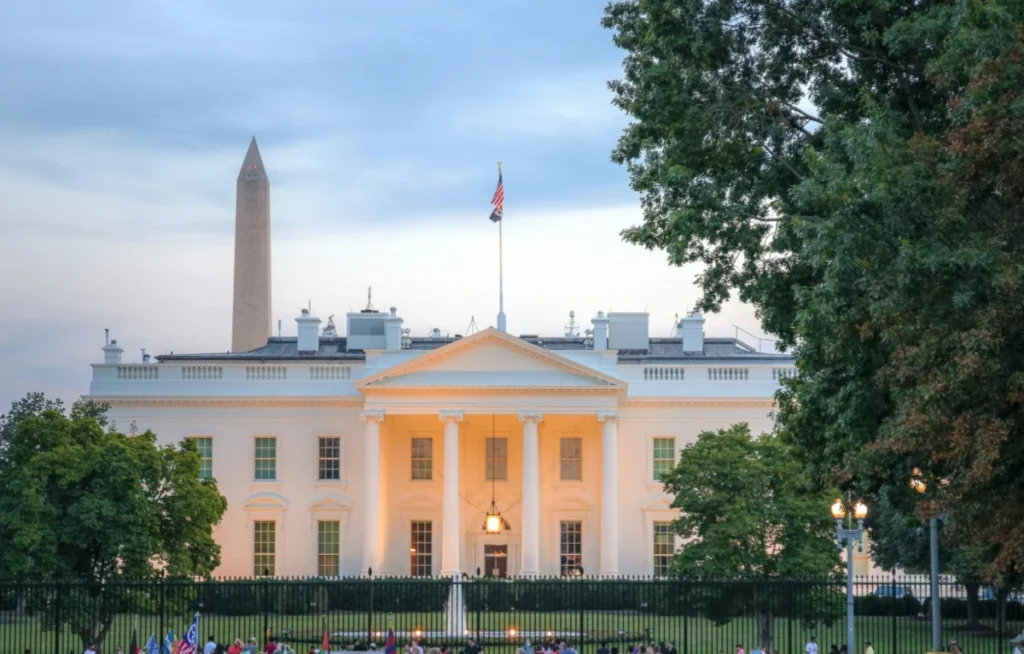
In a move that has sent shockwaves through the federal workforce and legal community, President Donald Trump has summarily fired two Democratic commissioners of the Equal Employment Opportunity Commission (EEOC), Charlotte Burrows and Jocelyn Samuels. The dismissals, confirmed on the afternoon of Tuesday, January 28, 2025, represent a significant escalation in the administration’s efforts to exert direct control over independent agencies that have historically operated with a degree of insulation from the executive branch. Alongside the commissioners, the President also terminated the EEOC’s General Counsel, Karla Gilbride, effectively stripping the agency of its leadership quorum and halting its ability to initiate major litigation or formal rulemaking.
These actions at the EEOC were not isolated incidents. They occurred simultaneously with the firing of Gwynne Wilcox, a Democratic member of the National Labor Relations Board (NLRB), and NLRB General Counsel Jennifer Abruzzo. Furthermore, media reports confirmed that the President dismissed all three Democratic members of the Privacy and Civil Liberties Oversight Board (PCLOB). This coordinated sweep across multiple bipartisan, multi-member agencies signals a transformative shift in the interpretation of presidential authority, specifically targeting the "for cause" protections that have traditionally protected independent regulators from at-will termination.
The Immediate Impact on EEOC Operations and the Loss of Quorum
The EEOC is a five-member commission established by Title VII of the Civil Rights Act of 1964. Under the statute, commissioners are appointed by the President and confirmed by the Senate to serve staggered, fixed five-year terms. By removing Burrows and Samuels, the administration has left the commission with only two active members: Acting Chair Andrea Lucas, a Republican, and Commissioner Kalpana Kotagal, a Democrat.
Title VII requires a minimum of three members to constitute a quorum for the commission to exercise its statutory functions. Without this quorum, the EEOC is legally incapacitated from performing several critical duties. It cannot vote to authorize new systemic lawsuits, it cannot approve the issuance of new formal enforcement guidance, and it cannot initiate notice-and-comment rulemaking under the Administrative Procedure Act.
For employers and legal practitioners, this creates a bifurcated operational reality. While the commission itself is paralyzed, the agency’s career staff continues to conduct day-to-day investigations and manage pending litigation. The Deputy General Counsel, a career official, has assumed the role of Acting General Counsel under the Federal Vacancies Reform Act. However, under a 2021 delegation framework, the Acting General Counsel is prohibited from initiating "pattern-or-practice" discrimination suits, filing amicus briefs, or pursuing cases involving novel legal issues without an explicit vote from a quorum of commissioners. Consequently, while routine enforcement continues, the EEOC’s ability to drive broad, high-impact legal precedents is effectively frozen.
A Chronology of the Coordinated Agency Reshuffle
The events leading to the January 28 dismissals reflect a calculated strategy to dismantle the leadership of independent agencies early in the presidential term.
- January 20, 2025: Immediately following the inauguration, the administration signaled its intent to review the leadership of independent boards, citing the "Unitary Executive" theory of constitutional law.
- January 22, 2025: Media reports surfaced that the President had requested the resignations of the Democratic members of the PCLOB. All three members reportedly declined to resign, citing their statutory terms.
- January 26, 2025: The administration terminated NLRB General Counsel Jennifer Abruzzo, mirroring a move made by President Biden in 2021 when he fired then-NLRB GC Peter Robb.
- January 27, 2025: President Trump appointed Andrea Lucas as Acting Chair of the EEOC. Within hours, several technical assistance documents regarding LGBTQ+ rights and artificial intelligence were removed from the EEOC website.
- January 28, 2025 (Morning): Confirmed reports emerged regarding the firing of NLRB Member Gwynne Wilcox and EEOC General Counsel Karla Gilbride.
- January 28, 2025 (Afternoon): Commissioner Jocelyn Samuels confirmed her dismissal via social media. Commissioner Charlotte Burrows released a statement through her legal counsel confirming her termination and her intent to challenge the move in court.
Official Responses and Legal Challenges
The ousted commissioners have characterized their removals as not only unprecedented but illegal. Commissioner Samuels stated on X (formerly Twitter) that removing a commissioner before the expiration of a Congressionally directed term "violates the law and represents a fundamental misunderstanding of the nature of the EEOC as an independent agency."
Charlotte Burrows, who served as the EEOC Chair during the Biden administration, echoed these sentiments, stating she would "explore all legal options." Their legal argument rests on the historical understanding of independent agencies. Unlike cabinet-level positions, which serve at the pleasure of the President, members of boards like the EEOC and NLRB have traditionally been viewed as protected from political interference to ensure the consistent application of civil rights and labor laws across different administrations.
Acting Chair Andrea Lucas, conversely, has embraced the administration’s new direction. In an official press release titled "Removing Gender Ideology and Restoring the EEOC’s Role of Protecting Women in the Workplace," Lucas confirmed she had used her authority to remove materials she deemed inconsistent with the President’s executive orders. Her stated priorities include "rooting out unlawful DEI-motivated race and sex discrimination" and "defending the biological and binary reality of sex."
Supporting Data: The Scope of EEOC Enforcement
To understand the stakes of this leadership vacuum, one must look at the volume of activity the EEOC manages. According to the agency’s Fiscal Year 2024 performance report, the EEOC handled:
- Over 80,000 new charges of discrimination.
- The recovery of more than $660 million for victims of discrimination through litigation and administrative settlements.
- The filing of 144 new lawsuits, including 25 systemic suits that targeted large-scale employment practices.
Without a quorum, the "systemic" lawsuits—which are the most resource-intensive and impactful—cannot be authorized. In 2024, systemic litigation accounted for nearly 20% of the agency’s total litigation docket. The suspension of these filings represents a significant reprieve for large corporations but a potential loss of recourse for classes of employees alleging widespread bias. Furthermore, the EEO-1 data collection, which requires employers with 100 or more employees to submit workforce demographic data, is currently authorized through 2026. Without a quorum, the EEOC cannot easily modify or revoke this requirement, leaving it in a state of regulatory limbo.
Constitutional Analysis: The Unitary Executive Theory vs. Humphrey’s Executor
The legal battle following these firings will likely center on a profound constitutional question: Does the President have the absolute power to fire any executive branch official, regardless of statutory protections?
For nearly a century, the governing precedent has been Humphrey’s Executor v. United States (1935). In that case, the Supreme Court ruled that Congress could create "quasi-legislative" and "quasi-judicial" bodies—like the Federal Trade Commission (FTC) or the EEOC—whose members could only be removed for "inefficiency, neglect of duty, or malfeasance in office." This established the concept of the independent agency.
However, the current Supreme Court has shown an increasing appetite for the "Unitary Executive" theory. In Seila Law v. CFPB (2020), the Court ruled that the single-director structure of the Consumer Financial Protection Bureau was unconstitutional because the President could not remove the director at will. While the Court at the time carved out an exception for multi-member boards, conservative justices like Clarence Thomas and Neil Gorsuch have signaled a desire to overturn Humphrey’s Executor entirely. They argue that the Constitution vests all executive power in the President, and any legislative attempt to restrict the President’s removal power is an unconstitutional infringement on Article II.
If the EEOC and NLRB cases reach the Supreme Court, the conservative majority may use them as the vehicle to finally dismantle the independence of these agencies, effectively turning every federal commission into a direct extension of the White House.
Broader Implications for the American Workplace
The immediate consequence of these firings is a period of profound uncertainty for the American workforce and the business community. While the Acting Chair can issue "technical assistance" to guide employers on the administration’s new priorities, these documents do not have the force of law and can be easily challenged in court.
Furthermore, the lack of a quorum means that the EEOC cannot update its Strategic Enforcement Plan. The current plan, which runs through 2028, focuses on emerging issues like AI bias and pregnancy accommodations. Under Acting Chair Lucas, the focus is expected to pivot sharply toward challenging Diversity, Equity, and Inclusion (DEI) programs, which the administration views as a form of reverse discrimination.
For employers, the message is mixed. On one hand, the threat of massive systemic lawsuits from the EEOC has diminished in the short term. On the other hand, the legal framework governing workplace discrimination is becoming more volatile. If the courts uphold the President’s power to fire commissioners at will, the EEOC’s policy positions could swing radically with every change in the White House, making long-term compliance planning nearly impossible for human resources departments.
As the dismissed commissioners prepare their legal challenges, the nation faces a pivotal moment. The outcome will determine not just the future of civil rights enforcement, but the very nature of the "independent" federal agency in the 21st century. Until the judiciary provides clarity, the EEOC remains an agency in transition, caught between its statutory mandate to protect workers and a new executive vision of absolute presidential control.








