

SAP Connect, a pivotal event in the enterprise software calendar, this week showcased a comprehensive suite of artificial intelligence advancements designed to propel businesses toward a truly "Intelligent Enterprise." Discussions with Dan Beck, President of SuccessFactors, alongside the broader SAP leadership team and a diverse group of SAP SuccessFactors customers, revealed an ambitious roadmap focused on leveraging AI to connect business processes, simplify complex data analysis, and empower employees through intuitive interfaces. The announcements signal a significant leap forward in how businesses can harness technology for real-time optimization and strategic decision-making.
The Evolving Intelligent Enterprise: SAP’s Foundational AI Architecture
SAP has long positioned itself as a leader in the concept of the "Intelligent Enterprise," a vision where all core business processes are seamlessly integrated and accessible, eliminating the need for extensive manual data analysis. At SAP Connect, this vision was elaborated upon with a clear emphasis on how AI, particularly through its proprietary "Business AI" and the new "Joule" agent, is making this a tangible reality.
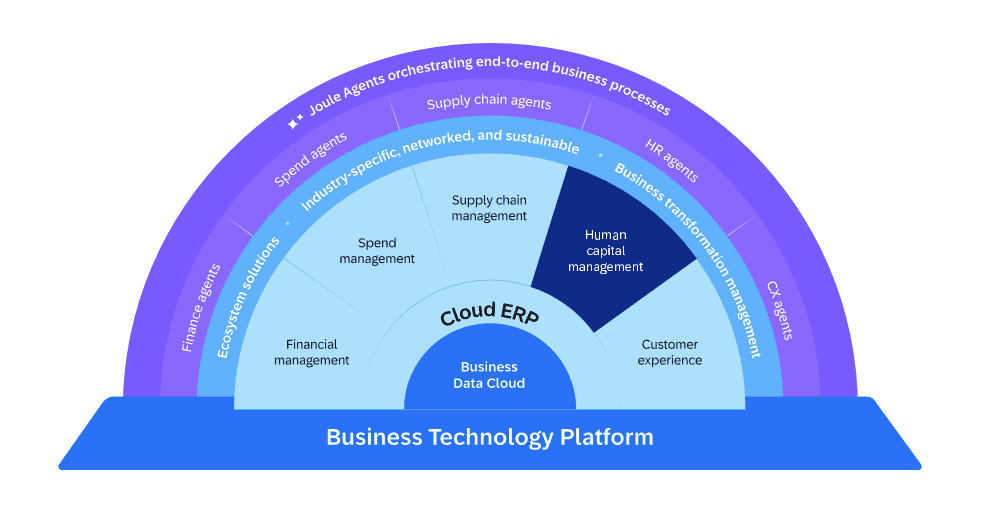
The foundation of SAP’s Intelligent Enterprise lies in its robust suite of industry-specific applications, encompassing Finance, Spend Management, Supply Chain, Customer Relationship Management, and Human Capital Management. These applications, numbering over 30, are designed to interlock and support complex industry workflows, such as "hire to retire," "lead to cash," and "source to pay." These workflows, which represent the major value chains within a business, are now being enhanced with dozens of embedded AI applications. These AI components are engineered to automate, integrate, and optimize processes, offering proactive insights and recommendations.

For instance, a manufacturer using SAP might receive an intelligent alert that a large order could negatively impact profit margins. The system could then suggest modifications using more standard components. Similarly, in the face of supply chain disruptions like hurricanes or tariff changes that increase component costs, SAP’s AI can proactively notify businesses and advise on repricing strategies or alternative sourcing. The underlying architecture is built to monitor and optimize hundreds of such scenarios in real-time, providing granular guidance, such as detailed recommendations for adjusting staffing or shift schedules to manage overtime costs.
SAP’s Business Data Cloud and Datasphere: The Data Backbone
The realization of this interconnected and intelligent system hinges on SAP’s Business Data Cloud (BDC). This platform serves as the central hub for aggregating data from SAP’s diverse applications, exposing it through SAP Datasphere. Datasphere acts as a universal SAP dictionary, enabling users to locate and access data across the entire application landscape. The BDC leverages SAP’s core technology while also incorporating integrations with third-party data platforms like Databricks and, notably, Google Cloud, signaling a growing commitment to open ecosystems. This data unification is critical for feeding the AI models that drive intelligent decision-making.
Joule: The Unified AI Agent Front Door
The most significant announcement at SAP Connect was the elevation of Joule, SAP’s AI agent platform, to become the primary interface for interacting with the Intelligent Enterprise. Joule is designed to be as user-friendly as consumer-grade AI tools like ChatGPT, but with the power to access and orchestrate complex enterprise data and processes. The platform supports over 40 different AI engines and is fully programmable through Joule Studio, allowing businesses to develop custom agents tailored to specific employee needs and workflows.
SAP unveiled dozens of pre-built Joule agents, with a particular focus on Human Resources. Five new HR agents were launched: the Performance and Goals Agent, Career and Talent Development Agent, HR Service Agent, Payroll Agent, and People Intelligence Agent. These agents aim to streamline HR functions, assisting employees with goal setting, career planning, learning program creation, HR inquiries, and payroll management. SAP claims that approximately 80% of core HR functionality can now be accessed via Joule, positioning it as the "front door" to business operations for employees and managers alike. This move aims to democratize access to critical business information and analytical capabilities.
Galileo Integration Enhances HR and Leadership Capabilities
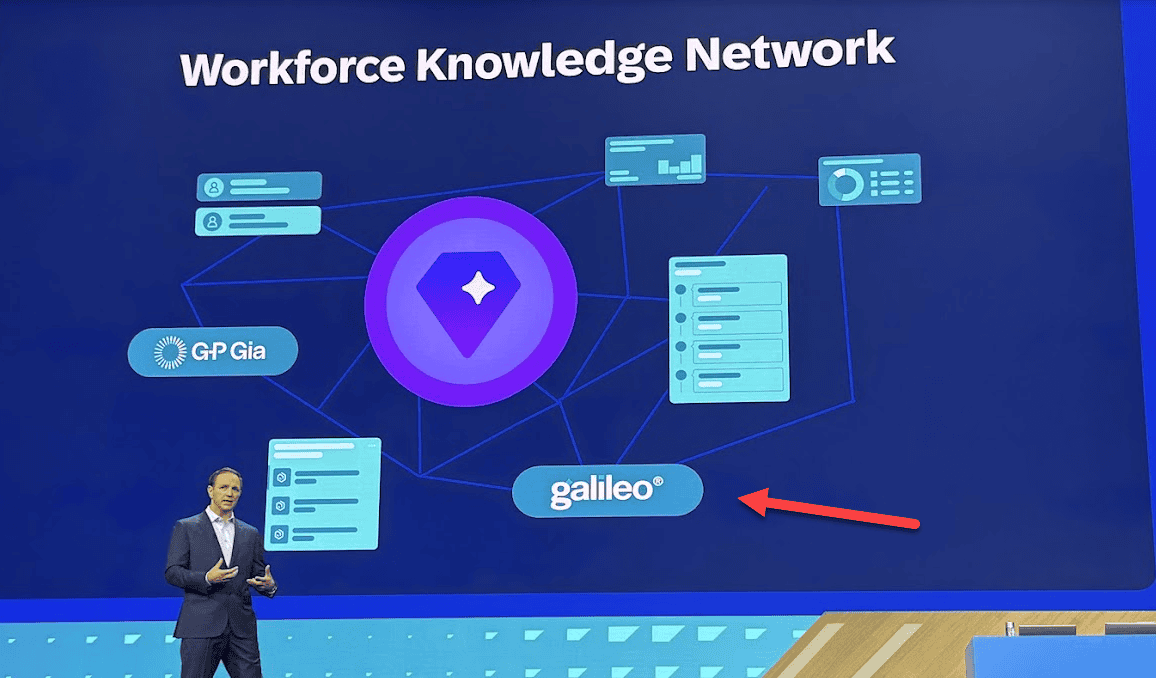
Further enhancing Joule’s utility, SAP demonstrated the integration of Galileo, an AI-powered expert system, into the Joule platform. Starting in 2026, this integration will transform Joule into a more sophisticated HR and leadership assistant. This partnership is expected to provide deeper insights and more advanced recommendations for HR professionals and managers. For existing SAP customers, the integration of Galileo into Joule promises to significantly elevate the capabilities of their HR and leadership functions. The company has indicated pathways for customers to adopt Galileo, with a promise of seamless upgrades to the Joule service.
Expanding SuccessFactors Capabilities: Workforce Scheduling and People Intelligence
Beyond the Joule agent, SAP announced significant new modules within its SuccessFactors suite, targeting areas where it aims to compete with established market leaders.
Workforce Scheduling: A Direct Challenge to UKG
SAP introduced Workforce Scheduling, a new system designed to optimize labor allocation through intelligent shift and time management. This module offers features such as aligning labor demand with staffing, matching employee skills to job requirements, and facilitating shift swapping. This release positions SAP directly against UKG, a recognized leader in complex shift and time management solutions. The move signifies SAP’s intent to capture a larger share of the workforce management market by offering integrated, AI-driven scheduling capabilities.
People Intelligence: A New Era for HR Analytics
The long-awaited People Intelligence product was also launched, aiming to consolidate and modernize SAP’s offerings in people analytics. This new product replaces several legacy tools and provides a Joule interface for accessing and acting upon HR data. Users can now not only monitor key metrics like skills, employee engagement, and turnover but also receive intelligent recommendations for actionable interventions. This offering directly competes with standalone HR analytics platforms such as Visier, promising a more integrated and user-friendly approach to data-driven HR decision-making.

Enterprise Service Management: Competing with Salesforce and ServiceNow
SAP is also making a concerted push into enterprise service management with a new integrated application designed for call centers, case management, and incident management. This move signals an ambition to compete with established players like ServiceNow and Salesforce in the service delivery space. Dan Beck highlighted that this new Enterprise Service Management (ESM) system extends SAP’s capabilities into HR and customer service, presenting a unified platform that is also connected to Joule. Early demonstrations suggest a robust and well-integrated offering.
Strategic Implications and Market Position
The series of announcements at SAP Connect underscores a strategic shift towards a more integrated, AI-driven enterprise ecosystem. SAP’s approach focuses on leveraging its existing strength in core business process management and augmenting it with advanced AI capabilities. The company appears to be consolidating its offerings, making them more accessible and actionable for the everyday user.
The integration of Joule as a unified front-end is a critical development. By offering a familiar and intuitive chat-based interface, SAP is democratizing access to its powerful enterprise applications. This strategy aims to reduce the complexity traditionally associated with SAP solutions, making them more appealing to a broader range of users within an organization. The interoperability of Joule with other AI agents, such as Microsoft Copilot, through protocols like a2a and MCP, further emphasizes SAP’s commitment to an open and collaborative AI landscape.
From a competitive standpoint, SAP is clearly aiming to enhance its standing in the Human Capital Management (HCM) space. While acknowledging that SuccessFactors may not offer every niche functionality (mentioning SAP SmartRecruiters as a leader in AI-driven hiring, for example), the overall suite is presented as highly competitive, particularly for organizations already invested in the SAP ecosystem. The fact that several clients have transitioned from Workday to SuccessFactors, citing their existing SAP enterprise usage, suggests that SAP is well-positioned to win new deals, especially among large enterprises seeking a unified platform. The AI architecture, with its focus on embedded intelligence and proactive recommendations, is a significant draw.
New Research: Quantifying the Impact of AI in HR
Complementing these product announcements, SAP highlighted the release of new research focused on the financial impact of AI in HR. A series of in-depth studies, conducted over a year and featuring SAP clients, delve into the ROI of AI in payroll and time management, talent management, employee experience, HR service delivery, and overall HR operating models. These research papers, led by Kathi Enderes, aim to provide businesses with practical insights and case studies to support the development of business cases for AI adoption. The availability of infographics and detailed research reports offers tangible evidence of AI’s transformative potential in HR functions. The research also points to tools like Galileo as resources for exploring these use cases, identifying ROI models, and assessing organizational readiness for AI integration.
The ongoing commitment to research and development, coupled with strategic product enhancements and a clear vision for AI integration, positions SAP as a formidable player in the evolving landscape of enterprise software. The focus on the Intelligent Enterprise, powered by advanced AI and a user-friendly agent like Joule, signifies SAP’s ambition to redefine how businesses operate and how employees interact with technology.







