
The accelerating integration of Artificial Intelligence (AI) into the global business landscape has ignited a fervent discussion around reskilling, upskilling, and fostering AI fluency across organizations. This imperative was starkly evident during a recent gathering of over 200 Chief Human Resource Officers (CHROs) in India and Singapore, where the paramount concern was "AI readiness" – specifically, how to rapidly enhance AI capabilities throughout their companies. This pressing need underscores a fundamental challenge: the current methodologies and technological infrastructure for corporate learning are, by many accounts, no longer adequate to meet these evolving demands.
The Alarming Skill Gap in Corporate Learning
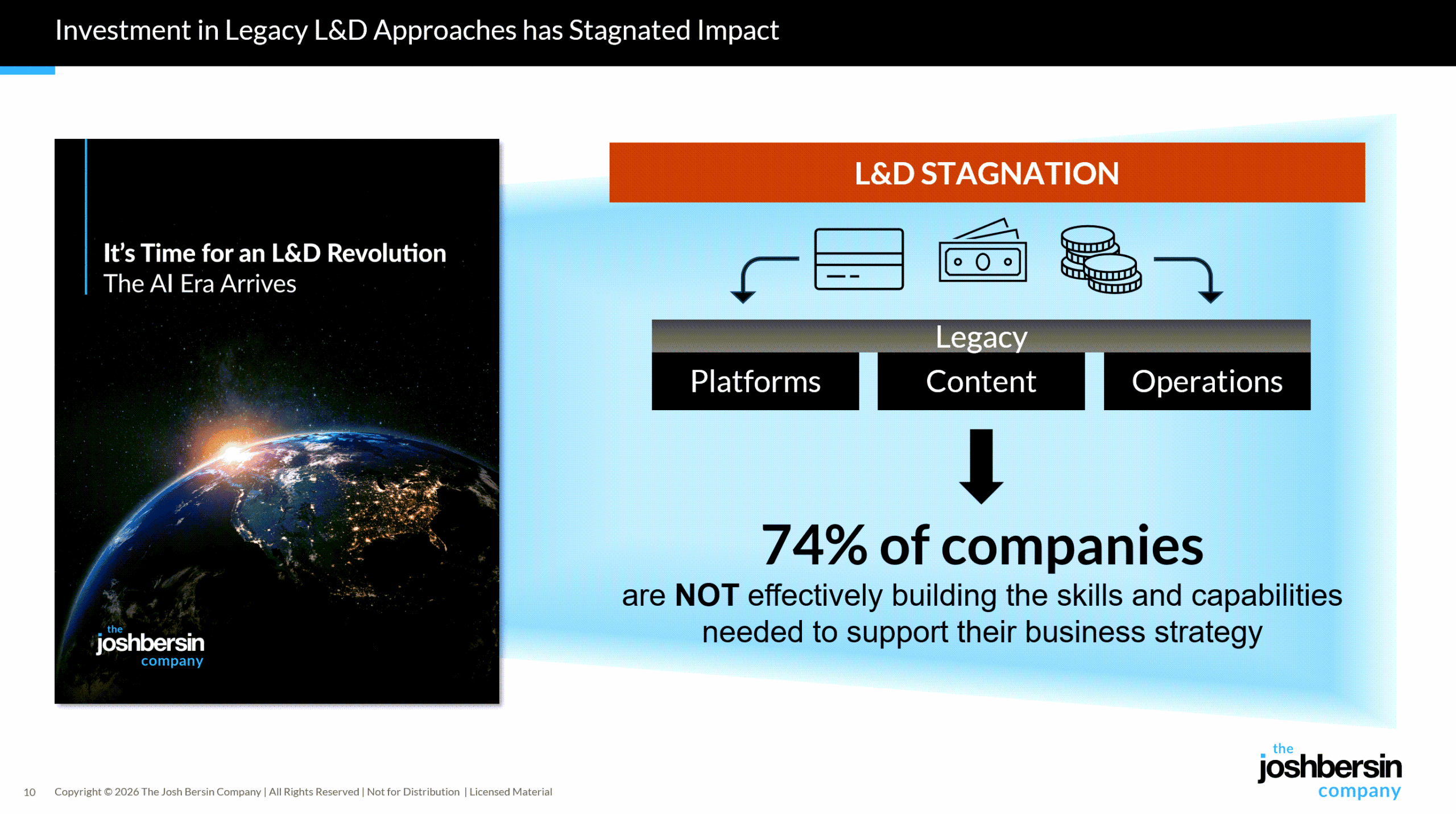
New research, unveiled through the fifth major study on corporate Learning and Development (L&D) conducted by industry analyst Josh Bersin, reveals a critical disconnect. A staggering 74% of companies surveyed report that they are failing to keep pace with their organization’s demand for new skills. This statistic is particularly concerning given the substantial investment – an estimated $400 billion annually worldwide – poured into corporate training, content libraries, L&D technology, trainers, and consultants. The implication is that a significant portion of this vast expenditure may be yielding diminishing returns, failing to equip workforces with the competencies required for the modern economy.

The traditional approach to corporate education, often characterized by pedagogical paradigms of "training" and "learning," is being re-examined. Experts suggest that the core issue is not a lack of effort or investment, but rather a fundamental misdefinition of the problem. The modern workplace demands a more dynamic approach, one that prioritizes the fluid sharing of information, encourages exploration, facilitates questioning, and enables the practical application of novel ideas. The rigid structures of conventional training programs are perceived as a bottleneck, hindering the agility required to adapt to rapid technological advancements and evolving business needs.
The AI Revolution in Organizational Learning
The research posits that AI is not merely an incremental improvement but a transformative force poised to fundamentally reinvent how organizations facilitate learning and development. This shift is driven by the advent of "AI-native systems," which leverage generative AI to create and disseminate content dynamically and systemically. Unlike static, manually created courseware that requires constant updates, translations, and improvements, these AI platforms can generate content on demand, adapting to diverse learning formats and individual needs.
This new paradigm moves beyond traditional "training" to what is being termed "Dynamic Enablement." The core principle is that learning in the workplace is not an end in itself, but a means to an end: empowering individuals to perform at a higher level and drive business growth. AI-native learning platforms can significantly accelerate the creation of new learning content, reducing development cycles from months to days. This allows for the immediate integration of new information, ensuring that employees have access to the most current knowledge and best practices.

Defining AI-Native Learning
AI-native learning is characterized by its ability to dynamically generate and share information. Instead of relying on pre-built, static course materials, these systems leverage generative AI to create content tailored to specific needs. This could involve generating instructional text, multimedia explanations, or interactive simulations based on prompts or existing company data. A key advantage is the ability to categorize all content by "skills," creating a structured knowledge base. As employees engage with the system, their activity can be used to infer their skill levels, providing personalized development pathways.
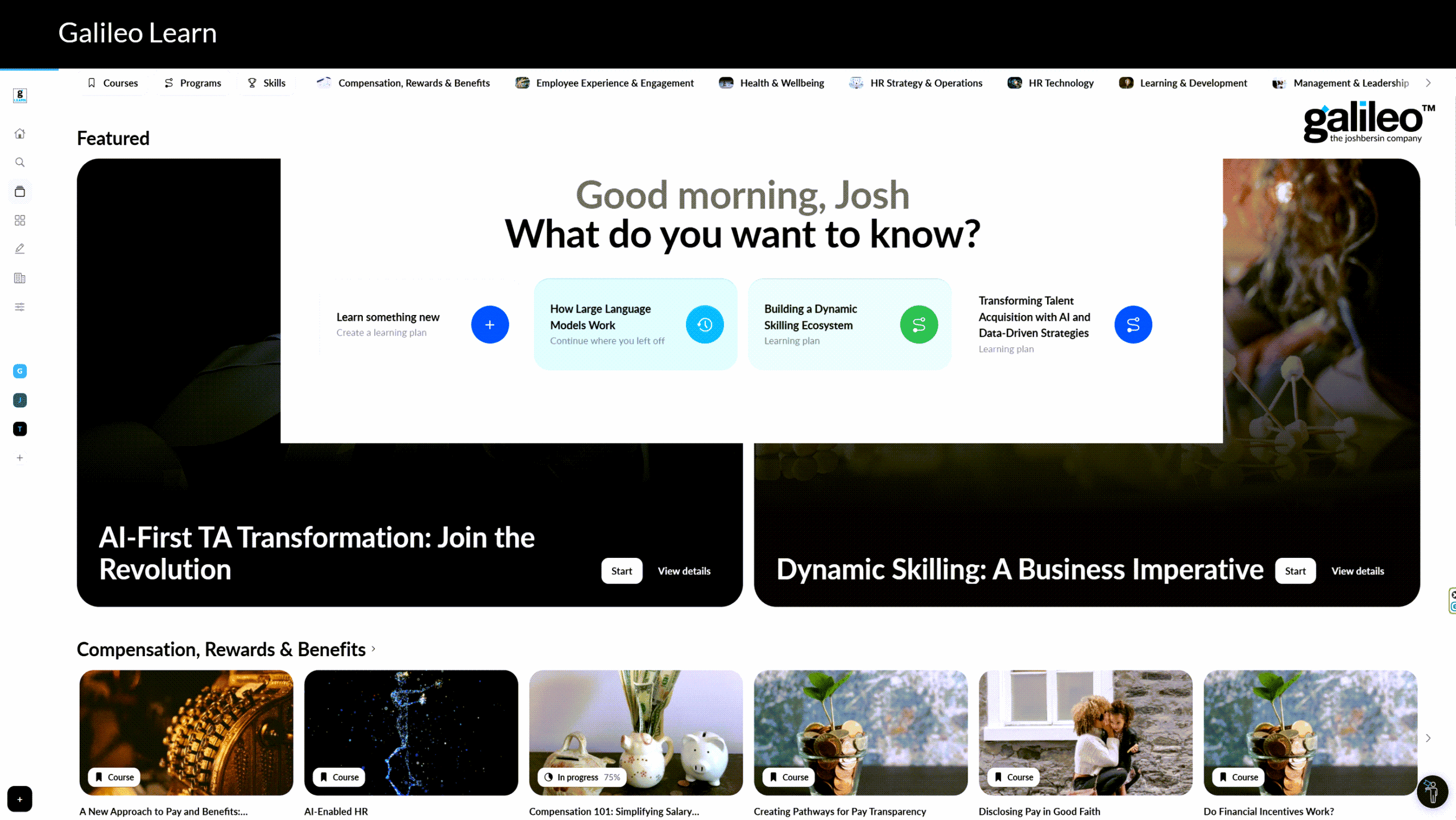
Furthermore, AI-native systems create a deeply interconnected knowledge ecosystem. Every piece of content is linked, enabling employees to seek answers and explore related topics without needing to navigate separate course catalogs. This functions as a unified "intelligence system" for the organization, constantly updating and expanding its knowledge base. The success of platforms like ChatGPT, where a significant portion of users engage for learning purposes, illustrates the power of this dynamic, self-directed learning approach. Organizations can further enhance these systems by integrating recordings of expert interviews, ensuring that the knowledge base remains current with the latest insights and practical advice.
A New Framework: The Learning Maturity Model
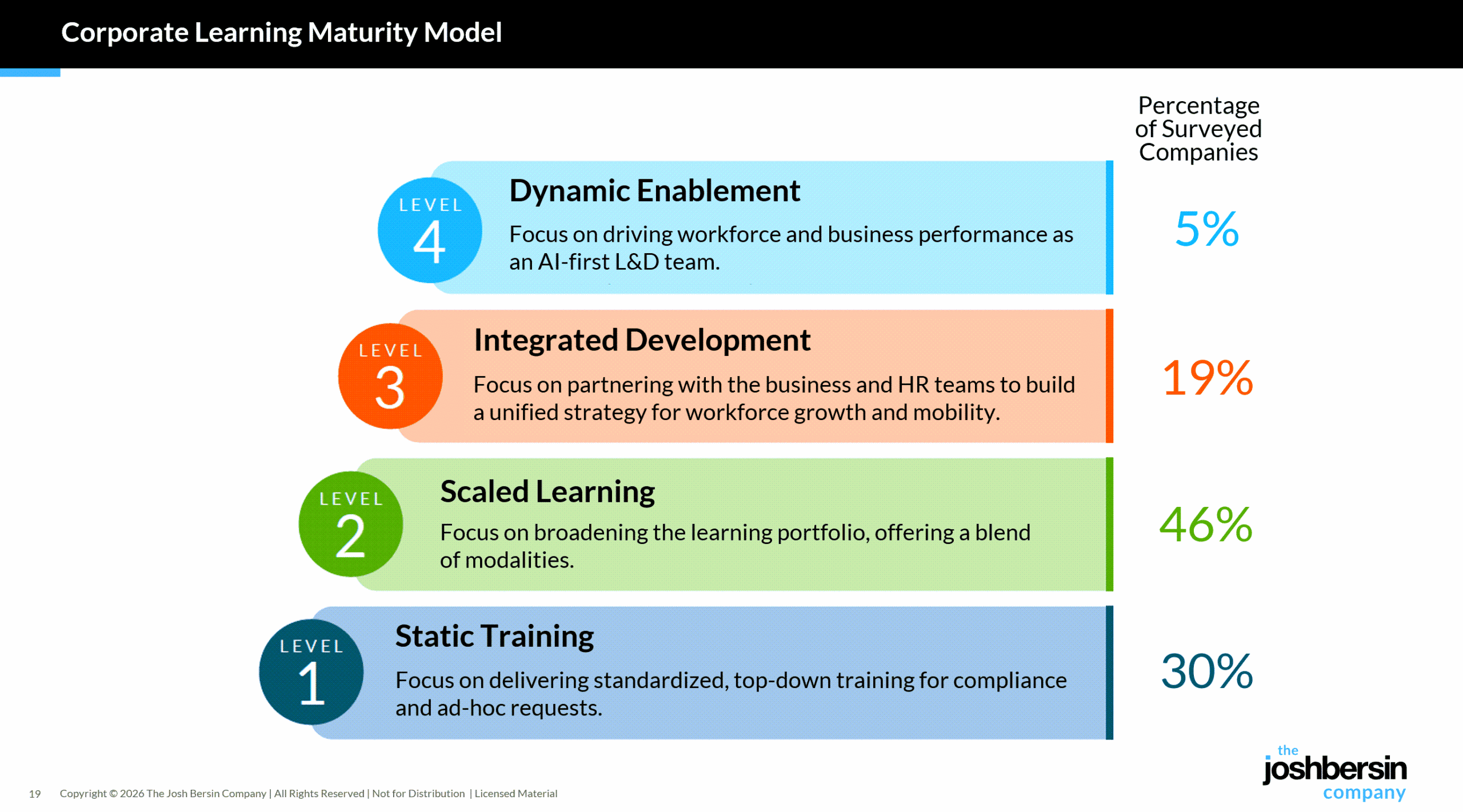
To help organizations navigate this transition, a new "Learning Maturity Model" has been developed, outlining four distinct levels of advancement:
Level 1: Static Training
At the foundational level, companies typically engage in "Static Training" programs. These are often compliance-driven or mandatory courses designed to address specific, episodic needs such as regulatory requirements or new product launches. While cost-effective to develop or procure, these programs offer limited scope for skills-based learning and are often not designed for continuous skill development. Approximately one-third of the market is estimated to operate at this level.
Level 2: Scaled Learning
Building upon static training, many organizations move to "Scaled Learning" by incorporating a broader range of learning formats. This includes videos, audio content, job aids, and interactive modules. The goal is to offer a more extensive portfolio of learning resources, often sourced from third-party content vendors. While this increases options, it places the onus on the individual learner to curate their own learning journey, identifying relevant content from a vast array of materials. Many popular online learning platforms fall into this category.
Level 3: Integrated Development
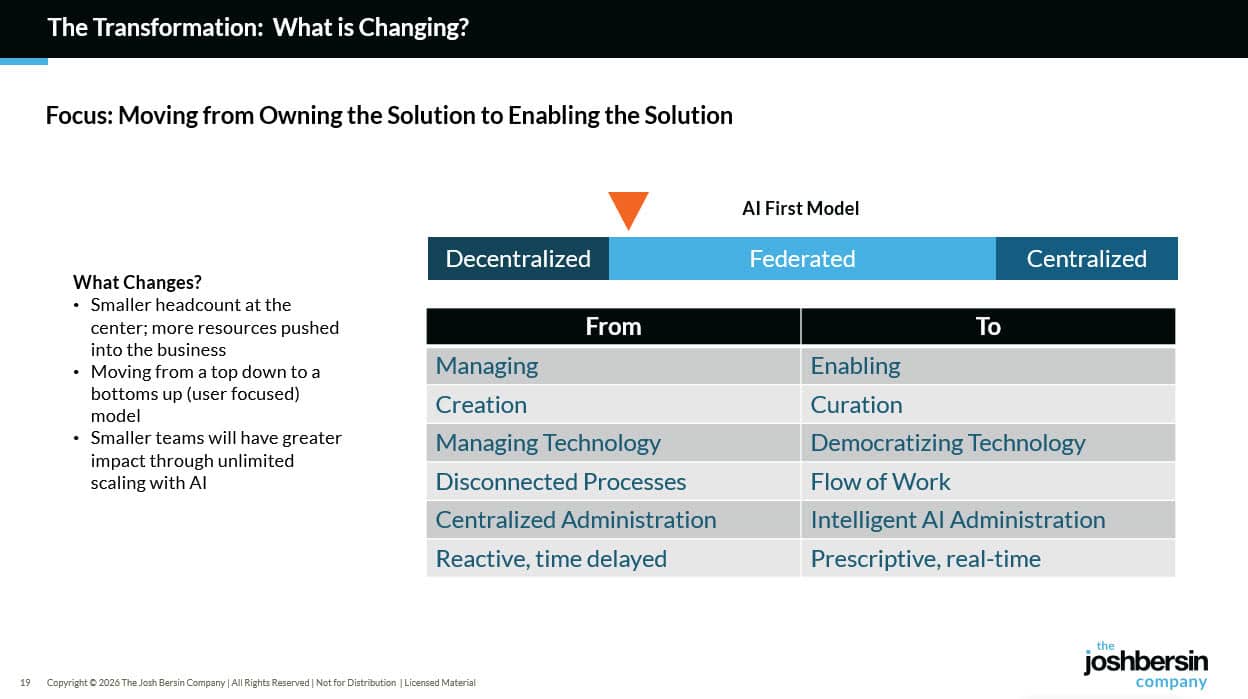
This level signifies a shift towards more personalized "Integrated Development" programs. Companies begin to tailor learning experiences around specific job roles, required skills, and defined career paths. This involves constructing comprehensive "development programs" rather than merely isolated training modules. However, this approach introduces significant complexity. With skills rapidly becoming obsolete – some estimates suggest up to 70% of job-related skills become outdated annually – maintaining and updating these intricate programs becomes a formidable challenge. This level often leads to a substantial increase in L&D expenditure as dozens of programs, curricula, and skill models require continuous maintenance and refreshment. A key operational challenge at this stage is the decentralized nature of corporate learning, with a significant portion of training occurring within specialized business units, necessitating local content updates and infrastructure. This often leads to a "federated" model, where corporate L&D delegates much of the responsibility to line-of-business teams.
Level 4: Dynamic Enablement
The apex of the maturity model is "Dynamic Enablement," a paradigm driven by AI. This level envisions a platform that centralizes all organizational knowledge, encompassing not just formal courses but also documents, policies, and expert interviews. This is the domain of AI-native learning. Publishing information can be accomplished in days, and employees can learn through personalized, on-demand experiences. Traditional Learning Management Systems (LMS) are often retained for legacy compliance programs, while AI platforms take over the roles of Learning Experience Platforms (LXPs), learning portals, and most content development tools. Early adopters of this model are reporting significant reductions in internal L&D spending, often in the range of 40-50%.
The Transformative Impact of AI-Native Learning
The implications of Level 4 "Dynamic Enablement" are profound. It offers substantial savings in both time and cost for delivering learning solutions, while simultaneously providing an exceptional employee experience. Learning can be seamlessly embedded into existing corporate workflows and AI-powered agents. For instance, an employee filling out benefits forms could query an AI assistant for comparative information. Similarly, a sales representative entering a new opportunity into a CRM system could receive AI-driven coaching on selling into that specific industry. For frontline workers, such as nurses or manufacturing staff, chatbots can provide immediate updates on procedural changes or departmental news.
A notable case study involves a large travel reservation company that leverages call recordings from its top customer service agents. This raw data is fed into the learning system, allowing other agents to learn best practices and how to handle challenging customer interactions. This approach extends across various functions, including customer service, engineering, and sales, offering a powerful mechanism for knowledge transfer and skill development.
This shift from "learning" to "enablement" is a critical distinction. Employees learn at work not simply for the sake of acquiring knowledge, but to enhance their ability to perform, grow, and contribute at a higher level. Dynamic Enablement aligns learning directly with business objectives, driving innovation and strategic execution.
Proven Returns and Future Outlook
The research indicates that organizations operating at Level 4 are significantly more likely to be innovation leaders (10 times more likely), exceed financial targets (6 times more likely), and adapt effectively to change (16 times more likely). As these AI-driven learning platforms mature, the benefits are expected to grow even further.
Strategic Recommendations for Companies
Achieving "Dynamic Enablement" is not merely about using AI to build courses faster. It necessitates a fundamental shift away from traditional SCORM-based LMS systems towards dynamic content platforms. The roadmap to this future involves several key steps:
- Content Rationalization: Companies must assess their existing content library, identifying what is valuable and can be transformed into an AI-native format.
- Platform Replacement: A move towards new, dynamic content systems is crucial. This may involve platforms like Sana, Arist, Disperz, Uplimit, or Colossyan, with many more expected to emerge.
- New Governance Models: L&D functions need to establish new governance structures that support AI-native learning.
- Hybrid Operating Models: Early adopters are finding success with hybrid or distributed operating models. Corporate HR can focus on global topics such as leadership, culture, and business strategy, while individual business units develop specialized "Enablement Academies" for functions like sales or manufacturing. This federated approach fosters agility and ensures that learning remains relevant and accessible at the frontline.
The implications of this transformation are far-reaching. By embracing AI-native learning and the principles of Dynamic Enablement, organizations can unlock unprecedented levels of employee performance, innovation, and adaptability, positioning themselves for sustained success in an increasingly complex and rapidly evolving global marketplace. The future of corporate learning is not about more training, but about intelligent, dynamic, and continuous enablement.