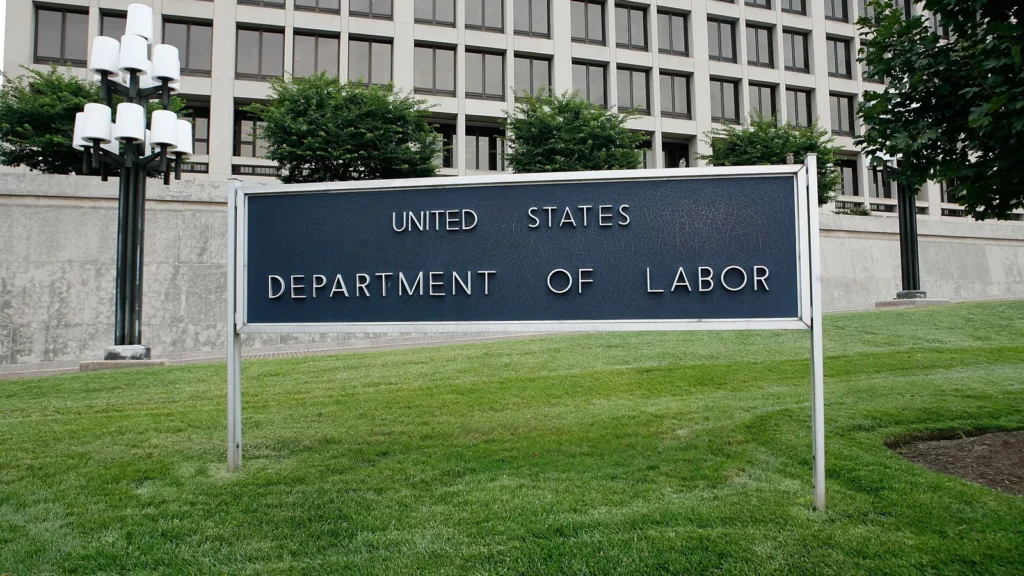
The U.S. Department of Labor’s (DOL) Wage and Hour Division (WHD) on April 22, 2024, unveiled a new proposed rule concerning joint employer status under federal labor law, marking a significant development in a long-contested area of employment regulation. This proposal aims to reestablish, in part, more stringent criteria for determining when multiple entities can be held jointly responsible for an employee’s wages and working conditions, echoing aspects of a rule initially issued by the first Trump administration in 2020. However, the new framework seeks to navigate past the legal challenges that ultimately led to the demise of its predecessor, while also contending with a newly reshaped judicial environment following recent Supreme Court rulings.
Mark Clark, counsel in Barnes & Thornburg’s labor and employment department, characterized the proposed rule as setting "more stringent criteria for when [a company] can be considered a joint employer." This shift is particularly crucial for businesses operating with complex structures, such as those relying on staffing agencies, subcontractors, or franchise models, where the lines of employer responsibility can become blurred. The determination of joint employer status carries substantial implications, affecting compliance with the Fair Labor Standards Act (FLSA), the Family and Medical Leave Act (FMLA), and the Migrant and Seasonal Agricultural Worker Protection Act (MSPA), potentially exposing multiple entities to liability for wage violations, overtime disputes, and other labor infractions.
Understanding Joint Employment and Its Stakes
At its core, joint employment occurs when an employee is employed by two or more employers simultaneously, each responsible for compliance with statutory obligations. The concept is vital for worker protection, ensuring that employees, particularly those in vulnerable positions or complex employment arrangements, have clear recourse and that all responsible parties are held accountable for upholding labor standards. For businesses, however, the definition of joint employment is a critical factor in managing operational risks, compliance costs, and potential litigation exposure. A broader interpretation of joint employment can significantly increase the compliance burden and potential liability for companies that utilize third-party services or have indirect relationships with workers.
The FLSA, the primary statute governing minimum wage, overtime pay, recordkeeping, and child labor standards, does not explicitly define "joint employment." Consequently, the DOL, through its WHD, has historically issued guidance and rules to interpret this concept, leading to varying standards across different presidential administrations. These interpretations dictate who is responsible for ensuring workers receive minimum wage, proper overtime pay, and other protections, thereby impacting millions of workers and thousands of businesses across the U.S.
A History of Shifting Sands: The Joint Employer Rule’s Evolution
The current proposal is the latest chapter in a protracted regulatory saga marked by frequent reversals and legal battles. The Obama administration, through its 2016 Administrator’s Interpretation, adopted a broad view of joint employment, emphasizing economic realities and the potential for indirect control, which was largely favored by worker advocacy groups and unions. This interpretation made it easier to establish joint employer relationships, increasing the liability for entities at the top of a supply chain or franchise structure.
Upon taking office, the Trump administration moved to reverse this trend. In January 2020, the DOL issued a final rule that adopted a narrower definition of joint employment, particularly for "vertical" relationships (e.g., between a franchisor and a franchisee’s employees, or a general contractor and a subcontractor’s employees). This 2020 rule emphasized direct control over employees as a primary determinant. However, its tenure was short-lived. Within months, a federal district court vacated large portions of the 2020 rule, specifically finding that its vertical relationship portion was inconsistent with the FLSA. The court argued that the rule had placed undue emphasis on direct control, failing to adequately consider the broader "economic reality" of the employment relationship as intended by the FLSA. Following this, the Biden administration, committed to strengthening worker protections, ultimately rescinded the challenged portions of the 2020 rule in 2021, signaling a return to a more expansive approach, though without immediately issuing a replacement.
This history underscores the deeply partisan and ideologically charged nature of joint employer regulations, with each administration seeking to implement policies that align with their respective priorities regarding business regulation and worker rights. The continuous back-and-forth has created an environment of significant uncertainty for employers, who must adapt their practices to constantly shifting legal landscapes.
The Proposed Rule’s Core Elements and Nuances
The new proposed rule attempts to thread a needle, learning from the criticisms that plagued its predecessor while still aiming to provide clarity. Like the 2020 Trump-era rule, the current proposal utilizes a four-factor analysis for determining vertical joint employment. These factors are:
- Hiring or Firing: Whether the potential joint employer hires or fires the employee.
- Supervision and Control: Whether the potential joint employer supervises and controls the employee’s work schedule or conditions of employment to a substantial degree.
- Payment: Whether the potential joint employer determines the employee’s rate and method of payment.
- Records: Whether the potential joint employer maintains the employee’s employment records.
However, the DOL has introduced a crucial distinction aimed at sidestepping previous legal vulnerabilities. While additional factors may still be relevant to determining vertical joint employment, the new proposal states that "a unanimous finding on the four factors in either direction would establish a ‘substantial likelihood’ regarding whether an individual or entity is a joint employer with another."
Mark Clark highlighted this subtle but significant change: "The first time they said that you had to show that at least one of those factors was proven and that the joint employer had to show direct control. They just softened that a little bit, saying there could be other factors that are relevant, but they made the point that those are not as probative as those four criteria they really care about the most." This approach suggests the DOL is trying to offer a more flexible, yet still structured, framework that acknowledges the "economic reality" test without completely abandoning the emphasis on control. By allowing for a "substantial likelihood" based on the four core factors, the DOL aims to provide clearer guidance to businesses and courts, potentially reducing ambiguity.
Legal Minefield: The Impact of Loper Bright and Judicial Scrutiny
Despite the DOL’s efforts to refine its approach, the legal landscape has become even more complex since the 2020 rule. A significant "wrinkle," as Clark put it, is the U.S. Supreme Court’s landmark 2024 decision in Loper Bright Enterprises v. Raimondo. This ruling overturned the long-standing Chevron deference standard, which had for decades compelled federal courts to defer to agency regulations when interpreting ambiguous statutes, provided the agency’s interpretation was reasonable.
The reversal of Chevron deference means that federal courts are no longer obligated to defer to the DOL’s interpretations of ambiguous statutes like the FLSA. Instead, courts will have greater latitude to conduct their own independent analyses of statutory meaning. "In theory, while the new administration has benefited from the learning from 2020, they have this other wrinkle where courts may not need to give as much deference to the DOL’s interpretation to begin with," Clark observed. "It really remains a bit uncertain how this will play out over the next year." This development introduces an additional layer of unpredictability, potentially making it harder for the DOL’s new rule to withstand judicial challenges, even if it is more carefully crafted than its predecessor. Any future legal challenges against this proposed rule will likely hinge on whether courts view the DOL’s interpretation of the FLSA’s implicit joint employment standard as the best or most persuasive reading, rather than simply a reasonable one.
Stakeholder Reactions and Broader Implications
The proposal is expected to elicit strong reactions from various stakeholders. Business groups, particularly those representing franchise systems, staffing agencies, and contractors, are likely to express concerns about increased compliance burdens and potential litigation risks. Organizations like the U.S. Chamber of Commerce have historically advocated for narrower joint employer definitions, arguing that broader interpretations stifle economic growth, create uncertainty, and penalize legitimate business relationships. They may contend that the proposed rule, despite its refinements, still imposes an undue burden on businesses, especially small and medium-sized enterprises, by making them liable for the actions of entities over which they have limited direct control.
Conversely, labor unions and worker advocacy groups are likely to welcome the proposed rule as a step towards greater accountability and protection for workers. They have consistently argued that a broad definition of joint employment is essential to prevent companies from evading responsibility for labor law violations by outsourcing work or structuring complex business relationships. A clearer, more expansive framework could empower workers to hold multiple entities responsible for wage theft, unsafe working conditions, or denial of benefits, thus leveling the playing field for employees in increasingly fragmented workforces.
The implications extend across various industries. The franchising sector, for example, has been particularly sensitive to joint employer rules. Franchisors often provide extensive operational guidance to franchisees to maintain brand consistency, but they typically argue that franchisees are independent business owners solely responsible for their employees. A rule that makes it easier to establish joint employer status could force franchisors to either reduce their oversight (potentially impacting brand quality) or accept increased liability. Similarly, the staffing industry, which provides temporary and contract workers to numerous businesses, faces direct impacts. Client companies using staffing agencies could find themselves jointly liable for the wages and working conditions of temporary staff, necessitating closer scrutiny of their contractual arrangements and operational interactions.
Compliance and Future Outlook for Businesses
Given the persistent uncertainty, legal experts are advising businesses to proactively review their operational structures and contractual agreements. Mark Clark emphasized, "It’s never a bad time to take a look at your relationships with other parties that you are interacting with, whether it’s through a staffing agency, through a subsidiary entity. It’s never a bad time to just be thinking about what would cause us to be considered a joint employer." This includes scrutinizing contracts with staffing firms, subcontractors, and franchisees to assess the level of control exercised, directly or indirectly, over workers’ employment terms.
Rob Boonin, a labor and employment attorney at Dykema, characterized the proposed rule as "silver" compared to the 2020 rule, which he called "gold" for lessening the liability of a vertical employer. While acknowledging that the new rule is not as favorable to employers as the rescinded Trump-era version, Boonin still suggested that employers, especially those higher in the vertical employer relationship, should continuously reevaluate their oversight practices. He advised considering whether they are holding the reins too tightly on lower-level entities, such as franchisees, and if they can remove aspects of their contracts that involve excessive oversight. "Aren’t there other ways that you can manage a relationship without starting to get involved in the details of the employment relationship?" Boonin questioned, urging businesses to seek alternative methods of ensuring quality and compliance that do not inadvertently establish joint employer status.
The DOL has opened a public comment period for the proposed rule, allowing stakeholders to submit feedback until 11:59 p.m. EDT on June 22, 2024. Following the review of these comments, a final rule will likely be issued. This period is crucial for businesses, labor groups, and legal professionals to articulate their positions and influence the final regulatory language.
In the interim, a "wait and see" approach, as suggested by Boonin, remains prudent for many. However, strategic planning and risk assessment are imperative. The final form of the rule, coupled with the inevitable legal challenges it will face, will ultimately determine its longevity and impact. What is clear is that the landscape of joint employer liability remains dynamic, requiring constant vigilance and adaptability from all parties involved in the complex tapestry of the modern workforce. The outcome will significantly shape how millions of American workers are protected and how thousands of businesses manage their operational and legal responsibilities in the years to come.