
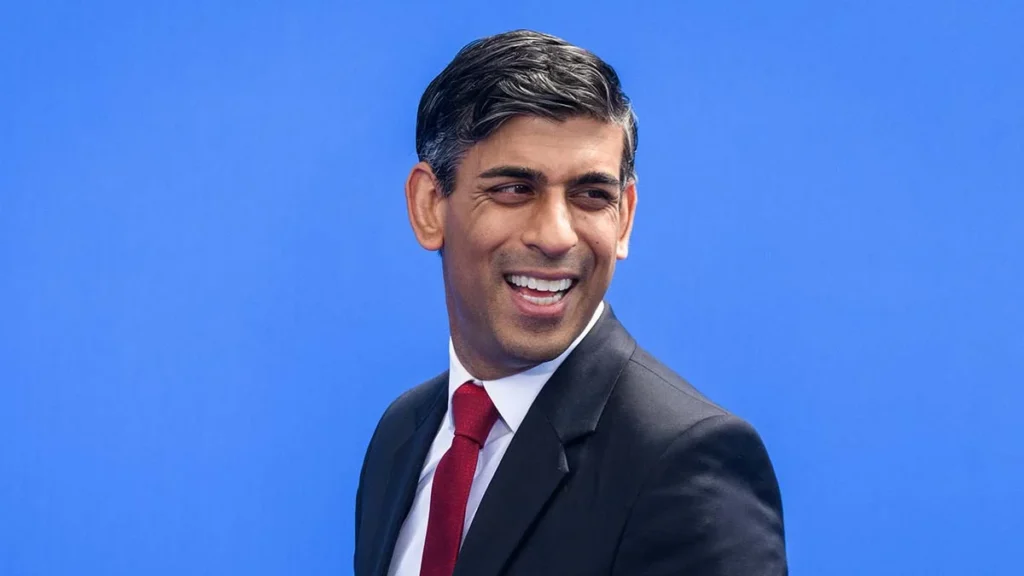
Former Prime Minister Rishi Sunak has issued a compelling call to action, asserting that the government must focus on the transformative impact of artificial intelligence (AI) on employment "more than anything else." Speaking on BBC Newsnight, Sunak advocated for an open and honest dialogue with the public about the impending changes, stressing the urgency of preparing the nation for a future profoundly reshaped by AI technologies. His remarks underscore a growing global consensus among leaders and economists regarding the imperative to proactively manage AI’s integration into the workforce, rather than passively react to its consequences.
Sunak articulated a nuanced perspective on AI’s effect on the labour market, acknowledging the dual reality of job displacement and creation. "It is clear that AI is going to mean that some jobs do disappear, other jobs are going to get created, new jobs that you and I and others we don’t even know about today, because that’s what happens throughout history," he explained. This historical lens, comparing AI to past technological revolutions, offers a degree of reassurance but does not diminish the scale of the current challenge. He cited the earlier predictions regarding radiologists, where AI was expected to render their roles obsolete due to its ability to read MRI and X-rays. While AI now assists in these tasks, the demand for radiologists remains robust, serving as a cautionary tale against overly dramatic predictions of immediate, widespread job losses.
However, Sunak tempered this optimism with a more profound observation: "Perhaps, more profoundly, almost all jobs are going to change as a result of AI." He posited that the immediate threat to employment might not come directly from AI systems themselves, but rather from individuals who effectively leverage AI tools. "At this moment, you’re more likely to lose your job to someone who is using AI than you’re likely to lose your job to AI itself," he warned. This shift in perspective places the onus on individuals and the broader workforce to adapt and acquire proficiency in AI tools. For Sunak, the "best protection for people, the best way to help our country get through this, and to give people confidence that the future is good for them, is to make sure that they have the confidence to use these new AI tools." This emphasis on upskilling and integration highlights a critical pathway for mitigating potential adverse impacts on employment.
The "Flat is the New Up" Phenomenon and its Economic Repercussions
The discussion delved into the more immediate and tangible impacts of AI on the labour market, particularly concerning entry-level positions. Faisal Islam, BBC economics editor, probed Sunak, who now advises major AI developers Microsoft and Anthropic, about the observed reluctance of firms to recruit graduates. Sunak’s response brought to light a concerning trend he termed "flat is the new up." This phrase, which he heard from CEOs discussing their future headcount, signifies a strategic shift in corporate thinking. "They’re talking about this concept that they think that they can continue to grow their businesses without having to significantly increase employment, because they’re starting to see how they can deploy AI," Sunak revealed.
This phenomenon carries significant implications for economic growth and social mobility. Traditionally, job creation, particularly at entry levels, has been a key indicator of a healthy economy and a pathway for younger generations to enter the workforce and gain experience. If businesses can achieve growth without a corresponding increase in human capital, it could lead to stagnant employment rates, especially for new entrants. Data from various economic bodies supports this concern. The World Economic Forum’s "Future of Jobs Report 2023" indicates that while AI is projected to create 69 million new jobs by 2027, it will simultaneously displace 83 million, resulting in a net loss of 14 million jobs globally. Furthermore, the report highlights a significant skills gap, with only half of workers having access to adequate upskilling opportunities, particularly in AI and data analytics. This "flat is the new up" scenario could exacerbate unemployment among certain demographics and sectors, necessitating proactive governmental and educational interventions.
Government’s Imperative: Candour, Proactive Policy, and Global Context
Sunak’s call for government action extends beyond mere acknowledgement; he demands candour and a clear plan. "The response to that, from a policymaker’s perspective, is not to put your head in the sand, not to pretend that there isn’t something here, that it could be of concern and consequence; it’s to be candid with the country about what’s coming, but also, then to take actions that give people reassurance and confidence that we’ve got a plan to get through it." He underscored the profound significance of this moment, impacting both current workers and future generations. "This has to be the issue that government leaders focus on more than anything else, I would say, this issue of AI in general, not just getting the benefits from it, but helping manage this transition."
This perspective resonates with a broader international dialogue surrounding AI governance and its societal impact. Global leaders, including those at the G7 and the inaugural AI Safety Summit hosted by the UK at Bletchley Park, have increasingly prioritised discussions on AI’s ethical implications, safety, and economic effects. The European Union has moved towards comprehensive AI regulation with its AI Act, while the United States has issued executive orders on AI safety and security. These initiatives reflect a growing understanding that AI is not merely a technological advancement but a fundamental societal shift requiring coordinated policy responses. Sunak’s advocacy for candidness aligns with the need for transparent communication from governments to build public trust and facilitate collective adaptation.
Reimagining the Tax System for the AI Age
Perhaps Sunak’s most radical proposal to mitigate the employment impact of AI concerns a fundamental overhaul of the tax system. He argued that current tax structures inadvertently incentivise the adoption of AI over human employment. "We have to ask ourselves some searching questions about whether our tax system, for example, is doing that today. And I think the answer is very clearly, not only is it not, it’s doing the opposite," he stated.
Sunak elaborated on the current disincentive: when a business employs a person, it incurs significant incremental costs beyond just wages, including National Insurance Contributions (NICs) and other employment-related taxes, which can add 20-25% to the total wage bill. In contrast, if the same business opts to deploy an AI agent by purchasing software, it bears none of these equivalent employment costs. This disparity, he contended, creates an uneven playing field that favours automation. "So that, to me, seems an obvious area where, if we have concerns, as I do and many others do, that the employment impact of this may be different to previous technology cycles, and we want to do what we can to tip the scales in a more positive direction. That seems to me a really obvious area we should look at."

When pressed by Islam on whether this could lead to the elimination of National Insurance for employers and employees, Sunak acknowledged the complexity but affirmed the direction of travel. "In an ideal world, I mean that’s not an easy thing to do, and you have to raise that money elsewhere, but you’re raising that money elsewhere on the basis that AI is being deployed and that is providing an enormous amount of productivity and efficiency, so you’re better off raising more money from the pool of extra value that’s being created over there, rather than making it even harder to employ people."
This bold proposition aligns with a growing international debate about "robot taxes" or other forms of automation levies, though Sunak’s specific focus is on rebalancing existing employment taxes. Critics of such proposals often raise concerns about stifling innovation and competitiveness, while proponents argue they could fund social safety nets, retraining programmes, or even universal basic income (UBI) schemes. However, Sunak’s approach is more about neutrality: removing disincentives to human employment rather than explicitly taxing AI, and instead capturing the "extra value" generated by AI through broader economic growth and corporate taxation. The economic implications of such a reform would be profound, potentially reshaping labour markets, investment decisions, and the very structure of the welfare state. It would require careful modelling to avoid unintended consequences, such as driving AI development or employment offshore.
Historical Context: Technological Revolutions and Workforce Adaptation
Sunak’s reference to historical precedent is crucial for understanding the current challenges. Throughout history, technological advancements have consistently reshaped the nature of work. The Agricultural Revolution shifted populations from hunting and gathering to farming; the Industrial Revolution mechanised production, leading to mass migration to urban factories and the decline of artisanal crafts; and the Information Age brought about the computerisation of many tasks, creating new roles in IT and data management while automating others. Each epoch generated significant anxieties about job losses, yet ultimately led to higher productivity, new industries, and often, an improved quality of life.
However, many economists and technologists argue that AI, particularly generative AI, presents a unique challenge due to its pervasive nature, speed of adoption, and ability to perform cognitive tasks previously exclusive to humans. Unlike previous revolutions that primarily automated manual or routine tasks, AI can impact white-collar professions, creative industries, and even highly skilled roles. This distinction suggests that while history offers lessons in adaptability, the current transition may require more deliberate and innovative policy interventions than ever before. The pace of change also means that the time available for workforce reskilling and societal adaptation is compressed, amplifying the urgency of Sunak’s call.
Global Perspectives and Expert Consensus on AI’s Impact
The concerns raised by Sunak are echoed by international bodies and research institutions worldwide. The Organisation for Economic Co-operation and Development (OECD) has consistently highlighted the need for countries to invest in skills development and social protection systems to navigate the AI transition. The International Monetary Fund (IMF) has also weighed in, suggesting that while AI could boost global GDP, its benefits might be unevenly distributed, potentially exacerbating inequality if not managed carefully.
While there is no universal consensus on the exact number of jobs that will be lost or created, there is a strong agreement on the need for proactive measures. Experts generally concur on several key areas:
- Lifelong Learning: Education systems must adapt to foster critical thinking, creativity, and digital literacy, preparing individuals for continuous learning and career transitions.
- Reskilling and Upskilling: Governments and businesses must collaborate on programmes to reskill workers whose jobs are at risk and upskill others to leverage AI tools effectively.
- Ethical AI Governance: Frameworks are needed to ensure AI is developed and deployed responsibly, considering issues of bias, transparency, and accountability.
- Social Safety Nets: The potential for widespread displacement necessitates a review of social welfare systems, including discussions around universal basic income or enhanced unemployment benefits, to provide a safety net during periods of significant economic disruption.
Challenges and Opportunities for Policymakers and Businesses
Navigating the AI revolution presents both formidable challenges and unprecedented opportunities. For policymakers, the task is multifaceted:
- Balancing Innovation and Regulation: Striking the right balance between fostering technological advancement and implementing safeguards to protect workers and society.
- Funding Education and Training: Allocating significant resources to transform educational curricula and establish robust adult learning and reskilling programmes.
- Reforming Taxation: As Sunak suggested, re-evaluating existing tax structures to ensure they support human employment and capture the economic value generated by AI.
- International Cooperation: Collaborating with other nations to develop common standards and approaches to AI governance, given its global nature.
For businesses, the opportunities lie in leveraging AI to enhance productivity, drive innovation, and create new products and services. However, they also face the challenge of:
- Workforce Transformation: Investing in their employees’ AI literacy and skills, fostering a culture of continuous learning.
- Ethical Deployment: Ensuring AI tools are implemented responsibly, transparently, and without exacerbating inequalities.
- Strategic Planning: Anticipating future labour needs and adapting business models to integrate human and artificial intelligence effectively.
Rishi Sunak’s intervention serves as a critical reminder that the AI revolution is not merely a technological phenomenon but a profound economic and social challenge that demands immediate and strategic governmental attention. His call for candidness, proactive policy development, and a re-evaluation of the tax system underscores the urgency of preparing society for a future where almost every job will be transformed. Successfully navigating this transition will require visionary leadership, significant investment in human capital, and a willingness to rethink established economic paradigms to ensure that the benefits of AI are broadly shared and that no one is left behind.








