Employee benefits have fundamentally transformed from ancillary perks to a strategic imperative, now serving as a defining factor in talent attraction, employee engagement, and long-term retention. This profound shift reflects a broader re-evaluation of the employer-employee compact, driven by evolving economic pressures, increasing skill scarcity, and persistent global wellbeing challenges. In today’s dynamic labor market, a competitive salary, while still crucial, is increasingly insufficient on its own; employees are actively seeking stability, reassurance, and comprehensive support systems from their employers.
The contemporary landscape sees benefits at the very core of an organization’s Employee Value Proposition (EVP). Research underscores this paradigm shift, with a compelling 81% of employees indicating that benefits significantly influence their choice of employer, and an even higher 85% affirming their impact on decisions to remain with a company. This makes the benefits strategy one of the most direct and controllable levers available to organizations seeking to navigate a highly competitive talent market. For Human Resources departments, this necessitates a fundamental repositioning of benefits, elevating them to a central, rather than peripheral, component of their overall talent management strategy.
The Evolving Employee Deal: A Historical Context
Historically, employee benefits often consisted of standard offerings such as basic health insurance, retirement plans, and statutory leave. These were largely viewed as a cost of doing business, or at best, a modest enhancement to compensation. The focus was primarily on compliance and providing a baseline safety net. However, the turn of the millennium, accelerated by global economic shifts, technological advancements, and more recently, the profound impact of the COVID-19 pandemic, catalyzed a dramatic re-evaluation.
The period following the 2008 financial crisis brought increased job insecurity, prompting employees to seek greater stability. The rise of the gig economy and a more fluid labor market also placed greater emphasis on benefits as a differentiator. The pandemic, in particular, served as a stark accelerator, bringing issues of mental health, work-life balance, and financial fragility to the forefront. Employees, having experienced unprecedented disruption, began to prioritize holistic well-being, flexibility, and a sense of care from their employers more than ever before. This chronological evolution highlights a trajectory from benefits as a transactional element to a deeply relational and strategic one.
Redefining Employee Expectations for 2025 and Beyond
The shifting sands of employee expectations demand proactive responses from employers. Concepts such as flexibility, the burden of commuting costs, and the elusive work-life balance are no longer static ideals but dynamic priorities. In an era marked by economic uncertainty and rapid societal change, a robust benefits package serves as a tangible demonstration of an organization’s trust, care, and long-term commitment to its workforce.
A significant trend observed across various sectors is the expansion of wellbeing strategies. Beyond the traditional pillars of physical, mental, and social well-being, many forward-thinking organizations are now formally integrating financial well-being as a fourth critical component. This proactive step acknowledges the severe pressure employees face from rising living costs and inflation, offering resources such as financial literacy programs, debt counseling, and emergency savings support. Industry analysts suggest that companies failing to address this fourth pillar risk disengagement and increased attrition, particularly among younger demographics entering a challenging economic environment.
From Cost Center to Growth Lever: The Productivity Uplift
The notion of employee benefits as merely a cost line on a balance sheet is rapidly becoming obsolete. Contemporary analysis reveals that benefits are actively driving productivity and contributing directly to business growth. A substantial 74% of organizations globally, and an even higher 84% in the UK, report this direct correlation. This signifies a fundamental shift in how benefits are perceived and managed, moving from an expense to a strategic investment with measurable returns.
The change lies in the sophisticated design and measurement of benefits programs. Organizations are moving beyond simple tracking of uptake rates to actively linking benefits to concrete outcomes such as enhanced engagement, improved retention, elevated performance metrics, and reduced absenteeism. When benefits are meticulously designed to meet genuine employee needs, the workforce experiences reduced distractions stemming from financial worries, health concerns, or burnout. This improved sense of security and holistic well-being naturally translates into heightened focus, sustained energy levels, and superior performance at work. The ripple effects are profound: increased profitability, a more resilient and attractive company culture, a stronger employer brand, and a noticeable reduction in both absenteeism and employee turnover.
Consider, for example, a large UK healthcare employer that implemented a mobile-first benefits platform specifically designed to reach its hard-to-engage frontline staff. The ease of access and personalized experience led to a significant surge in benefits utilization. Concurrently, the organization observed measurable reductions in both attrition rates and sickness absence, providing a clear demonstration of how experience-led design in benefits can translate into tangible operational and financial outcomes. This case exemplifies a crucial insight: benefits only deliver results when they genuinely serve employees in their daily lives, underscoring the vital role of clear, consistent, and accessible communication throughout the employee lifecycle. More investment does not automatically equate to more value; the employee experience is paramount.
The Core Priorities: What Employees Value Most
Across diverse sectors and geographical regions, employee demand for benefits is converging around a clear set of priorities: financial protection, comprehensive healthcare, flexibility in work arrangements, and robust well-being support. This convergence is particularly pronounced among younger generations. Nearly three-quarters (72%) of Gen Z employees, for instance, report a desire for more benefits and well-being support compared to the previous year, highlighting an upward trend in expectations. Organizations are witnessing the strongest positive impact where benefits directly address critical life moments, offering peace of mind through services such as will writing, financial planning, or support during serious illness.
These priorities reflect a workforce that actively seeks security, control, and adaptability in an increasingly unpredictable world. The enduring pressure of the cost of living, a more volatile labor market, and often stretched public health services mean that financial protection and healthcare benefits are particularly highly valued. In the UK, for example, the lengthy waiting times within the National Health Service (NHS) are directly fueling increased demand for supplementary services such as virtual GP consultations, healthcare cash plans, and private medical insurance.
Flexibility, once considered a luxury, has become an essential component of the modern employee deal. It enables individuals to effectively balance work commitments with family responsibilities, caring duties, and personal recovery from potential burnout. Similarly, well-being support has definitively transitioned from a "nice-to-have" amenity to a core expectation, encompassing mental health resources, stress management programs, and initiatives promoting physical health. Critically, employees desire benefits that manifest as genuine support during "moments that matter," enabling them to feel healthier, financially secure, and supported when life takes an unexpected turn.
Sectoral and Regional Disparities: Lessons for HR Leaders
The impact and perception of employee benefits are not uniform across the workforce. Research indicates significant variations, with employees in sectors such as technology, energy, and finance often reporting a greater positive impact from their benefits packages compared to those in media, healthcare, or logistics.
In highly competitive talent markets, employers are often compelled to make more strategic and substantial investments in benefits, leading to a wider array of options and a superior overall employee experience. For instance, employers in the energy sector report that clearly articulating the full value of the total reward package through tools like personalized total reward statements can significantly influence retention decisions. These statements help employees visualize the comprehensive value of their employment beyond just their salary, making benefits a clear differentiator for attraction and retention in these competitive environments.
Conversely, sectors characterized by tighter margins or a predominantly deskless workforce often encounter distinct challenges related to access, engagement, and communication, even when employer intent to provide robust benefits is strong. For example, a construction company with a dispersed workforce across multiple sites might struggle to communicate complex benefits information effectively to employees who lack regular computer access.
The overarching lesson here is not simply to increase spending, but to meticulously design benefits that are inherently accessible, relevant, and intuitive to use. Implementing mobile-first access strategies, streamlining user journeys, and deploying targeted communications can dramatically boost engagement, particularly for harder-to-reach employee groups. Furthermore, acknowledging and adapting to regional and cultural differences is paramount, reinforcing the principle that a one-size-fits-all approach is no longer viable. For example, a benefit highly valued in one country due to specific healthcare system gaps might be less impactful in another with robust public services.
Rising Expectations from Younger Generations
The trajectory of rising expectations is most pronounced among younger employees, particularly Gen Z. Nearly three-quarters of Gen Z individuals express a desire for more benefits and well-being support than they did just a year prior. This generation, having entered the workforce amidst unprecedented economic uncertainty, a global pandemic, and rapid technological evolution, possesses a distinct outlook. They prioritize relevance, flexibility, and choice, expecting benefits to adapt seamlessly to different life stages, align with their core values, and accommodate individual circumstances.
According to recent Benifex research, Gen Z and Millennial employees exhibit considerably more positive sentiments regarding their current benefits packages compared to older generations. Across categories such as personalized support, accessible technology, well-being tools, and flexibility in benefit selection, at least six in ten younger employees report satisfaction with their employer’s efforts. In stark contrast, Gen X and Boomer employees tend to be less convinced, suggesting a disconnect in how benefits are perceived across generational cohorts.
This younger demographic values autonomy. While they are open to guidance—and even to leveraging AI for informed decision-making—they are wary of decisions being made for them. For employers, the critical challenge lies in striking a delicate balance: offering a broad spectrum of choice while ensuring a clear, robust core provision that provides fundamental reassurance and security.
The "Value Void": When Investment Fails to Translate
Despite increased investment in employee benefits, a significant challenge persists: many employees struggle to fully understand or genuinely value the provisions available to them. While 79% of employers report increasing their benefits spend and 90% believe their benefits deliver substantial value, only 69% of employees concur. Furthermore, a staggering 62% of employees find it difficult to discern the full value of their overall package, 78% desire simpler benefits structures, and 85% crave clearer, personalized guidance on what is most relevant to their individual needs.
This "value void" is rarely a matter of intent; rather, it often stems from practical implementation shortcomings. Lengthy policy documents, complex jargon, and an over-reliance on a single annual enrollment window mean that benefits frequently fail to connect with employees’ day-to-day lives or resonate at crucial moments. The consequence is a substantial portion of benefits investment not translating into perceived value, leading to wasted resources and missed opportunities for engagement.
Closing this value void necessitates a strategic pivot from merely broadcasting information to actively guiding employees. Personalization is paramount: delivering the right benefit, at the optimal moment, with effortless access. This requires a deep understanding of employee demographics, life stages, and individual preferences, leveraged through intelligent communication and delivery mechanisms.
Beyond Annual Enrollment: The Need for Continuous Engagement
The traditional model of annual enrollment, while still playing a role, is no longer sufficient on its own. Employees increasingly expect ongoing education, timely nudges, and proactive support triggered by real-life events. The static, once-a-year approach struggles to accommodate the dynamic needs and life changes of a modern workforce.
Many HR and reward teams are progressively adopting "always-on" engagement models. This involves using simpler language, maintaining consistent messaging across various channels, and empowering employee advocates to bring benefits to life through peer-to-peer communication. Life-event-based communications – such as guidance for new parents, preparing for retirement, or support during a significant family change – are proving exceptionally effective in enhancing understanding and driving engagement. For example, a global engineering organization reported a substantial year-on-year increase in platform engagement after strategically reframing its benefits communications around key moments in employees’ lives, demonstrating the power of contextual relevance.
Technology as the Ultimate Simplifier
With a significant 85% of employees stating that benefits need to be easier to access and manage, technology has emerged as a critical enabler, not merely an enhancement. Ease of use and simplicity are no longer desirable features; they are fundamental expectations.
The most effective technological platforms provide a single, trusted, one-stop-shop for all benefits information and management, replacing fragmented systems and dense policy documents that often deter engagement. Large, predominantly deskless organizations – including those in sectors such as transport and infrastructure – have reported that mobile access, when combined with targeted and clear communication campaigns, can dramatically improve engagement, satisfaction, and retention within a single year. This highlights the transformative potential of well-implemented technology to bridge the gap between benefit provision and employee utilization.
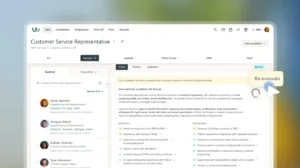
Furthermore, artificial intelligence (AI) is poised to play an increasingly important role, not as a decision-maker, but as an intelligent guide. AI can help employees navigate complex options, find answers to common questions, and understand the nuances of their benefits while preserving individual choice and fostering trust. By leveraging AI to personalize recommendations based on individual profiles and past usage, HR teams can ensure that employees receive information that is highly relevant and actionable, thus enhancing the perceived value of their benefits package.
The Foremost Priority for HR in 2026
Looking ahead, the single most critical focus for HR teams is to ensure that employee benefits serve as a genuine and authentic expression of the organizational culture. Benefits should be meticulously aligned with the overarching Employee Value Proposition (EVP), rather than being treated as a disconnected, standalone program. The greatest opportunity for impact lies in actively closing the aforementioned "value void" – ensuring that existing benefits are not only understood but also widely used and genuinely valued by the entire workforce.
This demands a strategic emphasis on the employee experience over mere provision. It requires crafting clearer user journeys, implementing more effective and consistent communication strategies, and making smarter use of data and technology to personalize and streamline the benefits landscape. When benefits are effectively designed and delivered, they transcend mere administrative functions and transform into meaningful support mechanisms – for individual employees, fostering their well-being and loyalty, and ultimately, for the organization as a whole, driving its productivity, growth, and enduring success.