
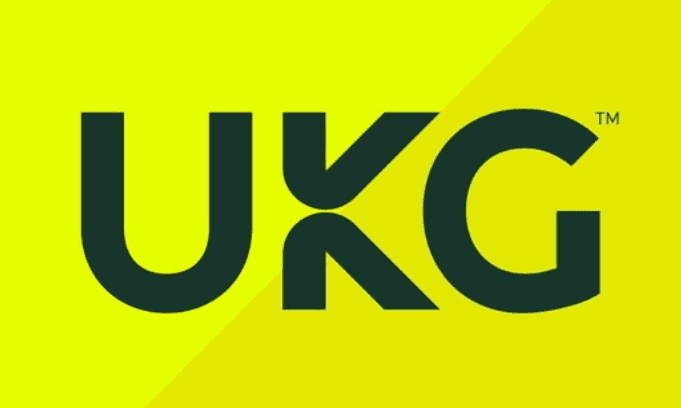
The global economy relies heavily on a vast and often overlooked segment of the workforce: frontline employees. These are the nurses, drivers, hospitality staff, retail associates, airline personnel, technicians, and manufacturing workers who form the bedrock of daily operations and customer interactions. New research indicates that nearly 80% of all workers, by sheer numbers, occupy these vital roles, collectively earning an estimated $6.5 trillion annually in the United States alone. This demographic is not only the largest but also the fastest-growing segment of the workforce, outpacing white-collar professions significantly. A key driver of this growth is the inherent difficulty in automating their tasks, making them increasingly strategic assets for CEOs and CFOs. These individuals are at the forefront of delivering core business value, engaging directly with customers, patients, and the physical delivery of goods and services, while also representing a substantial and often manageable portion of an organization’s cost structure.
The Neglected Investment: A Widening Gap in Frontline Support
Despite their critical importance, frontline workers have historically received a disproportionately small share of investment compared to their white-collar counterparts. Data reveals that spending on training, management development, and career advancement for this group is less than one-third of that allocated to salaried employees. On average, companies invest around $400 per frontline worker annually, a stark contrast to the over $1,500 per year dedicated to white-collar staff. This disparity is often rationalized by the perception of higher turnover rates within frontline roles, leading to a cyclical argument: "If we’re going to lose these people in a year or two, why invest in long-term development?"
However, this line of reasoning is fundamentally flawed. Emerging evidence suggests a powerful correlation between increased investment in frontline employees and significant improvements in tenure and productivity. A prime example is Costco, a retail giant that deviates sharply from industry norms. By paying its retail employees an average of $26 per hour, considerably higher than the industry benchmark of $17, and offering comprehensive healthcare and clear pathways for advancement into management, Costco has achieved a remarkable employee turnover rate of less than 8% annually, dramatically lower than the industry average exceeding 60%. This success story underscores that a "good jobs" strategy, which prioritizes frontline well-being and development, is not just a social imperative but a sound business strategy.
Beyond compensation and benefits, successful frontline-first companies demonstrate a commitment to a more holistic employee experience. This includes investing in effective communication channels, offering schedule flexibility, providing robust management support, and valuing employees’ time. The complexities of frontline work present unique challenges that require tailored solutions.
The Intricacies of Frontline Challenges
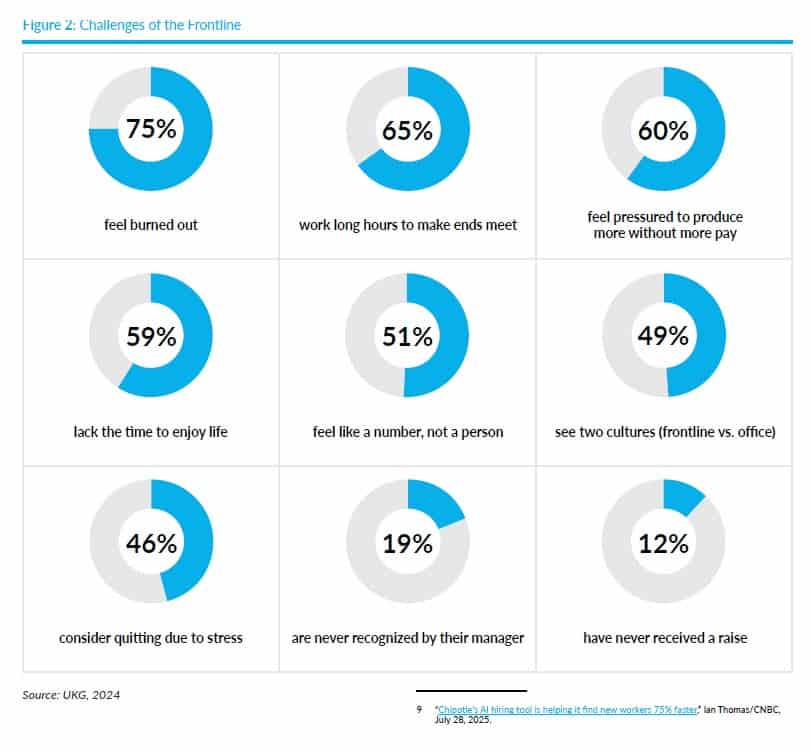
The challenges faced by frontline workers are multifaceted and deeply embedded in the nature of their work. Consider a nurse needing to adjust their schedule to accommodate childcare responsibilities or a delivery driver experiencing back pain after a demanding week. These individuals often engage in physically demanding labor, are typically paid hourly, and frequently seek overtime opportunities or shift changes to optimize their earnings and personal lives. Their aspirations often include greater schedule predictability, real-time visibility into their compensation, and tangible opportunities for career progression. The inherent risks, stress, long hours, and a sense of disconnection from the broader organization can lead to decreased productivity and increased turnover, ultimately impacting operational efficiency and financial performance.
From a business perspective, optimizing frontline capacity is directly linked to profitability. In scenarios of rapid demand fluctuations, supervisors and operations teams must swiftly reschedule shifts, accelerate hiring processes, or rapidly upskill existing staff to bridge critical gaps. Failure to do so can result in lost revenue and reputational damage. Unpredictable schedules or insufficient work hours can lead to employee dissatisfaction, underperformance, and attrition. Furthermore, the dynamic nature of labor forecasting makes it challenging to accurately project expenses, often leading to budget overruns when timesheets are finally processed. Businesses like fitness centers or salons, if understaffed, directly forfeit revenue and diminish their brand value. Companies like Chipotle have publicly acknowledged the competitive advantage derived from their workforce automation efforts, which have contributed to positive sales results.
The management of skills is also paramount in frontline roles. These jobs often require specialized technical proficiencies that directly impact safety and operational integrity. Companies must meticulously track certifications, safety training, and acquired skills to justify higher wages for advanced capabilities. Many frontline positions are physically demanding, necessitating employers to invest in training programs focused on proper lifting techniques, ergonomic practices, and physical conditioning. For instance, a poultry manufacturer might provide fitness training to employees who regularly handle heavy food products.
The HR Disconnect: Operational Management’s Crucial Role
A surprising and often detrimental disconnect exists between Human Resources departments and the direct management of frontline workforces. In many organizations, frontline issues are predominantly handled by supervisors and operations managers, who may themselves lack adequate training or strategic oversight. It is not uncommon for line staff to be promoted into managerial roles without formal training, inadvertently creating a cascade of potential risks and inefficiencies.
When HR departments do engage proactively, the impact can be transformative. During the COVID-19 pandemic, when numerous Marriott hotels faced closures, the Chief Human Resources Officer and CEO initiated the development of a comprehensive new management training program. This initiative proved remarkably successful, fundamentally reshaping global leadership development and establishing a new operating model that fostered closer collaboration between HR and operational teams, empowering workers in novel ways.
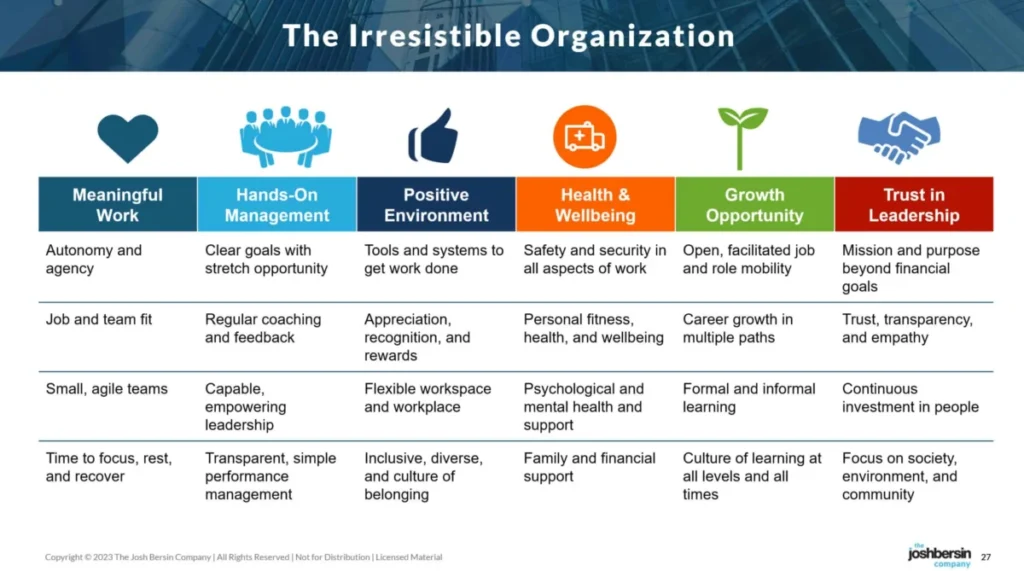
The "Irresistible" model, which tracks 24 distinct areas of employee experience, highlights the complexity of addressing frontline needs. Many frontline staff lack consistent access to computers or email, and their ability to use personal devices during work hours is often restricted. Issues such as the need for payday loans or immediate access to earned wages necessitate financial education and support. Moreover, a pervasive sense of disconnection among frontline employees calls for robust communication and team-building initiatives.
The HR Technology Landscape: A Fragmented Approach
The HR technology market has attempted to address the needs of the frontline workforce, but often with a piecemeal approach. Vendors typically offer specialized solutions for workforce scheduling, which are then only loosely integrated with core HR Information Systems (HRIS) and payroll platforms. This fragmentation leads to challenges in managing skills across disparate systems, disconnecting shift and work data from payroll and tax information, and complicating the calculation of total labor costs.
Consider the scenario of an employee swapping shifts with a higher-paid colleague or relocating to a different jurisdiction. Without seamless data integration, HRIS and payroll systems may struggle to accurately account for tax implications and positional alignments. Similarly, employees may find it difficult to access consolidated pay statements if data across different systems is not unified.
While many HR technology providers are striving to improve their offerings, significant gaps remain. Workday, for example, has made strategic acquisitions, including VNDLY and Paradox, and has recently emphasized its focus on the frontline workforce. SAP, a major player in industries with substantial frontline employment, launched its new Total Workforce Management platform. ADP, a significant provider to mid-market frontline businesses, has also revamped its workforce platform. Despite these efforts, the question of market leadership in this evolving space remains open.
UKG: A Pioneer Forging a New Path for the Frontline
Emerging as a significant force in this arena is UKG (formerly Kronos and Ultimate Software), a company that has historically prioritized frontline workers and pioneered essential workforce management tools like time clocks and dynamic scheduling. UKG has evolved into a $5 billion powerhouse, offering a comprehensive suite of solutions that encompass Human Capital Management (HCM), global payroll, pay optimization, dynamic labor optimization, high-volume hiring, employee communication, voice-driven employee applications, integrated surveys, recognition programs, and well-being initiatives, all augmented by advanced AI agents.
The company refers to its integrated solution as the "Workforce Operating Platform," a unified system designed to meet the diverse needs of C-suite executives, operations leaders, managers, and frontline employees. As CEO Jen Morgan articulated, "UKG understands the needs of frontline industries, workers, and what’s important to them." This deep understanding is rooted in the company’s unique history and strategic vision.
UKG’s Strategic Foundation: Integration and Culture
UKG was formed in 2020 through the strategic merger of Ultimate Software and Kronos. Kronos, a pioneer in workforce time tracking, established the foundation for dynamic, optimized shift scheduling. Ultimate Software, an early adopter of cloud technology, provided a user-friendly and scalable HRMS and payroll system. Under new leadership, the combined entity has meticulously built an integrated platform, the Workforce Operating Platform, which harmonizes payroll, scheduling, shift management, skills tracking, and HR processes into a single, operationally cohesive system.
This platform-centric approach is a critical differentiator. Every shift change, pay adjustment, jurisdictional tax update, overtime calculation, and employee record modification flows seamlessly across payroll, HCM, and scheduling modules. Core HR functions, including onboarding, compliance management, training, and performance management, operate within the same integrated environment as daily workforce operations. The outcome is a unified interface that simplifies the employee experience while equipping managers and leaders with AI-powered tools for scheduling, employee engagement, operational oversight, and cost control.
Furthermore, UKG recognizes the profound impact of culture and leadership on the frontline workforce. In 2021, the company acquired "Great Place To Work" (GPTW), an organization renowned for its validated culture assessments, which Fortune Magazine uses to compile its annual list of the 100 Best Companies to Work For. UKG customers can leverage GPTW data to gain industry-specific benchmarks and insights into fostering trust and improving management practices. Currently, UKG serves over 80,000 organizations, generating approximately $5 billion in annual revenue and adding 1,500 new clients in the past year.
UKG’s Frontline-First Innovations
UKG’s unwavering commitment to the frontline worker market is evident in its recent flurry of new capabilities, all designed to address the urgent needs of frontline-first companies. These innovations represent a significant step forward in empowering and supporting this vital segment of the workforce.
Workforce Intelligence Hub: From Insight to Action
A central challenge in labor management lies not just in scheduling and payroll, but in real-time planning and dynamic adjustment. UKG’s Workforce Intelligence Hub, deliberately named to emphasize action rather than mere analysis, integrates workforce planning with operational insights, providing managers with actionable tools. This represents a continuation of the legacy established by Kronos, a capability that few other vendors have successfully replicated. The Hub offers functionalities such as:
- Predictive Analytics: Forecasting labor needs based on historical data, seasonal trends, and anticipated demand shifts.
- Scenario Planning: Simulating the impact of various scheduling and staffing decisions on operational efficiency and costs.
- Performance Benchmarking: Providing real-time comparisons of labor utilization and costs against industry standards and internal targets.
These insights are further amplified by AI-driven use cases, enabling "Superagent" functionalities that are only possible through an integrated data platform. This transition from a system of insight to a system of action positions UKG as a leader in operational efficiency for frontline environments.
Dynamic Labor Management Coupled with Rapid Hire: Agility in Staffing
UKG has unveiled "Dynamic Labor Management," a pioneering system that links real-time labor insights and benchmarking with a rapid hiring solution to scale capacity on demand. This initiative was bolstered by the company’s November acquisition of Chattr, a company specializing in rapid hiring solutions. Chattr’s "one-click hire" technology allows job seekers to quickly apply for and accept positions without the need for extensive profile creation or lengthy application processes. This technology is perfectly suited for dynamic labor management needs.
Imagine a restaurant manager facing an unexpected surge in customers due to inclement weather or preparing for a busy holiday season. With Dynamic Labor Management integrated with UKG’s rebranded "Rapid Hire" solution, managers can quickly post open positions and fill them within hours. Prospective employees, alerted to job openings via their mobile devices, can scan a QR code and initiate an application immediately through UKG’s digital hiring assistant. This represents another powerful "Superagent" application designed to fuel business growth.
Voice-Enabled Frontline Worker Support: Ubiquitous Access to Information
A groundbreaking innovation from UKG is the development of voice-activated AI agents designed to connect an employee’s schedule and personal calendar with the entire UKG ecosystem of shift scheduling, pay, skills, and rewards. Dubbed "Project Alto," this initiative offers profound implications.
For instance, a restaurant or transportation worker could use a voice assistant like Siri to inquire about their projected monthly earnings. If they identify a need for additional funds for holiday shopping, Project Alto can process this request and leverage UKG’s integrated platform to suggest available shifts or even opportunities for supervisory roles. An affirmative response could trigger recommendations for relevant training to prepare them for a potential promotion. This integrated experience, compatible with Siri and other voice assistants, brings the full power of UKG’s platform directly to frontline workers, catering to their busy, mobile lifestyles and limited time. This feature also promises significant benefits for white-collar employees.
UKG Frontline Worker Network: Expanding Support Beyond Core Functions
Further reinforcing its commitment to frontline empowerment, UKG has launched a partner network providing all UKG-powered workers access to third-party services focused on health, wealth, and well-being. The initial offerings concentrate on financial wellness and support, addressing the critical needs of frontline workers who often navigate paycheck-to-paycheck financial realities. This network includes partnerships with providers such as Chime, OnePay, and TurboTax, with plans for further expansion.
UKG Beacon: Enhancing Employee Recognition
In late November, UKG acquired Mo, a UK-based provider of employee recognition solutions designed for effortless delivery. Employee recognition can range from simple verbal acknowledgments and "shout-outs" to more elaborate rewards like gift cards, facilitated by peers or managers. Research conducted a decade ago indicated that companies with robust recognition programs experienced a 70% lower voluntary turnover rate compared to their peers.
In frontline-first organizations, where every employee contributes directly to customer or patient care, consistent and meaningful recognition is invaluable. Beacon, the newly integrated system, provides an in-suite experience embedded alongside HR, payroll, and recruiting functions. It features a feed of "moments," boosts, and rewards that managers can easily distribute to employees, acknowledging milestones such as work anniversaries, career achievements, or consistent high performance. UKG’s platform tracks these recognition events, enabling managers and executives to monitor recognition trends across stores or facilities. AI agents can even prompt managers to provide recognition if their team’s activity falls below company benchmarks, ensuring consistent appreciation.
The Future of Frontline Workforce Technology
The market for frontline workforce technology is poised for significant growth. UKG, under the leadership of Jennifer Morgan, is effectively illuminating this critical sector and driving innovation. While many HR providers view the "frontline" as an ancillary opportunity, UKG perceives it as a distinct market segment with vast potential for innovation. The integrated features within UKG’s new platform are applicable to all workers within an organization, providing UKG with a strategic advantage in sectors that include banking, insurance, and other industries with substantial frontline workforces.
The immediate opportunity lies in execution: closing the persistent gaps in employee experience, opportunity, and mobility for the 2.7 billion individuals who "make the world run" daily. With Jennifer Morgan at the helm and a dynamic executive team, the future of AI-powered frontline support appears exceptionally bright, with UKG strategically positioned to lead this transformative shift.
Additional Information







