
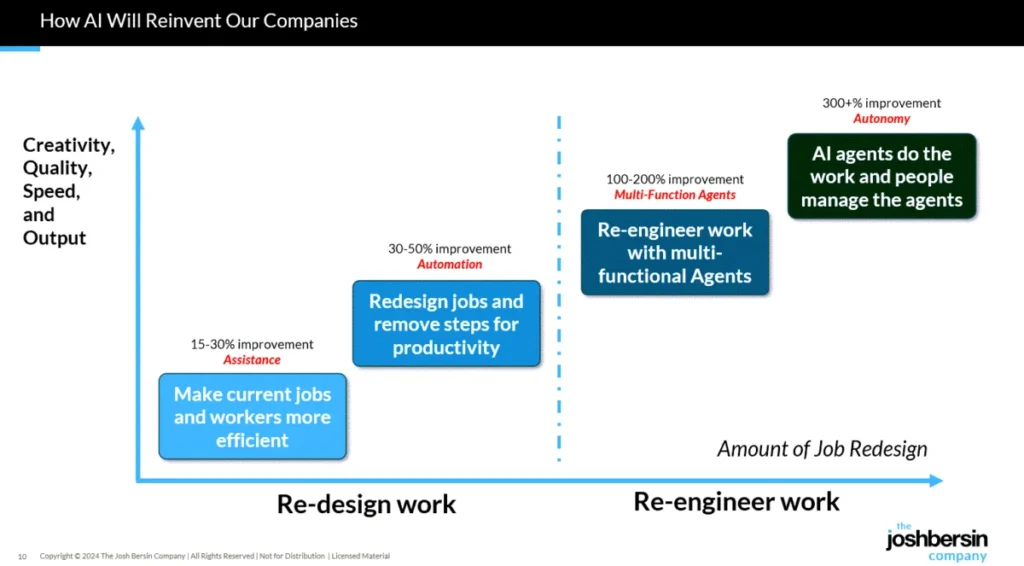
The global business landscape is undergoing a profound transformation driven by the rapid integration of Artificial Intelligence (AI). Insights gathered from extensive international travel, encompassing nearly 60,000 miles across Europe, Asia, and the Middle East, reveal a consistent and compelling trend: AI is no longer a nascent technology but a fully realized business tool with an ever-expanding array of practical applications. This observation is further corroborated by a recent survey from Wharton, which indicates a significant uptick in AI adoption and tangible returns on investment across diverse industries.
The Quantifiable Impact of AI Adoption
Wharton’s comprehensive survey on AI adoption paints a clear picture of its growing influence in the corporate world. The data indicates that 46% of business leaders are now utilizing Generative AI (Gen AI) on a daily basis, with an additional 34% engaging with the technology weekly, bringing the total weekly usage to a substantial 80%. Crucially, this widespread adoption is translating into measurable business outcomes. Among the surveyed users, an impressive 72% are actively tracking the return on investment (ROI) of their AI initiatives, and a significant 74% report a positive return.
This surge in AI deployment is not confined to specific sectors. The survey highlights that Human Resources (HR) departments are emerging as significant adopters, ranking as the third-highest area for AI use cases, closely following the traditionally tech-centric departments of Information Technology (IT) and Finance. This indicates a broadening acceptance and integration of AI across core business functions.
Financial commitments to AI are also escalating in tandem with its adoption. The survey reveals that 23% of large companies are allocating $20 million or more annually to AI investments, while a substantial 43% are investing over $10 million per year. These figures underscore a strategic shift towards AI as a critical component of corporate infrastructure and future growth strategies.
The Primary Driver: Enhanced Individual Productivity
The immediate and most prominent benefit derived from current AI implementations is a significant boost in individual productivity. The report identifies "stage 1" usage – focusing on individual enhancement – as the predominant use case. AI tools are empowering employees by streamlining tasks such as summarizing lengthy meetings, analyzing complex datasets, efficiently retrieving information, and assisting in the creation or review of documents. While these personal productivity gains are substantial and demonstrably real, they represent only the initial phase of AI’s transformative potential.
This phenomenon draws parallels to the early days of foundational digital tools. The current wave of AI-driven productivity mirrors the initial adoption of word processing, spreadsheets, and internet search engines. These early applications, much like today’s AI tools, were primarily focused on enhancing individual efficiency. Microsoft’s Copilot, for instance, is increasingly positioned as a foundational element of a new "Microsoft Office Suite," aiming to integrate AI capabilities seamlessly into everyday work processes.
Expanding Horizons: Corporate Agents and Knowledge Management
Beyond individual empowerment, AI is rapidly evolving to address more complex organizational needs. Approximately 12% of companies are now deploying "corporate agents" – sophisticated AI systems designed for specific functions, such as IBM’s "Ask HR" example. These agents are revolutionizing knowledge and information management. They are poised to become ubiquitous, capable of replacing cumbersome internal portals, SharePoint sites, and even serving as advanced customer support systems. The expectation is that virtually every enterprise will integrate such AI agents in the near future.
A compelling case study involves a large healthcare company that has been utilizing an employee-facing chatbot (an AI agent) for the past four years. The success of this initiative has led to the integration of virtually all HR applications behind the chatbot interface. Employees now leverage this AI agent for inquiries related to payroll, benefits, work schedules, and even professional development.
The recruitment sector is another area demonstrating proven AI utility. Job candidates can now interact with AI agents for initial engagement, undergo AI-powered assessments, and even participate in AI-driven avatar interviews. This capability allows for round-the-clock recruitment processes, removing the constraints of scheduling calls with human recruiters or hiring managers.
While the advent of high-ROI "multi-function agents" (akin to "stage 3" in AI adoption models) is still emerging, companies are actively deploying AI-powered coaching and learning tools. Many large organizations are implementing AI-native learning systems, reporting significant improvements in workforce enablement and a notable reduction in staff requirements in certain areas.
The growth in demand for specialized HR AI solutions is particularly evident in the burgeoning market for AI-driven HR and learning agents. Businesses are increasingly seeking these tools to act as digital HR partners and personalized tutors for both staff and management.
Crossing the Rubicon: A Point of No Return for AI Integration
The current phase of AI adoption can be characterized as having "crossed the Rubicon," signifying a point of no return. Despite ongoing discussions and concerns surrounding the potential negative impacts of AI on careers and society, the reality on the ground is that Gen AI has proven to be a practical, accessible, and understandable business tool. While not without its imperfections – as evidenced by the documented high error rates in certain AI models – the ability to effectively utilize and train AI with trusted data sets is leading to increasingly reliable performance.
Two years ago, public discourse was dominated by speculative narratives about AI’s more dramatic societal implications. However, substantial capital investment, estimated in the trillions, has fueled advancements in infrastructure, engineering, and power generation, contributing to the increasing safety and reliability of AI technologies.
This is not to suggest that AI is entirely risk-free. The potential for generating incorrect answers, poorly formulated reports, or flawed findings remains. However, as users become more accustomed to validating AI-generated outputs and understanding its "probabilistic nature," a greater sense of comfort and confidence is emerging.
New challenges are also surfacing. The significant energy and resource demands of AI infrastructure, such as data centers and power plants, are raising new geopolitical and environmental considerations. For example, reports from the UAE highlight that each ChatGPT query consumes approximately four liters of water, underscoring the environmental challenges that need to be addressed.
The Future Trajectory: From Single-Function to Multi-Functional Agents
The next frontier in AI’s evolution lies in the development and widespread adoption of "multi-functional agents." Current AI productivity tools, while beneficial, are akin to power steering – they assist with a specific task. The true transformative potential lies in AI agents that can autonomously manage entire processes, moving from "helping me steer" to "take me from place to place."
This shift is already beginning to manifest in areas like recruitment and training. AI agents are emerging that can manage the entire hiring lifecycle, from drafting job requisitions and engaging with candidates to scheduling interviews and screening resumes. Future iterations are expected to integrate seamlessly with onboarding and performance review processes, creating a comprehensive "hiring and career" agent. The development of blueprints to guide the creation and implementation of these multi-functional AI agents is a critical next step.
Organizations are moving away from the concept of numerous single-purpose agents towards "smart" agents that can orchestrate end-to-end business processes, such as the entire "design-to-build-to-distribute-to-sell" lifecycle, or the "market-to-close-to-bill-to-collect-to-renew-and-support" sales cycle. This integration will consolidate individual use cases into more cohesive and impactful workflows.

The emergence of these advanced agents will necessitate a fundamental re-evaluation of job roles within companies. Positions focused on routine administrative tasks, such as interview scheduling or appointment setting, may become obsolete as AI agents handle these functions within broader workflows.
The evolution of platforms like Galileo exemplifies this trend. What began as an HR assistant has transformed into a comprehensive solution provider, capable of answering queries, developing training courses, and resolving complex HR-related issues. These agents are evolving to move from identifying a problem to delivering a proven solution, mirroring the autonomy of self-driving vehicles.
The Rise of Agents with Memory and Personality
A significant development on the horizon is the emergence of AI agents that possess "memory" and can personalize interactions. Advanced agents will learn from user history and business context, becoming more autonomous and valuable over time.
Imagine a manager facing a staffing shortage. An AI agent like Galileo could proactively engage, inquiring about the specific role requirements. It might then leverage benchmark data to suggest internal candidates or assess whether current team dynamics warrant additional hiring. Months later, if the manager faces a similar challenge, the agent could recall previous hiring outcomes and suggest developmental plans for the existing team before initiating a new recruitment process.
This level of contextual understanding and proactive engagement signals a shift towards AI agents that not only execute tasks but also contribute strategically to organizational decision-making. The integration of these "memory-enabled" agents is anticipated to accelerate significantly in the coming year.
Data Management: The New Mission-Critical Discipline
Experience with advanced AI implementations consistently highlights the paramount importance of robust data management, data labeling, and data governance. As demonstrated by the Galileo project, the accuracy and performance of AI systems are directly contingent on the quality of the underlying data. Errors in data sets, even minor ones, can lead to a disproportionately high rate of inaccuracies in AI outputs.
AI models operate on probability and vector calculus, lacking inherent understanding of the data they process. This underscores the critical need for meticulously curated and accurately labeled datasets. Consequently, organizations like IBM, Walmart, and Bristol Myers Squibb have recognized data ownership as a mission-critical function. IBM, for example, employs dedicated owners for each of its 6,000 HR policies to ensure their accuracy and currency. Furthermore, IBM is developing AI agents to monitor regulatory changes across numerous jurisdictions, proactively identifying potential compliance issues. This learning curve is one that all organizations will need to navigate.
Inter-Agent Communication: The Next Layer of Integration
With the "crossing of the chasm" in AI adoption, the next critical development is agent-to-agent communication. While protocols for this inter-agent communication (A2A and MCP) are still maturing, companies are actively developing these capabilities. Integrations, such as Galileo’s connection with SAP’s Joule, are becoming increasingly common, paving the way for more interconnected AI ecosystems.
Organizations are advised to exercise caution and avoid acquiring a proliferation of disparate AI agents. The true utility of AI will be realized when these agents can communicate and collaborate effectively. The risk of ending up with siloed and ineffective tools is significant. Many clients are opting for shorter contract terms to maintain flexibility in a rapidly evolving market.
The development of frameworks, such as an "Agentic AI Blueprint for HR," will be crucial in guiding organizations on how to best connect these agents. Such blueprints will prevent the fragmentation of AI investments and ensure that AI systems work in concert, much like a well-coordinated self-driving car, rather than pulling in opposing directions.
Navigating Vendor Risks and Market Consolidation
The AI vendor landscape presents its own set of challenges and opportunities. The trajectory of major AI players like OpenAI remains subject to change, and the broad-reaching strategies of Microsoft Copilot continue to evolve. The competitive environment, with emerging players and established giants, suggests a period of potential consolidation.
Companies that focus on pragmatic, quality-driven business applications, such as Galileo, Paradox, Eightfold, and Sana, are likely to be well-positioned for sustained growth or acquisition. The HR technology sector, in particular, is witnessing significant activity.
Major Human Capital Management (HCM) vendors, including SAP, Workday, ADP, HiBob, and ServiceNow, are actively integrating AI agents into their core payroll and workflow platforms. Their strategic acquisitions, such as SAP’s purchase of SmartRecruiters and Workday’s acquisitions of HiredScore, Paradox, and Sana, underscore their ambition to become comprehensive, end-to-end AI solution providers. Organizations must stay abreast of these evolving offerings.
Addressing Fears: Job Displacement and Workforce Dumbing Down?
Throughout extensive consultations, a recurring theme has been apprehension regarding job security, the authenticity of candidates, and the potential for AI to diminish human cognitive abilities.
The prevailing sentiment is that embracing this technological revolution is imperative. Resisting AI integration is likely to result in organizations being left behind. This era presents a unique opportunity to fundamentally re-engineer business operations and individual roles. Proactive engagement with AI tools, whether independently or through guided platforms, is crucial for career development and the identification of new opportunities.
The notion of AI comprehensively replacing human jobs is widely considered an overstatement. Just as the advent of spreadsheets did not eliminate accountants but rather transformed their roles to focus on higher-value analysis, AI is poised to augment, rather than eradicate, human capabilities.
AI’s current state – characterized by its nascent nature, inherent imperfections, and rapid evolution – necessitates a new category of "Superworkers." These individuals will act as consultants and innovators, identifying novel use cases and driving AI adoption. For creative professionals, designers, authors, and analysts, AI can serve as a personal supercomputer, enhancing their ability to create sophisticated and elegant work.
The pervasive influence of AI is now undeniable. The initial uncertainties are giving way to a clear understanding of its permanence. The path forward involves embracing the role of a "Superworker," actively learning, applying, and leveraging this transformative technology to empower organizations and individuals alike. The ultimate impact of AI will be shaped by our collective ability to adapt and innovate.







