The landscape of employee engagement in 2026 is not merely experiencing a quiet downturn; it has evolved into a significant and costly liability for businesses across the United States. New findings from the Achievers Workforce Institute’s 2026 Engagement and Retention Report indicate that current job-seeking behaviors alone place U.S. employers on a trajectory to absorb over $1 trillion in turnover costs in the coming year, a stark financial reality if current trends persist. This is not a hypothetical risk, but a quantifiable consequence of a workforce that feels increasingly disconnected and ready to act on that sentiment. Disengagement has transcended its traditional perception as a mere cultural issue, now directly impacting organizational balance sheets.
The core message from the data is unequivocal: when employees feel undervalued, disconnected from their colleagues and leadership, or unsupported in their roles, their disengagement quickly escalates into active job-seeking. These decisions create a ripple effect, negatively impacting productivity, diminishing retention rates, and hindering long-term organizational performance. This underscores why employee engagement has always been far more than superficial perks like free snacks or infrequent team-building events. At its heart, it is about fostering an environment where individuals feel recognized, valued, and genuinely motivated to contribute their best work, not out of obligation, but because the work experience itself provides a compelling reason to care.
The comprehensive data presented in the 2026 Engagement and Retention Report, derived from extensive global research by the Achievers Workforce Institute, moves beyond aggregated third-party benchmarks. It represents original data collected directly from employees and HR leaders across a diverse range of industries and geographical locations. This methodology is specifically designed to pinpoint the exact areas where employee engagement is faltering and where organizations still retain significant leverage to implement corrective actions. The report’s findings offer critical insights into the statistics that define employee engagement in 2026, illuminating pathways to cultivate workplaces where employees are not merely present, but actively invested and committed.
Understanding Employee Engagement Statistics
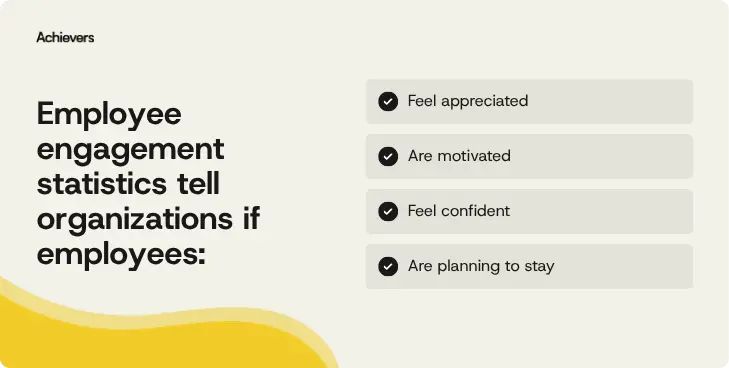
Employee engagement statistics are quantifiable metrics that measure employees’ sentiments towards their work, their leaders, and their organization, and how these sentiments translate into observable behaviors. These statistics encapsulate levels of commitment, motivation, connection, and intent to remain with an organization. By providing concrete data, they transform what might otherwise be perceived as an intangible "culture problem" into a measurable and actionable challenge for leadership.
Typically, these statistics are gathered through comprehensive employee surveys and rigorous workforce research, such as the aforementioned 2026 Engagement and Retention Report from the Achievers Workforce Institute. This report specifically captures the employee experience concerning appreciation, professional growth, sense of connection, purpose, and the quality of leadership.
Employee Engagement Statistics Reveal Deeper Trends
The true power of employee engagement statistics lies in their ability to reveal underlying patterns. When analyzed beyond individual data points, a clear narrative emerges regarding the strengths and weaknesses of the employee experience within an organization. These patterns highlight the discrepancies between employee expectations and the realities of what many organizations are currently delivering.
When utilized effectively, employee engagement statistics serve as crucial signals rather than mere metrics. They indicate areas where organizational culture is flourishing, where it is beginning to deteriorate, and where strategic investments in recognition, connection, or growth can yield the most significant positive impact. In essence, these statistics equip leaders with the clarity needed to move beyond guesswork and proactively shape engagement in a deliberate and consistent manner.
Fifteen Critical Employee Engagement Statistics for 2026
The impact of employee engagement is profound. When individuals feel a strong connection to their work, their teams, and the overarching purpose of their organization, a cascade of positive outcomes follows: performance metrics improve, retention rates strengthen, and the concept of "company culture" evolves from a buzzword into a tangible, lived experience. However, to truly understand the forces that either drive or deplete engagement, a deep dive into the data is essential.
The following fifteen statistics, drawn directly from the 2026 Engagement and Retention Report, offer a revealing snapshot of what is currently succeeding, what is notably absent, and where organizations must direct their increased attention:
1. Only 26% of Employees are Engaged at Work:
This statistic reveals that just over one in four employees actively report being engaged in their work. The vast majority of the workforce falls into the categories of disengaged or emotionally disconnected. Such low levels of engagement inevitably lead to declines in productivity, stifle innovation, and negatively impact retention. The clear takeaway is that engagement cannot be assumed; it must be intentionally cultivated and nurtured.
2. Just 25% of Employees Feel Appreciated at Work:
Recognition continues to be one of the most significantly overlooked drivers of employee engagement. With only a quarter of employees reporting feeling genuinely appreciated, a substantial gap exists, carrying real-world consequences. Employees who feel appreciated are demonstrably more likely to find their work meaningful (12 times more likely) and envision a long-term career with their organization (17 times more likely). Appreciation is not a mere perk; it is a powerful predictor of both engagement and loyalty.
3. 34% of Employees Plan to Look for a New Job:
A concerning trend is that more than one-third of employees are actively seeking new employment opportunities this year, with an additional 22% expressing uncertainty about their future with their current employer. This places over half of the workforce at a significant risk of turnover. These statistics point to a pervasive fragility in employee commitment and represent a substantial opportunity for organizations that prioritize and effectively manage engagement.

4. Only 25% of Employees Envision a Long-Term Career with Their Employer:
The data indicates that merely one in four employees can visualize a future with their present organization. This statistic extends beyond immediate turnover rates, reflecting a fundamental lack of perceived long-term prospects. When employees do not see pathways for growth, opportunities for appreciation, or a sense of connection within their organization, their engagement stagnates, and their loyalty erodes long before any formal resignation occurs.
5. Employees Who Feel Appreciated are 17x More Likely to Envision a Long-Term Career:
This is one of the most impactful statistics within the report, highlighting the profound influence of feeling appreciated on an employee’s perception of their future. Experiencing consistent appreciation dramatically shifts an employee’s outlook, demonstrating that recognition not only motivates immediate performance but also fundamentally shapes long-term career commitment.
6. Only 22% of Employees Feel They Have Access to Growth Opportunities:
Career development is a paramount driver of engagement. Yet, fewer than a quarter of employees believe their organization provides the necessary tools, resources, or opportunities for professional growth. When individuals perceive their career progression as blocked, engagement levels decline, and the inclination to seek employment elsewhere intensifies.
7. Employees with Development Opportunities are 2.5x More Engaged:
The data clearly illustrates that when employees perceive a clear trajectory for advancement, their engagement levels rise significantly. Access to learning and development opportunities makes employees 2.5 times more likely to be engaged and simultaneously 2.5 times less likely to be actively job hunting. Growth is not an optional benefit; it is a foundational element of sustained engagement.
8. Only 19% of Employees Feel Connected to Their Manager:
Managers play a pivotal role in shaping employee engagement. However, the report indicates that fewer than one in five employees feel a genuine connection with their direct supervisor. This disconnect directly impedes trust, the flow of constructive feedback, and the delivery of effective recognition – all of which are essential components of a highly engaged workforce.
9. Recognition from Managers Makes Employees 2.8x More Likely to Feel Connected:
The consistent recognition of employees by their managers has a rapid and positive effect on fostering connection. Employees who regularly receive recognition from their direct leaders are 2.8 times more likely to feel connected to their organization and 2.7 times more likely to feel supported in their professional development. This demonstrates that recognition is a tangible manifestation of effective leadership.
10. Only 25% of Employees Feel Their Work is Meaningful:
A strong correlation exists between a sense of purpose and employee engagement. However, only one in four employees currently report that their work feels meaningful. This statistic is directly linked to appreciation, as employees who feel appreciated are 12 times more likely to find meaning in their tasks, reinforcing how recognition serves as a powerful catalyst for purpose.
11. Only 23% of Employees Feel They Have the Resources They Need to Do Their Best Work:
Engagement can be hindered not only by a lack of motivation but also by operational friction. Fewer than a quarter of employees feel adequately equipped to succeed in their roles. When employees are expected to perform without the requisite tools, clarity, or support, their initial effort can devolve into frustration. Over time, this friction quietly erodes engagement, impacts performance, and undermines trust. Enabling employees with the necessary resources is not separate from engagement; it is a prerequisite.
12. Disengagement Could Cost Employers Up to $1.3 Trillion in Attrition:
Projected trends in job-seeking behavior suggest that U.S. employers could face a staggering turnover cost of at least $1.3 trillion in 2026. This stark figure underscores that disengagement is not merely a cultural challenge but a significant financial risk to organizations.
13. 75% of Employees Feel Overlooked at Work:
A substantial three-quarters of the workforce reports feeling overlooked. This pervasive sense of invisibility directly undermines engagement, erodes trust, and diminishes motivation. When individuals feel unseen, their sustained engagement is unlikely.
14. Employees Who Feel Appreciated are 56x More Likely to Feel Connected to Their Organization:
Connection is a critical predictor of engagement, and recognition emerges as the most effective and rapid method for cultivating it. Employees who feel appreciated exhibit dramatically increased levels of connection and a significantly higher likelihood of remaining with their organization.
15. Recognition, Connection, and Growth are the Top Engagement Drivers:
Across all surveyed regions, the data consistently identifies three primary levers for achieving high employee engagement: recognition, connection, and growth. Organizations that strategically invest in these three areas cultivate cultures where employees not only work but truly thrive.
The Deeper Implications of Engagement Statistics
The stark reality that only 26% of employees are engaged and a mere 25% feel appreciated points to a fundamental issue of visibility rather than a lack of effort. The majority of employees are not disengaged because they lack care; they are disengaged because their contributions often go unnoticed, their potential for growth feels uncertain, and their connection to the organization gradually fades.
This presents a significant opportunity for organizations. The same data reveals that employees who feel appreciated are 17 times more likely to envision a long-term career. Appreciation does more than simply boost morale; it fundamentally alters an employee’s perspective on their future within the company. True engagement is not built through grand, infrequent gestures or annual programs. Instead, it is forged in the everyday interactions: a manager acknowledging an employee’s effort, a team celebrating collective progress, and a workplace that consistently makes individuals feel seen, supported, and valued.
Achievers is strategically positioned to facilitate this essential shift. By transforming employee engagement statistics into actionable insights, the platform enables frequent recognition, strengthens manager-employee connections, and fosters organizational cultures where individuals are not just present but actively choose to stay, grow, and contribute meaningfully. The outcome of this approach is clear: employees who are seen, heard, and appreciated translate directly into tangible results for the organization.