In the rapidly evolving landscape of modern American workplaces, employee engagement is no longer a static metric but a dynamic force susceptible to swift shifts. Workload fluctuations, decisive leadership actions, moments of genuine recognition, and the pervasive sense of daily support all contribute to an employee’s overall sentiment. Yet, a significant disconnect persists, with many organizations still relying on annual surveys—a practice that often provides feedback long after the employee experience has transformed. This temporal gap carries substantial consequences, as highlighted by the 2026 Engagement and Retention Report. The report reveals a concerning reality: only 29% of employees feel engaged, and a mere 29% feel appreciated. Compounding this issue, over a third of the workforce are actively exploring new career opportunities or are uncertain about their current tenure. This lack of frequent listening creates a breeding ground for quiet disengagement, escalating retention risks for businesses.
To bridge this chasm and maintain alignment with the immediate needs of their workforce, a growing number of organizations are adopting more frequent and focused feedback mechanisms. This is precisely where employee pulse surveys have emerged as a critical tool. Unlike their more comprehensive annual counterparts, pulse surveys are designed to be concise, targeted, and recurrent questionnaires. They offer a snapshot of how employees are feeling right now, providing real-time insights rather than retrospective data. Typically comprising a small number of carefully selected questions, these surveys are deployed on a regular cadence, such as monthly or quarterly, enabling organizations to meticulously track shifts in engagement, morale, and overall sentiment over time.
The Differentiating Factors of a Pulse Survey
An effective employee pulse survey is characterized by several key attributes that set it apart from traditional annual assessments. It is designed to be fast, focused, and repeatable. Think of it not as an exhaustive examination, but rather as a series of quick, targeted check-ins. This approach ensures that feedback remains relevant and actionable, providing leaders with timely signals about what is working well, what is not, and where immediate intervention might be necessary before minor issues snowball into significant problems.
Strategic Imperatives: Why Organizations Embrace Pulse Surveys
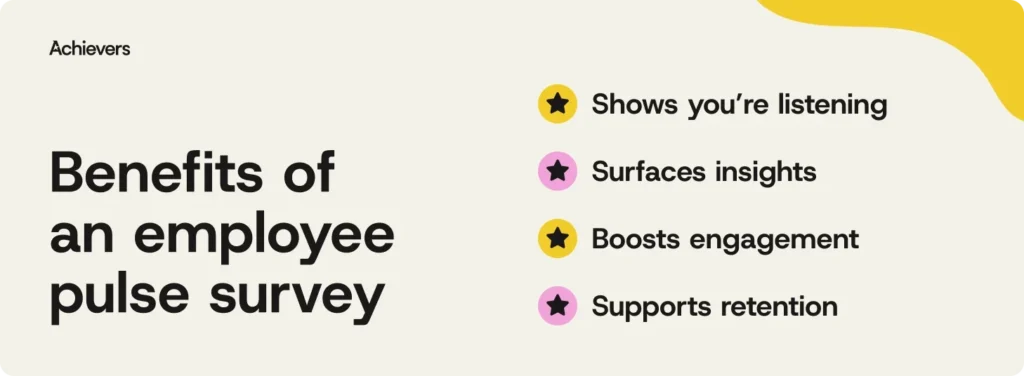
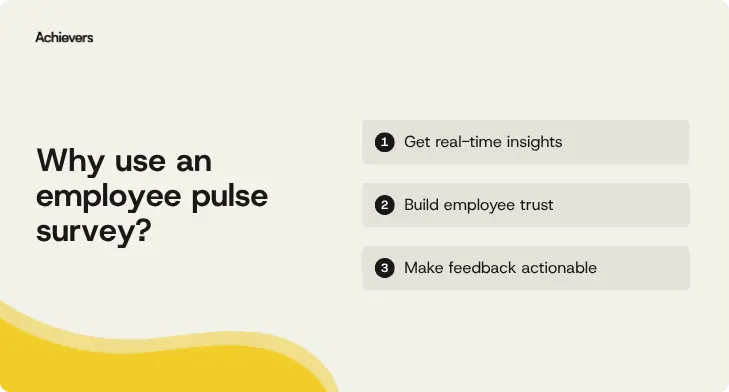
The strategic advantage of employing employee pulse surveys lies in their ability to provide early warnings and actionable intelligence to leadership. Research consistently underscores a few core benefits that drive their adoption:
- Real-time Insights: Pulse surveys offer immediate visibility into the employee experience, allowing for proactive problem-solving.
- Enhanced Engagement: By demonstrating a commitment to listening and acting on feedback, organizations can foster a more engaged workforce.
- Improved Retention: Identifying and addressing issues before they lead to dissatisfaction can significantly reduce employee turnover.
- Data-Driven Decision Making: Consistent data collection enables trend analysis, informing strategic people initiatives.
- Culture Cultivation: Regular feedback loops can reinforce positive behaviors and address areas for cultural improvement.
Despite the clear value proposition, a significant portion of companies remain behind the curve in their implementation. Achievers’ research indicates that a substantial 43% of organizations conduct surveys only once a year, a stark contrast to the nearly 60% of employees who express a desire for more frequent check-ins. This represents a considerable disconnect, particularly given the inherently fluid nature of employee engagement.
Employee engagement is not a fixed state; it is influenced by a myriad of daily interactions and organizational actions. The frequency of recognition, the quality of leadership, the management of workloads, and even simple gestures like acknowledging good work can all contribute to an employee’s overall sentiment. Employee pulse surveys provide organizations with the crucial opportunity to detect these shifts early, understand their underlying drivers, and implement corrective measures before minor concerns escalate into major challenges.
Measuring the Pulse: What Employee Pulse Surveys Can Gauge
The inherent flexibility of pulse surveys is one of their most significant strengths. They can be tailored to measure any aspect of the employee experience that is critical to organizational success, provided there is sufficient consistency in the questions asked to allow for meaningful trend analysis over time. This adaptability is precisely why they are so effective in capturing the rapid fluctuations common in employee engagement, which can be influenced by workload demands, recognition practices, managerial behavior, and the sense of connection employees feel on a week-to-week basis.
Common themes that employee pulse surveys can effectively measure include:
- Engagement Levels: Assessing overall employee commitment and enthusiasm for their work and the organization.
- Recognition and Appreciation: Gauging how valued and acknowledged employees feel for their contributions.
- Managerial Support: Understanding the quality of support and guidance employees receive from their direct supervisors.
- Workload and Well-being: Monitoring employee stress levels, work-life balance, and overall well-being.
- Connection and Belonging: Evaluating the sense of camaraderie, inclusion, and psychological safety within teams and the organization.
- Communication Effectiveness: Assessing the clarity, transparency, and timeliness of organizational communications.
- Opportunities for Growth: Understanding employee perceptions of career development and learning opportunities.
Crafting Effective Pulse Survey Questions: Themes and Examples
A truly effective employee pulse survey is not a random collection of questions. It is a curated set of prompts designed to elicit actionable insights. The questions should be concise, clear, and easy for employees to answer, facilitating straightforward translation into concrete actions.
Engagement (Outcome Measure):
- "On a scale of 1 to 5, how likely are you to recommend our company as a place to work?" (Net Promoter Score for employees)
- "How satisfied are you with your current role?"
Recognition and Appreciation (Driver Measure):

- "In the past week, how often have you received recognition for your contributions?"
- "Do you feel your efforts are adequately appreciated by your manager and colleagues?"
Manager Support (Driver Measure):
- "Does your manager provide you with the support you need to be successful in your role?"
- "Do you feel comfortable approaching your manager with concerns or ideas?"
Workload and Well-being (Driver Measure):
- "How manageable is your current workload?"
- "Do you feel you have a healthy work-life balance?"
Connection and Belonging (Driver Measure):
- "Do you feel a sense of belonging within your team?"
- "Do you feel connected to the company’s mission and values?"
Open-Text (Contextual Insights):
- "What is one thing that could be improved to enhance your experience at work?"
- "What is one positive aspect of your work experience this week?"
A particularly effective strategy is to incorporate a "recognition moment" question in each survey cycle. Instead of just asking about general engagement, queries like "What should we recognize more of?" can directly inform cultural development and reinforce desired behaviors. This approach transforms passive listening into active culture-shaping.
The Compelling Case for Pulse Surveys: 10 Key Benefits
The increasing adoption of employee pulse surveys is driven by a compelling array of benefits that extend beyond mere feedback collection. When implemented effectively, these surveys act as catalysts for action, foster trust, and equip organizations with the agility to stay ahead of disengagement and turnover.
1. Demonstrating a Commitment to Listening
Administering regular pulse surveys sends an unequivocal message to employees: their voices are valued, and their contributions matter. This consistent feedback loop builds credibility, but its impact is amplified exponentially when leaders demonstrate a genuine commitment to acting on the insights gained. Without tangible follow-through, surveys can devolve into perfunctory exercises. Gallup research indicates that a mere 8% of employees strongly believe their organization acts on survey feedback. To be part of that impactful minority, organizations must not only ask but, crucially, act.
2. Accelerating the Identification of Insights
The concise nature of pulse surveys, typically involving between 5 to 15 questions, facilitates the early detection of potential issues. This brevity often translates into higher participation rates, more candid responses, and a swifter delivery of actionable insights. When prompt action follows feedback, trust is cultivated and strengthened at an accelerated pace.
3. Catalyzing Engagement Growth
Feedback that is not met with action can breed frustration. Conversely, when employees witness their input leading to tangible improvements, their engagement levels rise. Achievers’ own Engagement and Retention Report found that 41% of employees surveyed more than four times a year reported being "very engaged." This correlation underscores how frequent listening, coupled with timely and meaningful responses, can foster deep commitment, cultivate advocacy, and build organizational momentum.
4. Bolstering Retention Efforts
Employee pulse surveys serve as a vital early warning system, flagging potential sources of dissatisfaction before employees begin their job search. Signs of disengagement, burnout, or frustration often manifest in survey feedback long before an individual decides to leave. In an era where nearly two-thirds of employees are considering a job change, this proactive visibility is invaluable.
5. Proactively Addressing Escalating Issues
One of the most significant advantages of pulse surveys is their capacity to surface problems at their nascent stages. Whether the concern pertains to widespread burnout, communication breakdowns, or a disconnect with leadership, pulse surveys enable organizations to identify and address these issues while they are still manageable, preventing them from eroding morale or impacting performance.
6. Encouraging Candid and Honest Feedback
While direct conversations about dissatisfaction can be challenging for many employees, particularly when their manager is part of the issue, surveys often provide a safe and anonymous channel for honest feedback. Achievers’ research revealed that 77% of employees prefer sharing candid feedback about their manager through a survey rather than in a face-to-face discussion. This unvarnished honesty is crucial for cultural improvement, provided leaders are prepared to receive and act upon it.
7. Fostering a Culture of Continuous Improvement
Each pulse survey provides a valuable snapshot of the employee experience. Over time, these snapshots coalesce into discernible trends, which in turn can inform and shape organizational strategy. This continuous feedback loop empowers leaders to focus their efforts on what is proving effective, identify areas needing adjustment, and maintain both employee morale and performance on an upward trajectory.
8. Mitigating Bias in Feedback
Traditional feedback mechanisms can be susceptible to biases, influenced by who speaks up, who is actively solicited, or how input is interpreted. Employee pulse surveys help to level the playing field. By offering anonymity and employing consistent questioning, these surveys reduce subjectivity, providing leaders with clearer, more reliable insights that are less prone to personal interpretation.
9. Informing Strategic Decision-Making
Beyond simply reflecting employee sentiment, pulse surveys offer concrete indications of where organizational efforts should be focused. Armed with targeted data, leaders can transition from guesswork to evidence-based action, designing initiatives that directly address identified pain points and areas for improvement. In essence, feedback is transformed into a strategic roadmap.
10. Driving Higher Participation Rates
Long, annual surveys can often feel like daunting marathons, leading to survey fatigue and diminished engagement. Conversely, short, focused employee pulse surveys are perceived as manageable and are more likely to be completed. When surveys are easily accessible and engaging, feedback flows more freely and with greater frequency, creating a more robust and responsive feedback ecosystem.
Defining the Essence of a Pulse Survey
It is crucial to recognize that not all surveys are created equal. Pulse surveys distinguish themselves through their inherent design principles: speed, focus, and a direct pathway to action. They are not intended to be repositories of information that gather dust, but rather dynamic tools for ongoing organizational health assessment. Key differentiating factors include:
- Frequency: Deployed regularly (monthly, quarterly) to track trends.
- Brevity: Typically 5-15 questions to maximize completion rates.
- Focus: Concentrates on specific themes or critical areas of the employee experience.
- Actionability: Questions are designed with clear potential for tangible organizational response.
- Anonymity: Protects employee privacy to encourage honest feedback.
Navigating Survey Fatigue: Strategies for Sustained Engagement
The specter of "survey fatigue"—the reluctance of employees to participate in yet another survey—is a valid concern. However, research suggests that fatigue is less a product of survey frequency and more a consequence of poor communication and a lack of follow-through. When employees do not see the outcomes of their feedback, trust erodes, and participation rates decline.
To mitigate survey fatigue and foster sustained engagement, organizations should integrate the following practices:
- Close the Loop Consistently: Communicate what was learned from the survey, outline the changes being implemented, and explain any decisions not to act on specific feedback, providing clear rationale.
- Maintain Anchor Questions: Retain a core set of consistent questions across survey cycles to enable meaningful trend analysis and demonstrate progress over time.
- Rotate Thematic Focus: Dedicate each pulse survey to one or two specific themes (e.g., recognition, workload, manager support) to ensure relevance and avoid overwhelming employees with too many topics at once.
- Prioritize Actionable Queries: Only include questions for which the organization has the capacity and commitment to act upon the resulting feedback.
- Ensure Clear and Real Anonymity: Transparently communicate the anonymity of the survey process and ensure its integrity to build employee trust.
A particularly innovative approach to reinforcing positive survey behavior involves recognizing teams and leaders who actively respond to and implement feedback derived from pulse surveys. This practice transforms listening into a deeply ingrained cultural habit rather than a perfunctory quarterly task.
Integrating Employee Pulse Surveys into Your Strategic Toolkit
An employee pulse survey is more than just a data-gathering mechanism; it is a powerful demonstration of an organization’s commitment to valuing its employees’ perspectives. When individuals feel seen, heard, and genuinely appreciated, their propensity to remain engaged, motivated, and committed to the organization increases significantly.
However, the true impact of feedback lies not solely in its collection but in the subsequent actions taken. The speed at which insights are translated into tangible improvements, the consistency with which feedback is linked to recognition and reward, and the clarity with which employees perceive that their input drives change are all critical determinants of success. Many organizations falter at this crucial stage, highlighting the importance of the right partnerships and technological solutions.
For organizations seeking a streamlined yet highly impactful method to maintain a pulse on their workforce and transform feedback into meaningful moments of recognition and strategic improvement, employee pulse surveys represent a prudent starting point. Platforms that integrate listening capabilities with recognition and reward systems ensure that feedback does not exist in a vacuum but is intrinsically linked to measurable outcomes that shape organizational culture and performance.
Embarking on this journey does not necessitate a wholesale overhaul of existing strategies. Commencing with the articulation of precise questions and selecting a platform engineered to facilitate listening, acting, and demonstrating employee value is a strategic and effective approach. By prioritizing these elements, organizations can cultivate a more engaged, responsive, and ultimately, more successful workforce.