The conventional approach to employee recognition, which heavily favors manager-to-employee acknowledgment, is often lauded as a cornerstone of positive workplace culture. However, a growing body of evidence suggests that this top-down model, while valuable, is incomplete. The critical, yet frequently overlooked, ingredient is peer-to-peer recognition – the act of employees acknowledging and appreciating one another’s contributions. This practice, far from being a mere "feel-good" initiative, is emerging as a potent catalyst for significantly enhanced employee engagement, robust teamwork, heightened productivity, and even a measurable reduction in absenteeism.
Recent data, particularly from the Engagement and Retention Report (E&R Report), underscores the profound impact of peer connection. Employees who report high levels of peer connection are a staggering 4.7 times more likely to feel genuinely appreciated, 5.4 times more likely to experience a sense of well-being support, and an equally significant 5.4 times more likely to feel a strong sense of belonging. These statistics paint a clear picture: when colleagues acknowledge each other’s efforts, it cultivates an environment where individuals feel seen, heard, and valued, directly influencing their overall workplace experience and commitment.
Peers are uniquely positioned to observe and acknowledge the "quiet wins" and the consistent, everyday efforts that often elude managerial oversight. These are the moments of collaboration, problem-solving, and embodiment of organizational values that, when recognized by peers, fuel a deeper sense of connection and reinforce the purpose behind their work. This organic recognition process fosters a company culture where employees are not just present, but actively invested in contributing their best.
This article will delve into the multifaceted nature of peer recognition, explore its critical importance in today’s business landscape, and outline 15 actionable best practices to empower organizations in building a sustainable and impactful recognition culture from the ground up.
Defining Peer-to-Peer Recognition: Beyond the Superficial
At its core, peer-to-peer recognition is the practice wherein employees acknowledge and appreciate one another for meaningful contributions, collaborative efforts, and the consistent demonstration of organizational values. This is distinct from traditional top-down recognition, which often emanates from supervisors or management. Peer recognition offers a more authentic reflection of how work is actually accomplished on a daily basis. It captures the real-time impact of an individual’s or team’s efforts, reinforces shared standards of excellence, and highlights the day-to-day behaviors that are crucial for success, rather than solely focusing on achievements documented during formal review periods.
When peer-to-peer recognition is supported by a well-defined structure and appropriate technological tools, it transcends mere gestures of goodwill. It creates essential visibility into contributions, reinforces company values in practice, and provides organizations with invaluable insights into which behaviors are actively driving engagement and performance across all levels and teams. At its most effective, peer recognition transforms isolated moments of appreciation into a consistent, ingrained habit. This not only ensures that employees feel seen, heard, and valued but also equips leaders with the necessary visibility to intentionally shape and nurture a positive organizational culture.
The Tangible Benefits: How Peer Recognition Reduces Employee Turnover
The impact of peer recognition on employee retention is substantial and multifaceted. The everyday connections forged through mutual appreciation directly influence how employees perceive their work and their future within an organization. When individuals feel acknowledged by the colleagues they interact with daily, their propensity to disengage or actively seek alternative employment diminishes significantly.
Supporting Employee Well-being Through Consistent Validation
Peer recognition plays a crucial role in reinforcing the message that effort and impact are noticed and valued in real time, not just during infrequent formal performance reviews. This consistent validation acts as a powerful buffer against stress, builds confidence, and actively supports day-to-day well-being. Research consistently shows a strong correlation between strong peer connections and higher engagement levels. Employees with robust peer recognition experiences are demonstrably more engaged, making them less susceptible to burnout and disengagement, which are significant drivers of turnover.
Cultivating a Genuine Sense of Belonging
Being acknowledged by teammates fosters genuine emotional connections and reinforces a shared sense of purpose. The same E&R Report data reveals that employees who experience strong peer connections are three times more likely to find their work meaningful. This sense of meaning is a direct determinant of an employee’s likelihood to remain with a company or begin searching for opportunities elsewhere. When employees feel they are part of a supportive and appreciative team, their commitment to the organization deepens.
Forging Stronger, More Connected Organizational Cultures
Peer recognition serves as a unifying force, bringing teams together across diverse departments, roles, and geographical locations. As these inter-team relationships strengthen, collaboration naturally improves, company culture becomes palpable in everyday interactions, and employees develop a greater sense of investment in the organization as a whole. When individuals feel connected to their colleagues, their motivation to grow and develop within the organization intensifies, reducing the impetus to seek connection and fulfillment elsewhere.
Implementing a Thriving Peer Recognition Program: 15 Best Practices and Ideas
While the benefits of peer recognition are clear, establishing an effective program can seem daunting. The following 15 practical, people-centric strategies are designed to help organizations build a peer recognition program that is not only adopted but also sustains its momentum and becomes an integral part of the organizational fabric, rather than a forgotten HR initiative.
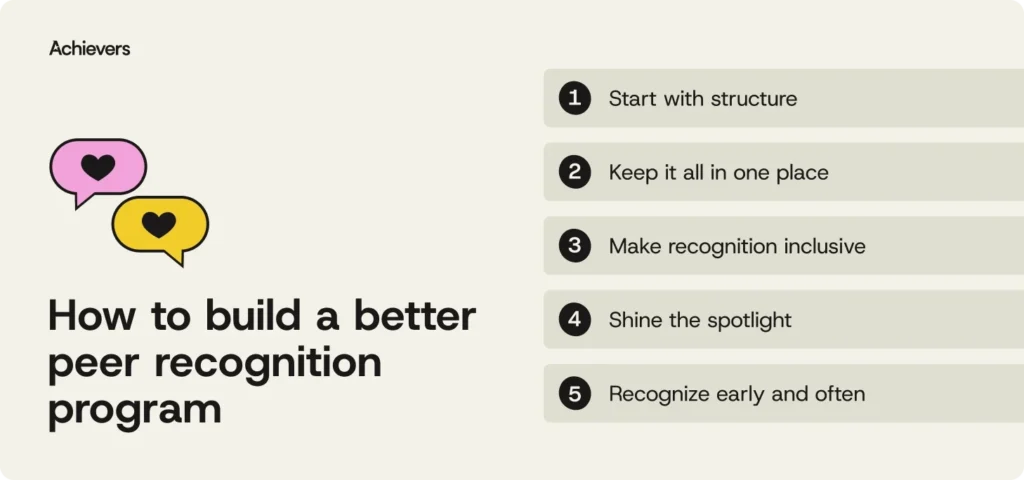
1. Establish a Clear Structure from the Outset
Effective peer recognition does not occur spontaneously; it requires a foundational framework. Organizations must clearly define what constitutes meaningful recognition between peers and establish guidelines that facilitate widespread participation. Whether through informal shout-outs, formal peer-nominated awards, or integrated digital platforms, a well-defined structure ensures that recognition is easily integrated into the daily workflow and has a lasting impact.
2. Centralize Recognition Efforts
If employees find it challenging to locate where and how to offer recognition, the program’s effectiveness will suffer. A single, user-friendly recognition platform streamlines the process, making peer recognition simple and seamless. This ensures that no act of appreciation goes unnoticed, promotes fairness and visibility, and removes friction for peers wishing to celebrate each other. The goal is fewer clicks and more kudos.
3. Prioritize Inclusive Recognition Practices
Peers are adept at recognizing effort in its myriad forms, not just in the final deliverables. Cultivating an organizational culture where everyone feels empowered to both recognize and be recognized is paramount. This means celebrating all types of contributions, from technical expertise to exceptional customer service, and actively reviewing recognition data to ensure that all voices and contributions are acknowledged. True inclusion ensures every peer has an opportunity to be seen and appreciated.
4. Amplify and Highlight Contributions
Recognition is inherently contagious. Publicly acknowledging peer contributions serves as a powerful reinforcement of what constitutes good work and demonstrates that appreciation is deeply embedded in the team’s ethos. Whether through a brief mention during a team meeting or a company-wide announcement, public peer recognition generates energy, enhances visibility, and fosters a shared sense of pride within the employee engagement strategy.
5. Encourage Frequent and Timely Recognition
Peers are often the first to notice and appreciate day-to-day successes, long before formal performance reviews. Therefore, the frequency of recognition is critical. Encouraging regular peer shout-outs for everything from meeting tight deadlines to offering morale boosts helps to solidify recognition as a consistent habit. This practice strengthens relationships and cultivates a positive, people-first workplace culture.

6. Emphasize Specificity Over Vagueness
Generic praise like "great job" is far less impactful than specific feedback. When recognizing a peer, it is essential to articulate precisely what action was taken, why it stood out, and how it benefited the team or project. Specificity makes recognition more meaningful and provides a clear understanding of the behaviors that are valued and should be replicated, which is a key driver of employee performance.
7. Leaders Must Lead by Example
For a peer recognition program to truly flourish, leadership must actively participate and model the desired behavior. When managers and executives engage in recognizing peers – not just their direct reports – it signals that appreciation is not solely a hierarchical exercise but a fundamental aspect of human interaction within the workplace. Consistent modeling from leadership encourages wider adoption across the organization.
8. Integrate Social and Monetary Rewards Thoughtfully
While a simple "thank you" from a peer can be incredibly meaningful, incorporating small, tangible rewards can amplify the impact. A well-balanced employee reward and recognition program should offer both social praise and appropriate incentives. Whether through global reward points or a small gift voucher, the right combination ensures that peer recognition remains both meaningful and motivating.
9. Celebrate the Entire Journey
Peers are present for both the significant milestones and the smaller victories. Recognizing achievements such as promotions, successful project completions, or even personal wins helps employees feel supported and valued by their colleagues. This reinforces the notion that success is a shared journey, enhancing the overall employee experience.
10. Infuse Fun and Gamification
Recognition doesn’t always need to be a formal or serious undertaking. Peers can nominate each other for themed awards, participate in friendly challenges, or contribute to a kudos leaderboard. Incorporating elements of gamification can invigorate a recognition strategy and encourage sustained employee participation in a culture of appreciation.
11. Recognize Both Teams and Individuals
Employees contribute in diverse ways, sometimes as individuals and sometimes as integral parts of a team. It is crucial to celebrate both. Highlighting collective efforts on projects alongside standout individual contributions reinforces that every role is vital and contributes to overall success, thereby boosting employee morale.
12. Measure What Truly Matters
To ensure ongoing impact and effectiveness, organizations should track key metrics such as participation rates, frequency of recognition, and equity across different demographics. Data from recognition platforms can reveal how often peers are recognizing each other and whether this reflects the entire workforce. These insights are invaluable for refining and improving the employee recognition strategy over time.
13. Empower Employees to Nominate Peers
Giving employees the agency to nominate their peers for recognition adds a layer of authenticity and brings often-unseen contributions to the forefront. Employees are often best positioned to identify colleagues who are making a significant difference behind the scenes; providing a structured nomination process allows them to voice this appreciation.
14. Celebrate Cross-Functional Collaboration
Peer collaboration frequently extends beyond immediate teams. It is essential to recognize and celebrate instances where peers from different departments support each other. This practice actively breaks down organizational silos and fosters a more cohesive and collaborative employee culture.
15. Link Recognition to Professional Growth
Peers often observe and acknowledge an individual’s professional development and growth before formal appraisals do. When an employee takes on a new role, acquires a new skill, or demonstrates emerging leadership qualities, acknowledging this development through peer recognition is highly impactful. This reinforces a growth mindset and underscores the importance of continuous learning as a core component of the employee value proposition.
The Role of Technology in Operationalizing Peer Recognition
While the 15 best practices outlined above provide a robust framework, their sustainable implementation is often contingent on the right technological infrastructure. Peer-to-peer recognition software acts as the crucial connective tissue, transforming intent into tangible outcomes. A dedicated platform provides structure, ensures visibility, and instills consistency, ensuring that appreciation is not reliant on memory, proximity, or individual personality.
By centralizing recognition, aligning it with organizational values, enabling real-time appreciation, and offering data-driven insights, peer-to-peer recognition software transforms best practices into ingrained daily behaviors. This technology ensures that recognition is not merely a theoretical concept but is actively integrated into the fabric of where work actually happens, thereby shaping culture, strengthening connections, and driving measurable improvements in engagement and retention.
The Compelling Data: Peer-to-Peer Recognition Statistics
Extensive research, including findings from the Achievers Workforce Institute (AWI), consistently demonstrates that peer recognition is far more than a superficial nicety. It is a transformative element that significantly impacts engagement, productivity, and retention. These are not merely vanity metrics; they represent tangible proof that cultivating a culture of recognition yields substantial and measurable returns.
Data indicates that organizations with robust peer recognition programs experience:
- Increased Employee Engagement: Employees who feel recognized by their peers are more likely to be engaged in their work and committed to their organizations.
- Enhanced Productivity: Acknowledged employees often feel more motivated and are therefore more productive. The collaborative spirit fostered by peer recognition also leads to more efficient teamwork.
- Reduced Turnover: As previously detailed, the sense of belonging and appreciation derived from peer recognition directly combats the factors that lead to employee attrition.
- Stronger Company Culture: Peer recognition reinforces desired behaviors and values, making the organizational culture more visible and tangible for all employees.
- Improved Morale: Acknowledging the daily efforts and successes of colleagues naturally lifts spirits and creates a more positive and supportive work environment.
The overarching takeaway from this body of evidence is that a thriving culture of recognition is not built overnight. However, with the right tools, consistent application, and a deliberate focus on intention, it is an achievable goal. The resulting benefits – a more engaged, productive, and loyal workforce – are undeniably worth the investment.
Conclusion: Moving Beyond Collaboration to Recognition
Peer-to-peer recognition may appear to be a "soft skill," but its impact on organizational outcomes is anything but. It demonstrably boosts employee engagement, drives productivity, strengthens company culture, and crucially, ensures that individuals feel genuinely seen for their everyday contributions, not just their major achievements. It stands as one of the most straightforward yet powerful methods for cultivating a workforce that is deeply connected, highly motivated, and built for long-term success.
Platforms like Achievers aim to integrate recognition seamlessly into the daily rhythm of work. Their technology simplifies the process for employees to recognize and reward one another in real time, infusing interactions with purpose, meaning, and even a touch of digital flair. From tailored culture campaigns to globally administered reward programs, these solutions help organizations translate values into observable behaviors and ultimately, into tangible results. For companies aspiring to build an environment where every employee feels consistently appreciated, the path forward is clear: embrace the power of peer recognition.