

The current global climate presents a complex and often turbulent environment for leadership. As artificial intelligence rapidly advances and geopolitical landscapes shift, the very nature of effective leadership is undergoing a profound transformation. This evolution demands a re-evaluation of traditional leadership models, moving beyond historical paradigms to embrace new strategies for guiding organizations and their people. Decades of leadership theory, from the foundational principles of Peter Drucker to the command-and-control era of Jack Welch, and more recent approaches like Howard Schultz’s servant leadership and Elon Musk’s first-principles thinking, have offered valuable insights. However, the contemporary challenges necessitate a fresh perspective on what it truly means to lead today. While core responsibilities such as setting direction, defining mission, and aligning people remain constant, the behavioral expectations and the mechanisms of influence are rapidly changing. This analysis, informed by extensive research into leadership, particularly the emerging concept of the "Supermanager," highlights three critical shifts reshaping the leadership paradigm.
The "Voluntary Army": From Command to Commitment
Perhaps the most significant alteration in leadership dynamics over the past half-century is what can be termed the "decoupling" of the employee from the traditional organizational structure. Historically, a hierarchical, boss-subordinate relationship, a legacy of the industrial age, allowed leaders to issue directives with a high degree of compliance. This ingrained dynamic shaped corporate cultures and human resource practices for generations. However, this model is demonstrably becoming obsolete.
Today’s workforce, encompassing full-time employees, contingent workers, and increasingly, AI-powered "Superworkers," operates with a distinct set of individual needs, aspirations, and concerns. Participation is no longer a passive acceptance of employment but an active, daily "opt-in." Consequently, the traditional levers of authority and hierarchical power have yielded to a more nuanced and often more fragile foundation: trust.
Building and maintaining this trust is paramount. It is cultivated through the clear articulation of organizational mission, the empowerment and continuous development of individuals, and a genuine openness to novel ideas. In an era of hyper-specialization, where individual expertise can often surpass that of leadership, fostering an environment where everyone feels empowered to contribute their insights is not merely beneficial but essential for innovation and resilience. The "decoupling" trend, which has been a gradual process for 50 years, is now accelerating dramatically due to the pervasive influence of AI. A single highly skilled engineer or a strategically adept professional possesses the potential to fundamentally reinvent a business. This reality compels leaders to actively listen, engage deeply, and empower every member of their organization.
This shift can be illustrated by observing the changing nature of employee engagement surveys. While historically focused on satisfaction with benefits and management style, contemporary surveys increasingly probe for a sense of purpose, opportunities for growth, and psychological safety. Companies that exhibit higher levels of trust and employee empowerment consistently report lower turnover rates and higher productivity, according to industry benchmarks. For example, research by Gallup has consistently shown that highly engaged teams outperform their disengaged counterparts by as much as 21% in profitability. This empirical evidence underscores the financial and operational imperative of cultivating trust in a "voluntary army."
Embracing Iteration Over Perfection in an AI-Driven World
A second pivotal shift in leadership is the transition from an emphasis on "doing it perfectly" to "doing it now." The rapid integration of new, powerful, and inherently unpredictable AI technologies across industries presents a significant challenge. Leaders are often pressured to adopt AI to remain competitive, leading to a natural inclination to meticulously analyze, plan, and strive for a flawless implementation before deployment.

However, recent engagements with leading organizations such as IBM, Standard Chartered, and Mastercard reveal a consistent pattern: the pursuit of a perfect AI solution is often a precursor to failure. In the fast-paced digital age, waiting for absolute certainty creates unacceptable levels of risk. This stands in stark contrast to the industrial era, where product development cycles allowed for extensive testing and refinement before a 1.0 version was released.
In the current AI era, leaders must cultivate a higher tolerance for imperfection. Companies like IBM, for instance, successfully transitioned from Workday to SuccessFactors within an ambitious 18-month timeframe, acknowledging that the initial implementation would not be flawless. Similarly, Microsoft is proactively deploying Copilot agents across its HR functions globally, even as new use cases and potential refinements are continuously being discovered. The notion of waiting until a solution is "completely done" is no longer a viable strategy.
The journey from initial concept to successful implementation is rarely a straight line. It is, rather, a dynamic process of iteration, punctuated by learning from mistakes and continuous improvement. The leader’s role in this environment is to maintain a steadfast focus on the overarching problem or customer need, while simultaneously granting teams the autonomy to experiment, potentially fail, and most importantly, learn. This iterative approach is crucial for adapting to the rapid pace of technological advancement and evolving market demands. The implications of this shift are far-reaching, potentially leading to faster innovation cycles, more agile product development, and a workforce that is more adaptable and resilient in the face of change.
The Renewed Primacy of Trust, Ethics, and Inclusion
The third fundamental change in leadership is a pronounced refocus on core values, ethical conduct, and moral principles. The contemporary media landscape, often saturated with revelations of misconduct and political polarization, presents a challenging environment where the proliferation of "alternative facts," frequently amplified by AI, makes discerning truth increasingly difficult. Leaders are now tasked with actively counteracting this trend.
The underlying reason for this imperative lies in a fundamental human inclination: the innate desire for trust. Most individuals seek to align themselves with organizations that demonstrate integrity and operate on a bedrock of ethical principles. When leaders compromise their values, bend rules, or treat individuals unfairly, the repercussions extend far beyond legal liabilities. Such actions inflict profound damage on the human spirit, eroding morale and fostering a climate of cynicism.
This emphasis on integrity is not merely a matter of corporate social responsibility; it is intrinsically linked to organizational success. As explored in research on enduring, employee-focused organizations, the "unquenchable power of the human spirit" is identified as a critical, yet often overlooked, business asset. Cultivating this spirit requires leaders to champion authenticity, transparency, and fairness.
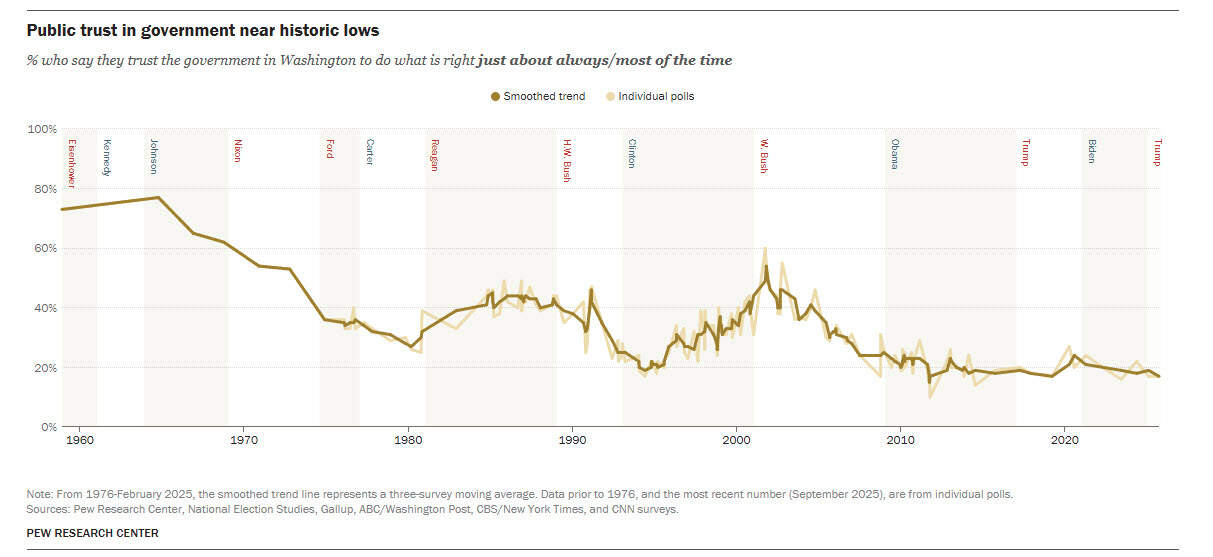
The decline in public trust in institutions is a well-documented phenomenon. In the United States, for example, public trust in government has plummeted from approximately 80% in the 1960s to a mere 17% in recent surveys. This erosion of confidence creates a significant vacuum that leaders within organizations must strive to fill. The path to rebuilding this trust involves actively listening to employees, remaining steadfastly committed to core values, and applying common sense in decision-making. Speaking truth to power, taking principled stances on significant issues, and demonstrating genuine empathy are values that are regaining prominence, even amidst debates surrounding diversity, equity, and inclusion (DEI) initiatives. Leaders who embrace these values are better positioned to foster a culture of loyalty and engagement.
The Broader Implications of Declining Institutional Trust
The decline in public trust is not an isolated phenomenon confined to governmental bodies. It has permeated various sectors, including corporations, media, and even academic institutions. This pervasive skepticism creates a challenging operating environment for leaders. Individuals are increasingly scrutinizing the actions and pronouncements of those in positions of authority.
This backdrop makes the role of organizational leadership in demonstrating integrity and ethical behavior more critical than ever. When employees perceive their leaders as trustworthy and their organizations as committed to ethical practices, it fosters a stronger sense of loyalty and commitment. Conversely, instances of unethical conduct or a lack of transparency can quickly erode this trust, leading to disengagement, higher turnover, and reputational damage.
The rise of AI further complicates this landscape. While AI can offer powerful tools for efficiency and innovation, it also presents new ethical dilemmas. The potential for AI to generate misinformation, perpetuate biases, or be used for surveillance raises critical questions about governance and responsible deployment. Leaders must navigate these complexities with a strong ethical compass, ensuring that AI is used to augment human capabilities and uphold organizational values, rather than undermine them.
Developing Leaders for the Future: A Strategic Imperative
In conclusion, the contemporary challenges facing leaders necessitate a fundamental re-evaluation of existing leadership models. The ability of an organization to adapt, innovate, and thrive in this dynamic environment is directly contingent upon the quality of its leadership. Leaders who can effectively drive change, inspire enthusiasm, and consistently uphold core values are no longer simply desirable; they are indispensable assets.
The research into the "Rise of the Supermanager" and related initiatives like Galileo, an AI-powered leadership academy, underscore the growing recognition of this imperative. Galileo, trained on decades of leadership research and case studies, aims to provide personalized leadership development pathways. Its curriculum is designed to equip leaders with the skills and knowledge necessary to navigate the complexities of the AI age.
Attending annual research conferences, such as Irresistible 2026, which convenes leaders and experts to discuss the future of organizational development, offers further insights into emerging best practices. These forums serve as crucial platforms for disseminating research findings and launching innovative solutions designed to address the evolving needs of leadership.
Ultimately, the future of leadership lies in cultivating individuals who are not only strategic thinkers but also ethical stewards, empathetic communicators, and agile adaptors. By embracing the shifts towards trust, iteration, and a renewed focus on values, organizations can build more resilient, engaged, and successful futures. The investment in developing such leaders is no longer a discretionary expense but a strategic imperative for long-term viability and prosperity in an increasingly complex world.







