A groundbreaking report from the National Partnership for Women and Families (NPWF) has illuminated a critical and escalating challenge within the modern workforce: women of color are disproportionately overrepresented in jobs most vulnerable to disruption by artificial intelligence (AI) and automation. This vulnerability is particularly pronounced in sectors such as gig work, nursing, and warehouse operations, where algorithmic management often dictates work conditions, pay, and job security, raising urgent concerns about equity, bias, and economic stability. Published on May 6, 2026, the findings underscore the need for immediate and comprehensive policy interventions to prevent the exacerbation of existing inequalities in an AI-driven economy.
The Rising Tide of Algorithmic Control and Its Disparate Impact
The NPWF report brings into sharp focus how the rapid integration of AI across industries is reshaping the labor landscape, but not uniformly. While AI promises increased efficiency and innovation, its deployment often disproportionately impacts certain demographic groups. For White women, Latinas, and American Indian and Alaska Native women, the share of jobs identified as highly vulnerable to AI automation is nearly double their representation in the overall workforce. This stark disparity highlights a systemic issue where historical patterns of labor market segmentation are being amplified by new technological paradigms. These workers, often occupying roles with less bargaining power and fewer opportunities for upskilling, are also among the least likely to possess the resources or pathways to adapt and transition to new forms of employment.
Jocelyn Frye, President of the NPWF, emphasized the critical juncture the American workforce faces. "Because women are significantly overrepresented in positions such as secretaries, office clerks, and receptionists, they will be uniquely affected by this technology," Frye stated. "Without clear standards and accountability, we risk reinforcing the same inequities that have shaped our economy for decades." Her remarks underscore a broader concern that without proactive measures, AI could solidify, rather than dismantle, long-standing systemic disadvantages.
The issue extends beyond mere job displacement. As generative AI and other advanced AI systems become more sophisticated, workers are increasingly confronted with novel forms of bias, harassment, and pervasive concerns regarding privacy and transparency in their daily tasks. Algorithms designed without diverse input or tested against diverse populations can inadvertently perpetuate or even amplify existing societal biases, leading to unfair treatment in hiring, performance evaluations, scheduling, and even compensation.
Understanding the Vulnerability: Sectors Under Scrutiny
The NPWF report specifically identifies gig work, nursing, and warehouse operations as areas of heightened vulnerability for women of color. Each sector presents unique challenges in the face of AI adoption:
-
Gig Work: The gig economy, often lauded for its flexibility, largely operates under algorithmic management. Workers for ride-sharing, food delivery, and other on-demand services are subject to algorithms that dictate task assignment, pricing, routes, and performance metrics. For many women of color, gig work represents a primary or supplementary income source, often due to caregiving responsibilities or barriers to traditional employment. The lack of human oversight, opaque decision-making processes, and limited avenues for recourse in algorithmic management can lead to arbitrary deactivations, unfair pay, and a constant pressure to meet algorithmically-driven targets, effectively eroding worker autonomy and protections. Studies from organizations like the Economic Policy Institute have frequently pointed out that gig workers, who often lack benefits and collective bargaining rights, are particularly susceptible to exploitation by these systems.
-
Nursing and Healthcare: While often seen as a resilient sector, healthcare is undergoing significant AI-driven transformation. AI is increasingly used for administrative tasks, patient scheduling, medical record analysis, diagnostic support, and even robotic assistance in certain procedures. While some applications aim to reduce clinician burden, the automation of administrative roles and the introduction of AI-powered diagnostic tools could redefine nursing responsibilities, potentially deskilling some roles or shifting job requirements dramatically. Women of color are heavily represented in nursing and allied health professions, and any significant restructuring of these roles without adequate retraining or support could destabilize their careers. Furthermore, biased AI in diagnostics could lead to disparate health outcomes, indirectly affecting the work and ethical dilemmas faced by healthcare providers.
-
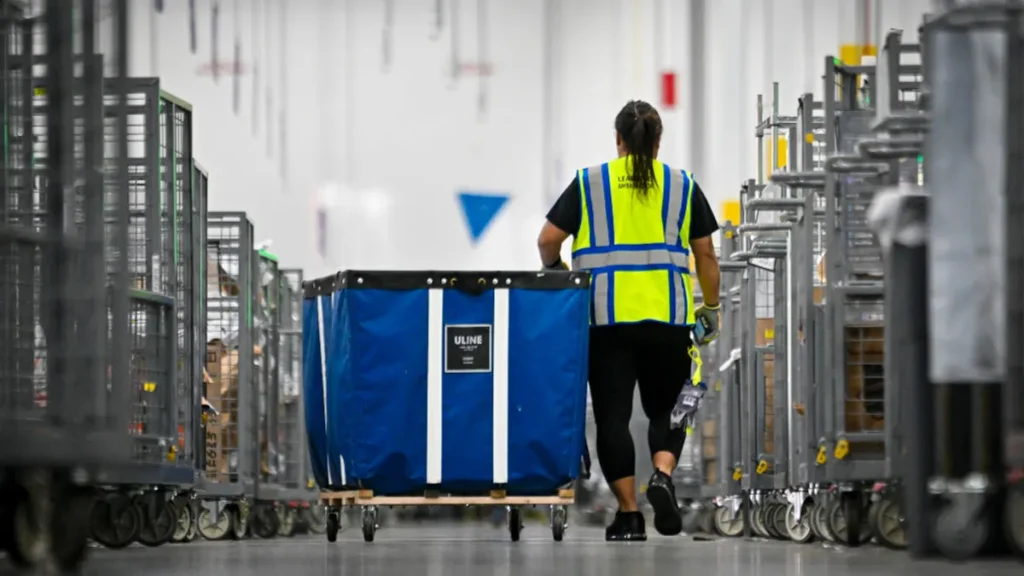
Warehouse and Logistics: The e-commerce boom has led to massive investments in warehouse automation, with robotics and AI-powered systems managing inventory, optimizing picking routes, and even directly supervising human workers. Women of color constitute a significant portion of the warehouse workforce, particularly in roles involving packing, sorting, and fulfillment. Here, AI often translates to intense surveillance, algorithmic pressure to meet aggressive productivity targets, and a work environment where human pace is dictated by machine efficiency. Reports from organizations like the National Council for Occupational Safety and Health (COSH) have highlighted how such algorithmic management can lead to increased stress, higher rates of injury from repetitive tasks, and a pervasive sense of being monitored and controlled, eroding worker dignity and safety.
Historical Context and the Amplification of Existing Disparities
The current vulnerability of women of color to AI’s negative impacts is not an isolated phenomenon but rather an amplification of historical and systemic inequalities in the labor market. For decades, women of color have faced intersectional discrimination, leading to their overrepresentation in lower-wage, less secure, and often physically demanding jobs. These roles are precisely the types of routine, rule-based tasks that are prime targets for automation.
Historically, women of color have been relegated to positions with limited opportunities for advancement, lower pay, and reduced access to skill-building initiatives. This structural disadvantage means that as the economy shifts, they often lack the foundational capital, educational opportunities, or social networks to pivot effectively into emerging, AI-resistant fields. The "gender gap" in AI skills, training, job access, and pay, as noted by previous research, further compounds this issue, showing men outnumbering women in AI jobs by a significant margin. This gap isn’t just about technical expertise; it reflects broader systemic barriers that prevent women, especially women of color, from accessing high-growth sectors.

The Peril of DEI Rollbacks
Adding another layer of complexity and concern is the recent trend of Diversity, Equity, and Inclusion (DEI) rollbacks. The NPWF report implicitly connects the rising AI vulnerability with these broader societal shifts, noting that DEI rollbacks are negatively affecting women’s opportunities regarding equity, salary transparency, protections against bias and harassment, and leadership opportunities.
When DEI initiatives are deprioritized or dismantled, the very mechanisms designed to address systemic bias and promote equitable access are weakened. This retreat comes at a particularly inopportune time, as AI systems, if left unchecked, have the potential to encode and scale existing biases at an unprecedented rate. Without strong DEI frameworks in place within companies and across industries, the likelihood of developing and deploying AI responsibly and equitably diminishes significantly. This creates a feedback loop where lack of diversity in AI development leads to biased AI, which in turn disproportionately harms marginalized groups, further justifying a lack of DEI investment.
Calls for Action: Policy and Oversight
In response to these pressing concerns, the National Partnership for Women and Families is advocating for a multi-pronged approach that combines robust research with decisive legal and policy interventions.
First, the NPWF calls for more comprehensive studies on AI in the workplace. Understanding the nuanced impacts of AI across different demographics and job functions is crucial for developing targeted and effective solutions. Such research should go beyond aggregate data to explore intersectional experiences, recognizing that the experiences of Black women, Latina women, Asian American and Pacific Islander women, and Indigenous women in the face of AI may vary significantly.
Second, and perhaps most critically, the NPWF is urging for increased legal oversight on AI. Tanya Goldman, a senior fellow at the NPWF, articulated this need clearly: "Right now, too many workers are navigating the use of AI in their workplaces without proper protections in place. Lawmakers have an opportunity – and a responsibility – to set clear rules that both support the responsible use of these tools and protect workers from harm."

This call for legal oversight aligns with a growing global movement to regulate AI. Countries and blocs, such as the European Union with its landmark AI Act, are attempting to establish regulatory frameworks that balance innovation with ethical considerations and human rights. In the United States, discussions around AI regulation are ongoing, with various proposals emerging to address issues like algorithmic transparency, accountability, data privacy, and bias mitigation. However, the pace of technological development often outstrips the legislative process, creating a regulatory gap that leaves workers exposed.
Broader Implications and the Path Forward
The findings of the NPWF report carry significant broader implications for the future of work, social equity, and economic development. If left unaddressed, the disproportionate impact of AI on women of color could:
- Widen Economic Inequality: By displacing workers from already precarious positions without providing adequate pathways to new opportunities, AI could exacerbate wealth and income gaps, further entrenching poverty within marginalized communities.
- Deepen Social Divides: A workforce bifurcated into a privileged class of AI developers and users, and a marginalized class of those displaced or exploited by AI, could lead to increased social unrest and political polarization.
- Erode Worker Protections: The opaque nature of algorithmic management challenges traditional labor laws and protections, making it harder for workers to organize, negotiate, or seek redress for unfair treatment.
- Stifle Innovation (Long-Term): While seemingly counterintuitive, an AI ecosystem that perpetuates bias and fails to account for diverse human experiences will ultimately be less robust, less adaptable, and less innovative in the long run. Ethical AI, developed with diverse input and equitable outcomes in mind, is crucial for sustainable technological progress.
To mitigate these risks and harness AI for inclusive growth, a multi-stakeholder approach is essential. This includes:
- Governmental Action: Legislators must prioritize the development of comprehensive AI regulations that include strong worker protections, mandate algorithmic transparency and auditing, and establish accountability mechanisms for companies deploying AI in the workplace. Investments in public education and reskilling programs are also crucial.
- Industry Responsibility: Tech companies and employers must commit to ethical AI development and deployment, prioritizing fairness, transparency, and human oversight. This involves investing in diverse AI development teams, conducting thorough bias audits, and ensuring workers have channels for appeal against algorithmic decisions.
- Labor Advocacy: Unions and worker advocacy groups play a vital role in negotiating protections against algorithmic exploitation, advocating for fair wages and benefits in AI-augmented jobs, and ensuring that workers have a voice in the design and implementation of AI systems.
- Community Engagement: Civil society organizations, particularly those focused on racial and gender equity, must continue to monitor AI’s impact, raise awareness, and advocate for policies that protect vulnerable populations.
The NPWF report serves as a clarion call, urging policymakers, industry leaders, and civil society to recognize the profound and potentially inequitable implications of AI on the American workforce. The future of work must be one that leverages technological advancements to create opportunities for all, rather than deepening existing social and economic divides, especially for the women of color who stand at the front lines of this technological transformation. Proactive, equitable, and human-centered approaches to AI governance are not merely optional; they are imperative for a just and prosperous future.