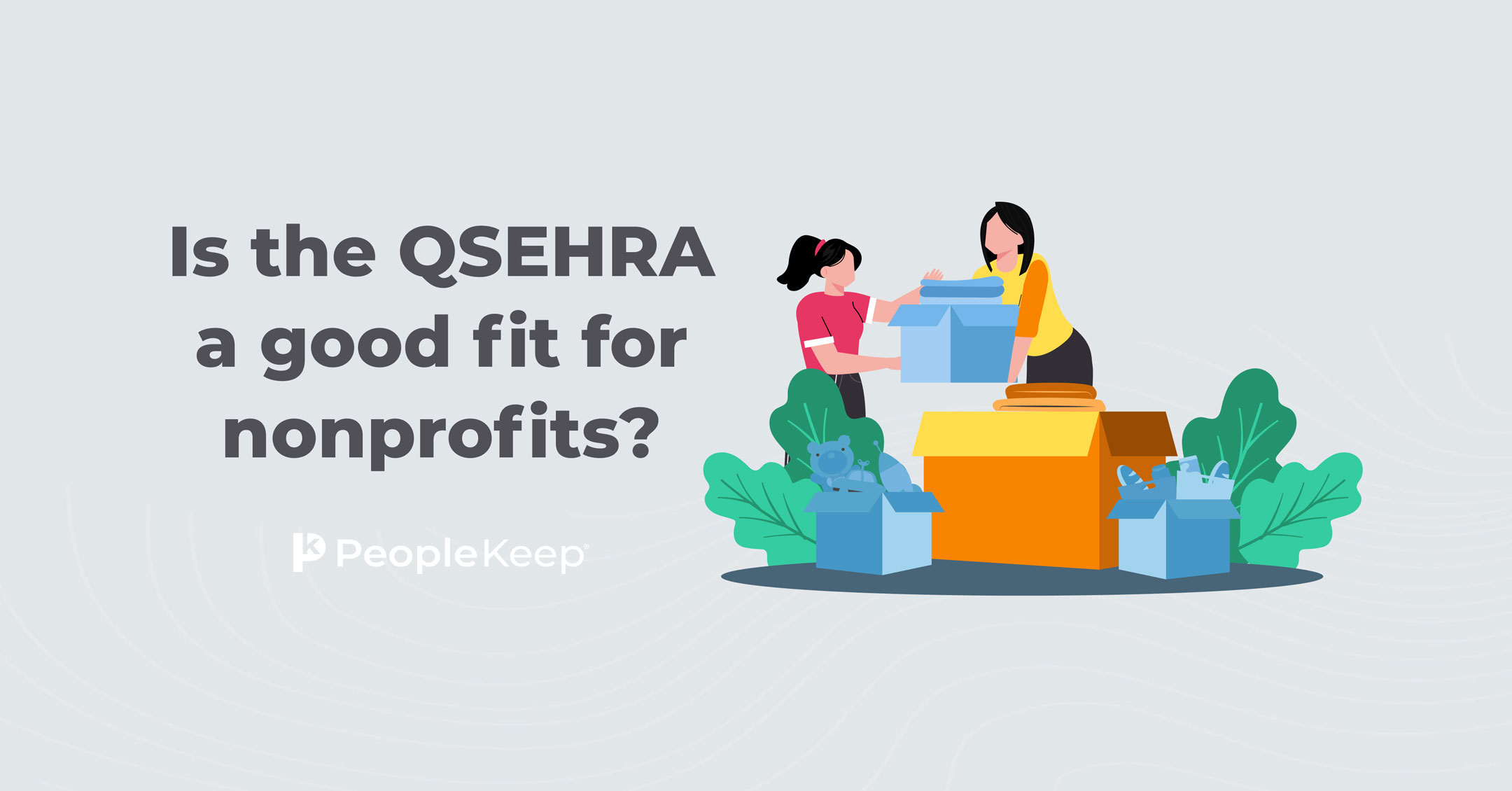
The escalating cost of traditional group health insurance has reached a critical inflection point for the American nonprofit sector, forcing many small organizations to rethink their benefits strategies to maintain fiscal viability. As of early 2026, health insurance premiums have continued their decade-long upward trajectory, with annual costs for employer-sponsored coverage reaching an average of $9,325 for single coverage and $26,993 for family plans in the previous fiscal year. For nonprofit organizations—which often operate on razor-thin margins and fixed grant funding—these costs represent a significant barrier to attracting and retaining the specialized talent necessary to fulfill their missions. In response to these market pressures, the Qualified Small Employer Health Reimbursement Arrangement (QSEHRA) has emerged as a cornerstone of modern nonprofit management, offering a flexible, "defined contribution" approach to healthcare that replaces the unpredictable "defined benefit" model of old.
The Shift Toward Defined Contribution Healthcare
The transition from traditional group plans to QSEHRAs reflects a broader shift in the American labor market toward personalized benefits. For decades, the standard for employer-sponsored healthcare was a one-size-fits-all group plan. However, small nonprofits, particularly those with fewer than 50 full-time equivalent employees (FTEs), have found themselves increasingly priced out of this market. When a small group experiences even one or two chronic health conditions among its staff, premium hikes can reach as high as 20% to 30% in a single year, creating budget volatility that few 501(c)(3) organizations can absorb.
The QSEHRA offers a departure from this volatility. Rather than purchasing a specific plan for the entire staff, the employer sets a monthly allowance. Employees then purchase their own individual health insurance policies on the open market or via the Health Insurance Marketplace and submit their premium costs and other out-of-pocket medical expenses for reimbursement. This model allows the nonprofit to fix its healthcare costs with precision while providing employees the autonomy to choose plans that align with their specific doctors, prescriptions, and family needs.
A Chronology of HRA Legislation and Adoption
The path to the current QSEHRA landscape began in earnest with the passage of the 21st Century Cures Act in December 2016. Before this legislation, small employers faced significant legal hurdles—and potential IRS fines—if they attempted to reimburse employees for individual insurance premiums rather than providing a group plan. The 2016 Act formally established the QSEHRA, carving out a safe harbor for small businesses and nonprofits to support their employees’ healthcare costs without triggering the market reform penalties of the Affordable Care Act (ACA).
Following the initial rollout, the landscape evolved further in 2019 with the introduction of the Individual Coverage Health Reimbursement Arrangement (ICHRA). While the ICHRA offered similar benefits to larger organizations, the QSEHRA remained the preferred vehicle for the smallest nonprofits due to its simplified administration and specific focus on organizations with fewer than 50 employees. By 2024, data from the nonprofit sector indicated that over 90% of organizations considered health benefits a primary tool for retention, yet many were struggling with the administrative burden of traditional plans. By 2026, the QSEHRA has become a standardized solution for the "small-but-mighty" nonprofit, bridging the gap between no coverage and the prohibitive costs of group insurance.
Analyzing the Financial Impact and Tax Advantages
One of the most compelling arguments for the QSEHRA in a nonprofit context is its unique tax status. Unlike a simple salary increase, which would be subject to both employer and employee payroll taxes, QSEHRA reimbursements are generally tax-free. For the nonprofit, this means every dollar allocated to the HRA goes directly toward the employee’s health needs without being eroded by FICA or other employment taxes. For the employee, the reimbursement is not counted as taxable income, provided they maintain Minimum Essential Coverage (MEC).
However, the financial efficiency of a QSEHRA requires careful coordination with the federal Premium Tax Credit (PTC). Under IRS Code Section 36B, employees must coordinate their HRA allowance with any government subsidies they receive for Marketplace plans. If a QSEHRA allowance is deemed "affordable" by IRS standards, the employee must waive their PTC. If it is deemed "unaffordable," the employee can still claim the PTC but must reduce the credit amount dollar-for-dollar by the amount of their QSEHRA allowance.
For example, if an employee is eligible for a $500 monthly premium tax credit and their nonprofit provides a $200 monthly QSEHRA allowance, the employee would effectively receive $300 in tax credits and $200 in tax-free reimbursement. This coordination ensures that the federal government and the employer are not "double-funding" the same premium, but it requires nonprofits to educate their staff on how these mechanisms interact.
Supporting Data: Allowance Trends in the Small Business and Nonprofit Sector
Recent data from 2025 and early 2026 highlights how small organizations are utilizing the flexibility of the QSEHRA to remain competitive. According to industry reports from PeopleKeep and Remodel Health, the average monthly allowance offered by small employers has stabilized around $442 per employee. However, a closer look at the data reveals an inverse relationship between company size and allowance generosity:
- Organizations with 1-4 employees: Average monthly allowance of $465.
- Organizations with 5-9 employees: Average monthly allowance of $444.
- Organizations with 10-19 employees: Average monthly allowance of $424.
- Organizations with 20-49 employees: Average monthly allowance of $415.
This trend suggests that the smallest nonprofits use higher healthcare allowances as a strategic lever to compete for talent against larger organizations that might offer higher base salaries. By providing a robust HRA, a four-person advocacy group can offer a "platinum-level" healthcare experience that rivals or exceeds the benefits of a major corporation, all while maintaining a controlled, predictable budget.
Employee Empowerment and Talent Retention
In the 2026 labor market, "benefits flexibility" has become a buzzword as significant as "remote work." Employees increasingly value the ability to choose their own providers and plan structures. A traditional group plan often forces a diverse workforce into a single network. A 25-year-old entry-level staffer might prefer a high-deductible plan with lower premiums, while a 55-year-old senior director might require a plan with low co-pays and a specific specialist network.
The QSEHRA empowers both. By providing the funds rather than the plan, the nonprofit avoids the "one-size-fits-all" trap. This empowerment correlates directly with employee satisfaction. Surveys conducted in late 2024 and 2025 indicated that 92% of employees view health benefits as a top priority. In a sector where mission-driven work often leads to burnout, showing a tangible commitment to staff well-being through a customizable health benefit can be the deciding factor in employee retention.
Broader Implications: QSEHRA vs. ICHRA
While the QSEHRA is a powerful tool, it is not the only HRA available to the nonprofit sector. The Individual Coverage HRA (ICHRA) has gained traction for organizations that exceed the 50-employee threshold or those that wish to offer different allowance amounts to different classes of employees (such as full-time vs. part-time).
Unlike the QSEHRA, which has federally mandated maximum contribution limits ($6,150 for individuals and $12,450 for families as of recent inflation adjustments), the ICHRA has no contribution caps. This makes the ICHRA a more scalable option for growing nonprofits. However, the QSEHRA remains the "gold standard" for small nonprofits due to its ease of administration and the fact that it allows reimbursements for a wider range of out-of-pocket expenses even if the employee is covered under a spouse’s group plan—a flexibility not always present in the ICHRA model.
Official Responses and Sector Analysis
Industry analysts and nonprofit advocates have largely praised the shift toward HRAs. Financial consultants specializing in the 501(c)(3) space note that the "defined contribution" model allows for more accurate long-term strategic planning. "When a nonprofit can predict its healthcare spend to the penny for the next three years, it can allocate more resources to its programs and community impact," says one benefits specialist.
Furthermore, the 2024 Nonprofit Benefits Survey found that 93% of organizations now offer some form of health insurance. Those that do not are finding it nearly impossible to fill vacancies. The QSEHRA provides an "on-ramp" for the remaining 7% of organizations that previously thought they were too small or too budget-constrained to offer benefits.
Conclusion and Future Outlook
As the nonprofit sector moves through 2026, the reliance on traditional group health insurance is expected to continue its decline among small organizations. The QSEHRA represents more than just a cost-saving measure; it is a structural shift in how the social sector supports its workforce. By decoupling health insurance from the employer’s specific plan choice and placing that power in the hands of the employee, nonprofits are fostering a more resilient and satisfied workforce.
The long-term implications suggest a more stabilized insurance market where small employers are no longer at the mercy of annual premium spikes. For the nonprofit leader, the message is clear: health benefits are no longer a luxury reserved for large institutions. Through the QSEHRA, even the smallest community organization can provide competitive, tax-advantaged, and personalized healthcare support, ensuring that those who work to solve society’s greatest challenges are well-cared for themselves. For organizations considering this transition, the consensus among HR specialists is that the combination of cost control, tax efficiency, and employee choice makes the QSEHRA an indispensable tool in the modern nonprofit toolkit.