The engine of the global economy is powered by a vast, often overlooked, segment of the workforce: deskless and offline employees. These are the individuals who directly engage with customers, maintain critical infrastructure, and ensure the seamless operation of industries ranging from retail and manufacturing to healthcare and logistics. Despite their indispensable roles, these vital contributors, who constitute an estimated 70 to 80% of the global workforce, have historically been underserved by traditional employee recognition programs. These programs, often designed with a desk-centric mindset, fail to acknowledge the unique work realities of frontline teams, leading to feelings of invisibility, disconnection, and a diminished sense of value. This comprehensive guide aims to illuminate the challenges and opportunities in designing effective recognition strategies that resonate with and empower this crucial segment of the workforce.
Understanding the Unique Landscape of Non-Desk Work
Non-desk and offline workers operate in environments far removed from the typical office setting. Their workplaces include bustling retail floors, dynamic factory assembly lines, high-pressure hospital units, demanding construction sites, and expansive logistical hubs. Their work is inherently mobile, collaborative, and often requires immediate problem-solving. This dynamic environment shapes their experience of employee engagement and retention in distinct ways. Shift-based work schedules, the shared use of devices, physically taxing roles, and limited access to digital communication channels mean these employees have fewer inherent opportunities for consistent feedback, visibility, or connection to broader organizational goals. Consequently, when recognition does occur, it can be sporadic, informal, or easily missed amidst the daily demands of their roles.
The Challenges of Traditional Recognition for Frontline Teams
The primary hurdle for effective recognition among non-desk and offline workers is access. A significant portion of this workforce lacks consistent access to a work computer or corporate email, rendering many standard digital recognition platforms inaccessible. This disparity immediately creates an uneven playing field, limiting participation and the frequency of acknowledgements. Furthermore, the very structure of their work—rotating shifts, shared equipment, and dispersed locations—makes consistent and timely recognition a logistical challenge. Teams rarely overlap, and work often occurs asynchronously, further complicating efforts to deliver appreciation in a meaningful timeframe.
This systemic exclusion often results in a tangible recognition inequality. Desk-based employees, with their readily available access to digital tools, tend to receive a disproportionately higher share of acknowledgements and expressions of gratitude. This is not a reflection of their comparative contribution, but rather a consequence of a recognition infrastructure that is not designed to accommodate the realities of frontline work. As a result, valuable contributions may go unnoticed, and the positive impact of these employees on the organization’s success can be significantly underestimated.
Prioritizing Inclusivity and Impact in Recognition
To effectively bridge this recognition gap, HR leaders must prioritize programs that ensure universal participation, irrespective of an employee’s role, location, or technological access. The implementation of a robust recognition platform is a critical first step. Beyond mere access, the focus must shift to "in-the-moment" appreciation. Recognition that is delivered close to the actual performance of the task or act of service is far more impactful, reinforcing desired behaviors and making employees feel genuinely acknowledged.
Visibility is another crucial element. Effective recognition programs should make the contributions of frontline teams visible across teams and the wider organization. This visibility fosters a sense of being seen and valued, which is paramount for morale and engagement. The State of Recognition Report by Achievers highlights that 45% of surveyed employees believe that recognition would boost their productivity. When recognition is directly linked to the core values and objectives of the business, it communicates to employees that their efforts are recognized and appreciated, even when they are not directly observed by management.
The Profound Importance of Recognition for Frontline and Offline Employees
For individuals whose work is primarily hands-on and often solitary, recognition serves as a vital conduit for connection and belonging. Unlike their desk-bound counterparts who may regularly participate in team meetings or engage in frequent email exchanges, frontline workers have fewer built-in touchpoints for feedback and affirmation. Exceptional work can easily go unnoticed, and great efforts might be overlooked. Recognition acts as a powerful tool to bridge this void. Being acknowledged by peers, supervisors, or the broader organization reinforces a profound sense of belonging, sending a clear and resonant message: "You are valued here." Over time, these moments of appreciation help non-desk team members transcend the transactional nature of their tasks and feel an integral part of a larger organizational mission.
In fast-paced, hands-on environments where priorities can shift rapidly, explicit recognition of specific actions provides essential clarity. It helps employees understand what constitutes excellent performance. Recognizing behaviors aligned with safety protocols, exceptional customer service, or effective teamwork not only builds individual confidence but also reinforces how each person’s effort contributes to overarching business objectives. This clarity is particularly important for roles where immediate feedback mechanisms may be limited.
Innovative Recognition Program Ideas for Non-Desk and Offline Workers
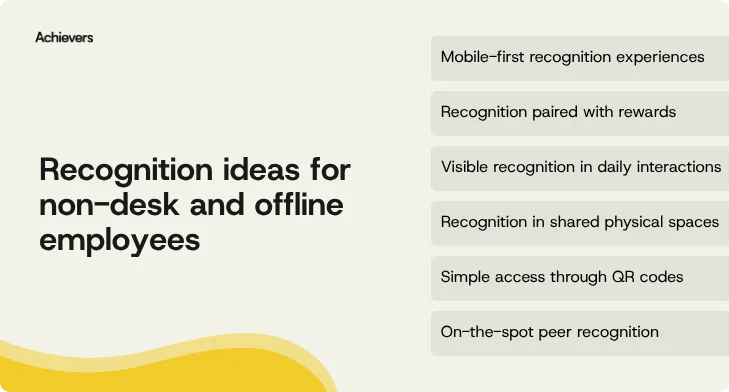
To ensure recognition truly makes a lasting impact, it must be accessible across diverse shifts, locations, and roles, often without relying on traditional communication channels like email or formal meetings. The following innovative strategies can foster connection and belonging within non-desk environments:

Mobile-First Recognition Experiences:
The critical challenge addressed here is access. By designing recognition programs with a mobile-first approach, appreciation can be delivered to offline and non-desk teams in real-time, immediately following the impactful moment. Delayed recognition, often a consequence of requiring logins from a computer, loses its power to reinforce desired behaviors. This mobile-centric design ensures that appreciation is timely and relevant.
Recognition Paired with Tangible, Easy-to-Use Rewards:
The impact of recognition can be diminished by rewards that are confusing, generic, or difficult to access. For non-desk and offline employees, rewards are most effective when they are straightforward, relevant to their needs, and readily available without additional logistical hurdles. When the selection of rewards is limited or access is cumbersome, the reward can inadvertently detract from the intended message of appreciation, feeling more like an afterthought than a genuine acknowledgement.
Visible Recognition in Daily Team Interactions:
Recognition that is publicly shared and directly tied to specific actions serves a dual purpose. It helps team members understand performance expectations and reinforces the behaviors that are most valued by the organization. This visibility transforms recognition from a private thank-you into a powerful learning signal for others, promoting a shared understanding of excellence.
Recognition Embedded in Shared Physical Spaces:
For employees who do not regularly access digital systems, recognition must be integrated into their physical work environment. Making recognition visible in communal areas—such as break rooms, locker areas, or near time clocks—increases awareness, encourages participation, and strengthens connection. This approach is particularly effective for teams whose workdays are screen-free.
Simple Access Through QR Codes and Shared Entry Points:
Reducing friction in the recognition process is paramount. Implementing simple entry points, such as QR codes, allows employees to easily give or redeem recognition in the moment, bypassing the need for logins, passwords, or delayed follow-up procedures. When access is seamless, participation naturally increases.
On-the-Spot Peer Recognition Captured and Shared:
Many of the most authentic and impactful recognition moments occur organically between coworkers who witness exceptional efforts firsthand—a quick assist, a supportive gesture, or a calm response under pressure. Enabling easy and accessible peer recognition in the moment ensures that these positive behaviors are seen, celebrated, and subsequently replicated.
Designing a Meaningful Recognition Program for Offline Teams: A Strategic Approach
Crafting a truly impactful recognition program for frontline and offline teams requires a strategic focus on several key pillars:
-
Start with Access and Equity:
Frontline and offline employees are frequently the most challenging to reach and the most susceptible to unintentional exclusion. Designing programs with a foundational emphasis on access and equity ensures that recognition is not dictated by the presence of a desk or an inbox, but rather by the quality and impact of the work performed. This requires exploring diverse communication channels and reward mechanisms. -
Make Recognition Frequent and Behavior-Based:
The efficacy of recognition is amplified when it occurs contemporaneously with the work being performed and directly reinforces specific, desirable behaviors. Frequent acknowledgements foster a culture of continuous positive reinforcement, while behavior-based recognition builds employee confidence by clearly articulating what constitutes success. -
Balance Structure with Flexibility:
While clear guidelines and established parameters are essential for ensuring fairness and organizational alignment, incorporating an element of local flexibility is crucial. This allows recognition to adapt to the unique operational nuances of different teams and departments, ensuring relevance and resonance. An overemphasis on rigid structure can stifle organic appreciation, while excessive flexibility can lead to inconsistency and perceived unfairness. -
Build Recognition into the Flow of Work:
The most successful recognition initiatives are those that are seamlessly integrated into the existing tools and routines that employees already utilize. When giving and receiving recognition becomes a natural part of the workday, it occurs more frequently and organically. The simpler the process, the more likely it is to become a sustainable practice.
External Recognition: A Powerful Catalyst for Frontline Pride
External recognition, which originates from outside the organization—such as from customers, clients, or patients—can be particularly potent for non-desk teams. This form of appreciation directly links their daily efforts to the tangible impact they have on the lives of those they serve. It transforms individual contributions into demonstrable impact, showcasing to peers and leaders not just the quality of their work, but its meaningful effect.
The Achievers Workforce Institute (AWI) has found that for healthcare workers, specific and non-monetary recognition is often the most meaningful. When appreciation comes from those directly experiencing the benefits of their labor, it imbues a powerful sense of pride, credibility, and purpose that internal recognition alone might not always achieve. This external validation reinforces the significance of their roles and can be a significant driver of job satisfaction and retention.

Technology Solutions for Inclusive Recognition
A growing number of technology platforms are emerging to address the unique needs of non-desk and offline workforces. These solutions are designed to break down traditional barriers to recognition:
-
Achievers: This all-in-one recognition and rewards platform is specifically engineered to support organizations with large, distributed, and frontline workforces where traditional recognition methods are impractical. It ensures frequent, meaningful recognition is accessible to every employee, regardless of their work setting. Achievers removes access barriers, supports timely recognition, and provides HR leaders with crucial visibility across diverse roles and locations, fostering a sense of value and connection among frontline staff.
-
Guusto: Guusto focuses on simplicity and flexible access for non-desk teams, offering a recognition and rewards platform that serves both office and frontline employees. It is an ideal solution for organizations looking to implement recognition programs with a scalable approach, allowing them to start small and expand over time.
-
Kudos: With an emphasis on structured recognition tied to company values, Kudos offers a platform focused on internal culture measurement and formal recognition programs, aiming to align employee appreciation with organizational objectives.
-
Motivosity: Motivosity provides an employee recognition and engagement platform that strongly emphasizes social connection, peer-to-peer recognition, and internal communication across dispersed teams and locations, fostering a more connected and engaged workforce.
Making Recognition a Priority, Everywhere Work Happens
The success of any employee recognition program hinges on its ability to reach all employees. For non-desk and offline teams, this necessitates designing recognition strategies that are intrinsically aligned with the realities of frontline work—dynamic shifts, shared workspaces, limited screen time, and the critical importance of real-time acknowledgements. Organizations that excel in retention, safety, and overall performance are those that embed recognition into the fabric of where work actually occurs, rather than confining it to easily designed, but less impactful, theoretical frameworks. Ultimately, recognition proves most effective when it is delivered on the front lines, not merely presented in a boardroom slide deck.
Frequently Asked Questions: Recognition Programs for Non-Desk and Offline Employees
-
What are the primary challenges in implementing recognition programs for non-desk workers?
The main challenges include limited access to technology (computers, email), inconsistent work schedules (shifts), shared devices, and distributed work locations, all of which can make traditional, desk-centric recognition methods difficult or impossible to implement effectively. -
Why is "in-the-moment" recognition particularly important for frontline employees?
For non-desk workers, moments of exceptional performance or helpfulness often happen spontaneously and may not be observed by management directly. In-the-moment recognition ensures that these contributions are acknowledged promptly, reinforcing the desired behavior while it is still fresh in everyone’s mind and maximizing its impact. -
How can organizations ensure equity in recognition between desk-based and non-desk employees?
Equity can be achieved by adopting mobile-first recognition platforms, utilizing simple access methods like QR codes, embedding recognition into shared physical spaces, and actively encouraging peer-to-peer recognition. The key is to remove technological and logistical barriers that disproportionately affect frontline staff. -
What types of rewards are most effective for non-desk and offline workers?
Rewards should be tangible, easy to understand, and readily accessible. This could include gift cards for popular retailers or services, experiences, extra time off, or company-branded merchandise. The focus should be on practicality and relevance to the employee’s lifestyle. -
How can HR leaders measure the success of recognition programs for non-desk employees?
Success can be measured through a combination of metrics, including participation rates in recognition programs, employee feedback surveys (specifically asking about feelings of appreciation and belonging), retention rates among frontline staff, and observable improvements in key performance indicators such as safety incidents, customer satisfaction scores, and productivity.