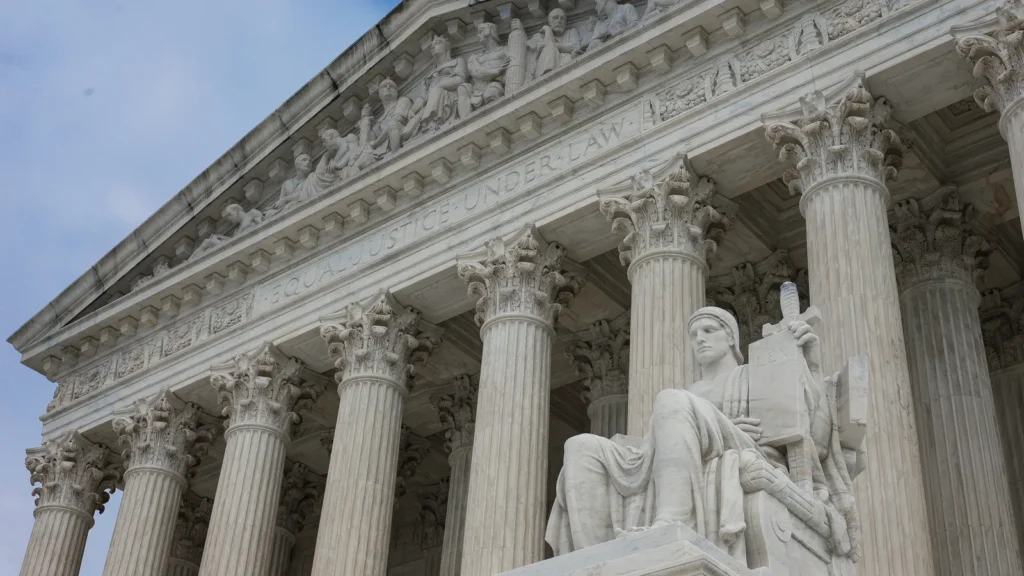
The U.S. Supreme Court has agreed to hear a pivotal case that could redefine the scope of Title IX, specifically addressing whether employees of federally funded educational institutions possess the right to personally sue their employers for sex discrimination. This decision comes as the nation’s highest court seeks to resolve a significant legal divergence among federal appeals courts, with the 11th U.S. Circuit Court of Appeals having ruled against such a right, directly contradicting the stance of at least eight other appellate circuits. The resolution of Thomas Crowther v. Board of Regents of University System of Georgia is anticipated to have profound implications for civil rights protections and employment law across the education sector.
Understanding Title IX: A Foundation of Gender Equity in Education
Enacted in 1972 as part of the Education Amendments, Title IX is a comprehensive federal civil rights law that prohibits discrimination on the basis of sex in any education program or activity receiving federal financial assistance. Its foundational principle states: "No person in the United States shall, on the basis of sex, be excluded from participation in, be denied the benefits of, or be subjected to discrimination under any education program or activity receiving Federal financial assistance." While initially celebrated for its transformative impact on women’s athletics and access to higher education for female students, the scope of Title IX has steadily expanded through judicial interpretation and regulatory guidance to encompass a wide array of issues, including sexual harassment, sexual assault, and, crucially, employment discrimination.
For decades, the prevailing legal interpretation, affirmed by numerous federal courts, has been that Title IX provides a private right of action for individuals, including employees, to sue educational institutions for violations. This mechanism is critical because it allows victims of discrimination to seek redress directly in federal court, often leading to injunctions, compensatory damages, and attorneys’ fees, thereby serving as a powerful enforcement tool alongside administrative complaints filed with the U.S. Department of Education’s Office for Civil Rights (OCR). The ability to pursue private litigation has been seen as a cornerstone of Title IX’s effectiveness, enabling individuals to hold institutions accountable for failing to uphold their obligations.
However, the legal landscape surrounding Title IX’s application to employees has not been entirely without contention. While Title VII of the Civil Rights Act of 1964 specifically addresses employment discrimination, including on the basis of sex, Title IX has historically been viewed as offering a complementary, and sometimes broader, avenue for redress within educational settings. The distinction between these two statutes often lies in their jurisdictional scope, remedies, and the specific types of claims they cover. Title VII applies to employers with 15 or more employees and requires claimants to first file a charge with the Equal Employment Opportunity Commission (EEOC). Title IX, by contrast, applies to all federally funded educational programs, regardless of employer size, and typically does not mandate administrative exhaustion before filing a lawsuit, although some courts have required it for certain types of claims.
The Genesis of the Supreme Court Challenge: Crowther v. Board of Regents
The case now before the Supreme Court originated from two separate lawsuits filed by employees of the University System of Georgia: MaChelle Joseph, a former women’s basketball coach at Georgia Tech, and Thomas Crowther, an art professor at Augusta University. Both individuals alleged sex-based discrimination by their employer, leading to their respective terminations or non-renewal of contracts.
MaChelle Joseph’s tenure as head coach of the Georgia Tech women’s basketball team concluded in 2019. Her termination followed closely on the heels of an internal complaint she filed, alleging that the university was systematically discriminating against her and her program. Joseph claimed that the women’s basketball team was not afforded the same resources, funding, and support as the men’s program, a classic Title IX compliance issue. Her complaint escalated into a claim of retaliation when her employment was subsequently terminated, an act she contended was a direct consequence of her speaking out against the alleged inequities.
Concurrently, Thomas Crowther, an art professor at Augusta University, faced the non-renewal of his contract in 2021. This decision by the university came after several students reported him for allegedly inappropriate conduct in class, including accusations of sexual harassment. As a result of these reports, a Title IX investigation was launched into Crowther’s conduct. Crowther, however, maintained that his contract non-renewal was discriminatory and sought to pursue a private right of action under Title IX, arguing that the university’s actions constituted sex-based discrimination against him.
Both Joseph and Crowther initially filed complaints with the U.S. Equal Employment Opportunity Commission (EEOC), as is often required for employment discrimination claims, and subsequently filed lawsuits in the U.S. District Court for the Northern District of Georgia, invoking Title IX alongside other federal and state laws. Their cases were eventually consolidated as they moved through the appellate process, ultimately reaching the 11th U.S. Circuit Court of Appeals.
The 11th Circuit’s Divergent Ruling and the Circuit Split

In 2024, the 11th U.S. Circuit Court of Appeals, which holds jurisdiction over federal cases arising from Alabama, Florida, and Georgia, issued a groundbreaking ruling that directly challenged the long-held understanding of Title IX. The court decided that Title IX’s implied private right of action does not extend to employees seeking to sue for employment discrimination. This decision diverged sharply from the established jurisprudence of at least eight other federal appeals courts across the nation, creating a profound circuit split.
The 11th Circuit’s reasoning centered on the "Spending Clause" of the U.S. Constitution, under which Title IX was enacted. The court posited that when Congress enacts legislation under the Spending Clause, it essentially creates a contract with entities receiving federal funds. For these entities to be held liable for damages, they must have "knowingly and voluntarily accepted" such potential liability. The 11th Circuit reasoned that it was "dubious that recipients of federal funds would understand that they have knowingly and voluntarily accepted potential liability for damages for claims of employment discrimination under Title IX when those kinds of claims are expressly provided for and regulated by Title VII." In essence, the court argued that because Title VII specifically addresses employment discrimination, institutions receiving federal funds would not reasonably anticipate also facing employment discrimination lawsuits under Title IX. This interpretation effectively carved out a significant exception to Title IX’s enforcement mechanism within the 11th Circuit.
Following this ruling, Joseph and Crowther sought a rehearing from the full 11th Circuit, which was denied in 2025, solidifying the circuit’s position and setting the stage for a Supreme Court review. Their legal teams subsequently filed a petition to the high court in August 2025, urging it to take up the case and resolve the escalating conflict among the federal appellate courts. The Supreme Court’s decision to grant certiorari to Thomas Crowther v. Board of Regents of University System of Georgia on a Monday, with the case accepted for its October 2026 term, underscores the legal community’s recognition of the urgency and significance of this issue.
The Precedential Shadow of Jackson v. Birmingham Board of Education
A critical backdrop to the Crowther case is the Supreme Court’s own precedent established two decades prior in Jackson v. Birmingham Board of Education (2005). In that landmark case, the Supreme Court ruled that a girls’ basketball coach at a public high school, Roderick Jackson, had the right to pursue private litigation under Title IX. Jackson had received negative work evaluations and was subsequently fired as coach after complaining that his team was not receiving equal funding, athletic equipment, and facilities compared to the boys’ team.
The Jackson decision was pivotal because it affirmed that Title IX’s private right of action extends to claims of retaliation for complaining about sex discrimination, even if the individual retaliated against is not the direct target of the underlying discrimination (i.e., the coach was retaliated against for advocating for his female players). While Jackson focused on retaliation, its underlying premise reinforced the broad application of Title IX to employees and the availability of a private right of action. The Supreme Court’s majority opinion in Jackson emphasized Title IX’s broad remedial purpose and held that retaliation against a person for complaining about sex discrimination is itself a form of sex discrimination prohibited by Title IX.

Lawyers for Joseph and Crowther explicitly highlighted Jackson in their August 2025 petition to the Supreme Court, stating, "Since this Court’s decision in Jackson v. Birmingham Board of Education… every court of appeals to have considered the question presented here has answered yes. The Eleventh Circuit held otherwise." This direct challenge underscores the fundamental disagreement over whether the 11th Circuit’s ruling can coexist with the spirit and letter of the Jackson precedent. The Supreme Court will now have to reconcile these differing interpretations.
Implications and Potential Impact of the Supreme Court’s Decision
The Supreme Court’s eventual ruling in Crowther v. Board of Regents carries immense weight and potential consequences for various stakeholders within the educational landscape:
-
For Employees: If the Supreme Court upholds the 11th Circuit’s ruling, employees in Alabama, Florida, and Georgia, and potentially across the nation, would lose the ability to sue their employers directly under Title IX for employment discrimination. This would force them to rely primarily on Title VII, which has different procedural requirements, statutes of limitations, and potentially different scopes of available remedies. It could complicate and prolong the process for seeking redress, potentially creating a chilling effect on reporting discrimination. Conversely, a ruling reaffirming the broader application of Title IX would maintain a vital avenue for employee protections.
-
For Educational Institutions: The decision will bring much-needed clarity, albeit potentially challenging, regarding their legal obligations and potential liabilities. If the 11th Circuit’s reasoning prevails, institutions might face fewer direct Title IX employment lawsuits, shifting the legal burden to Title VII. However, they would still be bound by Title IX’s administrative enforcement through the OCR and would need to maintain robust internal Title IX compliance programs to avoid federal funding withdrawal. If the Jackson precedent is reaffirmed, institutions must continue to ensure their policies and practices effectively prevent and address sex discrimination against employees, acknowledging the risk of private litigation.
-
For Civil Rights Advocates and Women’s Rights Organizations: These groups are likely to view a decision restricting Title IX’s scope as a significant setback for civil rights, potentially undermining decades of progress in combating sex discrimination in education. They would argue that Title IX serves a unique and crucial role in educational environments that Title VII does not fully replicate. They would advocate for a broad interpretation that ensures maximum protection for all individuals within federally funded programs.
-
For the Judiciary and Legal Precedent: The Supreme Court’s decision will clarify the interplay between Title IX and Title VII in the context of employment discrimination. It will also refine the interpretation of the Spending Clause concerning federal funding conditions and the implied private right of action. The Court’s approach to stare decisis (respect for precedent) will be closely watched, particularly concerning its prior ruling in Jackson.
-
For Federal Enforcement: The U.S. Department of Education’s Office for Civil Rights (OCR) would continue its administrative enforcement of Title IX, regardless of the Supreme Court’s decision on private rights of action. However, the absence of a robust private enforcement mechanism could place a greater burden on the OCR, which already operates with limited resources, potentially impacting the overall effectiveness of Title IX enforcement nationwide.
Timeline of Key Events:
- 1972: Title IX of the Education Amendments is enacted, prohibiting sex discrimination in federally funded education programs.
- 2005: The U.S. Supreme Court rules in Jackson v. Birmingham Board of Education, affirming an employee’s right to sue for retaliation under Title IX.
- 2019: MaChelle Joseph, women’s basketball coach at Georgia Tech, is terminated after filing an internal complaint alleging sex discrimination and unequal resources.
- 2021: Thomas Crowther, art professor at Augusta University, is informed his contract will not be renewed following student reports of inappropriate conduct and a Title IX investigation.
- 2024: The 11th U.S. Circuit Court of Appeals rules in the consolidated case of Joseph and Crowther that Title IX’s private right to sue does not apply to employees, creating a circuit split.
- 2025: The 11th Circuit denies a petition for a rehearing of the case.
- August 2025: Lawyers for Joseph and Crowther file a petition for a writ of certiorari with the U.S. Supreme Court, requesting review of the 11th Circuit’s decision.
- Date (Monday, as per original article): The U.S. Supreme Court announces it will hear Thomas Crowther v. Board of Regents of University System of Georgia.
- October 2026 Term: The case is scheduled for oral arguments before the Supreme Court.
As the Supreme Court prepares to hear arguments in the upcoming term, the educational community, legal scholars, and civil rights advocates will closely monitor the proceedings. The ultimate decision will not only resolve a critical circuit split but also significantly shape the landscape of employee rights and the enforcement of gender equity in federally funded educational institutions across the United States for years to come.