The landscape of corporate education is undergoing a fundamental shift as traditional Learning Management Systems (LMS) increasingly fail to meet the demands of a hyper-accelerated global economy. With the half-life of professional skills now estimated at a mere 18 months, organizations are finding that static course catalogs and passive video modules are no longer sufficient to maintain a competitive workforce. In response, a new category of technology known as agentic AI tutors has emerged, moving beyond simple chatbots to provide autonomous, conversational, and highly personalized coaching at scale. These systems do not merely deliver content; they act as proactive mentors that evaluate learner needs in real-time, diagnose skills gaps through natural dialogue, and integrate directly into the daily workflow of employees. By transforming learning from a periodic compliance exercise into a continuous growth engine, agentic AI is redefining the ROI of corporate training, with early adopters reporting significant gains in productivity, confidence, and course completion rates.
The Crisis of Traditional Corporate Learning
To understand the rise of agentic AI tutors, one must first examine the systemic failures of the traditional Learning and Development (L&D) model. For decades, the industry standard has been the LMS—a repository for SCORM-compliant modules and pre-recorded videos. However, internal data from major corporations suggests that employees abandon up to 90% of self-paced digital courses. These platforms are often described by HR professionals as "digital graveyards" where content goes to be ignored.
The primary issue is the lack of engagement and relevance. Traditional training is often "one-size-fits-all," ignoring the specific context of an employee’s role or their current level of mastery. Furthermore, the delay between learning a skill and applying it often leads to rapid knowledge decay. In an era where technical requirements change quarterly, the "push" model of education—where HR pushes modules to employees—is being replaced by a "pull" model, where learning is available at the exact moment of need.
Defining the Agentic Shift: From Chatbots to Tutors
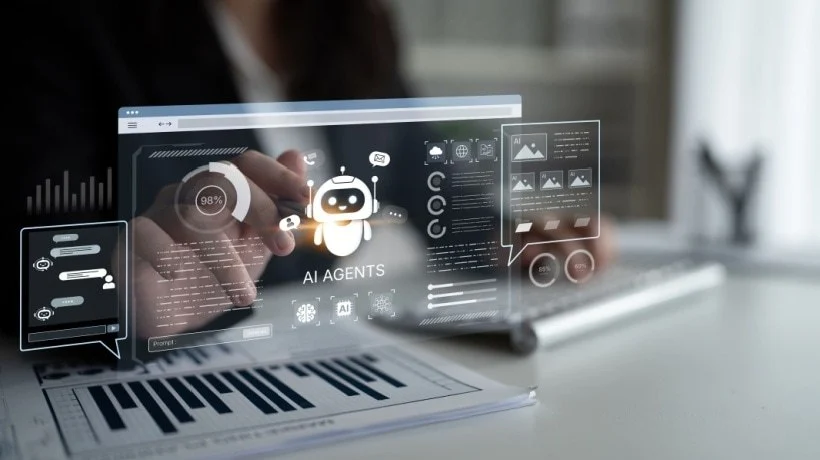
While the first wave of AI in L&D focused on basic generative search or simple FAQ bots, agentic AI represents a more sophisticated architectural shift. An "agentic" system is characterized by its ability to reason, plan, and take initiative. Unlike a standard chatbot that waits for a prompt, an agentic AI tutor monitors a learner’s progress and proactively intervenes to offer guidance, challenge assumptions, or provide remedial support.
These systems utilize Socratic questioning techniques, encouraging employees to arrive at solutions through critical thinking rather than rote memorization. They possess long-term memory, allowing them to recall a learner’s previous struggles and successes to tailor future interactions. This level of personalization, once reserved for high-cost executive coaching, is now being democratized across entire workforces.
A Chronology of L&D Evolution
The journey toward agentic AI tutors has moved through four distinct phases over the last thirty years:
- The Era of E-Learning (1990s-2005): Focused on digitizing classroom materials. Success was measured by "seat time" and completion of basic quizzes.
- The Video and Social Era (2006-2015): The rise of YouTube and MOOCs (Massive Open Online Courses) brought high-quality video content to the enterprise, but engagement remained low due to the passive nature of the medium.
- The Learning Experience Platform (LXP) Era (2016-2022): Platforms began using basic recommendation algorithms (similar to Netflix) to suggest content, yet they still relied on pre-existing, static assets.
- The Agentic AI Era (2023-Present): The integration of Large Language Models (LLMs) with agentic workflows allows for the creation of dynamic, generative content that adapts to the user in real-time.
Quantifying the Impact: Data-Driven Results
The transition to agentic AI tutors is driven by compelling metrics that far outpace traditional methods. According to recent industry benchmarks, companies implementing these intelligent systems have observed a 4x increase in course completion rates. This surge is attributed to the conversational nature of the interface, which feels less like "work" and more like a professional consultation.
Productivity gains have been equally stark. Organizations utilizing AI-driven coaching report a 28% average increase in overall workforce productivity. In specific domains, the results are even more granular:
- Sales Performance: Sales teams coached by conversational AI closed 23% more deals. The AI simulated client interactions, allowing representatives to practice handling objections in a low-stakes environment before engaging with real prospects.
- Technical Proficiency: Software developers using agentic AI for debugging and code review detected 41% more defects compared to those using traditional documentation.
- Safety and Compliance: In high-risk environments like warehousing and manufacturing, voice-activated AI tutors available 24/7 contributed to a 29% reduction in workplace accidents by providing instant safety protocols during late-night shifts.
Key Features of 2026-Ready AI Tutors
As we look toward the mid-decade mark, several key features have become the standard for enterprise-grade AI tutors:
Continuous Skills Gap Diagnosis
Rather than waiting for an annual performance review or a quarterly test, agentic AI tutors perform exploratory dialogues to assess competence. These systems can predict an employee’s field performance with 87% accuracy based on their conversational interactions. This allows L&D leaders to identify "red zones" in team capabilities before they impact the bottom line.
Multimodal and Ubiquitous Delivery
Learning no longer happens exclusively at a desk. Modern AI tutors are integrated into Slack, Microsoft Teams, and specialized mobile apps. Multimodal capabilities mean the AI can interpret code, analyze visualizations, and—in the case of augmented reality integrations—provide feedback on physical hand gestures or machinery operation.
Hyper-Personalized Adaptive Pathways
The AI adjusts the learning path hourly. For instance, a finance professional learning Python will receive different examples and exercises than a data engineer, even if they are enrolled in the same "Introduction to Programming" track. This ensures that every minute spent training is directly applicable to the employee’s specific role.
Implementation Strategy: A Roadmap for Transformation
For organizations looking to deploy agentic AI tutors, industry experts suggest a three-step phased approach to ensure alignment with business goals.
Step 1: Targeted Domain Testing
Instead of a company-wide rollout, successful organizations begin with high-impact domains such as technical roles, sales, or complex compliance areas. Integration with existing HRIS (Human Resource Information Systems) and LMS platforms is critical at this stage to ensure data continuity. Success is measured not just by completion, but by "Level 3 and 4" metrics—actual behavioral change and business impact.
Step 2: Cultural Alignment and Gamification
To overcome potential resistance to AI, companies must link learning progress to tangible career growth. When employees see that mastering a skill via the AI tutor leads to new project opportunities or promotions, engagement skyrockets. Gamification elements, such as badges and visible progress milestones, help maintain momentum.
Step 3: Scaling Through Evidence
Once a pilot program demonstrates ROI—such as the 32% higher sales close rates or 47% faster time-to-competence seen in leading SaaS firms—the program can be scaled. At this stage, the AI handles approximately 87% of routine coaching, allowing human mentors and managers to focus on high-level strategy and complex interpersonal breakthroughs.
Broader Implications and Official Perspectives
The shift toward agentic AI is receiving cautious but optimistic support from industry leaders. Chief Learning Officers (CLOs) are increasingly viewing themselves as "Capability Architects" rather than content curators. By utilizing AI to handle the "knowledge transfer" phase of learning, human educators can focus on the "wisdom transfer" phase—mentoring employees on leadership, ethics, and corporate culture.
Analysts suggest that this technology will significantly close the global skills gap. As industries are disrupted by automation, the ability to rapidly reskill thousands of employees simultaneously becomes a matter of national economic security. However, this also raises questions about data privacy and the "human touch" in education. The consensus among forward-thinking firms is a "Human-AI Synergy" model, where the AI acts as the tireless tutor and the human manager acts as the empathetic coach.
Conclusion: The Adaptive Future of the Workforce
Agentic AI tutors are not merely a replacement for the digital textbook; they represent the end of static learning. In the near future, an employee’s professional development will be guided by an intelligent companion that knows their strengths, anticipates their weaknesses, and provides the exact knowledge required to solve the problem at hand.
The transition from "training" to "transformation" is now underway. Organizations that continue to rely on outdated, non-interactive platforms risk falling behind as their workforce’s skills stagnate. The real question for L&D leaders is no longer whether AI is necessary, but how quickly they can deploy agentic systems to create a truly adaptive, future-ready organization. The future of work is conversational, continuous, and powered by autonomous intelligence.