
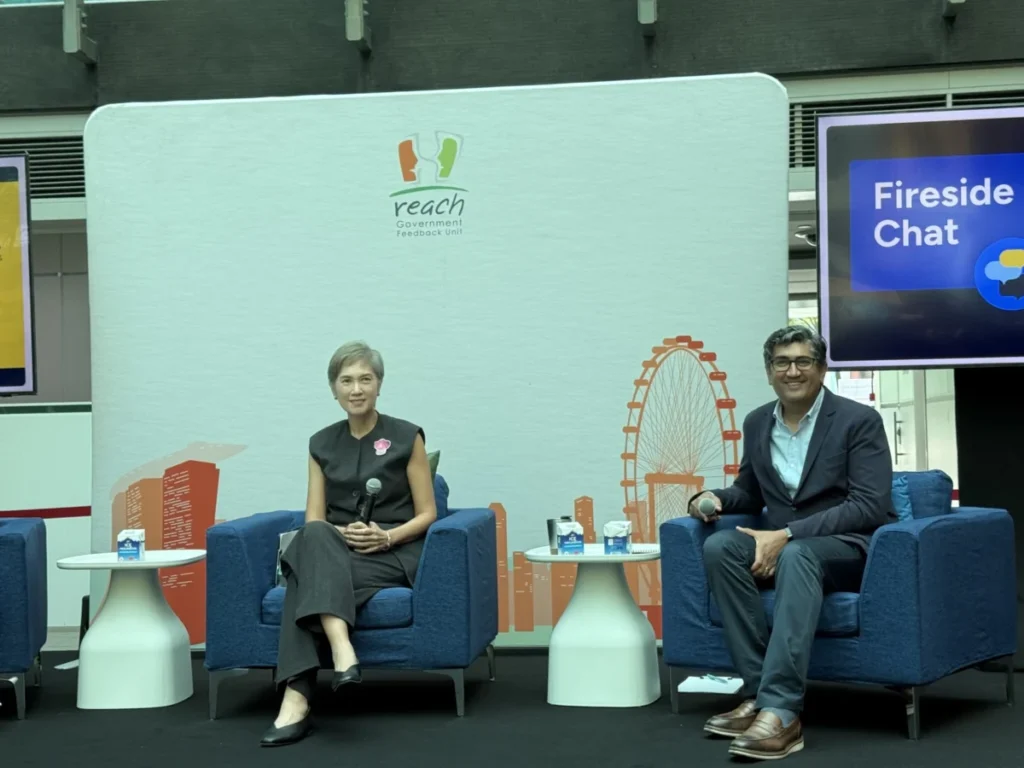
Artificial intelligence is no longer a futuristic concept; it is actively reshaping the landscape of employment, transforming not only entry-level positions but also roles across all organizational strata. This seismic shift presents a profound challenge and opportunity for Human Resources leaders, demanding a fundamental reevaluation of how talent is acquired, nurtured, and retained. The evolving skill requirements within nearly every job function necessitate a strategic pivot, a theme that underscored a recent youth employability event co-hosted by LinkedIn and Singapore’s feedback unit, REACH, at the Ministry of Digital Development and Information (MDDI). The dialogue at this pivotal gathering moved beyond the traditional focus on what young job seekers need to do, instead emphasizing the imperative for employers to adapt their strategies in response to this AI-driven transformation.
The current job market in Singapore reflects this evolving dynamic, exhibiting signs of a significant tightening. LinkedIn’s latest data reveals a year-on-year decline of 5% in hiring activity. Concurrently, the number of applications per job posting has surged by 6%, indicating a trend towards longer and more discerning hiring cycles. This trend is further corroborated by the Ministry of Manpower’s Q1 2026 Labour Market Report. While overall employment growth continues, the report highlights an increase in retrenchments during the quarter. Notably, these retrenchments were most pronounced among degree holders and older employees, particularly within knowledge-intensive sectors undergoing substantial restructuring. This data paints a clear picture: the traditional insulation of highly skilled and experienced workers from market volatility is eroding.
Adaptability and AI Fluency: The New Cornerstones of Employability
The headline session of the event featured a compelling fireside chat between Josephine Teo, Singapore’s Minister for Digital Development and Information, and Aneesh Raman, Chief Economic Opportunity Officer at LinkedIn. Minister Teo articulated a clear vision for the future of work, identifying adaptability as the paramount skill for navigating the current economic climate. "The job market rewards those who stay adaptable," she stated, emphasizing that career progression often involves evolving into suitable opportunities rather than finding a pre-existing perfect fit. She strongly advocated for individuals to become "AI bilingual," a concept that involves integrating domain expertise with a sufficient level of AI fluency to enable new ways of working. To support this, she highlighted Singapore’s SkillsFuture initiative and its collaborations with industry partners and unions as crucial scaffolding for workforce development.
Minister Teo’s message was one of empowerment rather than apprehension regarding AI. While acknowledging the valid concerns about being left behind, she posited that "the people thriving are not the ones avoiding it. They are the ones learning to work with it." She further elaborated that the true differentiator in the AI era lies in human judgment – the capacity to apply and interpret AI-generated outputs. This critical thinking and discerning application of technology is where "you create real value," she asserted. Her overarching objective is to cultivate a workforce that is "resilient, future-ready, and leaves no one behind."
Aneesh Raman, sharing the platform, echoed this sentiment by referencing the five essential human capabilities outlined in his book, Open to Work: curiosity, courage, creativity, compassion, and communication. He posited that these intrinsic human qualities will become increasingly vital as AI assumes more routine tasks.
"No Job is Safe": The Pervasive Impact of AI Across All Career Stages
Raman extended this argument to encompass every echelon of an organization, asserting that the anxiety surrounding graduate employment can sometimes overshadow a broader reality: "No job is safe in this moment. Our jobs are changing no matter what stage of career we’re at, no matter what job title we have." He cited LinkedIn data projecting that approximately 70% of the skills required for an average job will undergo transformation by 2030. This implies that even individuals who remain in the same role can experience significant job evolution. Singapore’s labor market data further supports this, indicating that higher-skilled employees are no longer immune to displacement, as business transformations lead to the reallocation of tasks, even within previously secure professional, managerial, executive, and technical (PMET) roles.
Raman’s advice for professionals at all career stages was consistent: actively engage with emerging AI tools and adopt a task-oriented mindset rather than clinging to traditional job titles. "Figure out what tasks you’re going to give these tools," he advised, "then use the freed-up time for the creative, critical, and collaborative work that builds a distinctive contribution."
Redefining the First Job and the Rise of "Super ICs"
For entry-level positions, where LinkedIn data suggests that up to 85% of tasks may be automatable even without a title change, Raman maintained that the "first job is changing, not disappearing." He reframed the graduate job search not as climbing a ladder but as navigating a wall, emphasizing that employers who invest in new graduates gain access to AI fluency and an entrepreneurial mindset that older cohorts may not possess. He pointed to forward-thinking organizations like IBM, which is tripling its entry-level hiring, and Salesforce, with its dedicated builder programs. LinkedIn itself has introduced a program where applicants submit portfolios of their creations instead of traditional resumes.
This shift is visibly reflected in the job market. Globally, there are 1.3 million new AI-related roles. In Singapore, demand for AI literacy has surged by over 70% year-on-year. Furthermore, entry-level hiring in small and medium-sized organizations (SMEs) experienced a substantial increase of 152% and 100% between 2023 and 2025, respectively, positioning SMEs as increasingly attractive launchpads for early-career professionals rather than mere fallback options.
Raman also highlighted how this evolution addresses a long-standing gap in skills-based hiring, where traditional reliance on degrees and pedigree often overshadows demonstrable capabilities. The bridge to more effective hiring, he argued, is through tangible work products. "Show me something you’ve done, and then tell me the story of how you did it," he urged, encouraging candidates to detail their process, including any failures, recoveries, and collaborative efforts. He anticipates that work products will not only influence hiring decisions but also shape career progression, leading to the emergence of "super ICs" – senior individual contributors who advance based on their output and impact rather than by managing larger teams.
The Structural Imperative: Beyond the Organizational Chart
Raman issued a stark structural warning to employers: "The organizational chart is going to hold you back." He drew a parallel to the electrification of industries, where companies that merely swapped steam engines for electric motors saw minimal productivity gains. In contrast, those that fundamentally redesigned their workflows to leverage the new technology experienced significant surges in efficiency. The same principle applies to AI. The greatest potential, he argued, lies not just in optimizing existing workflows with AI but in fundamentally rebuilding work around enhanced human capabilities.
Cultivating Enduring Human Capabilities in an AI-Driven World
A separate #AskMeAnything session featuring Feon Ang, Managing Director of Asia-Pacific at LinkedIn; Lim Hin Chuan, Country Head of DBS Singapore; and Willson Cuaca, Co-founder and Managing Partner at East Ventures, further illuminated the qualities that employers will increasingly seek and cultivate. Ang emphasized that in an era of rapid technological advancement, organizations are not seeking candidates with encyclopedic knowledge but rather those possessing a strong ability to learn and a growth mindset. Lim Hin Chuan distilled his hiring priorities into three core anchors: trust, ownership, and purpose. Willson Cuaca suggested that true differentiation in the market comes from proficiency across multiple domains rather than singular specialization.
The panel collectively viewed AI as a powerful tool with humans remaining at its core. Cuaca encouraged employees to become "power users" of AI, understanding the underlying mechanisms of these tools, and crucially, to maintain "humans in the loop" to provide the judgment and empathy that AI cannot replicate. The consensus was clear: careers are no longer linear, a reality that directly impacts how employers design talent development pathways and career progression frameworks.
Data-Driven Insights for Future Workforce Planning
The data presented offers a concrete direction for workforce planning. LinkedIn’s analysis of the fastest-growing skills in Singapore reveals a compelling blend of technical and human capabilities. These include AI, machine learning, and data engineering; software engineering and cloud computing; strategic business and transformation; financial management; and leadership and communication. Notably, AI literacy has emerged as a baseline expectation across virtually all professional functions.
The overarching message from this comprehensive discussion was consistent: as AI fundamentally reshapes the nature of work, the metrics for evaluating individuals in hiring and for career advancement are shifting. The emphasis is moving away from traditional credentials and towards demonstrable skills, the ability to build and innovate, and the capacity for sound judgment. This signifies a profound and ongoing transformation in the world of work, necessitating proactive adaptation from both individuals and organizations to thrive in the age of artificial intelligence.







