E-commerce giant Amazon has announced a significant investment in its frontline workforce, increasing hourly pay by $1 for full-time employees in core operations and introducing a suite of new financial and grocery benefits. This strategic move, published on September 17, 2026, aims to bolster employee well-being amid persistent economic pressures and a competitive labor market, pushing the company’s average starting wage to approximately $24 per hour. The comprehensive package underscores Amazon’s commitment to attracting and retaining talent, providing tangible support as consumers navigate rising living costs.
Addressing Economic Headwinds: A Strategic Move by Amazon
The decision to elevate hourly wages by $1 for full-time personnel engaged in core operational roles directly addresses the financial strains currently experienced by a vast segment of the American workforce. This increase is projected to elevate Amazon’s average starting wage to approximately $24 per hour, a figure that significantly surpasses the federal minimum wage and positions the company competitively within the retail and logistics sectors. For context, the federal minimum wage has remained at $7.25 per hour since 2009, making Amazon’s new average starting wage more than three times that baseline. While specific state and local minimum wages vary, Amazon’s updated compensation framework places it among the leading employers for entry-level and operational roles.
This adjustment comes at a critical juncture for the U.S. economy. For several quarters, consumers have contended with elevated inflation, particularly in essential categories such as groceries and fuel. Data from the U.S. Bureau of Labor Statistics has consistently shown that the Consumer Price Index (CPI) has risen, with food-at-home prices experiencing notable increases, impacting household budgets across the nation. Earlier this year, for the first time in three years, inflation demonstrably outpaced wage growth, eroding the purchasing power of many Americans. This trend prompted experts to predict a slowdown in consumer spending as households grapple with shrinking discretionary income.
Heather Long, Chief Economist at Navy Federal Credit Union, articulated this concern following the release of monthly retail sales data, stating, “A consumer spending slowdown is likely later this year and into early 2027 as middle-income and lower-income households feel the pinch from higher gas and grocery prices. Real incomes are flat or declining for many and they will have to cut back on something.” Amazon’s wage increase can be viewed as a direct response to this challenging economic environment, aiming to provide its employees with greater financial stability and potentially mitigate the effects of inflation on their livelihoods. By enhancing wages, Amazon not only addresses an immediate need for its employees but also potentially strengthens consumer spending capabilities within the broader economy, albeit on a micro-level.
Holistic Support: Beyond the Paycheck
Beyond the direct wage increase, Amazon is rolling out a series of robust benefits designed to offer comprehensive financial and lifestyle support. These initiatives highlight a strategic shift towards a more holistic approach to employee well-being, recognizing that financial security extends beyond hourly pay.
A significant component of this new benefits package includes enhanced grocery discounts. These discounts are designed to be combinable with existing Prime member discounts, amplifying savings for eligible employees. All eligible Amazon employees already receive a complimentary Amazon Prime membership, which itself offers a multitude of benefits, including free expedited shipping, access to streaming services, and exclusive deals. The addition of specific grocery discounts, layered onto Prime benefits, directly tackles one of the most pressing financial concerns for many households: the rising cost of food. For a typical family, grocery expenses can represent a substantial portion of their monthly budget, and these discounts are expected to provide meaningful relief. By reducing the cost of essential goods, Amazon aims to alleviate a direct pressure point for its workforce, demonstrating a tangible commitment to their day-to-day financial health.
Perhaps the most innovative and far-reaching new benefit is a comprehensive financial service slated for a phased rollout. This groundbreaking banking service will be introduced later this year and is expected to be broadly available to all eligible employees by 2027. What sets this service apart is its accessibility: it requires no credit history to open checking and savings accounts. This feature is particularly impactful for individuals who may be new to the financial system, have limited credit history, or have struggled with traditional banking relationships. In an era where credit scores often dictate access to essential financial tools, Amazon’s initiative democratizes access to banking services, fostering greater financial inclusion among its diverse workforce.
Furthermore, this new financial service will offer access to auto and home loans, two critical milestones in personal financial stability. The provision of these loan options, potentially with favorable terms or streamlined application processes, could significantly empower employees to achieve long-term financial goals, such as homeownership or vehicle acquisition, which might otherwise be out of reach. This service is an expansion of Amazon’s existing free Brightside Financial Care service, where employees can already connect with a financial assistant for personalized guidance. The integration of banking and lending capabilities with financial advisory services creates a robust ecosystem designed to support employees through various stages of their financial journey, from daily budgeting to major life investments. This integrated approach signifies a deeper commitment to the financial literacy and long-term prosperity of its employees.
Amazon’s Evolving Compensation Strategy: A Historical Perspective

Amazon’s latest announcement is not an isolated event but rather a continuation of its evolving compensation strategy, often influenced by a dynamic labor market and public scrutiny. Historically, Amazon has faced criticism regarding its working conditions and pay, particularly in its fulfillment centers. However, the company has also made significant strides in raising its baseline compensation.
A pivotal moment occurred in 2018 when Amazon announced it would raise its minimum wage for all U.S. employees to $15 per hour. This move was widely seen as a response to growing public and political pressure, including calls from figures like Senator Bernie Sanders, who had publicly criticized the company’s wage practices. At the time, this increase affected over 250,000 Amazon employees and more than 100,000 seasonal workers. The 2018 decision had a ripple effect across the retail sector, prompting other large employers to re-evaluate their own pay structures to remain competitive.
Since then, Amazon has continued to adjust its compensation, typically stating that its average starting wage has consistently risen. The company’s workforce is immense and globally distributed, with millions of employees worldwide, a significant portion of whom are in its logistics and operations network. In the U.S. alone, Amazon employs hundreds of thousands of individuals, making its compensation policies influential benchmarks for the broader labor market. The sheer scale of its operations means that any wage adjustment or benefit enhancement impacts a vast number of households and communities.
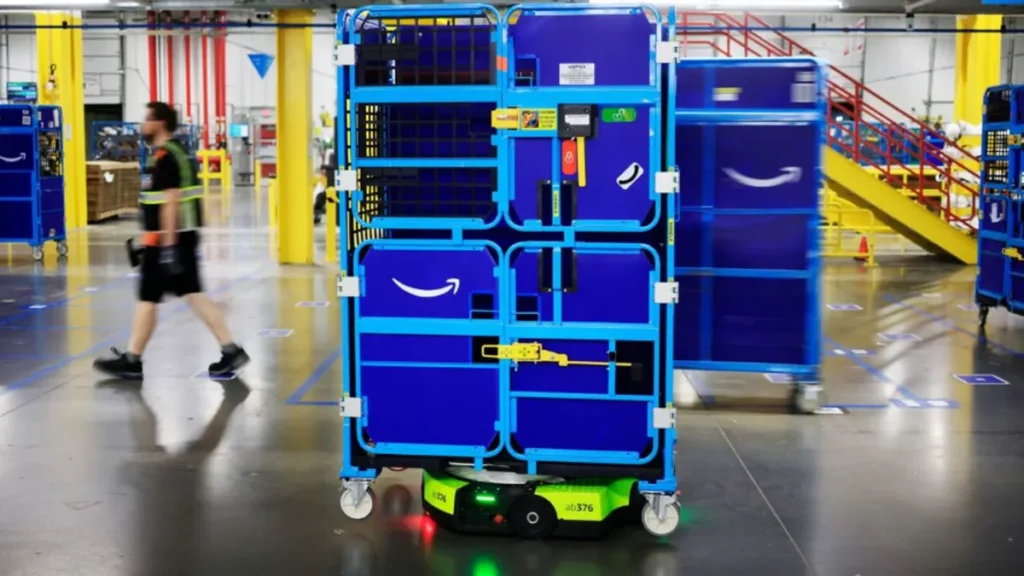
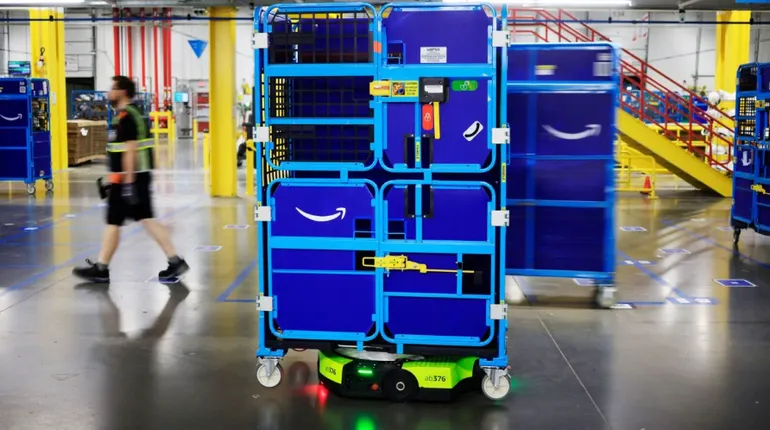
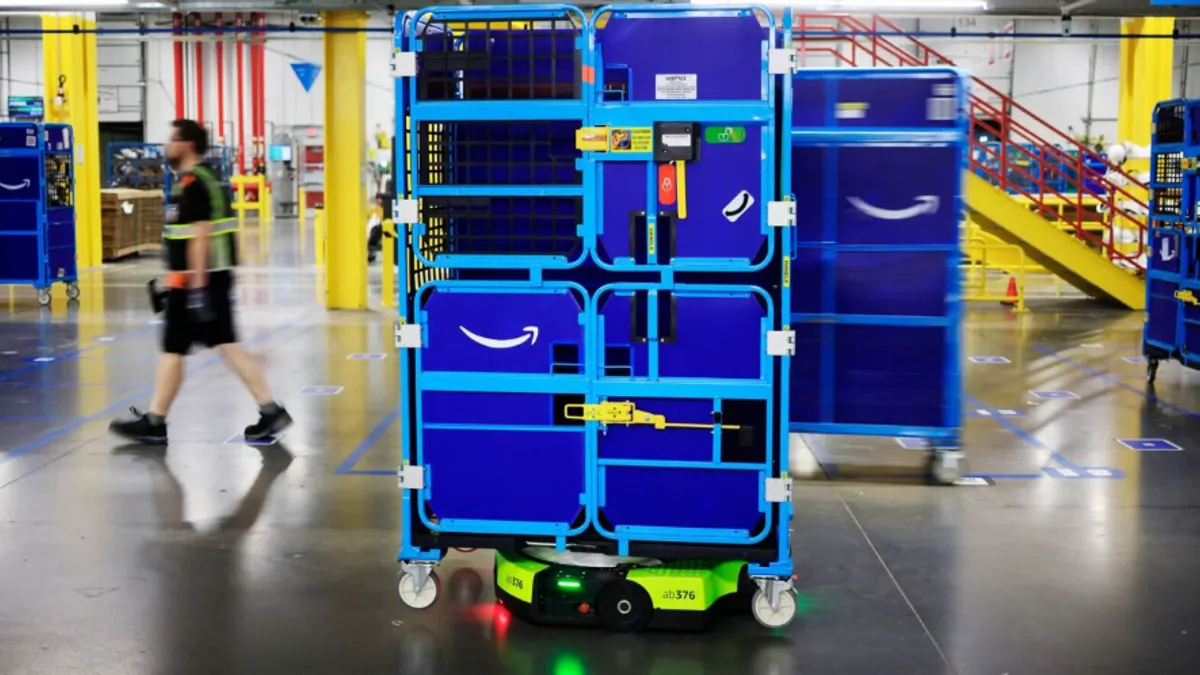
While the company has invested heavily in automation and robotics, as evidenced by images of robots like Proteus carrying totes within its facilities, human labor remains central to its operational efficiency. Maintaining a stable and motivated workforce is paramount for a company that relies on rapid fulfillment and extensive logistics networks. Therefore, strategic investments in employee compensation and benefits can be seen as a necessary measure to ensure operational continuity and service quality, especially given the high demands placed on its frontline workers.
Market Dynamics and Competitive Pressures
The current labor market for frontline workers, particularly in logistics and retail, remains remarkably tight. Despite some economic cooling, unemployment rates have largely stayed low, creating a competitive environment where employers must actively vie for talent. Companies across various sectors have been challenged by labor shortages, high turnover rates, and increased demands for better pay and working conditions. This dynamic has empowered workers to seek out employers offering more attractive compensation and benefits packages.

Amazon’s decision to increase wages and expand benefits reflects an understanding of these prevailing market dynamics. By enhancing its total compensation package, the company aims to solidify its position as an employer of choice in a highly competitive landscape. This move could put pressure on other large retailers and logistics companies, such as Walmart, Target, FedEx, and UPS, to re-evaluate their own wage structures and employee offerings. Such a large-scale increase from a dominant player like Amazon can set a new standard, potentially leading to an upward spiral in wages across the industry as companies strive to attract and retain the necessary workforce.
For smaller businesses or those operating on tighter margins, Amazon’s wage increases can present a significant challenge. They may struggle to match the compensation offered by a corporate giant, potentially leading to difficulties in hiring and retaining staff. This phenomenon underscores the broader economic implications of Amazon’s employment strategies, which can reshape local labor markets and influence regional wage benchmarks.
Implications for Employees and the Broader Economy
The immediate and long-term implications of Amazon’s enhanced compensation package are multifaceted. For the employees directly affected, the pay increase and new benefits will undoubtedly offer tangible relief and improved financial security. A higher hourly wage means more disposable income, which can be used to cover rising costs of living, pay down debt, or build savings. The grocery discounts directly reduce a major household expense, while the new financial services provide crucial tools for long-term financial planning and stability, particularly for those underserved by traditional banking. These measures could lead to improved employee morale, reduced stress, and ultimately, lower turnover rates—a significant benefit for Amazon in terms of reduced hiring and training costs.
From a broader economic perspective, Amazon’s decision to boost wages for such a vast workforce can have a ripple effect. When hundreds of thousands of employees have more purchasing power, it can stimulate local economies through increased consumer spending. This can partially offset the predicted consumer spending slowdown, contributing to economic resilience. The increased wages could also contribute to greater wealth distribution, even if incrementally, from a highly profitable corporation to its frontline workers.
Furthermore, this move could positively impact Amazon’s public image and corporate responsibility narrative. The company has frequently been the subject of media scrutiny regarding its labor practices. By proactively investing in its workforce and addressing some of the most pressing economic concerns of its employees, Amazon can enhance its reputation, demonstrating a commitment to its human capital. This could also serve to pre-empt future unionization efforts or mitigate criticism from labor advocates who consistently push for better conditions and compensation for workers in large corporations.
Looking Ahead: The Future of Workforce Investment
Amazon’s latest announcement signals a continued trend in large corporations prioritizing workforce investment, especially in a dynamic economic and labor environment. As automation continues to advance, the role of human workers in e-commerce and logistics is evolving, but their necessity remains undeniable. Companies are increasingly recognizing that a stable, well-compensated, and supported human workforce is a strategic asset, crucial for operational excellence and long-term success.
The phased rollout of the new financial benefits, extending into 2027, suggests a carefully planned, long-term strategy rather than a reactive measure. This indicates that Amazon is looking beyond immediate economic pressures to build a sustainable model for employee engagement and retention. The blend of direct financial compensation with comprehensive support services — spanning basic needs like groceries to complex financial planning and lending — reflects a sophisticated understanding of employee needs in the 21st century.
In conclusion, Amazon’s decision to increase pay and introduce sweeping new benefits for its core operations employees is a significant development with wide-ranging implications. It addresses current economic challenges faced by consumers, aims to strengthen employee loyalty and well-being, and sets a potential new benchmark for compensation and benefits in the competitive retail and logistics sectors. As the U.S. economy continues to navigate inflationary pressures, such investments in human capital will likely play an increasingly critical role in both corporate strategy and national economic stability.