On September 21, 2026, World Gratitude Day will once again offer a global moment to pause and reflect on the profound impact of appreciation, particularly within the professional sphere. This annual observance arrives at a crucial juncture for businesses worldwide, as contemporary data paints a stark picture of a disengaged workforce. According to the comprehensive 2026 Achievers Engagement and Retention Report, which surveyed 2,500 employees globally, a sobering mere 25% of employees currently report feeling engaged in their work. This statistic underscores a persistent challenge for organizations striving for productivity, innovation, and sustained growth, positioning gratitude not merely as a pleasant sentiment but as a strategic imperative for fostering a thriving workplace culture.
The Historical Roots and Enduring Vision of World Gratitude Day
World Gratitude Day traces its origins to a profound moment of reflection and global aspiration. The concept was first proposed in 1965 during a Thanksgiving dinner hosted at the United Nations building in Hawaii. The visionary behind this initiative was Sri Chinmoy, a spiritual leader, philosopher, artist, and advocate for peace, who dedicated much of his life to promoting harmony and understanding through the Peace Meditations at the United Nations. Chinmoy believed that gratitude was a fundamental human virtue with the power to transcend cultural and political divides, fostering unity and a shared sense of purpose. He envisioned a day where individuals across the globe could collectively acknowledge the people and experiences that enrich their lives, thereby strengthening the bonds of humanity.
The idea resonated deeply with the international attendees, leading to the first official celebration on September 21, 1966. This inaugural event set a precedent for an annual observance, firmly establishing September 21 as the consistent date for World Gratitude Day. Unlike some holidays that shift with the calendar, its fixed date ensures a dependable global moment each year, allowing organizations and communities to plan and participate with regularity. From its inception, the day was conceived as a non-denominational, universally accessible opportunity for introspection and outward expression of thanks, rooted in the simple yet powerful act of acknowledging positive contributions. Its genesis within the United Nations framework further lent it an international imprimatur, symbolizing its universal appeal and potential to foster goodwill on a global scale.
The Pervasive Challenge of Workplace Disengagement in 2026
The 2026 Achievers Engagement and Retention Report’s finding of only 25% employee engagement is not an isolated metric; it reflects a broader, systemic issue with significant ramifications for global economies. Low employee engagement is intrinsically linked to myriad negative outcomes, including decreased productivity, higher turnover rates, reduced innovation, and a noticeable dip in overall organizational performance. When employees feel disconnected or undervalued, their motivation wanes, leading to a transactional approach to their roles rather than an invested, passionate commitment.
Further research and industry analyses consistently corroborate these trends. For instance, a recent study by Gallup, a leading authority on workplace analytics, estimated that actively disengaged employees cost the global economy trillions of dollars annually in lost productivity. This financial burden stems from increased absenteeism, higher rates of workplace errors, and a general lack of discretionary effort. Moreover, the cost of employee turnover, encompassing recruitment, onboarding, and training new hires, can range from tens of thousands to well over a hundred thousand dollars per employee, depending on the role. In a competitive talent landscape, organizations cannot afford to hemorrhage valuable human capital due to a perceived lack of appreciation.
Beyond the quantifiable economic impacts, disengagement also takes a toll on the human aspect of work. Employees who do not feel valued often experience higher levels of stress, burnout, and cynicism, which can spill over into their personal lives and contribute to broader societal mental health challenges. The lack of psychological safety and a sense of belonging can stifle creativity and collaboration, preventing teams from reaching their full potential. Therefore, addressing disengagement is not just a matter of improving bottom lines; it is about cultivating humane and sustainable work environments where individuals can thrive.
Gratitude as a Strategic Lever: Bridging the Engagement Gap
The solution to the pervasive issue of disengagement often lies in a fundamental human need: the desire to feel seen, heard, and appreciated. Gratitude, when authentically expressed and consistently woven into the fabric of an organization’s culture, serves as a powerful antidote to apathy and detachment. Employees who regularly receive recognition for their efforts, their contributions, and their inherent value as individuals are demonstrably more connected to their work, more committed to their organizations, and far more likely to bring their best energy, creativity, and problem-solving skills to the workday.
Recognition acts as a powerful reinforcing mechanism. It signals to employees that their work matters, that their efforts are noticed, and that their contributions are integral to the organization’s success. This positive feedback loop fosters intrinsic motivation, encouraging individuals to repeat and even exceed desired behaviors. When employees understand the tangible impact of their work and feel genuinely valued for it, they develop a deeper sense of purpose and ownership. This psychological safety net allows them to take risks, innovate, and contribute more fully, knowing their efforts will not go unnoticed.
Furthermore, a culture of gratitude cultivates a more positive and supportive work environment. It encourages empathy, strengthens interpersonal relationships, and builds trust among colleagues and between employees and leadership. This heightened sense of community and mutual respect can significantly reduce workplace conflict, enhance team cohesion, and create a more resilient workforce capable of navigating challenges collaboratively.

Thematic Nuance: A Mindset, Not Just a Moment
While World Gratitude Day does not adhere to a specific annual theme, its underlying principle is profoundly consistent: to encourage individuals, teams, and entire communities to intentionally acknowledge what (and who) they are thankful for. This absence of a prescriptive theme allows for broad interpretation and application, empowering organizations to tailor their celebrations to their unique cultures and priorities.
The day’s essence is less about a formal dictate and more about fostering a mindset—a continuous habit of noticing and appreciating. It encourages a shift in perspective, moving from focusing on deficits to recognizing strengths and positive contributions. This mindset is crucial for building resilience in the face of ongoing challenges and for strengthening the foundational connections that underpin effective collaboration and a supportive community. In the workplace, this translates into a deliberate effort to spotlight moments of success, acts of support, and the embodiment of company values, making work feel more human, more connected, and ultimately, more rewarding for everyone involved.
Strategic Implementation: Cultivating Gratitude in Organizations on World Gratitude Day 2026
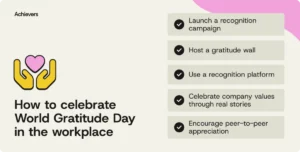
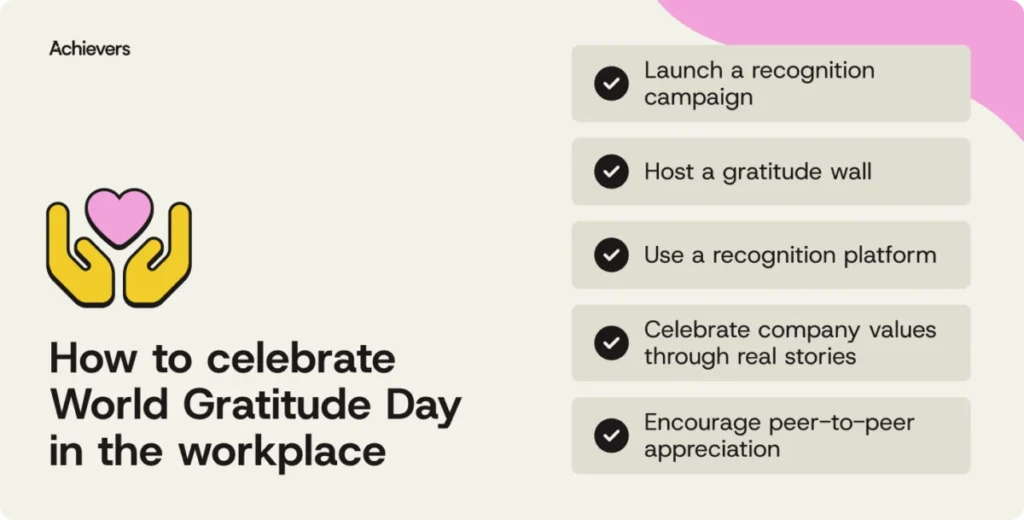
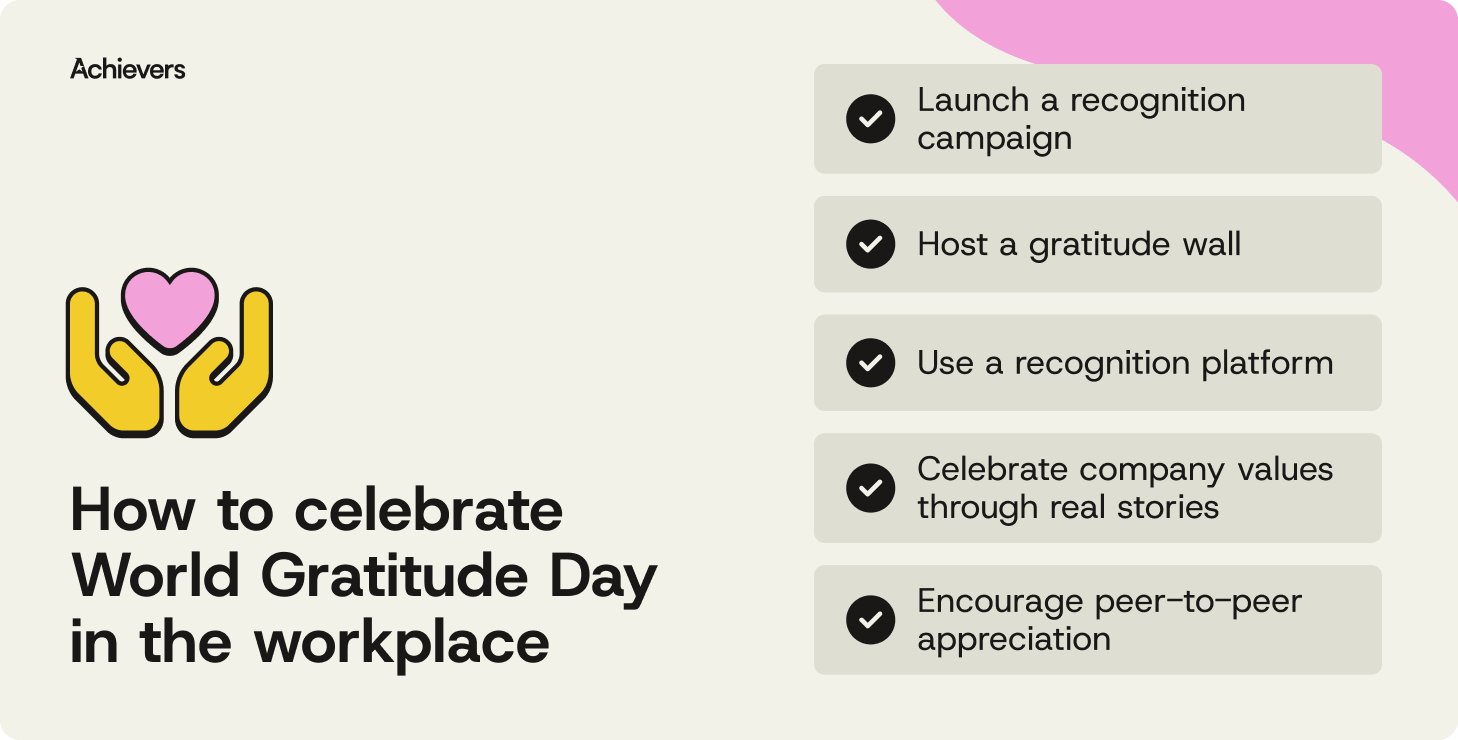
World Gratitude Day 2026 presents a prime opportunity for organizations to initiate or reinvigorate their appreciation efforts. Leveraging this global moment can serve as a catalyst for embedding gratitude into daily operations. Here are six comprehensive strategies to celebrate World Gratitude Day across the workplace, designed to foster lasting cultural change:
-
Launch a High-Visibility Recognition Campaign:
Beyond a simple email, organizations should design a multi-faceted campaign. This involves creating a dedicated internal communication plan, utilizing all available channels (intranet, internal social media, team meetings, digital signage). The campaign should clearly articulate its objectives, provide diverse categories for recognition (e.g., living company values, exceptional teamwork, innovation, customer service excellence), and offer ready-made templates or automated prompts to simplify the act of peer-to-peer recognition. Consider incorporating light gamification, such as leaderboards for top recognizers or teams, or small incentives for participation. The goal is to make recognition effortless, highly visible, and deeply integrated into daily workflows, ensuring that employees are not only encouraged but enabled to participate actively. -
Host a Dynamic Digital or Physical Gratitude Wall:
Creating a shared, accessible space for appreciation is paramount. For distributed or hybrid teams, a digital gratitude wall hosted on an internal platform (like an HRIS, collaboration tool, or dedicated recognition platform) allows employees to post messages, photos, and videos of appreciation in real-time, regardless of their physical location. A social-style feed can increase engagement, allowing colleagues to ‘like’ or comment on recognitions, amplifying their impact. For in-office environments, a physical gratitude wall in a common area can serve as a visible testament to collective appreciation, inviting handwritten notes or photo submissions. The key is making participation simple, mobile-friendly, and inclusive of all work models, ensuring every employee has a chance to contribute and witness the collective positive sentiment. -
Celebrate Company Values Through Compelling Real Stories:
Abstract values become tangible through concrete examples. Organizations should actively solicit and spotlight stories that illustrate how employees embody company values in their day-to-day work. This can take many forms:- Leadership Spotlights: Senior leaders sharing personal anecdotes of employees exemplifying values during company-wide meetings or internal newsletters.
- Employee Testimonials: Short video interviews or written features on the intranet, highlighting specific projects or moments where values were brought to life.
- Team Wins: Showcasing how collaborative efforts, rooted in specific values, led to significant achievements.
These stories not only make individuals feel seen and celebrated but also serve as powerful cultural reinforcement, demonstrating desired behaviors and inspiring others to emulate them.
-
Empower Managers with Comprehensive Gratitude Toolkits:
Managers are pivotal in fostering a culture of appreciation, yet they often lack the tools and training to do so effectively. A gratitude toolkit should equip them with:- Conversation Starters: Prompts for one-on-one meetings to discuss employee contributions.
- Recognition Templates: Customizable messages for various achievements or milestones.
- Training Modules: Guidance on delivering specific, timely, and impactful feedback.
- Budgetary Guidelines: Information on non-monetary and modest monetary recognition options.
- Real-time Insights: Access to data from recognition platforms showing who is recognizing whom, allowing managers to identify opportunities for intervention or reinforcement.
The Achievers’ State of Recognition Report highlights that employees recognized by their managers are 19 times more likely to trust them and 16.5 times more likely to recommend their company. Empowering managers with these tools ensures consistency and efficacy, building habits that extend far beyond World Gratitude Day.
-
Encourage Organic Peer-to-Peer Appreciation:
Recognition should not be solely top-down. Creating accessible and intuitive ways for teammates to appreciate each other is crucial for building a truly inclusive culture of gratitude. This can involve:- Dedicated Channels: Setting up specific channels on collaboration platforms (e.g., Slack, Microsoft Teams) for "kudos" or "shout-outs."
- Simple Digital Badges: Easy-to-use digital badges that can be awarded for various contributions (e.g., "Collaboration King/Queen," "Problem Solver," "Always Helpful").
- Informal Rituals: Encouraging teams to start meetings with a "gratitude round" where everyone shares one appreciation for a colleague.
Non-monetary appreciation, when genuine, personal, and publicly shared, packs a significant punch. It fosters camaraderie, strengthens team bonds, and reinforces a supportive environment where everyone feels valued by those they work closest with.
-
Utilize Recognition Platforms to Amplify the Day and Beyond:
Modern employee recognition platforms are indispensable tools for scaling and sustaining gratitude initiatives. These platforms enable:- In-the-Moment Recognition: Employees can send recognition instantly from any device, capturing the impact while it’s fresh.
- Visibility and Amplification: Recognitions can be shared across teams, departments, or the entire organization, increasing their reach and impact.
- Customization: Platforms allow for alignment with company values, creating custom awards, and integrating with existing HR systems.
- Analytics: Robust reporting provides insights into recognition trends, identifying areas of strength and opportunities for improvement.
By making appreciation simple, consistent, and accessible to everyone, recognition platforms transform World Gratitude Day from a singular event into the launchpad for a year-round habit, embedding gratitude deeply into the organizational DNA.
The Indisputable Link: How Gratitude Shapes Performance at Work
The impact of gratitude extends far beyond morale; it directly influences measurable performance outcomes. When employees are consistently recognized, it sends a clear message: "This matters. Do more of this." This affirmation motivates individuals to replicate and enhance the behaviors that contribute to organizational success.
Specific performance indicators influenced by a culture of gratitude include:
- Increased Productivity: Valued employees are more motivated to work harder and more efficiently.
- Enhanced Quality of Work: Feeling appreciated fosters a sense of pride and ownership, leading to higher standards.
- Greater Innovation: Psychological safety, cultivated by recognition, encourages employees to share new ideas and take calculated risks.
- Higher Retention Rates: Employees are less likely to seek opportunities elsewhere when they feel genuinely valued and connected to their current organization. This directly impacts the bottom line by reducing recruitment and training costs.
- Improved Customer Satisfaction: Engaged and appreciated employees are more likely to deliver exceptional customer service, leading to stronger client relationships and loyalty.
- Reduced Absenteeism: A positive work environment, fueled by gratitude, can significantly lower stress levels and improve overall employee well-being, leading to fewer sick days.
- Stronger Collaboration: When individuals feel appreciated, they are more willing to collaborate, share knowledge, and support their colleagues, leading to more effective team outcomes.
In essence, gratitude acts as a powerful catalyst for human potential, unlocking discretionary effort and fostering an environment where individuals are empowered to perform at their peak.
Beyond September 21: Sustaining a Culture of Appreciation
World Gratitude Day 2026 is an excellent moment to pause, appreciate, and reset, but its true impact hinges on what transpires after September 21. The real transformation occurs when teams return to their routines, and the initial novelty of the day fades. This is precisely where leaders, HR teams, and managers have a profound opportunity to capitalize on the momentum generated by World Gratitude Day.
The goal is to transition from a one-day event to an everyday practice. HR teams can integrate recognition into performance management systems, onboarding processes, and leadership development programs. Managers can be coached to make appreciation a regular part of their one-on-one meetings, team huddles, and project debriefs. It involves noticing great work, articulating it specifically, and reinforcing the behaviors that drive both individual and collective success. This continuous cycle of recognition and appreciation not only sustains engagement but also builds a resilient and adaptive culture capable of thriving in an ever-evolving business landscape.
Broader Economic and Societal Implications of Workplace Gratitude
The ripple effects of a gratitude-infused workplace extend far beyond the immediate confines of an organization. On an economic level, a more engaged and appreciative workforce contributes to higher national productivity, fostering economic growth and competitiveness. Companies with high engagement rates consistently outperform their peers in profitability, stock performance, and customer loyalty, collectively contributing to a more robust economic ecosystem.
Societally, a focus on gratitude in the workplace can have profound positive impacts. It contributes to improved mental health outcomes for individuals, reducing stress, anxiety, and burnout that can stem from feeling undervalued. As individuals experience more positive emotions at work, they are likely to carry that positivity into their communities and families, fostering stronger social bonds and a more compassionate society. The cultivation of gratitude at scale within workplaces can thus become a powerful force for collective well-being, fostering a more human-centered approach to work and life itself.
Expert Perspectives and the Future Outlook
Leading voices in organizational psychology and human resources consistently advocate for the strategic implementation of recognition. Dr. Christine Porath, a professor at Georgetown University and author on the topic of civility, emphasizes that "feeling valued is one of the most basic human needs, and when it’s met, people thrive." Similarly, HR executives like Sarah Jones, Chief People Officer at a multinational tech firm, underscore that "recognition isn’t just a nice-to-have; it’s a non-negotiable component of a high-performing culture. It’s an investment in our people and, by extension, our future."
The future of work, particularly post-pandemic, increasingly highlights the importance of empathy, well-being, and meaningful connections. As remote and hybrid work models become more entrenched, the intentional effort to foster gratitude and ensure employees feel seen becomes even more critical. Technology will continue to play a crucial role in enabling scalable and authentic recognition, ensuring that geographical distance does not equate to emotional distance. The trend indicates a shift from sporadic appreciation to integrated, continuous recognition as a core component of talent management strategies.
At Achievers, a company deeply invested in employee engagement and recognition, the consistent observation is that recognition truly transforms culture. When employees feel genuinely seen, appreciated, and valued, every aspect of the organization — from individual performance to collective innovation — functions better. World Gratitude Day 2026 is not merely a date on the calendar; it is a vital opportunity for organizations globally to strategically recommit to the fundamental principle that a valued employee is an engaged, productive, and loyal asset, essential for navigating the complexities of the modern world.