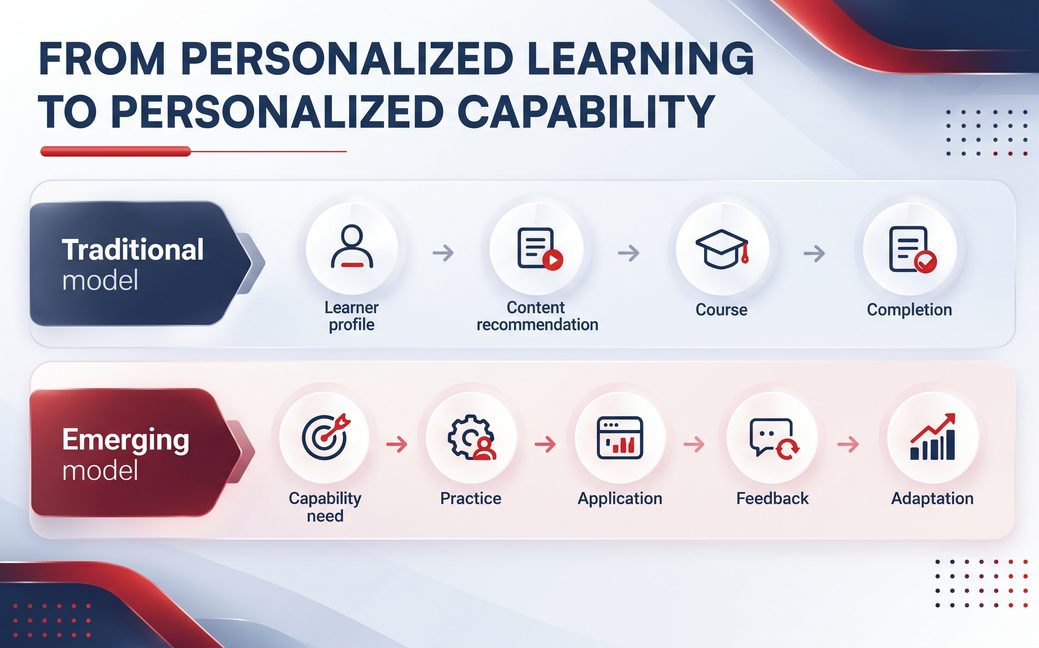
The global landscape of corporate training is currently undergoing a fundamental paradigm shift, moving away from the traditional focus on content delivery toward a more rigorous emphasis on measurable capability and performance readiness. For decades, the primary challenge facing Chief Learning Officers (CLOs) was logistical: how to deliver the right learning material to the right employee at the right time. However, as artificial intelligence (AI) becomes deeply integrated into the enterprise, the focus is shifting from "what people know" to "what people can do." Industry experts and learning and development (L&D) leaders now argue that while personalization of content has been the goal for the last decade, the next frontier is the personalization of practice and the objective measurement of workforce readiness.
The Evolution of Learning Technology: From Catalogs to Agents
The trajectory of learning technology has followed a path of increasing sophistication, driven by the need to manage burgeoning repositories of corporate knowledge. In the late 1990s and early 2000s, the industry relied on static digital catalogs within Learning Management Systems (LMS). These systems functioned primarily as administrative tools for compliance and record-keeping. As the internet evolved, the industry moved toward search-based models, allowing employees to pull information as needed, similar to a corporate version of Google.
By the mid-2010s, the rise of Learning Experience Platforms (LXPs) introduced recommendation engines, borrowing algorithms from consumer technology like Netflix and Amazon to suggest content based on user interests and peer behavior. Adaptive learning followed, using basic algorithms to adjust the difficulty of content based on quiz results.
Today, the integration of Generative AI has accelerated this progression exponentially. According to recent industry reports, the global AI in education and corporate training market is expected to grow at a compound annual growth rate (CAGR) of over 36% through 2030. This growth is fueled by AI’s ability to generate bespoke content, tailor assessments in real-time, and analyze complex learner behavior patterns. Yet, despite these technological leaps, a critical gap remains: the distinction between completing a course and being ready to perform a high-stakes task in a real-world environment.
The Readiness Gap: Why Content Personalization Is Not Enough
Personalization in its current form has focused almost exclusively on the "consumption" phase of learning. AI-driven systems identify a skill gap and serve a corresponding video or article. While this reduces the friction of finding information, it does not guarantee that the learner has internalized the skill.

"Relevance does not equal readiness," explains a leading L&D strategist. "A salesperson can watch ten hours of videos on negotiation tactics and pass a multiple-choice quiz with a perfect score. That tells us they understand the theory. It tells us nothing about how they will react when a client pushes back on pricing in a high-pressure meeting."
This "Readiness Gap" is forcing organizations to re-evaluate their metrics for success. Traditional KPIs such as "course completion rates" and "learning hours" are increasingly viewed as vanity metrics. They measure activity rather than impact. To bridge this gap, the emerging Personalized Capability Model suggests that personalization must move further "upstream," focusing on the specific context of an individual’s role, their prior experience, and the immediate performance requirements of their job.
The Frontier of Personalized Practice
The most significant application of AI in the modern L&D stack is the creation of scalable, safe environments for deliberate practice. This is particularly vital for roles involving "soft skills" or high-risk technical procedures.
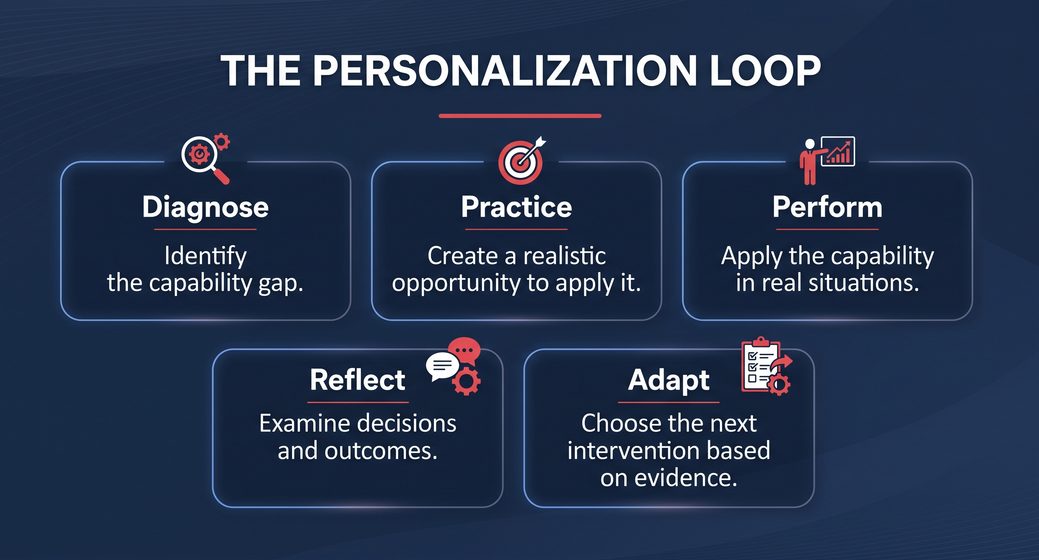
In leadership development, for instance, the principles of having a difficult conversation are well-documented. However, the execution of such a conversation requires emotional intelligence and the ability to pivot based on an employee’s reaction. AI-enabled simulations now allow managers to rehearse these interactions with large language model (LLM) avatars that can simulate various emotional states—from defensive to despondent. These systems provide immediate feedback on the manager’s tone, word choice, and effectiveness, allowing for a "personalized practice" loop that was previously only possible through expensive one-on-one coaching.
The same principle applies to technical fields. A technician responsible for safety-critical infrastructure should not encounter a rare failure scenario for the first time on the job. AI can generate infinite variations of a problem, forcing the technician to apply their knowledge in different contexts until proficiency is demonstrated consistently.
The Rise of Agentic AI and Task-Specific Support
The shift toward capability is also being supported by the evolution of AI architecture. Gartner recently projected that by the end of 2026, 40% of enterprise applications will include task-specific AI agents, a massive increase from less than 5% in 2025. Unlike general-purpose chatbots, these "agentic" AI tools are domain-specific. They understand the nuances of a particular industry or company-specific workflow.
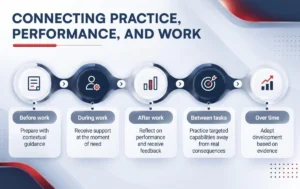
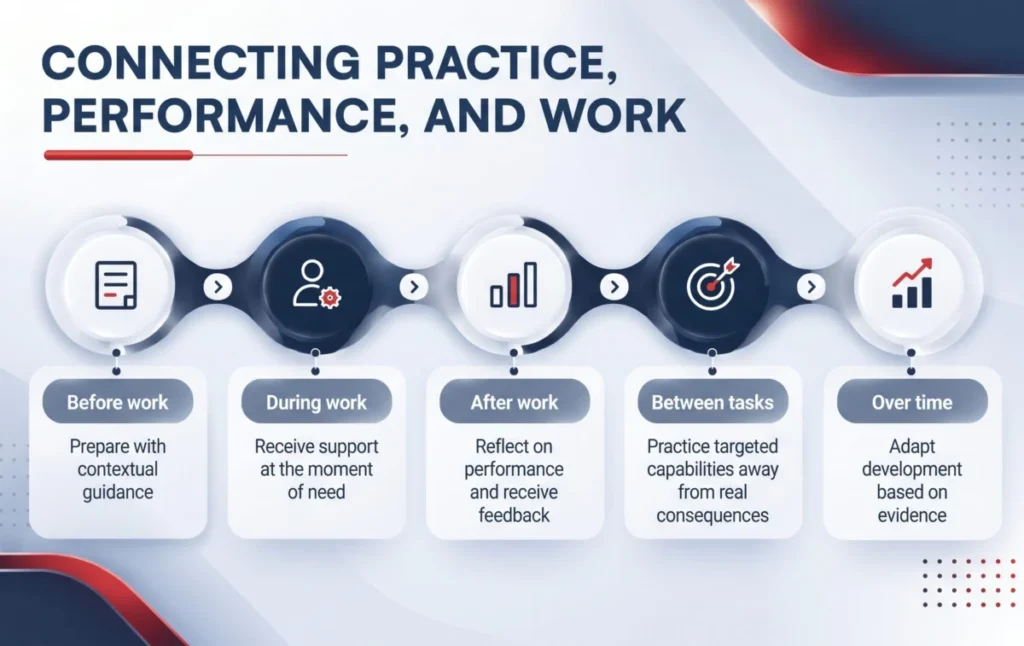
For the workforce, this means that learning is becoming "agentic." Instead of a person leaving their work to "go learn," the learning environment is embedded within their tools. These agents can provide contextual support during the performance of a task, analyze the decisions made by the employee, and subsequently determine if the individual requires more practice or a different type of developmental intervention. This creates a continuous loop of practice, performance, and feedback that aligns with the "70-20-10" model of learning, which posits that 70% of knowledge comes from job-related experiences.
Measuring Readiness: Beyond Clicks and Completions
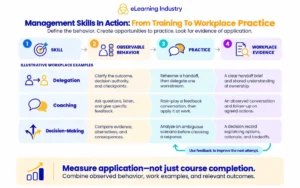
As organizations move toward a capability-based model, the methodology for measuring success must also evolve. L&D leaders are now being tasked with identifying "capability signals" rather than "participation signals."
A comprehensive picture of readiness is built from five distinct types of evidence:
- Demonstrated Proficiency in Practice: How the individual performs in controlled simulations.
- Quality of Application: Direct feedback or data from real-world work outputs.
- Expert Observation: Validation from managers or subject-matter experts.
- Consistency Over Time: The ability to maintain performance standards across different scenarios.
- Self-Efficacy: The individual’s own confidence in their ability to perform, which, while subjective, is a leading indicator of willingness to take on new challenges.
However, this move toward data-driven readiness raises significant questions regarding workplace privacy. Experts warn that capability measurement must have clear boundaries to avoid turning the workplace into a state of continuous surveillance. The goal of gathering evidence should be to support the employee’s growth, not to create a punitive monitoring system.
Strategic Imperatives for Chief Learning Officers
For CLOs, the transition to a capability-centric model requires a fundamental rethinking of their strategic role within the C-suite. Rather than acting as "content curators," they must become "capability architects." This involves three critical strategic decisions:
1. Defining "Good" Performance
Before implementing AI tools, L&D leaders must collaborate with business unit heads to define exactly what successful performance looks like in observable behaviors. AI cannot optimize for "better leadership" if the organization hasn’t defined the specific behaviors that constitute effective leadership within its unique culture.
2. Strategic Placement of Practice
Not every skill requires a high-tech simulation. CLOs must decide which capabilities are critical enough to warrant AI-driven practice environments and which can be addressed through traditional coaching or on-the-job experience. The decision should be based on the "cost of failure"—the higher the risk of a mistake, the more essential a simulated practice environment becomes.
3. Establishing Governance for Evidence
Organizations must reach a consensus on what counts as "meaningful evidence" of a skill. This requires thoughtful governance to ensure that the data being collected is a valid predictor of performance and that it is used ethically to support talent mobility and career development.
The Broader Economic Impact
This shift has implications beyond individual companies. As the global economy faces a "skills revolution," the ability to rapidly verify and deploy talent is becoming a competitive advantage for nations and corporations alike. The World Economic Forum’s "Future of Jobs" report highlights that 44% of workers’ skills will be disrupted by 2027. In such a volatile environment, the traditional university degree or a "completed" certificate on a LinkedIn profile is becoming less valuable than a real-time, verified record of what a person can actually do.
By focusing on capability rather than just content, organizations can also address issues of equity and inclusion. Traditional hiring and promotion often rely on pedigree or tenure. A capability-based system, powered by objective AI assessments of practice and performance, allows individuals from non-traditional backgrounds to prove their readiness through merit and demonstrated skill.
Conclusion: The New Goal of L&D
The era of personalized learning as a mere content recommendation engine is drawing to a close. The next generation of AI-enabled development is defined by a more ambitious goal: helping the right person demonstrate the right capability at the right moment.
Personalization remains a vital tool, but it is no longer the destination. The destination is a workforce that is not just "trained," but truly ready to meet the unpredictable challenges of the modern business environment. As AI agents become ubiquitous and simulations become indistinguishable from reality, the line between "learning" and "working" will continue to blur, ultimately leading to a more agile, capable, and resilient global workforce.