
The discourse surrounding Artificial Intelligence (AI) in hiring is frequently characterized by bold assertions and a scarcity of concrete evidence. While the concerns about bias in recruitment are well-documented and legitimate, many vendors have relied on vague assurances rather than transparent data. This article aims to address these concerns by examining common misconceptions about AI hiring tools, emphasizing the critical need for verifiable evidence of fairness, and outlining what constitutes a credible bias audit. The focus is not on dismissing the risks, but on providing a clear, evidence-based answer to them, grounded in public data rather than sales pitches.
It is crucial to understand that a passing audit signifies compliance with defined thresholds at a specific point in time, under a stated methodology. It is not a permanent guarantee of bias-free operation but a vital input for due diligence, not a substitute for it. The ongoing evolution of AI models and the dynamic nature of applicant pools necessitate continuous monitoring and re-evaluation.
Misconception 1: "AI Hiring Is A Black Box. No One Can Check Its Work."
This assertion is fundamentally inaccurate when considering transparent AI systems. A true "black box" system would not offer public access to its internal workings or independent verification of its processes. In contrast, sophisticated AI hiring tools are increasingly designed for explainability and accountability.
The Verdict: An unexplainable black box system does not publish its own test results, signed by an independent auditor. Advanced systems, however, do.
To illustrate, consider a simple test: take a candidate’s resume, replicate it, and alter a single signal – such as a gender marker – while keeping all other information identical. An AI model engineered for fair hiring should not be able to distinguish between the two with any significant difference in scoring. Eightfold’s matching model, for instance, undergoes this rigorous testing at scale. The results of these tests are not presented in a company-generated summary but are readily accessible through published bias audit reports.
The most recent comprehensive audit, covering data from January 2024 through December 2025, analyzed over 29 million candidate assessments. This analysis meticulously broke down results by self-declared demographic data, including gender, seven race and ethnicity groups, and all intersectional combinations thereof. This granular approach is essential because bias can manifest subtly within the intersection of different demographic categories, even if individual categories appear balanced.
It is important to differentiate between a demonstration and an audit. A single swapped resume pair might show minor score fluctuations, similar to how two coin flips might not always yield the same result. However, a true audit measures the average gap between paired resumes across thousands of instances, determining if this gap exceeds normal statistical variance. This focus on distribution, rather than isolated cases, is the hallmark of a robust audit.
Misconception 2: "Bias Testing Is Just The Vendor Grading Its Own Homework."
This concern is valid if the testing process is internal and self-reported. However, the integrity of bias testing hinges on the independence of the auditor.
The Verdict: The integrity of bias testing is preserved when an independent third party holds the reins of evaluation.
Eightfold, for example, does not produce its own fairness reports. This critical task is undertaken by BABL AI, an independent auditing firm. The lead auditors at BABL AI possess the ForHumanity Certified Auditor status under the New York City Automated Employment Decision Tools (AEDT) bias-audit standard. Crucially, their engagement terms stipulate fixed fees for the audit, completely unrelated to the outcome or opinion rendered. This financial independence is paramount in ensuring unbiased reporting.
The auditing process is not a singular event but a multi-faceted examination. BABL AI conducts separate audits for distinct AI products: one for the matching model that connects candidates to jobs, and another for the AI Interviewer, which engages directly with candidates. This dual-audit approach provides distinct, downloadable reports for each product, ensuring that the company being evaluated is not the one grading its own performance.

Furthermore, the methodologies employed in these audits are designed to handle data limitations with integrity. For the matching model’s audit, records where a candidate has not disclosed demographic information are excluded from specific breakdowns rather than being subject to estimation. The AI Interviewer’s audit, being more recent, employs a different strategy for data slices deemed too thin to be statistically reliable. In such cases, the audit clearly identifies these limitations and utilizes synthetic personas, explicitly labeled as such, to fill the gaps. Both audits have successfully passed across all tested categories, including disparate impact, governance, and risk assessment.
The framework underpinning these audits draws inspiration from established principles of financial auditing, emphasizing independence through fixed fees, no vested interest in the outcome, and a publicly disclosed methodology. This structure aligns with recommendations presented in the peer-reviewed proceedings of the 2024 ACM Conference on Fairness, Accountability, and Transparency. Therefore, a reasonable expectation for any vendor offering AI hiring solutions is the provision of bias audit reports that adhere to this standard: fixed fees for the auditor, a published methodology, and an independent evaluation, rather than a self-generated summary.
Misconception 3: "The Algorithm Just Repeats Whatever Bias Was Already In The Data."
This is a plausible hypothesis, but it is precisely why rigorous testing is necessary to move beyond speculation to empirical evidence.
The Verdict: While bias can exist in datasets, the crucial question is whether it manifests in actual hiring outcomes. Audits are designed to test precisely this.
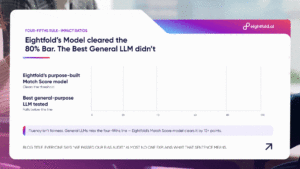
A standard practice in bias testing involves evaluating real-world outcomes against a legal benchmark known as the "four-fifths rule," derived from the U.S. federal government’s Uniform Guidelines on Employee Selection Procedures. This rule posits that no group should advance at a rate less than 80% of the rate of the group with the highest selection rate. A "flag" under this rule indicates a need for further investigation, not an automatic determination of guilt. This rule is most meaningful when applied to groups large enough that a single hire or rejection cannot disproportionately skew the overall rate. This is a widely accepted standard applicable to any vendor.
In Eightfold’s most recent matching model audit, all tested groups successfully cleared this threshold. The impact ratio for male candidates relative to female candidates was 96.2%. The broadest race/ethnicity gap, observed in the Asian candidate group, stood at 93.8%. Even the narrowest intersectional pairings, such as Asian female and non-Hispanic white male candidates, achieved an impact ratio of 88.0%. When demographic data was not disclosed by a candidate, the audit methodology prioritizes exclusion over estimation for relevant breakdowns, recognizing that a confidently presented number based on conjecture is less valuable than an admission of insufficient data.
This approach is supported by academic research. Peer-reviewed studies have demonstrated that occupation-prediction models can inadvertently learn gender stereotypes from biographical data, even after explicit gender markers are removed. Similarly, studies have shown that identical resumes with names associated with White individuals receive more callbacks than those with names associated with Black individuals. These findings underscore the necessity for hiring models to undergo outcome-based testing, rather than relying solely on the assumption that the underlying data is inherently unbiased.
Misconception 4: "One Clean Audit Means The Bias Problem Is Solved."
The dynamic nature of hiring and AI models means that bias mitigation is an ongoing process, not a one-time achievement.
The Verdict: A single successful audit confirms fairness at a specific point in time. Continuous evaluation, akin to a subscription service, is essential.
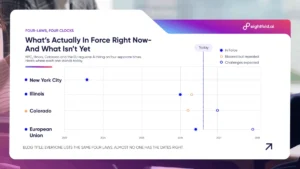
Regulations like New York City’s Local Law 144 mandate annual bias audits for AI hiring tools that remain in use. This requirement, enforceable since July 2023, acknowledges that models trained on past data may perform differently against evolving applicant pools. Eightfold’s matching model has undergone annual re-audits under this law since its inception. Similarly, the AI Interviewer is subject to its own distinct audit schedule, assessed against the same disparate impact standards, as it is a separate product and does not inherit the audit status of another tool.
The rationale for this periodic re-testing is not merely bureaucratic. Hiring patterns are intrinsically linked to labor market dynamics, influencing applicant volumes, demographics, and the types of roles being sought. A model that performed equitably in March may exhibit different characteristics when evaluated against the applicant pool in December. Regular re-testing provides the necessary assurance that the tool’s fairness remains consistent over time.
What Actually Makes A Bias Audit Credible
In evaluating AI hiring vendors, transparency and verifiable data are paramount. The following criteria should be used as a procurement checklist for any vendor’s claims regarding bias:

- Published Reports: The audit findings should be publicly accessible and detailed, not a high-level summary.
- Independent Auditor: The audit must be conducted by a reputable third-party firm with demonstrable expertise in AI bias assessment.
- Fixed Fees: The auditor’s compensation should be fixed and independent of the audit’s outcome to ensure impartiality.
- Published Methodology: The specific methods and metrics used in the audit should be clearly outlined.
- Regular Cadence: Audits should be performed on a recurring schedule to account for evolving data and model performance.
The assertion of a blanket "our AI is unbiased" should always prompt further scrutiny. Bias risk can permeate various stages of the hiring funnel, not solely residing within a single AI model.
Understanding Bias Risks Across the Hiring Funnel
| Hiring Stage | Common Bias Risk | How it’s Typically Mitigated |
|---|---|---|
| Sourcing | Targeting based on past applicant patterns can narrow who hears about an opening. | Review audience criteria, test reach across groups, document which signals drive recommendations. |
| Resume Review | Keyword-heavy parsing can favor familiar titles, schools, or uninterrupted employment. | Mask personal identifiers, assess relevant skills, audit the matching model separately. |
| Interview | Inconsistent questions or scoring can introduce unequal treatment. | Use standardized prompts and transcript-based criteria, with an audit specific to the interview product. |
| Final Decision | Subjective interpretation of tool outputs can reintroduce preference or automation bias. | Require human judgment at every material decision point, and monitor outcomes over time. |
Misconception 5: "AI Is About To Make Recruiters Obsolete."
While AI is undeniably transforming HR functions, its role is that of an enhancer, not a replacement, for human recruiters.
The Verdict: AI alters the nature of recruitment work, but it does not eliminate the human accountability for the process.
The urgency behind this fear is understandable. SHRM data indicates a significant surge in AI adoption within HR departments, from 26% to 43% of organizations in just one year. Furthermore, industry research suggests that nearly all recruiting teams are either using, piloting, or planning to implement AI agents in their talent acquisition processes. This rapid adoption pressure can lead to hasty decisions, but it does not absolve individuals of their responsibilities.
AI interviewers excel at handling repetitive, high-volume tasks such as gathering structured responses, applying consistent criteria, and delivering rapid insights. This augments capacity, but it does not substitute for human judgment. Recruiters remain essential for interpreting contextual nuances that AI cannot fully grasp: understanding team needs, assessing a candidate’s narrative, considering accommodation requirements, and evaluating competing evidence. The ultimate decision to advance or reject a candidate at any critical juncture remains a human prerogative. The shift is from administrative triage to higher-value activities such as cultivating candidate relationships, advising hiring managers, and ensuring that automated insights are applied judiciously.
Misconception 6: "AI Hiring Tools Are Less Effective Than Human Judgment."
Effectiveness, when measured objectively, often reveals that AI tools can surpass traditional human-led processes in speed and outcome.
What the published data actually shows:
- "Manual recruiter review is always faster." This is often not the case. Vodafone, for instance, achieved a 50% reduction in both cost-per-hire and time-to-hire after standardizing on Eightfold, while also seeing a 101-point increase in candidate Net Promoter Score (NPS). Morgan Stanley significantly improved its hiring speed, reducing the time-to-hire from 79 days to 45 days – a 57% acceleration.
- "Skills-based matching has no connection to later performance." Eightfold’s Match Score has demonstrated a correlation with tangible downstream talent outcomes. Customers have reported an 11.9% increase in promotability and a 26% reduction in attrition among candidates identified by the Match Score. This indicates a documented relationship with career progression and retention, rather than a guaranteed hiring outcome.
These metrics are specific to the customers that generated them and are not blended industry averages. It is important to note that achieving these results is contingent upon the availability of relevant, high-quality data. Moreover, these effectiveness metrics do not supersede the necessity for fairness audits. A tool that is fast and well-received by candidates must still meet the same rigorous fairness standards as any other.
How AI Bias Compares to Human Recruiter Bias
A direct comparison of AI bias and human bias reveals that neither is inherently greater or lesser than the other; the critical distinction lies in the ability to measure and verify.
| Decision-maker Type | Documented Pattern | Measurement Basis |
|---|---|---|
| Human recruiter judgment | Men tend to rate their performance roughly one-third higher than equally performing women, while women often delay applying until meeting all qualifications. | Published research on gender differences in self-assessment and application behavior. |
| Audited, purpose-built matching model | Every tested group cleared the four-fifths threshold, with the tightest intersectional pairing at 0.880. | Independent third-party audit, published in full. |
| Unaudited AI (any vendor’s) | Impact on different groups remains unknown without representative data, outcome testing, and independent review. | No published evidence supports a fairness conclusion either way. |
The true choice lies between audited AI, unaudited human judgment, or unaudited AI. The notion of a bias-free process, whether human or AI-driven, is a fallacy. Applicant pools are fluid, necessitating continuous review of audit results rather than a one-time assessment.
This analysis has focused on the technical and procedural aspects of AI bias audits. Further considerations include the applicability of various legal frameworks beyond New York and strategies for engaging vendors who are unwilling to provide transparency. The claim "We tested for bias" warrants more than a cursory mention; it demands substantiation through evidence.
For organizations evaluating AI hiring vendors, including Eightfold, the essential request is straightforward: demand the audit report, the name of the auditor, and the frequency of the audits. A vendor that readily provides all three is offering a verifiable standard, one that should be universally expected.