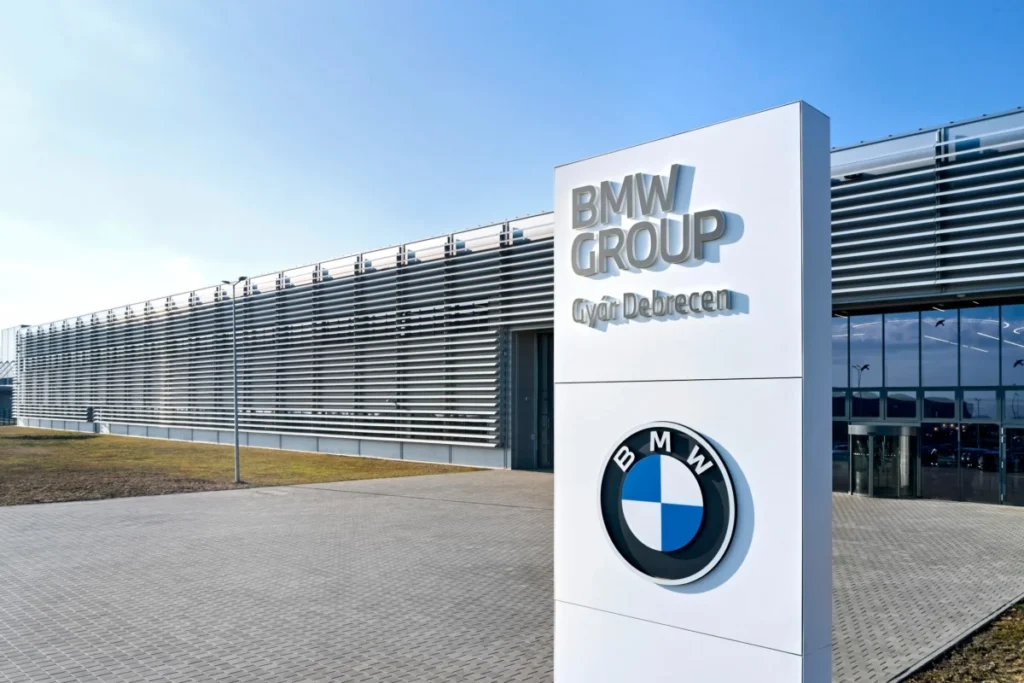
Munich, Germany – BMW, one of Germany’s most iconic automakers, has announced plans to reduce its global workforce by approximately 8,000 positions by the end of 2027 through a voluntary redundancy program. This strategic move, confirmed by the company to Reuters on July 29, positions BMW as the third major German automotive giant this year to undertake significant workforce reductions, signaling a profound structural realignment across the nation’s pivotal manufacturing sector. The program specifically targets administrative and development roles, notably excluding the core production workforce, a strategic decision reflecting the evolving demands of modern automotive manufacturing and the shift towards electrification and software-defined vehicles.
A Broad Reconfiguration Across Germany’s Automotive Landscape
BMW’s announcement is not an isolated incident but rather the latest manifestation of a pervasive trend sweeping through Germany’s storied automotive industry. The move follows similar, large-scale restructuring initiatives by industry behemoths Volkswagen and Mercedes-Benz, both of whom have already inked agreements with powerful labor unions to streamline operations and cut tens of thousands of roles. This synchronized push towards workforce reduction underscores the immense pressures facing German automakers, stemming from a complex interplay of global economic headwinds, the costly transition to electric vehicles (EVs), intensified international competition, and geopolitical trade dynamics.
Volkswagen, the world’s second-largest automaker, has been deliberating an even more extensive overhaul, reportedly weighing layoffs of up to 100,000 workers and the potential closure of four German manufacturing plants, as HR Executive first reported in June. Such a drastic measure would represent the largest workforce restructuring in the company’s history, highlighting the existential challenges confronting traditional automotive manufacturing models. Adding to the Volkswagen Group’s broader realignment, its luxury sports car marque, Porsche, recently expanded its own restructuring blueprint. As reported by Reuters on July 27, Porsche aims to cut approximately 20% of its staff by 2035, demonstrating that even highly profitable luxury segments are not immune to the imperative for operational efficiency and adaptation to future technologies.
Mercedes-Benz, another titan of German engineering, initiated its own voluntary redundancy program in 2025 as a cornerstone of its "Next Level Performance" cost-cutting strategy. This ambitious plan seeks to achieve approximately €5 billion in savings by 2027. The program was designed to incentivize up to 30,000 employees to voluntarily leave the company, with attractive severance packages reaching up to €500,000 for long-serving managers, according to financial reporting. Bloomberg further revealed in June 2026 that Mercedes-Benz was engaging in additional negotiations with unions to secure further cost reductions, indicating that initial targets might be insufficient given the ongoing market dynamics and cost pressures. This multi-pronged approach across the industry reflects a shared understanding that incremental adjustments are no longer sufficient to navigate the tectonic shifts underway.
Navigating the Electrification Imperative and Global Headwinds
The primary catalyst for these widespread workforce reductions is the monumental and costly transition from internal combustion engine (ICE) technology to electric powertrains. Developing new EV platforms, battery technology, and charging infrastructure requires colossal capital expenditure, diverting resources from traditional areas and necessitating a leaner, more agile organizational structure. The shift also demands a different skill set, emphasizing software engineering, battery chemistry, and electrical systems over traditional mechanical engineering, leading to a natural re-evaluation of workforce composition.
Beyond electrification, German automakers are grappling with a confluence of external challenges. Intense competition from burgeoning Chinese EV manufacturers, many of whom benefit from significant state subsidies and possess advanced battery technology, is eroding market share in key global markets. Brands like BYD, Nio, and Xpeng are not only competitive on price but are also rapidly innovating in areas like battery-swapping technology and advanced driver-assistance systems. Furthermore, escalating geopolitical tensions have manifested in trade barriers, such as U.S. tariffs on imported vehicles and components, which directly impact profitability and market access for German brands. Supply chain disruptions, exacerbated by the COVID-19 pandemic and subsequent geopolitical events, have also highlighted the vulnerability of globalized production models, prompting a re-evaluation of manufacturing footprints and inventory management. The rising cost of energy in Europe, particularly in Germany, adds another layer of financial burden, impacting manufacturing costs and overall competitiveness.
BMW’s Strategic Realignment and Anticipated Savings
Following six weeks of intense negotiations with its powerful works council, BMW unveiled the specifics of its voluntary redundancy plan in Munich. As reported by Euronews, citing German media, the program is projected to generate annual savings of approximately €1 billion starting from 2028. The severance packages offered to participating employees will be calculated based on a combination of their salary and tenure with the company, a standard practice designed to provide fair compensation while encouraging voluntary uptake.
The strategic focus on administrative and development roles, while shielding the production workforce, reveals BMW’s dual objectives. Firstly, it acknowledges that many traditional administrative functions are becoming increasingly automated or streamlined through digital transformation, making certain roles redundant. Secondly, by preserving its production workforce, BMW aims to maintain its core manufacturing capabilities, which are crucial for scaling up EV production and adapting to new assembly processes. This targeted approach seeks to optimize overheads and foster innovation in critical areas like software development, artificial intelligence, and advanced materials science, which are vital for future vehicle generations.
A BMW spokesperson, speaking on background, emphasized the program’s necessity for long-term competitiveness: "This voluntary redundancy program is a proactive measure to ensure BMW remains at the forefront of automotive innovation. The industry is undergoing an unprecedented transformation, and we must adapt our structures to be more agile, efficient, and focused on future technologies. Our priority is to manage this transition responsibly, in close cooperation with our works council, ensuring fair treatment for our employees while safeguarding the company’s future."
The Crucial Role of Works Councils and Labor Unions
In Germany, the influence of works councils (Betriebsräte) and powerful labor unions, most notably IG Metall, is paramount in corporate decision-making, especially concerning workforce changes. Unlike in many other countries, German labor law mandates significant employee representation and consultation, ensuring that major restructuring efforts are negotiated rather than unilaterally imposed. This institutionalized cooperation, known as "co-determination" (Mitbestimmung), often leads to more socially responsible outcomes, such as voluntary programs, retraining initiatives, and generous severance packages, rather than mass compulsory layoffs.
The successful negotiation of BMW’s program with its works council underscores the effectiveness of this system. A representative from the BMW Works Council, in a statement released after the agreement, stated, "Our primary goal throughout these negotiations has been to protect the interests of our employees. The voluntary nature of this program, coupled with fair severance terms and support for professional reorientation, reflects our commitment to a socially responsible transition. We believe this agreement provides a clear path forward for those who choose to participate, while also securing the future viability of BMW." This collaborative approach is a hallmark of the German industrial model, which prioritizes social consensus alongside economic efficiency.
Economic and Social Implications for Germany
The cumulative impact of these significant job cuts across BMW, Volkswagen, Mercedes-Benz, and Porsche sends ripples through the German economy. The automotive industry is a cornerstone of Germany’s industrial might, accounting for a substantial portion of its GDP, exports, and employment. The sector directly employs over 800,000 people and supports millions more in related industries. While voluntary redundancy programs aim to mitigate immediate social disruption, a reduction of tens of thousands of highly skilled, well-paid jobs signals a deeper structural shift with potential long-term consequences for regional economies dependent on automotive manufacturing.
Economists and policymakers are closely monitoring the situation. Dr. Klaus Müller, a senior analyst at the German Institute for Economic Research (DIW Berlin), commented, "These workforce adjustments are painful but necessary for the long-term health of the German automotive sector. The challenge lies in ensuring that the affected individuals, many of whom possess valuable engineering and administrative skills, can be successfully retrained and redeployed into new growth sectors, particularly within the burgeoning digital economy and renewable energy industries. Government support for retraining programs and regional economic diversification will be critical."
The emphasis on administrative and development roles suggests a shift in the nature of employment within the industry, away from traditional white-collar functions towards more specialized, often software-related, technical positions. This creates a demand for new skills and highlights the need for continuous professional development. For communities hosting major automotive plants and R&D centers, the reductions, even if voluntary, could lead to a decline in local purchasing power and secondary job losses in supporting services.
Industry Reactions and Expert Perspectives
The broader automotive industry and its stakeholders have largely acknowledged the inevitability of these changes. Hildegard Müller, President of the German Association of the Automotive Industry (VDA), has repeatedly stressed the urgency for Germany to accelerate its transition to electromobility and digital technologies while maintaining international competitiveness. "The global automotive landscape is undergoing a revolutionary transformation," Müller stated in a recent address. "German manufacturers are investing billions in future technologies, but to succeed, they must also streamline operations and adapt their organizational structures. These workforce adjustments, while challenging, are part of this necessary evolution."
Analysts from investment banks have generally viewed the restructuring efforts positively, interpreting them as proactive steps to improve profitability and long-term sustainability. "The market has been anticipating these moves," noted a senior automotive analyst from Deutsche Bank. "Legacy costs and slower decision-making processes were holding back German OEMs. These voluntary redundancy programs, particularly when focused on administrative layers, can significantly improve operating margins and free up capital for crucial R&D in areas like AI, autonomous driving, and advanced battery chemistries. The key will be the successful execution and whether these companies can attract and retain the new talent required for the EV era."
Looking Ahead: The Future of German Automotive Manufacturing
The voluntary redundancy offers from BMW are slated to be distributed starting in October. The uptake rate will serve as a crucial indicator of the appetite among German white-collar auto workers for exit packages of this magnitude. If the company successfully meets its 8,000-job reduction target through voluntary departures alone, it will underscore a collective understanding among employees of the industry’s changing dynamics and the perceived value of the offered packages. Conversely, if uptake is low, BMW may be compelled to revisit its restructuring strategy, potentially exploring other avenues for cost reduction or further negotiations with the works council.
The structural downturn facing Germany’s automotive industry is widely recognized as a multi-faceted challenge, driven by the relentless pace of the EV transition, the impact of U.S. tariffs, and the fierce competition emanating from Chinese rivals. These factors highlight that the current restructuring is not merely a company-specific issue for BMW, Volkswagen, or Mercedes-Benz, but rather a profound, sector-wide pattern. The future competitiveness of German automotive manufacturing hinges on its ability to rapidly innovate, embrace new technologies, and adapt its workforce and production models to a rapidly evolving global market. The coming years will determine whether these iconic brands can successfully navigate this transformative period, emerging leaner, more agile, and ultimately, more sustainable in the new automotive era.