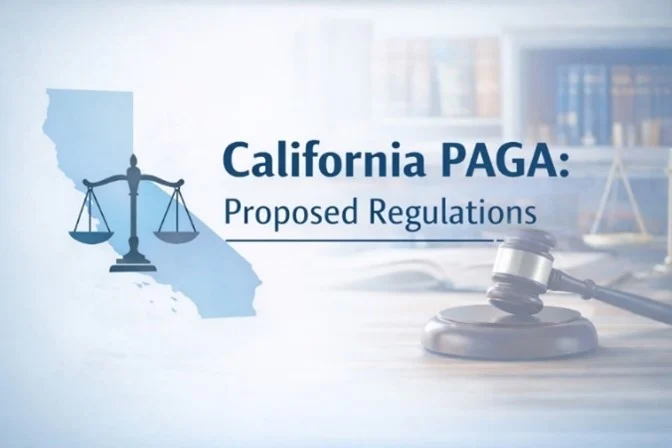
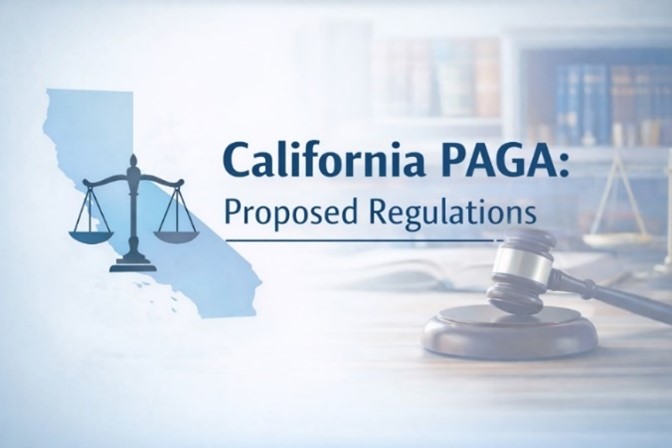
The California Labor and Workforce Development Agency (LWDA) has officially entered the next phase of its overhaul of the state’s Private Attorneys General Act (PAGA), issuing a comprehensive Notice of Proposed Rulemaking on February 6, 2026. This regulatory move is designed to operationalize the legislative amendments passed in 2024, which sought to balance the scales between robust labor law enforcement and the prevention of frivolous, high-volume litigation. By introducing more structured administrative procedures, the LWDA aims to provide what it describes as "greater transparency and effectiveness" in how labor violations are reported, cured, and settled within the nation’s largest state economy.
The proposed regulations arrive at a critical juncture for California’s legal and business landscape. For over two decades, PAGA has allowed aggrieved employees to act as "private attorneys general," suing employers on behalf of the state for Labor Code violations. While intended to supplement the resources of state enforcement agencies, the act has frequently been criticized by the business community as a vehicle for "shakedown" lawsuits characterized by generalized allegations and high settlement demands that rarely benefit the actual workers. The 2026 regulatory package represents the executive branch’s attempt to refine these mechanisms following the legislative reforms of 2024.
Historical Context and the 2024 Legislative Pivot
To understand the significance of the 2026 proposed regulations, one must look back at the legislative environment of 2024. For years, employer groups in California pushed for a repeal or significant modification of PAGA, eventually qualifying a measure for the November 2024 ballot that would have effectively neutralized the act. In a high-stakes negotiation involving Governor Gavin Newsom, labor unions, and business advocacy groups, a compromise was reached in June 2024. This legislative package, consisting of Assembly Bill 2288 and Senate Bill 92, introduced several major changes: it required plaintiffs to have personally experienced the violations they alleged (standing), capped penalties for employers who took proactive steps to comply with the law, and expanded the "cure" provisions that allow businesses to fix errors without facing full-scale litigation.
Despite these legislative changes, the administrative machinery required to manage these new rules was not fully established. The LWDA’s February 2026 announcement is the direct response to this vacuum. The agency noted that while the 2024 reforms provided a framework, the day-to-day processing of thousands of PAGA notices required a more standardized, data-driven approach to ensure that the spirit of the reform—transparency and efficiency—was actually met.
Chronology of the 2026 Rulemaking Process
The current regulatory cycle has moved swiftly through the standard California administrative law procedures. Following the initial notice on February 6, 2026, the LWDA opened a 45-day window for written public comments. This period, which concluded on March 23, 2026, saw a flurry of activity from law firms, trade associations, and labor advocacy groups.
The process culminated in a public hearing held on April 9, 2026, where stakeholders presented oral testimony regarding the impact of the proposed rules. During this hearing, the LWDA’s representatives emphasized that the agency is currently in a "review and deliberation" phase. Under the California Administrative Procedure Act, the agency must respond to all substantive comments before finalizing the rules and submitting them to the Office of Administrative Law (OAL). This timeline suggests that while the regulations are not yet law, their core tenets are likely to shape the enforcement environment for the remainder of the 2026-2027 fiscal year.
Data-Driven Justification: The Rise of High-Frequency Filers
A central component of the LWDA’s justification for these new regulations is the sheer volume and concentration of PAGA litigation. In the materials supporting the rulemaking, the LWDA released striking data from the 2024–2025 fiscal year. Despite the 2024 reforms, the agency received 8,846 PAGA notices during that period. This figure indicates that the appetite for PAGA litigation remains high, even with the new standing requirements and penalty caps in place.
More significantly, the LWDA highlighted a trend of extreme concentration among a handful of legal practitioners. According to agency data, just five law firms were responsible for 2,086 PAGA notices—roughly 24% of all filings in the state. Some firms were found to be filing more than one notice per day on average. Furthermore, a small cadre of individual attorneys accounted for hundreds of filings each within a single year.
The LWDA argued that this concentration often leads to "boilerplate" litigation. Many of these notices relied on generalized allegations that lacked specific factual details regarding the individual employee’s experience. The agency’s proposed regulations are specifically tailored to combat this "litigation mill" approach by requiring more granular detail at the outset of the process.
Key Provisions of the Proposed Regulations
The 2026 proposed regulations introduce several procedural hurdles and oversight mechanisms designed to move PAGA away from a "sue first, ask questions later" model.
1. Standardized and Verified Notices
Under Proposed Section 17420, the LWDA intends to move away from the current system of informal letter-based notices. Instead, claimants will be required to use a standardized LWDA form. Most importantly, the notice must include fact-specific allegations tied to the claimant’s own employment experience. The regulation also introduces a certification requirement: the claimant or their representative must sign the notice, certifying that after a reasonable inquiry, the claims are not being presented for an improper purpose and are supported by evidence or are likely to be supported after investigation. This aligns PAGA notice requirements more closely with the standards found in the California Code of Civil Procedure for filing lawsuits.
2. Formal Employer Response Mechanism
Proposed Section 17421 creates a new, optional mechanism for employers. Upon receiving a PAGA notice, an employer will have 33 days to submit a formal response to the LWDA. This allows the employer to present evidence early in the process that may refute the allegations or demonstrate that the alleged violations have already been addressed. By creating this "pre-litigation" dialogue, the LWDA hopes to filter out meritless claims before they reach the court system.
3. Expansion of the "Cure" Process for Small Businesses
One of the most praised aspects of the 2024 reform was the administrative cure process for employers with fewer than 100 employees. The 2026 regulations formalize the "how-to" of this process. It defines the specific filings required for a small business to propose corrective measures and places the LWDA in an active oversight role. This provides a "safe harbor" for smaller entities that may have committed technical or clerical errors in their payroll or scheduling without the intent to defraud employees.
4. Oversight of Settlement Expansions
A common tactic in PAGA litigation involves "expanding" a claim during settlement negotiations. A plaintiff might file a notice for a simple rest break violation, but during mediation, the parties agree to settle all possible Labor Code violations to provide the employer with global peace. The proposed Section 17420.5(d) seeks to curb this by prohibiting claimants from amending a PAGA notice to add new violations once a settlement is already underway or reached. This ensures that the LWDA has the opportunity to review the merits of every specific violation being settled on behalf of the state.
Stakeholder Reactions and Analysis of Implications
The reaction to the April 9 public hearing was divided along predictable lines, reflecting the ongoing tension in California labor relations. Representatives from the employer community, including various Chambers of Commerce, largely supported the move toward more detailed notices. They argued that for too long, businesses have been forced to spend thousands of dollars in legal fees just to figure out what they are being accused of. Strengthening the notice requirements, they argue, will force plaintiffs’ attorneys to do their due diligence before filing.
Conversely, some members of the plaintiffs’ bar expressed concern that the new requirements create "procedural traps" for workers. They argued that in many cases, an employee may know they are being cheated but may not have access to their full payroll records or the technical legal knowledge to specify every violation until the discovery phase of litigation begins. They cautioned that overly rigid notice forms could inadvertently bar legitimate claims from being heard.
From an analytical perspective, these regulations signify a shift in the LWDA’s role from a passive recipient of notices to an active gatekeeper. By requiring standardized forms and providing an employer response window, the state is attempting to resolve disputes at the administrative level rather than the judicial level. If successful, this could significantly reduce the burden on California’s Superior Courts, which are currently backlogged with thousands of PAGA cases.
Broader Impact on the California Business Climate
The long-term implications of these regulations extend beyond the legal department. For businesses operating in California, the "new PAGA" environment demands a proactive approach to compliance. The emphasis on the "cure" process and the limitation on penalties for employers who conduct regular audits suggests that the state is moving toward a "compliance-first" model.
However, the data regarding the concentration of filings suggests that the PAGA "industry" is highly resilient. Even with more stringent requirements, the five law firms identified by the LWDA are likely to adapt their business models to meet the new standards. Therefore, employers cannot rely solely on the new regulations to eliminate the risk of litigation. Instead, the focus must shift to maintaining impeccable records and utilizing the 33-day response window to shut down meritless claims before they escalate.
As the LWDA moves toward finalizing these rules, the legal community remains watchful. The agency’s final version of the regulations will likely determine whether PAGA remains a dominant force in California litigation or if the 2024–2026 reform era succeeds in transforming it into a more surgical tool for labor law enforcement. For now, the message from Sacramento is clear: the era of the "boilerplate" PAGA notice is coming to an end, replaced by a system that demands specificity, accountability, and earlier state intervention.