A well-designed performance management framework is the bedrock upon which successful organizations build sustained growth, employee engagement, and overall achievement. Far from being a mere retrospective evaluation of past efforts, performance management is a forward-looking strategy that cultivates future success. When a company’s performance management system is intricately woven into its core goals and organizational culture, it transforms disparate individual actions into a unified force, driving both personal and collective triumphs. This guide aims to equip organizations, whether they are refining existing processes or constructing a new framework from the ground up, with the insights needed to foster continuous improvement and yield meaningful, impactful results.
Understanding the Architecture of Performance Management Frameworks
At its core, a robust performance management framework serves as a guiding compass for organizations. It steers them away from fragmented and often chaotic performance initiatives toward a cohesive and interconnected system designed to propel the success of individual employees, teams, and the entire business. This strategic alignment not only connects individual efforts to overarching objectives but also serves as a powerful motivator, encouraging everyone to contribute their best work.
Performance management frameworks are instrumental in clarifying each individual’s role and defining their expected contributions to the broader organizational vision. These models establish the foundational principles for how an organization will:
- Set Clear Expectations: Define objectives and key results that are measurable, achievable, relevant, and time-bound (SMART).
- Facilitate Continuous Feedback: Implement regular check-ins and ongoing dialogue between managers and employees, moving beyond the traditional annual review.
- Support Employee Development: Identify skill gaps and provide targeted training, coaching, and growth opportunities to foster career progression.
- Recognize and Reward Performance: Establish systems for acknowledging and celebrating achievements, reinforcing desired behaviors and contributions.
- Drive Accountability: Ensure individuals and teams are accountable for their commitments and progress towards organizational goals.
- Inform Talent Decisions: Utilize performance data to guide promotions, compensation adjustments, and succession planning.
The Purpose and Pivotal Importance of a Solid Framework
The landscape of performance management has seen significant shifts recently, yet research from Quantum Workplace suggests that many organizations are still falling short of their objectives. A recent study indicated that while a substantial 75% of employees reported their organization had implemented changes to performance management processes within the past year, less than half found these changes to be effective, efficient, or motivating. This disconnect highlights a critical need for strategic refinement.
In today’s fast-paced business environment, managers and employees are often stretched thin. They simply do not have the bandwidth for cumbersome tools or excessive administrative burdens. An effective performance management program must prioritize simplification and standardization, making each step of the process as seamless and intuitive as possible.
Furthermore, a well-defined performance management framework ensures that all its constituent parts work in concert to create a transparent, two-way communication process where employees feel genuinely valued and heard. The ultimate aim of such a program should be to enhance employee engagement, as research consistently shows that engaged employees are significantly more productive and committed.

Ultimately, a strong framework empowers employees to take ownership of their performance trajectories. This leads to heightened engagement, increased motivation, and greater job satisfaction. For the organization, the ripple effects are substantial: improved productivity, reduced employee turnover, and a strengthened, more positive workplace culture.
Core Components of an Effective Framework
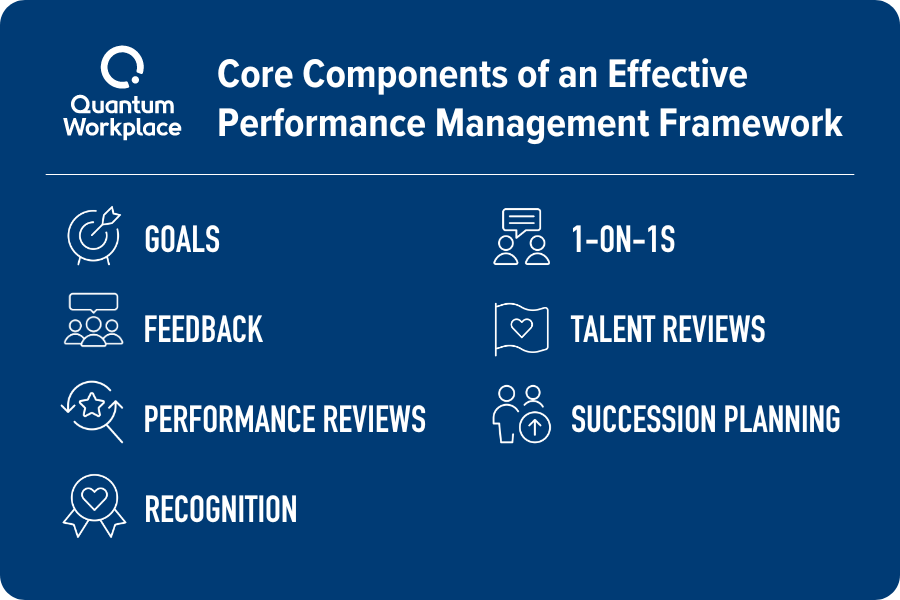
A high-performing performance management framework is built upon several interconnected elements that work in synergy throughout the performance management cycle. These core components are essential for creating a holistic and impactful system:
- Goal Setting and Alignment: The process of establishing clear, measurable objectives for individuals and teams that directly support organizational strategy. This ensures everyone understands how their work contributes to the bigger picture.
- Continuous Feedback and Coaching: Moving beyond annual reviews to incorporate regular, ongoing conversations between managers and employees. This includes constructive feedback, recognition, and developmental guidance.
- Performance Development Planning: Identifying areas for growth and creating actionable plans to enhance skills, knowledge, and competencies. This focuses on long-term career progression.
- Performance Evaluation and Review: Structured assessments of performance against established goals and expectations, often conducted periodically. These reviews should be fair, objective, and provide a basis for development and recognition.
- Recognition and Rewards: Systems for acknowledging and appreciating employee contributions, whether through formal programs or informal gestures. This reinforces positive behaviors and boosts morale.
- Data Analytics and Reporting: Utilizing performance data to gain insights into trends, identify high performers, pinpoint areas for improvement, and inform strategic decisions.
Designing Your Performance Management Framework
When it comes to performance management, a one-size-fits-all approach is rarely effective. Attempting to shoehorn an organization into a generic performance management system, as some HR technology vendors might suggest, can be a source of frustration and inefficiency. The most successful frameworks are those meticulously designed to fit the unique contours of an organization’s culture, values, and operational needs.
Creating an effective performance management framework requires thoughtful planning and a deep understanding of what the organization needs and desires. The process should begin with a thorough assessment of the current performance management process. This involves identifying any existing gaps, inefficiencies, or areas that require significant improvement.
Crucially, engaging with those directly involved—employees and managers—is paramount. Gathering their feedback ensures that the new framework will not only meet but also exceed their expectations. This collaborative design process fosters a sense of ownership and buy-in, paving the way for a smoother and more successful implementation.
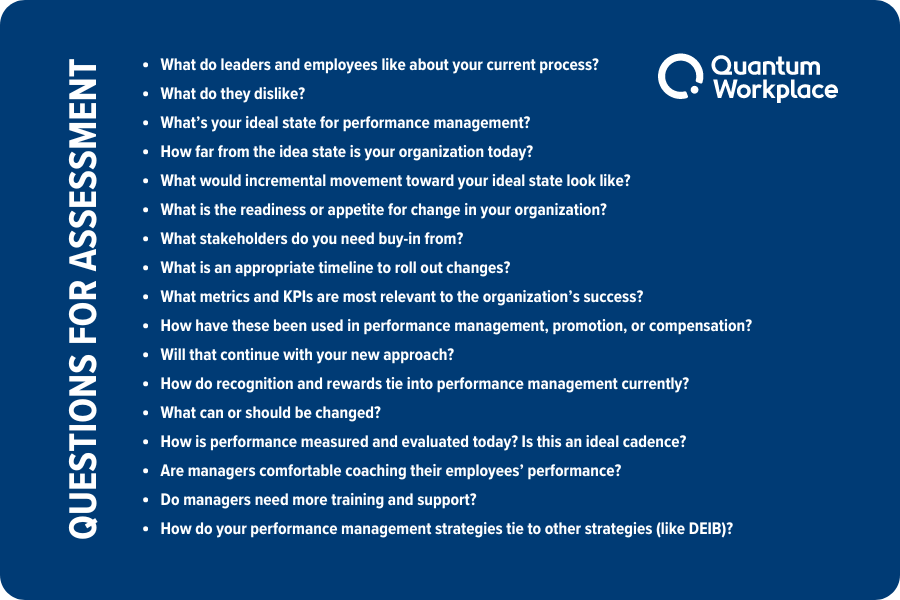
Questions for Assessment
To gain a comprehensive understanding of how well your current system is functioning and to inform its evolution, it’s vital to ask targeted questions. Reflecting honestly on these inquiries will illuminate both the strengths and weaknesses of your performance management process:
- Clarity of Objectives: Do employees clearly understand their individual and team goals, and how these align with the organization’s strategic objectives?
- Frequency and Quality of Feedback: How often do employees receive feedback on their performance, and is this feedback constructive, actionable, and timely?
- Managerial Effectiveness: Are managers equipped with the skills and resources to effectively coach, develop, and evaluate their team members?
- Development Opportunities: Does the current system adequately identify and support employee development needs and career aspirations?
- Recognition and Motivation: Are employees recognized for their contributions in ways that are meaningful and motivating?
- Fairness and Objectivity: Is the performance evaluation process perceived as fair, objective, and free from bias?
- Alignment with Culture: Does the performance management system reflect and reinforce the organization’s core values and culture?
- Efficiency and Usability: Are the tools and processes associated with performance management easy to use and not overly burdensome?
- Impact on Engagement and Productivity: Is there a discernible positive impact of the current performance management system on employee engagement and overall productivity?
- Data Utilization: Is performance data being effectively collected, analyzed, and used to inform talent management decisions and strategic planning?
Connecting to Your Culture
A performance management framework’s effectiveness is inextricably linked to its congruence with the organization’s prevailing culture. It must authentically embody the company’s values, beliefs, and operational ethos. For instance, an organization that places a high premium on teamwork and collaboration should incorporate peer feedback mechanisms and set ambitious team-oriented goals within its framework. Conversely, a culture that champions innovation and individual initiative should foster creativity and encourage calculated risk-taking through its performance management system.
When a framework is seamlessly integrated with a company’s unique cultural fabric, it acts as a powerful catalyst for enhanced employee performance. This approach ensures that team members feel a sense of belonging and inclusivity, fostering a stronger, more cohesive, and ultimately more productive work environment.
Quantum Workplace’s Performance Pathways
Quantum Workplace recognizes that a rigid, one-size-fits-all approach to performance management is often counterproductive. Every organization possesses a distinct culture, a unique set of values, and specific ways of operating, underscoring the necessity of a tailored strategy. To address this, Quantum Workplace has developed "Performance Pathways," a suite of flexible performance management frameworks designed to empower organizations in creating and implementing their ideal performance management systems. These pathways offer structured approaches to align with diverse organizational needs:
Pathway #1: Performance Evaluation
This pathway focuses on standardizing performance evaluation through structured reviews. It involves formal review cycles initiated by HR to ensure employee performance is consistently aligned with organizational objectives.
Best for Organizations That:
- Prefer a traditional, structured approach to performance reviews.
- Need to ensure consistency and compliance across the organization.
- Are looking to formalize the link between individual performance and company goals.
Pathway #2: Performance Development
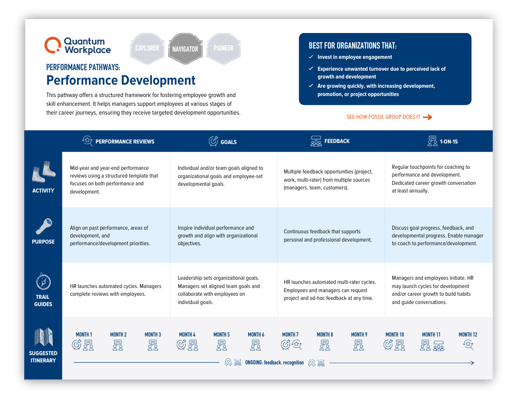
This pathway provides a structured framework for nurturing employee growth and enhancing skills. It assists managers in supporting employees through various career stages, ensuring they receive targeted development opportunities aligned with well-defined career paths.
Best for Organizations That:
- Prioritize employee growth and skill enhancement.
- Have a strong focus on career pathing and long-term employee development.
- Seek to proactively address skill gaps and prepare their workforce for future needs.
Pathway #3: Performance Coaching
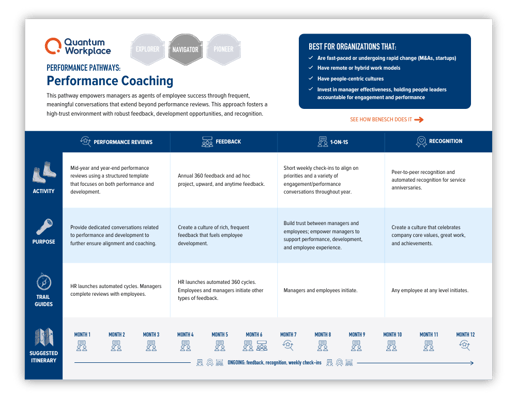
This pathway empowers managers to act as catalysts for employee success through frequent, meaningful conversations that extend beyond traditional performance reviews. It cultivates a high-trust environment characterized by robust feedback, development opportunities, and consistent recognition.
Best for Organizations That:
- Value ongoing dialogue and continuous feedback.
- Seek to foster strong manager-employee relationships.
- Are committed to developing a coaching culture.
Pathway #4: Collaborative Performance Coaching
This pathway utilizes a systematic approach to employee feedback, directly linking performance management to business outcomes and career progression. This model is particularly suited for data-driven organizations, matrixed environments, and those with established hierarchies, ensuring a clear alignment between employee contributions and strategic imperatives.
Best for Organizations That:
- Operate in complex or matrixed structures.
- Require strong data-driven insights into performance.
- Need to ensure alignment across multiple departments or business units.
Pathway #5: Continuous Performance Coaching
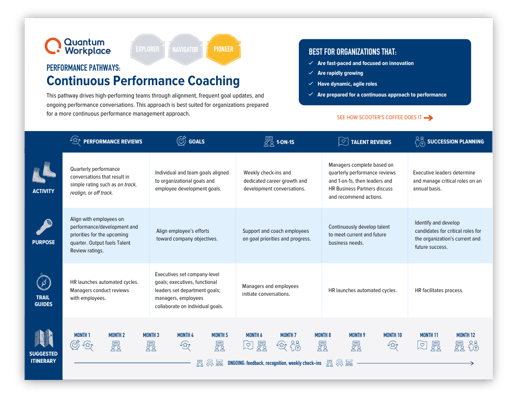
This pathway is designed to foster high-performing teams through strategic alignment, frequent goal updates, and ongoing performance conversations. This approach is ideal for organizations ready to embrace a more dynamic and continuous performance management methodology.
Best for Organizations That:
- Embrace agility and rapid adaptation.
- Prioritize real-time feedback and goal adjustments.
- Are looking to embed performance management into the daily workflow.
Best Practices for Implementing Your Performance Management Framework
Implementing a new performance management system can seem like a monumental undertaking, but it’s essential to remember that success often lies in incremental progress and thoughtful change management. Revolutionizing your entire approach overnight is rarely necessary or advisable.
Prioritize
Begin by identifying your organization’s most pressing performance management needs. Prioritize these needs and focus on addressing the top priority first. Clearly define the desired behaviors, set achievable goals, and leverage platform features to establish a solid foundation.
Scale
As you achieve your initial objectives, gradually expand your efforts to incorporate more sophisticated capabilities. Actively solicit feedback from users to refine your strategies and optimize the system. The goal is to solidify the desired behaviors and ensure the framework is effectively embedded.
Progress
If you are successfully meeting your initial goals, do not halt your progress. Move on to the next identified priority and repeat the process. As you introduce new features and functionalities, consider how to leverage the wealth of performance data for insightful analysis and strategic decision-making.
Transparent Change Management: Communicating Effectively
Effective communication is the cornerstone of successful change management. To ensure a smooth transition to a new performance management framework:
- Define Your "Why": Clearly articulate the purpose behind the changes and the anticipated benefits. Ensure all stakeholders understand the rationale and expected positive outcomes of the new system.
- Engage Stakeholders: Maintain consistent communication with all relevant stakeholders before, during, and after the launch. Involve them in the process to foster a sense of shared ownership.
- Offer Training and Support: Partner with your chosen technology provider to deliver comprehensive training and ongoing support for both managers and employees. Adequate resources can significantly ease the transition.
- Align with Mission, Values, and Culture: Continuously connect the performance management changes back to the organization’s core mission, values, culture, and strategic priorities. Reinforce how these improvements support broader organizational goals.
- Encourage Flexibility: Emphasize adaptability and flexibility throughout the implementation process. Acknowledge that challenges may arise, and the ability to adjust strategies is crucial for success.
- Collect Feedback: Establish clear channels for collecting user feedback. Actively listen to these insights to refine your approach and promptly address any emerging issues.
- Adapt and Evolve: Be prepared to evolve your strategy as needed. The journey towards a highly effective performance management system is an ongoing process, and adjustments will undoubtedly be necessary to maintain relevance and impact.
Evaluating and Enhancing Your Performance Management Model
Regularly assessing the efficacy of your performance management framework is critical to ensuring its continued relevance and impact. The evaluation should extend beyond simply measuring adoption rates; it must delve into the framework’s influence on the organization’s overall performance.
Collecting data on key performance indicators (KPIs) is essential. This includes metrics such as employee engagement scores, goal attainment rates, and outcomes from employee development initiatives. Analyzing this data will reveal trends, highlight strengths, and pinpoint areas requiring improvement. Additionally, utilizing employee feedback surveys and focus groups can provide invaluable qualitative insights into their experiences with the framework.
Consistently reviewing these metrics and identifying trends is paramount. Are employee engagement scores trending upward since the framework’s implementation? Are employees achieving their goals more frequently? The answers to these questions will directly inform the effectiveness of your framework.
Continuous performance management is an ongoing journey, not a static destination. Organizations must regularly review their frameworks, solicit feedback from stakeholders, and proactively identify opportunities for enhancement.

Furthermore, consider providing ongoing training and support for both managers and employees. Offer refresher courses on effective feedback delivery and reception, mastering performance conversations, and crafting impactful development plans. By fostering a culture of continuous learning and growth, you ensure your performance management framework remains a dynamic and effective tool, adapting to the evolving needs of your organization and its workforce.
Integrating Performance Management Software
Selecting the right performance management tool that aligns with your workplace culture is indispensable for the success of your strategy. When seeking the appropriate technology, prioritize solutions that not only bring together the elements of an effective system but also actively support and propel organizational growth. Look for a provider that offers more than just standalone tools; seek a partner dedicated to fostering your organization’s advancement.
Move Your Teams Forward with Clear and Aligned Goals
Establishing clear, well-aligned goals is fundamental to cultivating high-performing teams. Quantum Workplace empowers your teams to set, monitor, and achieve critical objectives, fostering a shared sense of purpose and direction.
Boost Trust and Employee Performance with Real-Time Feedback
Fostering an environment of trust and continuous improvement relies heavily on timely and constructive feedback. Performance management software can facilitate this by enabling open communication channels and providing tools for both formal and informal feedback.
Keep Managers and Employees on the Same Page with Performance Reviews
Performance reviews remain a cornerstone of most performance management programs, but their effectiveness hinges on being more engaging, efficient, and impactful. Streamlining performance conversations ensures clarity and shared understanding between managers and employees.
Celebrate Success and Help Team Members Feel Valued with Real-Time Recognition
Recognizing employee contributions in real-time not only boosts morale but also reinforces the behaviors and achievements that drive organizational success. Integrated recognition tools ensure that appreciation is timely and impactful.
Increase Clarity and Connection with Performance Reviews and 1-on-1 Meetings
Regularly scheduled one-on-one meetings, coupled with structured performance reviews, create consistent touchpoints for dialogue, alignment, and feedback. This ensures both managers and employees are synchronized on expectations and progress.
Identify and Develop Top Talent with Talent Reviews
Talent review processes, informed by robust performance data, are crucial for identifying high-potential employees and creating tailored development plans. This strategic approach ensures the organization has a strong pipeline of future leaders.
Sustain High Performance with Succession Planning
Effective succession planning, built upon a foundation of continuous performance management and talent identification, ensures business continuity and leadership readiness. It proactively addresses potential leadership gaps by nurturing internal talent.
Conclusion
In conclusion, the creation and implementation of a robust performance management system are indispensable for organizational success. A deep understanding of its purpose, core components, and best practices empowers organizations to significantly enhance employee engagement and elevate overall performance. Embark on your journey toward superior performance management today by exploring Quantum Workplace’s Performance Pathways.
Ready to build your ideal program with flexible, intuitive, and engaging tools you can trust? Request a custom demo of Quantum Workplace’s performance management software.
What is a Performance Management Framework?
A performance management framework is a structured methodology that organizations employ to systematically plan, measure, and enhance employee performance over time. It establishes clear objectives, facilitates consistent feedback mechanisms, and provides opportunities for growth, thereby aligning individual contributions with overarching business objectives. For instance, a company might leverage a performance management framework to ensure departmental goals are strategically aligned with overarching organizational priorities, thereby enabling every employee to understand how their daily tasks contribute to the company’s ultimate success.
What are the Key Parts of a Performance Management Framework?
An effective performance management framework encompasses both strategic and behavioral elements, strategically linking people management to tangible performance outcomes. Typically, these key parts include:
- Goal Setting and Alignment: The process of defining clear, measurable objectives that are directly linked to organizational strategy.
- Ongoing Feedback and Coaching: Continuous dialogue and constructive feedback exchanged between managers and employees, extending beyond formal reviews.
- Development Planning: The creation of personalized plans to enhance employee skills, knowledge, and competencies.
- Performance Reviews: Structured evaluations of employee performance against set goals and expectations.
- Recognition and Rewards: Systems for acknowledging and appreciating employee contributions.
- Data Analysis and Reporting: The use of performance data to gain insights and inform decision-making.
How Do You Create a Performance Management Framework?
Building a performance management framework involves defining its purpose, structure, and processes. Rather than a static checklist, it is an integrated and evolving system that adapts alongside the organization.
Core Components to Include:
- Strategic Alignment: Ensure goals cascade from organizational objectives to individual contributions.
- Continuous Feedback Loop: Implement regular check-ins and ongoing dialogue.
- Development Focus: Prioritize employee growth and skill enhancement.
- Fair Evaluation: Establish objective and transparent performance assessments.
- Recognition Mechanisms: Acknowledge and reward achievements.
When these components function cohesively, the system fosters continuous improvement rather than merely episodic evaluation.
What is the Common Framework?
The most prevalent performance management framework follows a continuous improvement cycle, often conceptualized as a "Plan -> Act -> Review -> Improve" model. This cyclical approach ensures employees consistently work towards evolving objectives while maintaining transparency regarding their progress. Many modern organizations adapt this model using methodologies such as SMART goals, Objectives and Key Results (OKRs), or Continuous Performance Management systems to foster flexibility and real-time adaptability, thereby aligning people strategy with business agility.
What are the Steps of the Performance Management Framework?
The performance management framework typically involves five fundamental steps that align individual performance with demonstrable business impact:
- Planning: Setting clear goals and expectations.
- Monitoring: Tracking progress and providing ongoing feedback.
- Developing: Supporting employee growth and skill enhancement.
- Rating: Evaluating performance against set objectives.
- Rewarding: Recognizing and acknowledging achievements.
This process establishes a consistent cycle of accountability, enabling both employees and managers to adjust strategies in real-time for sustained success.