The global business landscape is currently abuzz with discussions surrounding reskilling, upskilling, and the accelerated integration of Artificial Intelligence (AI). This pervasive theme was underscored this week during meetings with over 200 Chief Human Resource Officers (CHROs) in India and Singapore, where "AI readiness" emerged as the paramount concern. Organizations are grappling with the critical question of how to rapidly foster AI fluency and capability across all facets of their operations. This imperative has illuminated a stark reality: the established frameworks, technologies, and operational models for corporate learning and development (L&D) are no longer adequate for the challenges of the modern era.
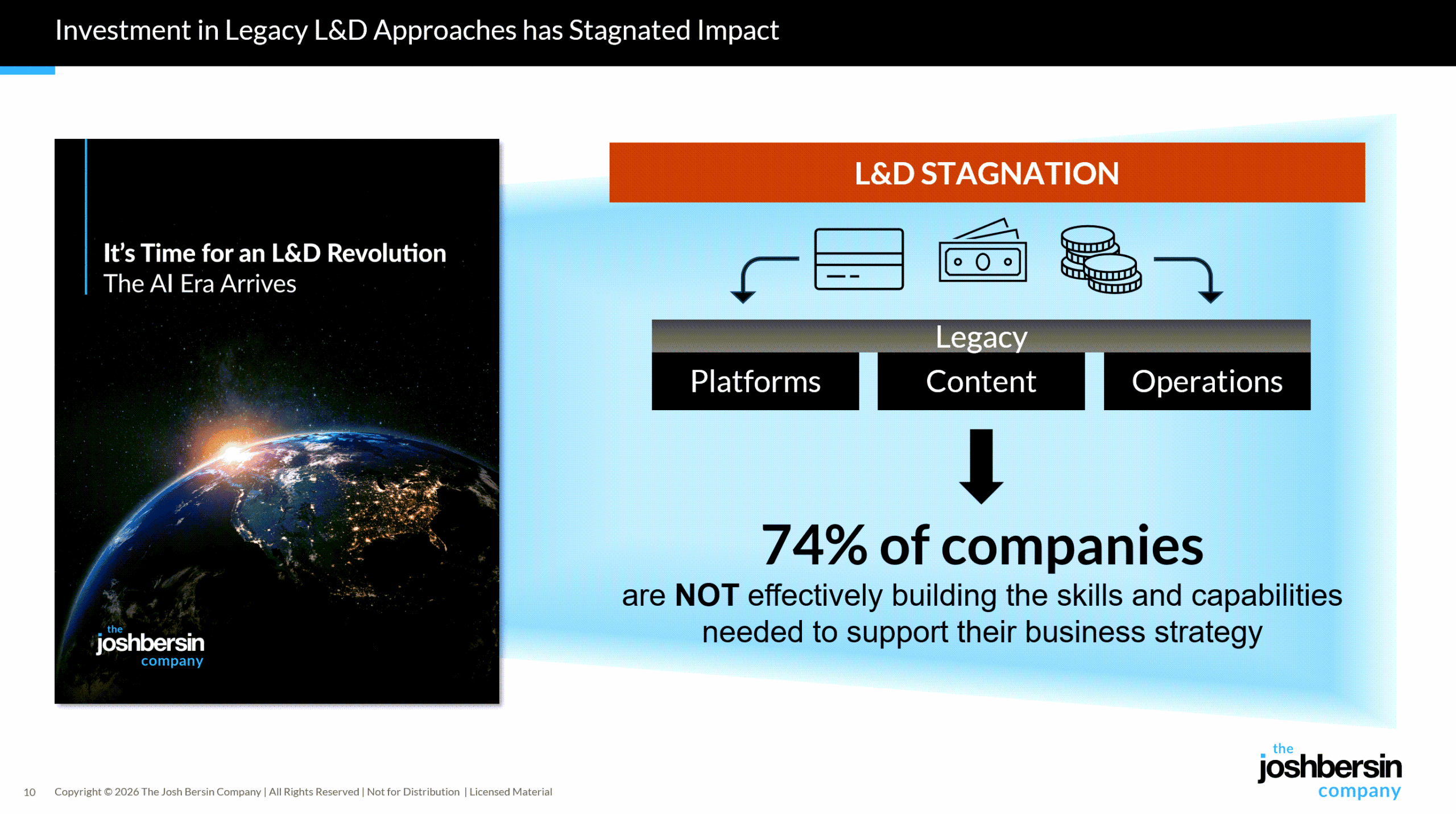
A comprehensive, multi-year study on corporate training, culminating in the recent launch of its fifth major iteration, has produced startling findings. The research indicates that a significant majority of companies, precisely 74%, report struggling to keep pace with their organization’s evolving skill demands. This statistic is particularly concerning given the substantial global investment in corporate training, estimated at $400 billion annually, encompassing content libraries, L&D technology, trainers, and consultants. The data suggests that a considerable portion of this investment may be yielding diminishing returns if three-quarters of companies are failing to meet their skill development needs.

Redefining the Learning Challenge: From Training to Dynamic Enablement
The core of this challenge, according to industry analysts, lies not in the traditional concepts of "learning" or "training" but rather in the dynamic sharing of information and the facilitation of exploration, questioning, and application of new ideas. The entrenched pedagogical paradigm of "training" is now seen as a significant impediment to progress. The current state of L&D is characterized by stagnation, with traditional approaches failing to equip workforces with the agility required in a rapidly changing technological environment.
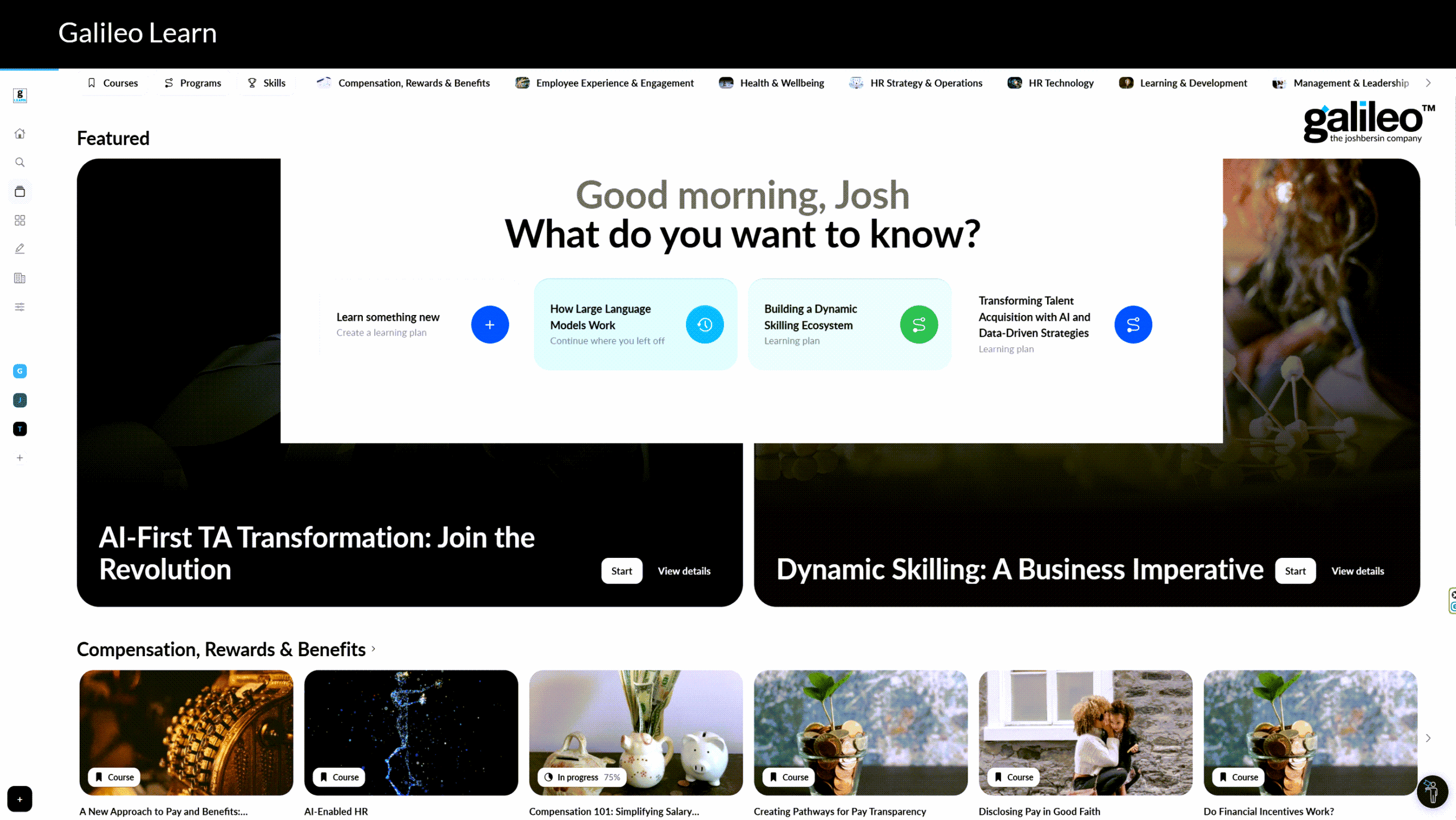
The latest research, detailed in a forthcoming comprehensive study, builds upon the hypothesis that AI is poised to fundamentally revolutionize organizational learning. As AI-native systems emerge, capable of dynamically generating and sharing content, they offer a transformative approach to training, upskilling, supporting, and ultimately, "enabling" employees. This new paradigm, exemplified by platforms like Galileo, is set to redefine the roles of L&D, HR, and all functions involved in organizational change management.
The Rise of AI-Native Learning: A Generative Approach
AI-native learning leverages the inherent capabilities of generative AI to create content dynamically. Unlike traditional courseware, which is often static, labor-intensive to update, and requires constant maintenance, AI platforms can generate content on demand and in virtually any desired format. This shift allows for the creation of new learning modules in days rather than months, with the entire system capable of integrating new information seamlessly.

This dynamic approach empowers employees in several key ways:
- Instant Access to Information: Employees can query the system for specific information or tasks, receiving immediate, contextually relevant answers.
- Personalized Learning Paths: The system can infer an employee’s skill level based on their interactions and activity, automatically suggesting relevant content and development pathways.
- Continuous Skill Development: As new information is introduced, the entire knowledge base is updated, functioning as a cohesive "intelligence system" for the organization.
The widespread adoption of tools like ChatGPT, with a significant portion of its user base actively engaging in learning activities, highlights the efficacy of this interactive, information-retrieval model. This level of engagement far surpasses that of traditional course catalogs, demonstrating the power of a paradigm shift from passive consumption to active exploration and knowledge acquisition. Furthermore, organizations are increasingly incorporating expert interviews and recordings into these AI-driven systems, ensuring that the knowledge base remains current with emerging trends, best practices, and critical insights. The potential business improvement stemming from this application of AI is estimated to be in the trillions of dollars.
A New Framework: The Four Levels of Learning Maturity
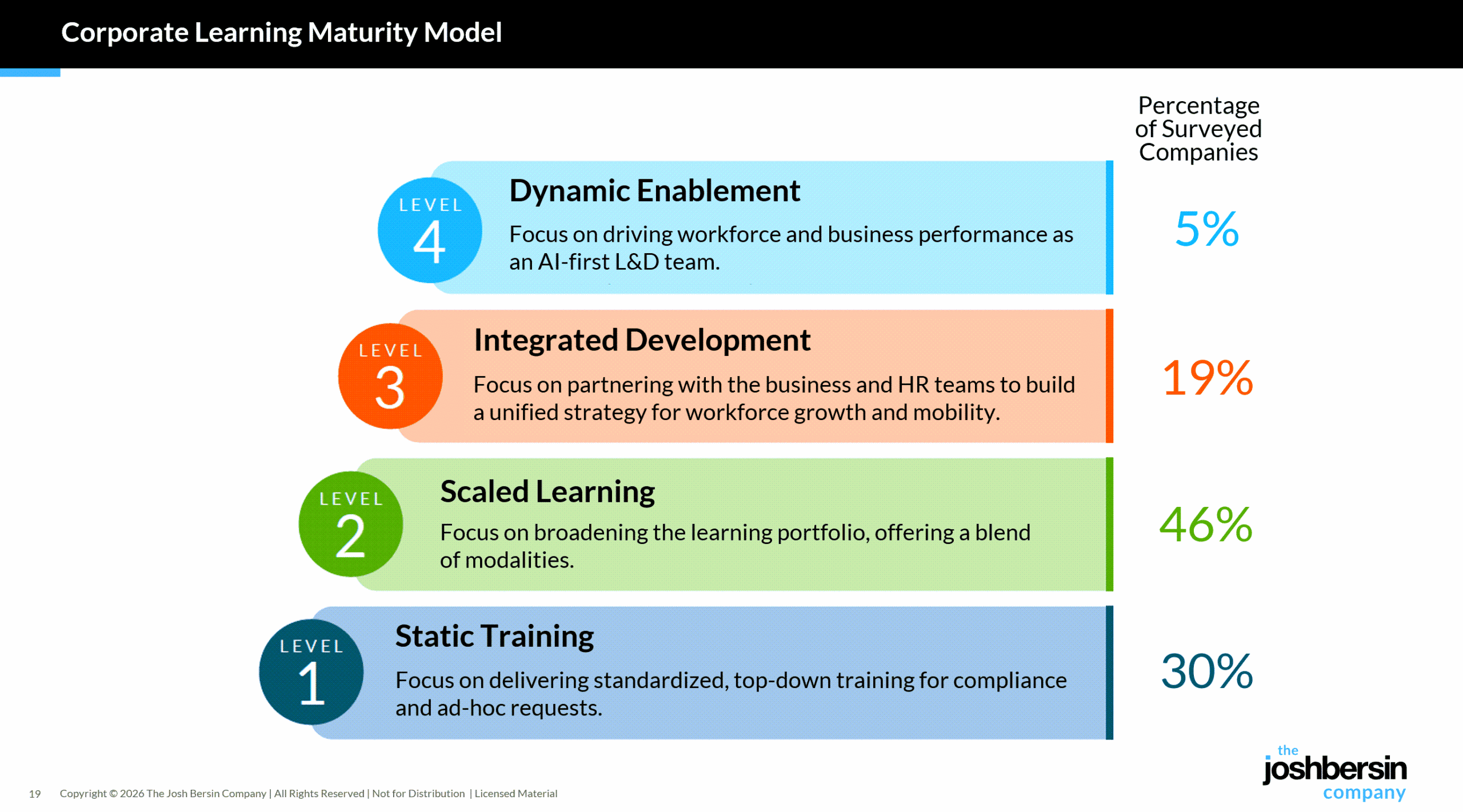
To navigate this evolving landscape, a new Learning Maturity Model has been developed, categorizing organizations into four distinct levels:
Level 1: Static Training Programs
At the foundational level, organizations rely on static training programs. This typically involves the creation or procurement of courses designed for compliance, new product launches, or other episodic needs. While these programs are often cost-effective and help employees stay current with immediate changes, they offer limited scope for deep skill development and are largely one-directional. Approximately one-third of the market operates at this level, focusing on essential compliance and awareness.
Level 2: Scaled Learning
As companies mature, they move to Level 2, characterized by "Scaled Learning." This involves expanding the learning portfolio beyond traditional courses to include a diverse range of formats such as videos, audio recordings, and job aids. This approach broadens employee options but often places the onus on the individual to curate their learning journey from a multitude of resources. Many offerings from major online learning providers fall into this category, providing extensive content libraries but requiring learner initiative.
Level 3: Integrated Development
Level 3 signifies "Integrated Development," where learning programs are meticulously tailored around specific job roles, skills, and career paths. Organizations at this stage build comprehensive "development programs" rather than merely "training." This introduces significant complexity, as it requires managing intricate webs of technical skills, professional competencies, job roles, and hierarchical levels.
The challenge at Level 3 is the rapid obsolescence of skills. Estimates suggest that up to 70% of job-related skills become outdated annually, making the maintenance and refresh of these multi-dimensional learning programs a formidable task. While beneficial for specialized training like channel education, technical certifications, and onboarding new employees, few individuals navigate these extensive pathways in their entirety.
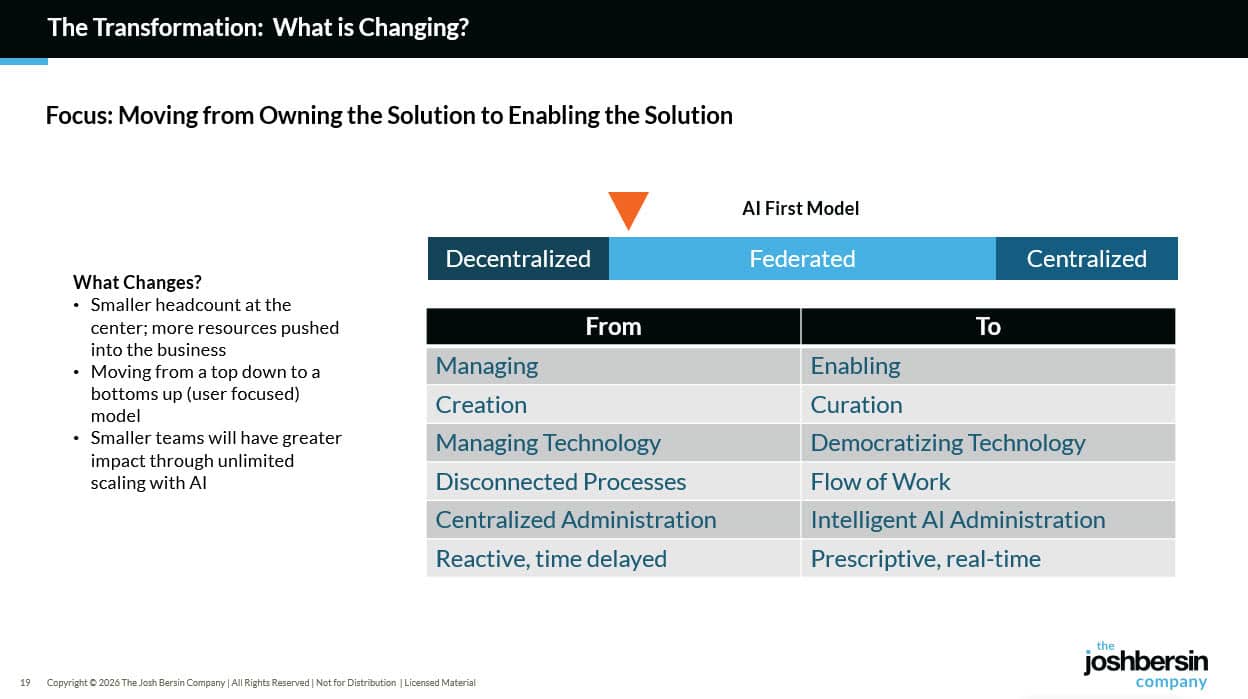
The escalating complexity at Level 3 often leads to a substantial increase in the size and cost of L&D departments. The continuous effort required for building, maintaining, and refreshing numerous programs, curricula, skills models, and content objects can become overwhelming. This complexity is further exacerbated by the decentralized nature of corporate learning, where L&D functions are often localized within specific business units such as sales, manufacturing, or customer service. While corporate trainers may oversee strategic programs, a significant majority of training content is developed and delivered at the front line, creating a fragmented and often inefficient ecosystem. This decentralization forces many Level 3 companies to scale down corporate L&D, delegating front-line training to business units and fostering a more complex, yet potentially more scalable, "federated" model.
Level 4: AI Transforms Everything – Dynamic Enablement
The apex of this maturity model is Level 4, where AI fundamentally transforms the learning landscape, ushering in an era of "Dynamic Enablement." This involves creating a comprehensive repository of organizational knowledge, encompassing not only formal courses but also documents, policies, and expert interviews. This integrated approach transcends the traditional definition of a "learning platform," evolving into a dynamic knowledge ecosystem.
AI-native learning platforms, such as Galileo, enable organizations to publish information and create learning content in days rather than months. This allows employees to learn in ways that are most effective for them, anytime and anywhere. Many organizations maintain their legacy Learning Management Systems (LMS) for compliance-driven programs while adopting new AI platforms to replace Learning Experience Platforms (LXPs), learning portals, and most content development tools. Early adopters of these AI-native solutions have reported significant reductions in internal L&D spend, often in the range of 40-50%.
The Implications of Dynamic Enablement
The shift to Dynamic Enablement promises enormous savings in time and resources for delivering learning solutions, coupled with an exceptional employee experience. This evolution aligns learning directly with business objectives, embedding knowledge and skill development into daily workflows. For instance, employees can interact with corporate chatbots to inquire about benefits, seek guidance on new sales opportunities, or receive immediate updates on departmental changes.
A compelling example comes from a large travel reservations company that utilizes call recordings from top-performing customer service agents to train others. This approach allows for rapid dissemination of best practices and effective strategies for handling challenging customer interactions across sales, engineering, and support functions. Similarly, companies can leverage client interviews and shared insights to foster a deeper understanding of customer needs and industry dynamics across their workforce.
This new domain of "Dynamic Enablement" represents a critical transition from simply "learning" to actively "enabling" individuals to perform at higher levels and drive business growth. The ultimate goal of workplace learning is not knowledge for its own sake, but the empowerment of employees to achieve greater success and contribute more effectively.
Proven Returns and Strategic Imperatives
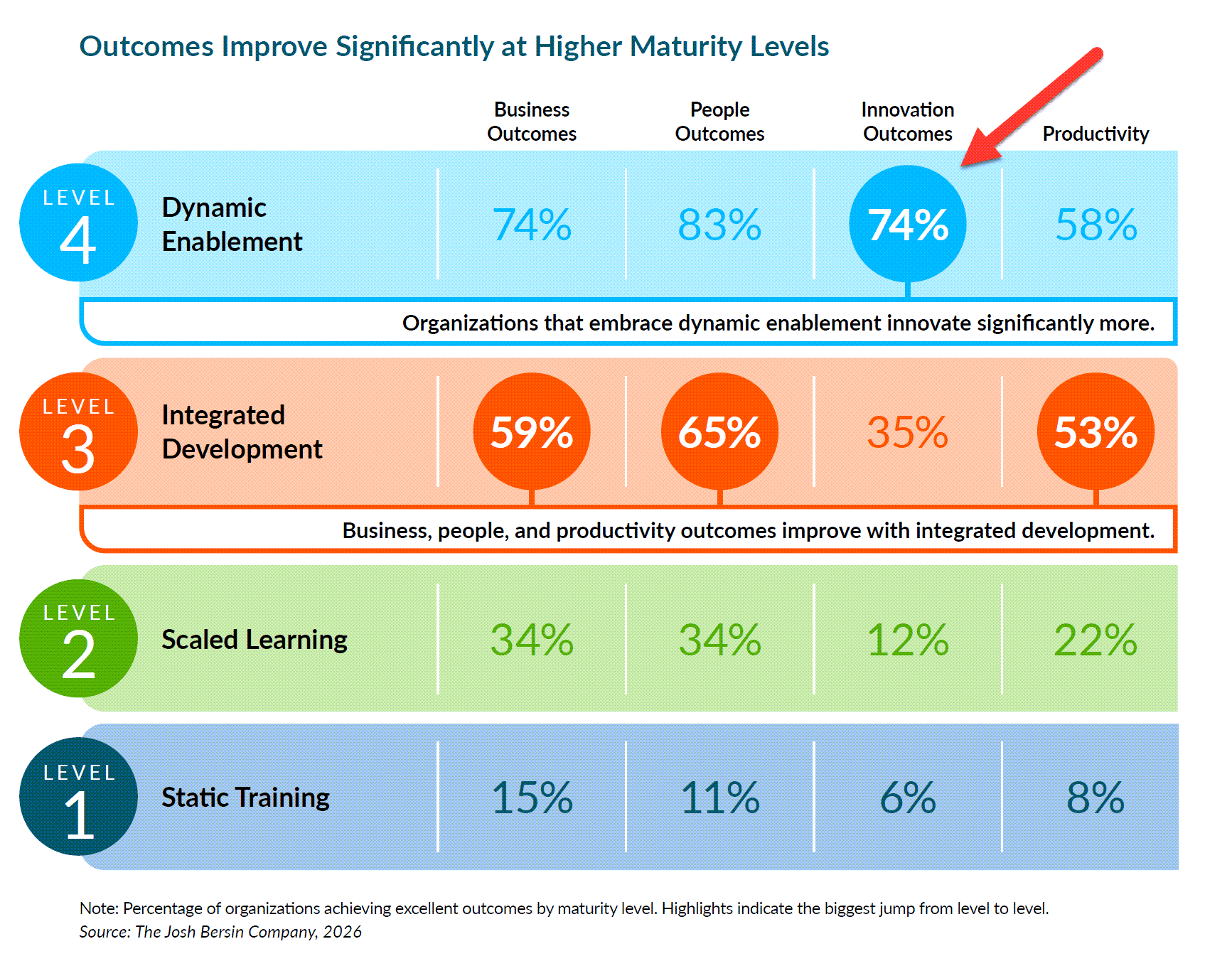
The research consistently demonstrates that organizations operating at Level 4, embracing AI-native learning and Dynamic Enablement, exhibit superior performance across key metrics. These companies are:
- Ten times more likely to be innovation leaders.
- Six times more likely to exceed financial targets.
- Sixteen times more likely to adapt effectively to change.
The roadmap to achieving this level of enablement is becoming increasingly clear. It necessitates a strategic rationalization of existing content, with SCORM-based courses being transformed into AI-native formats. A crucial step involves establishing new governance models for L&D, enabling a hybrid or distributed operating model. This allows corporate HR to concentrate on global strategic initiatives like leadership development, compliance, culture, and overarching business strategy, while individual business units can establish dedicated "Enablement Academies" for specialized functions such as sales and manufacturing.
The Future of Corporate Learning
The transition to AI-Native Learning is not merely about expediting course creation; it demands a fundamental reimagining of the traditional LMS with dynamic content systems. Emerging platforms and vendors are poised to facilitate this evolution. The benefits of this paradigm shift are profound, offering significant cost efficiencies, enhanced business impact, and unparalleled alignment with strategic organizational goals. As these AI-driven learning platforms mature, the tangible advantages are expected to grow exponentially. Organizations that embrace this journey towards Dynamic Enablement are positioning themselves at the forefront of innovation and competitive advantage in the evolving global marketplace.