A landmark decision by the D.C. Circuit Court of Appeals has affirmed the termination of an Oncor technician, concluding a decade-long legal battle and sending a clear message regarding transparency requirements for employees testifying before public officials, particularly when concurrently engaged in union contract negotiations. The court ruled that the technician’s failure to disclose his active involvement in collective bargaining negotiations during his testimony to state legislators rendered his speech unprotected under the National Labor Relations Act (NLRA), thus validating Oncor’s decision to fire him for violating company policy against providing misleading information. This ruling underscores the critical importance of disclosure under the long-established Jefferson Standard test, impacting the scope of protected speech for union members and shaping employer expectations for employee conduct in public forums.
The case originated from a technician’s testimony before state legislators, where he spoke extensively about increasing issues with smart meters, including reports of them "burning up" and customer complaints linking problems to their installation. While the technician identified himself as a union member, he crucially omitted the fact that he was actively involved in ongoing, and ultimately unsuccessful, contract negotiations between his union and Oncor. This omission formed the crux of the subsequent legal dispute, as Oncor argued that the undisclosed conflict of interest constituted a breach of company policy requiring honesty and transparency, especially when addressing public officials on matters directly pertaining to the company’s operations.
Chronology of a Decade-Long Legal Battle
The events leading to this pivotal ruling began with intense union contract negotiations between Oncor and its employee union. These discussions reportedly stalled without a resolution. The very next day, the technician in question appeared before state legislators. His testimony focused heavily on the alleged malfunctions and safety concerns associated with smart meters, recounting personal observations of increased work orders related to burning meters and relaying anecdotal evidence from customers attributing problems to the digital devices. The court noted his specific recollection of a customer stating she "never had a problem until the digital meters were installed" and his awareness of "similar problems in other locations."
Following his testimony, Oncor initiated disciplinary action, ultimately terminating the technician. The company cited a violation of its explicit policy prohibiting employees from providing misleading or fraudulent information to public officials. Oncor contended that by failing to disclose his direct involvement in the contentious union contract negotiations, the technician presented his testimony in a manner that lacked crucial context, potentially swaying legislative opinion without full transparency regarding his potential motivations.
The technician’s union subsequently filed an unfair labor practice charge with the National Labor Relations Board (NLRB), arguing that the termination violated Section 7 of the NLRA. Section 7 protects employees’ rights "to engage in… concerted activities for the purpose of collective bargaining or other mutual aid or protection." The NLRB initially sided with the technician, asserting that his testimony, even with the omission, fell under the protective umbrella of concerted activity and that Oncor’s firing constituted an unfair labor practice. The NLRB’s stance suggested a broader interpretation of protected speech, emphasizing the content of the testimony related to working conditions and public safety.
However, Oncor appealed the NLRB’s decision to the D.C. Circuit Court of Appeals. The appellate court’s review scrutinized the application of established labor law precedents, particularly the NLRB v. Jefferson Standard Broadcasting Co. test. After extensive deliberation, the D.C. Circuit reversed the NLRB’s finding, upholding Oncor’s right to terminate the employee. This decision effectively concluded the protracted legal saga, cementing the principle that while employees have rights to engage in concerted activities, these rights are not absolute and are subject to limitations, especially concerning public representations.
The Bedrock of Transparency: The Jefferson Standard Test
At the heart of the D.C. Circuit’s ruling is the Jefferson Standard test, a legal precedent established by the U.S. Supreme Court in 1953 in the case of NLRB v. Jefferson Standard Broadcasting Co. This test dictates that employees who make disparaging remarks about their employer to third parties in the context of a labor dispute may lose the protection of the NLRA if they fail to clearly disclose that their statements are related to an ongoing dispute. The rationale behind this standard is to ensure that the audience — in this case, state legislators — can accurately assess the weight and context of the employee’s statements, understanding any potential bias or underlying agenda.
The D.C. Circuit acknowledged that the technician’s testimony about smart meter issues could broadly be considered Section 7 protected speech, as it arguably related to working conditions or public safety, which could be topics relevant to collective bargaining or mutual aid. However, the court’s analysis pivoted on the technician’s critical omission. While he identified himself as a union member, the court emphasized that he "never mentioned anything about the contract negotiations, much less revealed anything ‘about his intent to pressure Oncor into concessions during [these] negotiations.’" This failure to explicitly link his testimony to the ongoing labor dispute was deemed fatal under the Jefferson Standard.
The court’s interpretation highlighted that the disclosure requirement is not merely about identifying oneself as a union member. It demands a clear and unambiguous connection between the public statement and the labor dispute itself. Without such a disclosure, the statements, even if factually accurate from the employee’s perspective, could be perceived as disloyal or misleading, thereby stripping them of NLRA protection under Section 10(c), which allows employers to discharge employees for cause.
Oncor’s Stance and Corporate Governance
Oncor, as a regulated utility, operates under stringent requirements for reliability, safety, and public trust. The company’s policy against providing misleading or fraudulent information to public officials is a standard corporate governance measure, particularly crucial for entities whose operations directly impact public welfare and are subject to intense regulatory scrutiny. The company’s decision to terminate the technician, rather than issue a lesser disciplinary action, signals the seriousness with which it views breaches of this policy, especially in the sensitive context of legislative testimony.
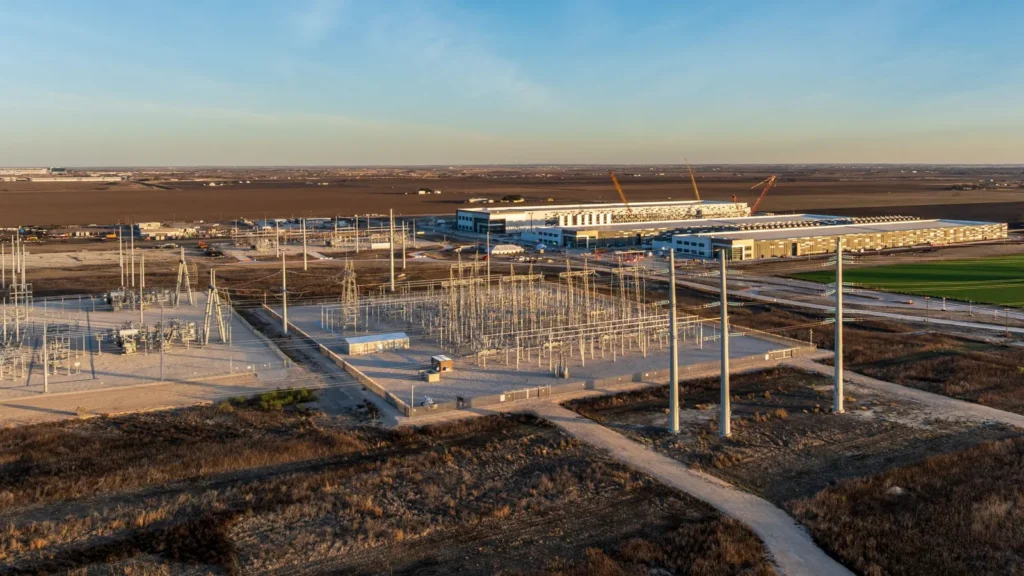
Oncor’s business involves maintaining a vast electric transmission and distribution network across Texas, serving millions of customers. Smart meters, which facilitate remote meter reading, demand response programs, and improved grid management, are a significant component of modern utility infrastructure. While generally reliable, like any technology, they can be subject to specific issues or public concerns. The technician’s testimony, even if based on genuine observations, could have had significant regulatory or public relations implications for Oncor. The company’s defense hinged on the argument that the technician’s testimony, by omitting critical context, undermined the company’s integrity and its relationship with public officials. Oncor did not provide a comment on the ruling, consistent with its likely position throughout the litigation.
Implications for Labor Relations and Public Testimony
This ruling carries significant implications for both employers and employees, particularly union members, engaged in public advocacy or testimony. For employees, it serves as a stern reminder that the protections afforded by Section 7 of the NLRA are not boundless. When addressing public bodies on matters that could be perceived as critical of their employer, and especially when a labor dispute is ongoing, full transparency regarding any personal or collective bargaining interest is paramount. Failure to disclose such interests can transform otherwise protected speech into unprotected conduct, potentially leading to disciplinary action up to and including termination.
For unions, the decision necessitates a review of strategies for public engagement during labor disputes. While unions often seek public support and leverage media and legislative channels to advance their positions, this ruling emphasizes the need for meticulous planning and clear communication regarding the context of any public statements made by their members. Unions may need to provide clearer guidance to members testifying publicly, ensuring they understand the Jefferson Standard and the potential consequences of incomplete disclosure.

Employers, conversely, may feel emboldened by this ruling. It reaffirms their right to enforce policies against misleading public statements, even when those statements originate from union members speaking on matters relevant to their employment. The decision provides a legal framework for distinguishing between legitimate whistleblowing or protected concerted activity and potentially disloyal conduct that lacks the necessary transparency.
The Broader Context: A Shifting NLRB Landscape
It is also important to view this D.C. Circuit decision within the broader context of recent shifts at the National Labor Relations Board. Late last year, the U.S. Senate confirmed new NLRB members James Murphy and Scott Mayer, alongside Crystal Carey as the board’s general counsel, thereby restoring a quorum. These appointments are widely seen as signaling a shift toward a more business-friendly board, moving away from some of the more expansive interpretations of employee protections seen in prior administrations.
Indeed, this shift was quickly evidenced by the NLRB’s February announcement of a final rule on joint employer status, reverting to a standard adopted in 2020 during the first Trump administration. This move generally makes it harder for companies to be deemed "joint employers," a change often favored by businesses seeking to limit liability for contractors or franchisees. While the D.C. Circuit’s ruling on the Oncor technician case is independent of the NLRB’s current composition, it aligns with a general trend towards a more cautious interpretation of NLRA protections, particularly when balanced against employer rights and public transparency concerns.
Smart Meters and Public Perception
The specific subject of the technician’s testimony—smart meters—adds another layer of context to the case. Smart meters have been a point of contention in various jurisdictions, with concerns ranging from data privacy and cybersecurity to perceived health risks from electromagnetic fields, and even accuracy issues leading to higher bills. While utilities generally champion smart meters for their efficiency, environmental benefits, and grid modernization capabilities, public skepticism or complaints are not uncommon.
In this instance, the technician’s testimony tapped into existing public anxieties, alleging operational failures and linking them to the digital devices. Had his testimony been fully transparent about the ongoing labor dispute, the legislative body would have been better equipped to weigh his statements, considering them both as potential factual accounts of operational issues and as strategically timed statements designed to exert pressure during contract negotiations. The absence of this crucial context was, in the court’s view, a material omission that compromised the integrity of the testimony.
Conclusion: A Call for Utmost Candor
The D.C. Circuit’s decision in the Oncor technician case serves as a powerful affirmation of the Jefferson Standard, reinforcing the principle that transparency is paramount when employees, particularly those involved in labor disputes, address public officials. While the NLRA broadly protects concerted activities, this protection is not a shield for misleading omissions. The ruling underscores that employees must exercise utmost candor, clearly disclosing any conflicts of interest or underlying labor disputes when making public statements that could reflect negatively on their employer. This judgment will undoubtedly influence future interactions between employees, unions, employers, and public bodies, fostering an environment where clarity and full disclosure are not merely encouraged but legally required for the preservation of protected speech. The decade-long litigation culminates in a clear mandate: when speaking to the public, especially to lawmakers, the whole truth, including relevant contexts, must be told.