A groundbreaking report from Businessolver reveals that empathy significantly enhances every measured AI metric, fostering greater employee optimism and a stronger sense of control over their work environments. Published on August 13, 2026, the findings underscore a critical intersection between advanced technology and fundamental human sentiment, challenging traditional, purely efficiency-driven approaches to artificial intelligence integration within organizations. The study, conducted by Businessolver, a prominent benefits and HR technology company, involved a comprehensive survey of both C-suite executives and employees, painting a nuanced picture of the contemporary workplace grappling with the accelerating pace of AI adoption.
The Paradox of AI Adoption in the C-Suite
Despite the clear benefits of empathy, a striking paradox emerged from the C-suite survey data. Nearly a third of the more than 300 executives, including CEOs and CHROs, admitted that their primary motivation for investing in AI was to achieve cost savings through headcount reduction. This profit-driven objective stands in stark contrast to another significant finding: 60% of these same executives acknowledged a much greater need to demonstrate empathy as their organizations become increasingly reliant on AI systems. This duality highlights a strategic tension at the highest levels of corporate leadership, where the drive for technological advancement and financial optimization often clashes with the imperative of human-centered management.
Adding to this complexity, more than 6 in 10 CEOs reported finding it difficult to demonstrate empathy in their day-to-day work. This figure represents a substantial 32-point increase year over year, suggesting a growing challenge for top leaders in maintaining a compassionate connection with their workforce amidst rapid digital transformation. The escalating difficulty could stem from various factors, including the increasing complexity of AI’s impact on diverse roles, the pressure to implement new technologies quickly, or perhaps a lack of adequate training and support for leaders in navigating the human elements of technological change.
Defining Empathy in the Digital Age
Businessolver, in an earlier June report, precisely defined empathy as "the ability to understand and/or experience the feelings or perspective of another." This definition serves as the cornerstone for their extensive research into its organizational impact. In an era where algorithms increasingly influence daily tasks, career paths, and even organizational structures, the capacity for leaders to genuinely grasp and respond to employee concerns—whether about job security, skill development, or work-life balance—becomes paramount. Empathy is not merely a soft skill; it is presented as a strategic imperative, essential for fostering trust, mitigating anxieties, and ultimately, ensuring the successful, sustainable integration of AI.
Employee Perspectives: Optimism and Control Amidst AI
The report provides compelling evidence of empathy’s direct influence on employee sentiment regarding AI. In cultures characterized by high empathy, over 80% of employees expressed optimism about their future with their organization in an AI-driven landscape. This figure significantly surpasses the 61% optimism rate observed among the total employee population across all organizational cultures, highlighting a 19-point differential attributable to empathetic leadership and environments. This optimism is not merely a feel-good metric; it correlates with greater engagement, higher productivity, and a willingness to adapt to new technologies.
Furthermore, empathy was linked to an enhanced "sense of control" among employees over their work. In an environment where AI can often feel autonomous and opaque, a perceived loss of control can lead to anxiety, disengagement, and resistance. Empathetic leadership, through transparent communication, involvement in decision-making, and proactive support for skill development, helps employees feel empowered rather than sidelined by AI. This sense of agency is crucial for maintaining morale and fostering a collaborative human-AI partnership rather than a hierarchical one where humans merely serve AI systems.
The Broader Landscape of AI and Work: A Chronology of Concern
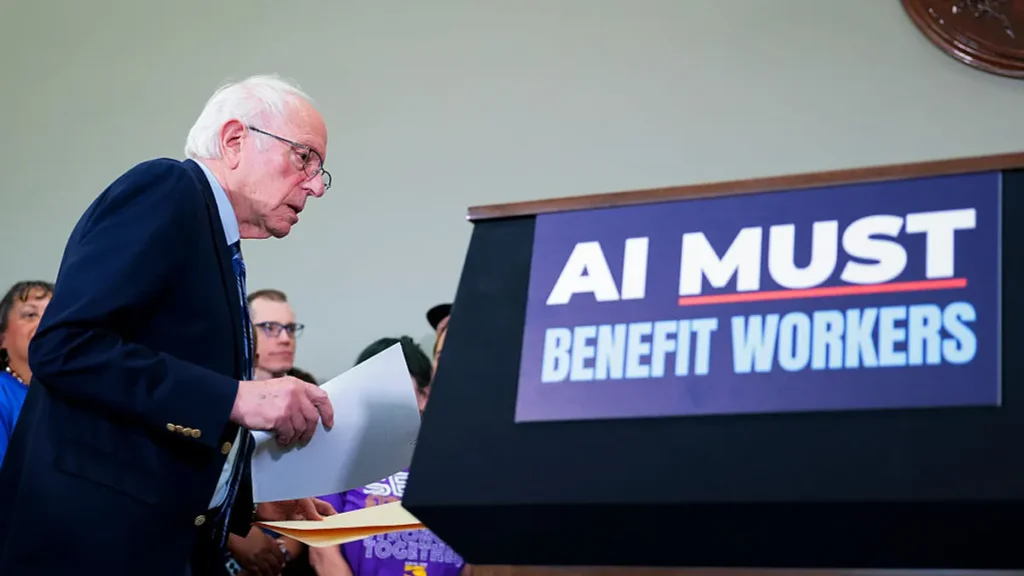
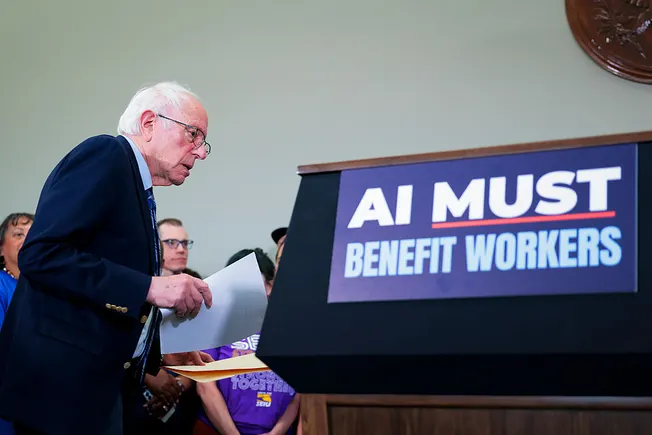
The Businessolver report emerges against a backdrop of increasing societal and political scrutiny regarding AI’s impact on the workforce. Just months prior to the report’s release, on April 16, 2026, U.S. Senator Bernie Sanders (I-VT) held a significant news conference in Washington, D.C., specifically addressing the ramifications of artificial intelligence on workers. His public statements and the visible sign stating "AI MUST BENEFIT WORKERS" underscored a growing concern among policymakers and labor advocates about ensuring that technological advancements serve humanity, not just corporate profits.
This chronology reveals a consistent theme: as AI capabilities expand, so does the imperative to manage its human consequences ethically and empathetically. The fears surrounding AI are not new; they echo historical anxieties about automation and technological unemployment. However, the unprecedented speed and scope of AI’s current development have amplified these concerns, making the role of empathetic leadership more critical than ever in reassuring and empowering the workforce. The political discourse, as exemplified by Senator Sanders, indicates a broader recognition that without careful human consideration, AI risks exacerbating existing inequalities and creating new forms of social and economic distress.
The Managerial Empathy Gap and its Consequences
Further substantiating the challenges in fostering empathy, recent research from resume template builder Zety and human resources service firm Sigma Assessment Systems revealed a significant "empathy gap" at the managerial level. Their findings indicated that across various industries—even in typically high-scoring fields like health, medicine, and HR—managers demonstrated less emotional sensitivity, empathy, and cooperativeness compared to the general population average.
This managerial empathy deficit can have profound implications. Managers are often the direct interface between corporate strategy, including AI implementation, and the daily experience of employees. If managers struggle to understand or respond empathetically to their teams’ concerns about AI, it can lead to breakdowns in trust, increased employee turnover, and a resistance to new technologies. The Zety/SAS research suggested that managers might find a certain level of detachment helpful in their roles, perhaps to make difficult decisions or maintain objectivity. However, in an AI-driven environment, this detachment risks alienating the workforce and undermining the very benefits that AI is intended to deliver. The struggle of CEOs to demonstrate empathy, as reported by Businessolver, could be mirroring or even exacerbating this gap at lower management levels, creating a systemic challenge for organizations.
The Economic Imperative: Empathy’s Tangible ROI
Beyond the qualitative benefits of employee optimism and control, Businessolver’s June report had already established a compelling economic case for empathetic leadership. The report estimated that empathetic leadership could save organizations an astonishing $180 billion annually in employee attrition costs. This staggering figure highlights that empathy is not merely a moral virtue or a "nice-to-have" attribute; it is a powerful driver of financial performance and organizational stability.

The mechanism is clear: employees who perceive their organization as "unempathetic" are 1.5 times more likely to seek new employment within the next six months. High turnover incurs significant costs, including recruitment, onboarding, training, and lost productivity. By fostering an empathetic culture, organizations can dramatically reduce these expenses, retaining valuable talent, institutional knowledge, and experience. Furthermore, an empathetic environment cultivates psychological safety, which is vital for innovation and problem-solving. Employees in such cultures are more likely to take risks, share ideas, and contribute meaningfully to the integration of new technologies like AI, knowing their contributions and well-being are valued. This translates into improved productivity, enhanced creativity, and a stronger employer brand, attracting top talent in a competitive market.
Expert Commentary and Industry Reactions (Inferred)
Industry experts and HR strategists would likely echo Businessolver’s findings with urgency. A spokesperson from Businessolver might emphasize, "Our latest report sends an unequivocal message: organizations cannot afford to overlook the human element as they race to adopt AI. Empathy is not a luxury; it is the strategic linchpin for successful AI integration, directly impacting employee well-being and, by extension, the bottom line. Leaders must prioritize developing empathetic capabilities to harness AI’s full potential responsibly."
HR consultants would likely stress the need for comprehensive leadership development programs that focus on emotional intelligence and empathetic communication. "The 32-point jump in CEOs finding empathy difficult is a red flag," an HR expert might comment. "It signals a systemic need for training, tools, and a cultural shift from the top down. HR must lead the charge in equipping leaders at all levels to navigate the complexities of AI with compassion and transparency."
Ethical AI advocates would also weigh in, pointing out the moral obligations inherent in deploying powerful technologies. "When a third of executives admit their primary AI goal is headcount reduction, it raises serious ethical questions," a tech ethicist might state. "Empathy must be embedded in the design and deployment of AI, not just an afterthought. We need human-centered AI, where the benefits are broadly shared, and potential harms are proactively mitigated through empathetic leadership and robust ethical frameworks." Employee advocacy groups would likely highlight the report as further proof of the need for stronger worker protections and representation in discussions about AI.
Charting a Human-Centric Path for AI Integration
The Businessolver report provides a clear roadmap for organizations seeking to integrate AI successfully and sustainably. The core implication is that AI adoption cannot solely be a technological or financial endeavor; it must be a profoundly human one.
- Strategic Empathy Integration: Organizations need to move beyond viewing empathy as a soft skill and elevate it to a core strategic competency, particularly for leadership roles. This requires embedding empathetic principles into AI strategy from conception to implementation.
- Leadership Development and Training: Given the reported difficulty CEOs face in demonstrating empathy and the general managerial empathy gap, robust training programs are essential. These programs should focus on emotional intelligence, active listening, transparent communication, and conflict resolution skills tailored to the challenges of an AI-augmented workplace.
- Transparent Communication: Leaders must openly discuss AI’s purpose, its potential impact on roles, and the support mechanisms available to employees. This transparency builds trust and mitigates fear, fostering the optimism and sense of control highlighted in the report.
- Employee Involvement and Co-creation: Involving employees in the design and implementation of AI systems can significantly enhance their sense of ownership and control. This collaborative approach can lead to more effective AI solutions that truly augment human capabilities rather than replace them.
- Ethical AI Frameworks: Developing and adhering to strong ethical guidelines for AI use, ensuring fairness, accountability, and human oversight, is crucial. This demonstrates an organization’s commitment to responsible technology deployment and reinforces an empathetic approach.
- Support for Skill Development: Proactive investment in reskilling and upskilling programs helps employees adapt to new roles and responsibilities created by AI, addressing anxieties about job displacement and fostering a sense of future security.
Conclusion: Empathy as a Differentiator in the AI Era
The Businessolver report serves as a stark reminder that in the rapidly evolving landscape of artificial intelligence, human connection remains an irreplaceable asset. As AI continues to reshape the future of work, organizations that prioritize and cultivate empathy within their leadership and culture will not only foster more optimistic, engaged, and productive workforces but also gain a significant competitive advantage. The $180 billion saved annually in attrition costs alone underscores that empathy is not just good for people; it is exceptionally good for business. In the human-AI partnership that defines the modern enterprise, empathy emerges not as a soft skill to be overlooked, but as the hard currency of successful, sustainable, and humane technological transformation. The future of work, powered by AI, depends critically on the enduring power of human understanding and compassion.