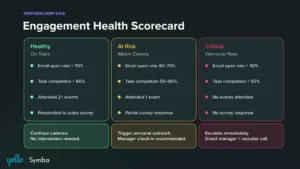
The economic repercussions of employee disengagement are far-reaching, impacting not only individual companies but also the broader global economic landscape. In 2025, the sheer magnitude of lost productivity—$10 trillion—highlights a systemic issue within the modern workforce. This figure, representing 9% of global GDP, is a stark indicator of untapped human potential and inefficient resource allocation. The decline in engagement, now a persistent trend, means that millions of individuals are not contributing their full capabilities, leading to a domino effect of reduced innovation, slower growth, and diminished overall economic output.
Employee engagement strategies are not merely about boosting morale; they represent deliberate, systemic practices designed by leaders to cultivate environments where individuals feel genuinely motivated, valued, and intrinsically invested in their roles and the organization’s mission. High-performing organizations recognize that fostering engagement is an ongoing leadership responsibility, requiring integration into the daily rhythm of operations rather than being relegated to annual surveys or isolated appreciation events. This proactive approach ensures that engagement remains a continuous pursuit, not a reactive measure.
The distinction between job satisfaction and employee engagement is crucial. While job satisfaction indicates whether individuals are content with their current employment situation, engagement measures their willingness to contribute discretionary effort—to go above and beyond the minimum requirements. It is the difference between merely showing up and actively contributing one’s best, driven by an emotional investment in their work. This elevated level of commitment is the bedrock of exceptional performance and sustained organizational success.
Understanding the multifaceted nature of employee engagement is paramount for organizations seeking to identify areas for strategic focus. Effective engagement strategies address the underlying conditions that foster this commitment. These include the observable behaviors of leaders, the clarity of organizational purpose, the perceived opportunities for professional growth, and the consistency of recognition and accountability. By focusing on these core elements, organizations can create an environment where employees are not just present, but truly engaged.
Key Takeaways for Cultivating Engagement
The insights gleaned from extensive research and organizational analysis point to several critical areas where leadership intervention can significantly impact employee engagement. These strategies, when implemented consistently, create a virtuous cycle of motivation, productivity, and retention.
The Critical Role of Leadership in Driving Engagement
The stark economic reality of employee disengagement necessitates a fundamental shift in how organizations approach leadership and workforce management. The $10 trillion productivity loss in 2025 serves as a potent reminder that human capital, when underdeveloped or uninspired, represents a significant economic liability. This situation is not a new phenomenon; reports from organizations like Gallup have consistently highlighted declining engagement trends over the past decade, suggesting a systemic challenge that requires more than superficial solutions.
The notion that employee engagement is solely the responsibility of the Human Resources department is a misconception. Instead, it is increasingly understood as a core leadership competency. Leaders at all levels—from frontline supervisors to C-suite executives—play a pivotal role in shaping the employee experience. Their actions, communication, and commitment to fostering a positive work environment directly influence how connected and motivated their teams feel.
Stephen R. Covey, a renowned author and educator, eloquently articulated the profound cost of disengagement: "Imagine the personal and organizational cost of failing to fully engage the passion, talent, and intelligence of the workforce. It is far greater than all taxes, interest charges, and labor costs put together!" This statement underscores that the economic impact of disengaged employees extends far beyond direct payroll expenses, affecting innovation, problem-solving, and the overall health of an organization.
Employee Engagement Strategies That Drive Results
To reverse the trend of declining engagement and unlock the full potential of the workforce, organizations must adopt specific, repeatable practices. These strategies are designed to increase employee motivation and their sense of connection to their work, team, and the broader organization.
1. Balance Expectations With Genuine Care
A cornerstone of effective engagement is the ability of leaders to set high expectations while simultaneously demonstrating genuine care for their team members. A recent report from the FranklinCovey Institute revealed a significant gap in leadership capability, with only a small fraction of leaders—a mere 7%—managing to effectively balance both high expectations and profound care for their people. This deficiency is a primary driver of workforce disengagement, more so than compensation or other organizational initiatives. The quality of management is a more reliable predictor of team engagement than any other single factor.
Managers who adopt a coaching approach, rather than a purely directive one, create fertile ground for sustained engagement. This involves focusing on what employees need to succeed and clearly articulating how their individual contributions align with broader team objectives. Structured one-on-one conversations are invaluable tools for managers to proactively identify early signs of disengagement, enabling timely intervention before attrition becomes a risk. These conversations are most effective when centered on an individual’s specific priorities and development needs.
The economic implication of this leadership gap is substantial. When leaders fail to provide both clear direction and empathetic support, employees are more likely to feel undervalued, misunderstood, and disconnected. This can lead to decreased productivity, increased errors, and a higher propensity to seek opportunities elsewhere. The cost of replacing an employee can range from tens of thousands of dollars to twice the employee’s annual salary, making proactive engagement a sound financial investment.
2. Identify and Address Leadership Gaps
Managerial behavior is the most significant lever for influencing employee engagement. However, its effectiveness hinges on leaders’ willingness to honestly assess their own capabilities and identify areas where they fall short. The disconnect between a leader’s intentions and their actual behaviors is often where disengagement quietly takes root. Many leaders remain unaware of the extent of this gap until it manifests in observable outcomes, such as increased turnover rates.
Organizations that encourage leaders to proactively close these capability gaps foster consistency and resilience within their teams, enabling them to navigate challenges and maintain alignment even under pressure. Embedding leadership capability assessment into ongoing development programs, rather than treating it as a reactive measure to address attrition, yields stronger and more consistent engagement over time.
The broader context of leadership development reveals that consistent, trustworthy leadership is crucial, especially during times of organizational change or market volatility. A failure to address these gaps can lead to widespread uncertainty, a decline in morale, and a loss of institutional knowledge as experienced employees depart. The economic cost of such attrition is compounded by the disruption to team dynamics and project continuity.
3. Align Daily Work with Organizational Purpose
A significant portion of the workforce expresses a desire for greater purpose in their professional lives. Gallup research indicates that 30% of employees envision their ideal job as one with a purpose they personally believe in. Crucially, only 13% of employees who experience a strong connection to purposeful work report feeling burned out. This suggests a strong correlation between purpose and resilience. Employees who seek purpose but do not find it in their current roles are already predisposed to deeper engagement; the opportunity for leaders lies in making that connection explicit.
Leaders can reinforce the link between daily tasks and the overarching organizational mission through regular team meetings and performance conversations. Consistently articulating how the team’s work creates value helps employees understand the impact of their efforts. Employee engagement strategies anchored in purpose are particularly vital during periods of disruption. When employees comprehend the significance of their contributions, they are more likely to remain engaged even amidst turbulence and uncertainty.
Aligning purpose transcends merely displaying a mission statement. Leaders who consistently connect team priorities to meaningful outcomes cultivate an environment where employees remain engaged through challenges and uncertainty, not just during periods of high performance. This sense of shared purpose can be a powerful motivator, fostering loyalty and a willingness to persevere through difficult times.
The Significance of Purpose in Times of Change
In recent years, the business landscape has been characterized by unprecedented disruption, from global pandemics to rapid technological advancements and geopolitical shifts. These events have amplified the importance of organizational purpose as a guiding star for employees. When the ground beneath an organization feels unstable, a clear and compelling purpose can provide a much-needed anchor, reminding individuals why their work matters and what collective goals they are striving to achieve.
This need for purpose is not a fleeting trend. Historical data from various economic cycles consistently shows that organizations with a strong sense of mission and clearly articulated values tend to weather storms more effectively. Employees who feel aligned with a purpose larger than themselves are more resilient, more innovative, and more likely to remain committed to their organizations, even when faced with personal or professional adversity.

4. Build Trust Through Autonomy and Accountability
Employees who trust their managers and feel that trust is reciprocated tend to contribute more discretionary effort to their work. Effective employee engagement and retention strategies empower individuals by providing clear goals and the autonomy to determine how best to achieve them, rather than dictating every step. Building trust within teams requires consistent and transparent leadership behaviors.
Accountability, when rooted in trust and engagement rather than constant monitoring, fosters a stronger sense of ownership. When leaders establish clear objectives and transparently track progress, teams develop a shared understanding of what success entails and why it is important. Leaders must also actively demonstrate trust-building behaviors such as respect, openness, and integrity.
The "Trust & Inspire®" framework, for instance, highlights how leaders can foster an environment where trust is paramount. This approach emphasizes empowering individuals, providing them with the freedom to innovate and problem-solve, while holding them accountable for delivering results. This balance is critical for cultivating a motivated and engaged workforce.
The Economic Impact of Trust
The erosion of trust within an organization can have profound economic consequences. It can lead to increased micromanagement, stifled creativity, higher rates of absenteeism, and a general decline in productivity. Conversely, organizations that successfully build and maintain trust often experience greater innovation, higher employee retention, and a more collaborative work environment. The investment in building trust, therefore, yields significant returns in terms of economic performance and organizational stability.
5. Make Recognition Specific and Consistent
Generic or infrequent recognition tends to have a limited lasting impact. In contrast, timely and specific acknowledgment, tied to meaningful outcomes, effectively reinforces desired behaviors. When leaders acknowledge effort that is directly linked to organizational priorities, employees understand that their contributions are valued and relevant, thereby deepening their investment in achieving results.
Effective employee engagement strategies treat recognition as a consistent leadership behavior, not an occasional event. Managers who acknowledge effort in real-time and connect that acknowledgment to organizational outcomes foster a stronger sense of contribution among employees and a clearer understanding of how their work advances shared goals. This consistent reinforcement of positive behavior can significantly boost morale and productivity.
The economic benefit of effective recognition is substantial. It contributes to a positive feedback loop where employees are motivated to continue performing at a high level. Organizations that fail to recognize their employees adequately risk seeing their top performers seek opportunities where their efforts are more appreciated, leading to increased recruitment and training costs.
6. Create Opportunities for Career Development
Investing in employee potential and coaching direct reports to solve problems signals long-term organizational confidence in those individuals, fostering loyalty and sustained effort. When organizations integrate learning into the daily workflow, development becomes a sustainable habit. Employees who perceive a clear career path are more likely to invest deeply in their performance, as their work begins to feel like progress toward personally meaningful development goals.
The CEO of FranklinCovey, Paul Walker, aptly stated, "Telling reinforces dependency; coaching develops capability." This highlights the power of developmental coaching in fostering self-sufficiency and growth within the workforce. By providing opportunities for employees to learn new skills, take on challenging assignments, and advance within the organization, companies can significantly enhance engagement and retention.
The economic implications of investing in employee development are manifold. It leads to a more skilled and adaptable workforce, capable of meeting evolving business needs. Furthermore, it reduces the likelihood of employees leaving due to a lack of growth opportunities, thereby lowering recruitment and training expenses. A developing workforce is a more productive and innovative workforce.
7. Act on Employee Feedback
Many well-intentioned organizations collect employee feedback but fail to visibly act upon it, often resulting in lower engagement. Harvard Business Review research indicates that business units where managers were responsive to employee feedback experienced approximately 30% less attrition. Moreover, employees demonstrated a 24% increase in their willingness to speak up when they believed their managers would act on their feedback.
Effective employee engagement strategies bridge the gap between listening and action. Leaders who share survey findings transparently and follow through on stated changes build credibility, encouraging greater participation in future feedback cycles. When feedback leads to visible improvements, it validates the effort employees invested in sharing their perspectives honestly.
Leaders who communicate openly about challenges build more trust than those who prioritize positive spin over reality. Employees desire evidence that their input has influenced tangible change. When leaders articulate what they have heard and what actions will be taken as a result, they demonstrate that the feedback process is a genuine exchange. This fosters a culture where honest input is safe and where employees believe their voices can effect meaningful change.
The Cost of Ignoring Feedback
The economic cost of ignoring employee feedback can be substantial. It leads to a decline in morale, a sense of being unheard, and a reduced willingness to offer future suggestions. This can stifle innovation, hinder problem-solving, and ultimately impact the organization’s competitive edge. A culture where feedback is actively sought and acted upon, however, can foster a more agile, responsive, and resilient organization.
8. Protect Employee Energy and Well-Being
Employees facing unsustainable workloads or unclear priorities often disengage, regardless of their initial motivation. Leaders who actively protect their teams’ energy and model sustainable work practices amplify trust and engagement. Effective employee engagement strategies guard against energy depletion and prioritize self-renewal, as lasting commitment requires conditions conducive to full contribution.
Engagement and retention strategies that overlook renewal lead to short-term effort followed by burnout and attrition. The organizational cost of burnout extends beyond individual performance, affecting team cohesion and the organization’s capacity to sustain performance over time. Prioritizing employee well-being is not just a matter of corporate social responsibility; it is a strategic imperative for long-term success.
The economic impact of burnout is significant. It leads to increased healthcare costs, higher rates of absenteeism, and a decline in productivity. Organizations that proactively address employee well-being and promote sustainable work practices not only foster a more engaged workforce but also reduce their exposure to these considerable costs.
Use Employee Engagement Strategies to Generate Consistent Results
Disruption exacerbates existing leadership capability gaps. Organizations grappling with change fatigue while simultaneously striving to retain talent cannot afford to treat engagement as a secondary initiative. When leaders lack the consistency, credibility, or development necessary to navigate uncertainty effectively, disengagement flourishes.
Leaders who consistently achieve high levels of engagement embed these practices into the very rhythm of how work is accomplished. When teams operate with clear priorities, visible progress, and when leaders actively cultivate trust and protect employee energy, organizations amplify both employee engagement and overall performance.
The organizations best positioned to retain talent during periods of disruption are those that invest in their leaders proactively, before attrition becomes a pressing issue. Leaders who successfully close capability gaps, prioritize meaningful recognition, invest in employee development, and actively respond to feedback can create the conditions for sustained high engagement, whether in stable times or during intense pressure.
Ultimately, the $10 trillion productivity loss attributed to employee disengagement in 2025 serves as a stark warning. It underscores that fostering a truly engaged workforce is not a discretionary expenditure but a fundamental investment in economic prosperity and organizational resilience. By embracing these strategic engagement practices, organizations can not only mitigate significant financial losses but also build a foundation for enduring success in an increasingly dynamic global landscape.