The landscape of talent acquisition has become increasingly competitive, with organizations investing significant resources in identifying, attracting, and securing top talent. However, a critical vulnerability often emerges in the period between a candidate accepting an offer and their official start date: the candidate renege. This phenomenon, where a candidate withdraws their acceptance, represents a substantial setback for companies, not only in terms of lost time and recruitment costs but also in its potential impact on team morale and operational continuity. Historically, many recruitment programs have operated without a structured process to address this pre-onboarding phase, often discovering a renege only after it has occurred, by which point the candidate has typically already made a definitive decision to withdraw. This reactive posture leaves organizations scrambling to backfill critical roles, perpetuating a cycle of inefficiency and uncertainty.
A burgeoning paradigm shift in talent management advocates for a proactive approach, treating candidate engagement signals during the pre-start period as crucial leading indicators of intent. This strategy centers on continuous monitoring and strategic intervention, transforming a traditionally passive waiting game into an active retention effort. At the heart of this evolved methodology is the implementation of an Engagement Health Scorecard, a sophisticated framework designed to categorize candidates based on their observed behavior and prescribe targeted interventions to mitigate the risk of renege.
The Evolution of Candidate Retention Strategies
For decades, the period following an offer acceptance and prior to a candidate’s start date was largely considered a quiescent phase. Companies would typically send an offer letter, complete background checks, and then await the start date, with minimal structured interaction. This approach was predicated on the assumption that once an offer was accepted, the candidate’s commitment was largely secured. However, market dynamics, including increased competition for skilled labor, the rise of remote work expanding candidate options, and a greater emphasis on candidate experience, have exposed the fragility of this assumption.
The average cost of replacing an employee can range from 50% to 200% of their annual salary, factoring in recruitment fees, onboarding costs, lost productivity, and the impact on team morale. When a renege occurs, these costs are exacerbated, as the recruitment cycle must often be restarted from scratch, leading to extended time-to-fill metrics and potential project delays. Recognising this significant financial and operational drain, forward-thinking organizations began to scrutinize the pre-start period, identifying it as a critical window for intervention rather than mere administration. This led to the conceptualization of engagement as a continuous process, extending beyond the offer acceptance and into the crucial weeks before a new hire joins the team.
Deconstructing the Engagement Health Scorecard: A Tiered Approach
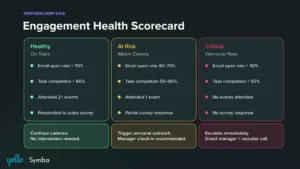
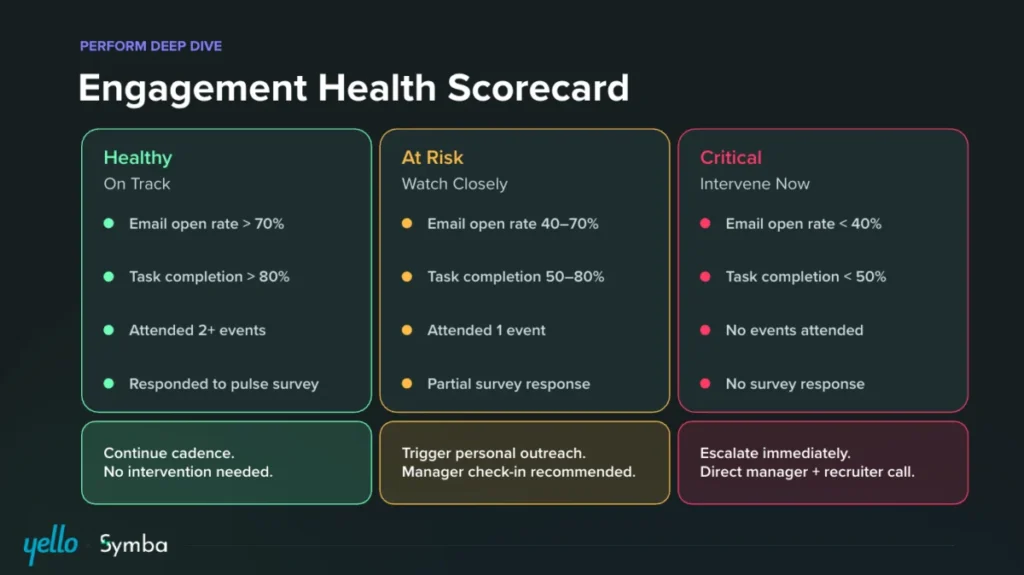
The Engagement Health Scorecard provides a structured, data-driven methodology for assessing and responding to candidate commitment levels during the pre-start phase. It categorizes candidates into three distinct groups – Healthy, At-Risk, and Critical – based on a combination of quantitative and qualitative engagement metrics. This tiered system allows for differentiated strategies, ensuring that resources are allocated efficiently and interventions are tailored to the specific needs of each candidate.
-
Healthy Candidates: Sustaining Momentum and Reinforcing Commitment
Healthy candidates exhibit robust and consistent engagement, signalling a strong likelihood of following through with their commitment. Their behavioral patterns typically include email open rates consistently above 70%, prompt completion of pre-onboarding tasks (e.g., submitting HR paperwork, reviewing benefits information), active attendance at optional pre-start events (such as virtual meet-and-greets, team introductions, or informational webinars), and thoughtful responses to pre-onboarding surveys. These actions collectively demonstrate continued interest, a proactive approach to their upcoming role, and a psychological investment in their new company.
For candidates in this category, the prescribed action is to maintain the established communication cadence and stay the course. This involves continuing to provide relevant information, sending periodic check-ins that reinforce excitement for their arrival, and ensuring all logistical preparations are clearly communicated. The goal is not to intensify engagement unnecessarily but to consistently affirm their decision, reinforce the positive aspects of their future role and team, and prevent any nascent doubts from emerging. This steady, reassuring presence helps to solidify their commitment and fosters a sense of belonging even before their first day.
-
At-Risk Candidates: Proactive Intervention and Personalized Outreach
The "At-Risk" category identifies candidates whose engagement signals show a discernible decline, indicating potential wavering or emerging concerns. This tier is characterized by email open rates falling within the 40-70% range, limited participation in optional pre-start events, and incomplete or perfunctory responses to surveys. These indicators, while not yet critical, suggest a need for immediate, targeted intervention. Failing to address these early warning signs can allow minor doubts to fester, potentially escalating into a full renege.
The recommended course of action for at-risk candidates is prompt, personal outreach within 48 hours of detecting declining engagement. This is a crucial window; delay can allow uncertainties to harden into decisions. Effective interventions include a direct, personalized message from the program manager or future team lead, expressing enthusiasm for their upcoming arrival and offering to answer any questions. Invitations to upcoming events should be individualized, highlighting how the event specifically relates to their interests or role, rather than appearing as a mass-distributed communication. A proactive check-in from the hiring manager, perhaps a brief call to reiterate excitement and discuss their future contributions, can be particularly impactful. Such personalized touches demonstrate that the organization values them individually and is attentive to their journey, often turning around nascent doubts quickly by providing reassurance and a direct channel for communication.
-
Critical Candidates: Urgent Escalation and Deep Dive into Root Causes
Candidates classified as "Critical" exhibit minimal to no engagement, signalling a high probability of reneging. Their behavior typically includes email open rates below 40%, complete absence from pre-start events, no responses to surveys, and a prolonged period of inactivity—often three or more weeks without any interaction. At this stage, the situation demands immediate, high-level intervention, as the candidate has likely already made a decision to withdraw or is on the verge of doing so.
For critical candidates, the strategy shifts to urgent escalation and a focused effort to understand and address the underlying issues. This necessitates a direct call from the hiring manager, a personal touchpoint from the recruiter, and a genuine, empathetic conversation about what might be happening. The objective is not merely to persuade but to uncover the root cause of their disengagement. Common factors include receiving a competing offer, facing unforeseen personal circumstances (such as family issues, relocation challenges, or health concerns), or simply experiencing uncertainty about the role, the company culture, or their career path. By catching these issues in time, organizations can sometimes offer solutions, clarify misunderstandings, or adjust their approach to retain the candidate. For instance, a competing offer might be countered if the candidate’s value justifies it, or personal circumstances might be accommodated with a revised start date or flexible arrangements. The key is timely, direct, and empathetic communication from a senior stakeholder, demonstrating the company’s commitment to their well-being and success.
The Economic and Strategic Imperative of Proactive Engagement
The difference between organizations that successfully retain accepted candidates and those that frequently scramble to backfill roles almost invariably lies in their approach to data. The former consistently monitors engagement data, not merely waiting for a renege email to arrive, but actively using insights to guide interventions. This proactive stance yields significant benefits across multiple dimensions:
- Reduced Recruitment Costs and Time-to-Fill: Each renege necessitates restarting the recruitment process, incurring additional advertising costs, recruiter time, interview panel time, and potentially agency fees. Proactive engagement drastically reduces the incidence of reneges, thereby cutting these recurring expenses and shortening the overall time-to-fill for critical positions. Industry data often indicates that the cost of a renege can be equivalent to several months of the position’s salary, making prevention a clear financial win.
- Enhanced Operational Stability and Productivity: Unfilled roles create productivity gaps, placing additional strain on existing teams and potentially delaying projects. By retaining accepted candidates, organizations ensure a smoother transition, maintaining operational stability and maximizing team productivity from day one.
- Strengthened Employer Brand and Candidate Experience: A well-managed pre-onboarding experience, characterized by attentive communication and personalized support, significantly enhances the candidate’s perception of the company. Even if a candidate ultimately chooses not to join, a positive experience minimizes negative word-of-mouth and protects the employer brand, which is crucial in today’s transparent job market. Conversely, a lack of engagement can be perceived as disinterest or disorganization, reflecting poorly on the organization.
- Improved Long-Term Retention: Candidates who feel valued and supported from the moment they accept an offer are more likely to integrate successfully and remain with the company long-term. The pre-start engagement sets a positive tone for their entire employee journey, fostering loyalty and commitment.
- Competitive Advantage in Talent Acquisition: In a talent-scarce market, companies that master pre-start engagement gain a distinct competitive edge. They are not only better at attracting talent but also significantly more effective at converting accepted offers into successful hires, thereby securing a higher proportion of top-tier candidates.
Implementing an Engagement Health Program: Best Practices and Challenges
Successfully implementing an Engagement Health Scorecard requires more than just a conceptual understanding; it demands strategic integration across an organization’s talent acquisition and HR functions.
- Technology Integration: Modern Applicant Tracking Systems (ATS) and Candidate Relationship Management (CRM) platforms are crucial for tracking engagement metrics. Integrating these with dedicated pre-boarding or HRIS systems allows for automated data collection, scoring, and trigger-based alerts for at-risk candidates. This technological backbone ensures that data is continuously monitored and insights are actionable.
- Training and Empowerment: Recruiters, hiring managers, and HR business partners need comprehensive training on how to interpret engagement signals and execute the prescribed interventions. This includes developing empathetic communication skills, understanding the potential root causes of disengagement, and knowing when and how to escalate. Empowering these stakeholders with the tools and autonomy to act swiftly is paramount.
- Continuous Improvement through Data Analytics: The "KEEP Playbook," referenced in the original context, exemplifies a comprehensive resource for organizations looking to refine their strategies. It typically includes not only the engagement health scorecard with thresholds and recommended actions but also a step-by-step intervention playbook and a post-cycle review template. This allows teams to analyze the effectiveness of their interventions, identify patterns in renege reasons, and continuously improve their processes with every recruitment cycle. Regular review of engagement data, successful interventions, and reasons for unavoidable reneges informs future strategy adjustments.
- Balancing Personalization with Scalability: One of the main challenges is maintaining a high level of personalized engagement as recruitment volumes increase. Automation can handle routine communications, but the critical interventions for "At-Risk" and "Critical" candidates demand genuine human interaction. Organizations must find a balance, leveraging technology for efficiency while preserving the personal touch that builds true connection and trust.
- Leadership Buy-in: Securing buy-in from senior leadership is essential, as implementing such a program requires resource allocation for technology, training, and personnel. Demonstrating the clear return on investment (ROI) through reduced renege rates and associated cost savings is key to gaining this support.
The Future of Talent Acquisition: Data-Driven Retention
The shift towards proactive candidate engagement, epitomized by the Engagement Health Scorecard, represents a significant maturation in talent acquisition. It moves beyond simply filling vacancies to strategically nurturing relationships and mitigating risks throughout the entire candidate journey. In an era where talent is a primary differentiator, organizations that master data-driven retention strategies will not only stabilize their workforce but also enhance their reputation, foster a stronger internal culture, and ultimately achieve greater long-term success. The ability to look at data continuously, identifying and addressing potential issues before they become crises, is no longer merely a best practice but a fundamental requirement for competitive advantage in the global talent market.