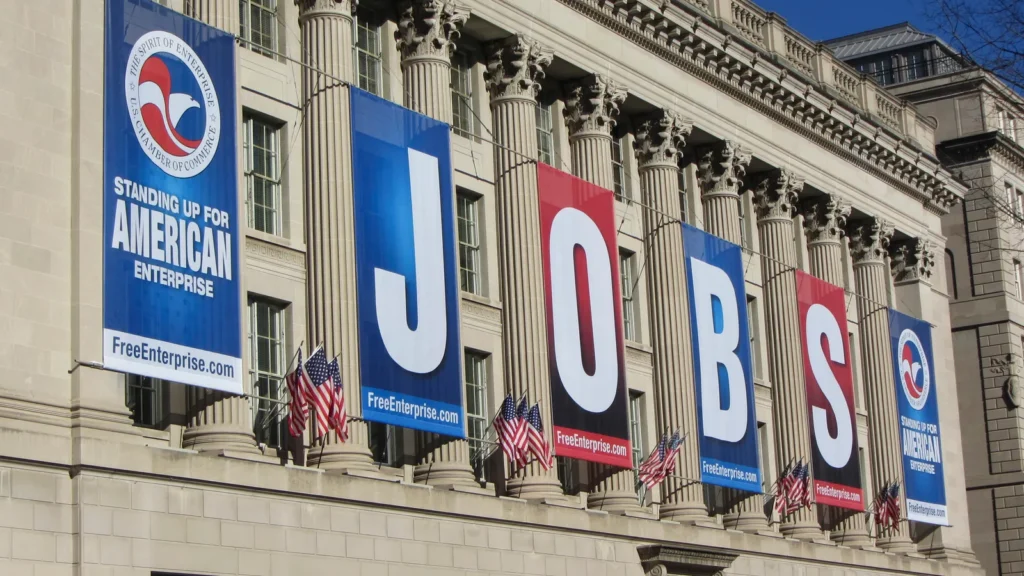
In a coordinated effort to address pervasive talent shortages across vital sectors of the American economy, the U.S. Chamber of Commerce Foundation and the U.S. Department of Labor have independently announced substantial grants and funding allocations. These strategic investments, revealed on July 14, 2026, are meticulously designed to cultivate a skilled workforce capable of meeting the demands of critical occupations, from advanced manufacturing and cybersecurity to construction and clean energy, thereby reinforcing the nation’s industrial strength and global competitiveness. The twin announcements underscore a growing consensus among policymakers and private sector leaders regarding the urgency of investing in human capital to secure the nation’s economic prosperity in an increasingly complex and technologically driven global landscape.
A Dual Approach to Workforce Development: The Core Announcements
The simultaneous unveiling of these initiatives by two influential entities—one representing the broad spectrum of American business and the other a key federal agency—highlights the multi-faceted nature of the nation’s workforce challenges. Both programs aim to establish clearer pathways for individuals to acquire the in-demand skills necessary for the jobs of today and tomorrow, while simultaneously providing businesses with the talent pipeline crucial for growth and innovation.
The U.S. Chamber of Commerce Foundation, the philanthropic and educational arm of the U.S. Chamber of Commerce, has committed significant resources to local and regional organizations. Their grants are specifically tailored to foster direct connections between students, educators, and employers, emphasizing practical experience, industry-recognized credentials, and tangible career progression. This approach reflects the business community’s desire for a workforce that is not only academically prepared but also possesses the real-world competencies immediately applicable in a professional setting.
Concurrently, the U.S. Department of Labor (DOL) has announced its own substantial funding through its Pay-for-Performance Incentive Payments Program. This initiative focuses on expanding Registered Apprenticeship programs, a proven model for workforce development that combines on-the-job training with related technical instruction. The DOL’s selections prioritize industries where robust apprenticeship infrastructures already exist, indicating a strategy to scale successful models and accelerate their impact on critical sectors deemed vital for national security and economic leadership.
Addressing a National Imperative: The Deep Roots of the Skill Gap Crisis
The current initiatives are not isolated events but rather a direct response to a burgeoning crisis in the American labor market that has been decades in the making. The "skill gap," or the mismatch between the skills employers need and the skills available in the workforce, has become a persistent impediment to economic growth and innovation. This gap has been exacerbated by several converging factors: rapid technological advancements, particularly in automation, artificial intelligence, and digital technologies; an aging workforce leading to significant retirements; a decline in vocational and technical education pathways in previous generations; and the lingering effects of global supply chain disruptions that have highlighted the need for domestic manufacturing capabilities.
Economists and industry leaders have long warned that these shortages pose a significant threat to U.S. competitiveness on the global stage. Industries such as advanced manufacturing, information technology, healthcare, and skilled trades consistently report millions of unfilled positions. The National Association of Manufacturers, for instance, has repeatedly projected millions of unfulfilled manufacturing jobs in the coming decade due to a lack of skilled workers. Similarly, the cybersecurity sector faces a chronic talent deficit, with hundreds of thousands of open positions, impacting national security and critical infrastructure. The COVID-19 pandemic further exposed vulnerabilities in supply chains and highlighted the urgent need for a resilient, domestically skilled workforce in areas from logistics to biomedical manufacturing.
The Chamber Foundation’s Vision: Industry-Driven Pathways to Opportunity
The U.S. Chamber Foundation’s grant program is built on the principle that direct engagement between industry and education is paramount. Michael Carney, President of the U.S. Chamber Foundation, articulated this philosophy, stating, "There’s a real mismatch in this country. Employers can’t find the workers they need, and young people can’t find a clear path to the workforce. These groups are closing that gap. They’re putting employers in the same room as educators and students and building the kind of real-world experience that turns a classroom into a launchpad."
The foundation’s strategy involves empowering local and regional organizations that are uniquely positioned to understand specific market needs and forge effective partnerships. The selected organizations are tasked with ensuring students gain "access to real employers, industry credentials, and hands-on experience." This emphasis on practical, employer-validated learning is critical in an era where theoretical knowledge alone is often insufficient for entry into high-demand fields.
Among the initial recipients are two exemplary programs targeting distinct, yet equally vital, regional needs:
-
Colorado Succeeds: This organization is focusing its efforts on the construction and skilled trades sectors within the burgeoning Denver metropolitan area. The construction industry nationwide faces acute shortages of electricians, plumbers, welders, and HVAC technicians, crucial roles for infrastructure development and housing. Colorado Succeeds’ program will likely involve collaborations with local trade schools, community colleges, and construction companies to develop apprenticeship and pre-apprenticeship programs, ensuring a steady stream of qualified individuals into these foundational professions. The program aims to equip students with both the technical skills and the industry certifications necessary to thrive in these physically demanding and increasingly technologically advanced fields.
-
San Diego Regional Economic Development Foundation: This foundation is pivoting towards the cutting edge of technological innovation, specifically addressing the growing demand for skills related to artificial intelligence (AI). Partnering with companies in the region, a prominent hub for technology and defense, the foundation will "identify the AI-related skills needed for entry-level jobs." This proactive approach recognizes that AI is not just a specialized field but a transformative technology impacting nearly every industry. The program will likely involve developing curriculum modules, short courses, and internship opportunities focused on data analysis, machine learning fundamentals, AI ethics, and prompt engineering, preparing a new generation for AI-powered roles that are rapidly emerging across various sectors.
These selections reflect a strategic geographical focus, addressing critical market needs where immediate and impactful interventions can be made, demonstrating the Foundation’s commitment to tailored, community-driven solutions.
Department of Labor’s Strategic Investments: Expanding Registered Apprenticeships for Future Industries
The Department of Labor’s Pay-for-Performance Incentive Payments Program represents a significant federal investment aimed at scaling and enhancing Registered Apprenticeship programs. These programs are widely recognized for their effectiveness in creating a highly skilled workforce by combining paid, on-the-job learning with classroom instruction, leading to nationally recognized credentials. The "pay-for-performance" aspect incentivizes successful outcomes, linking funding to the achievement of specific milestones such as participant enrollment, program completion, and job placement rates.
Acting U.S. Secretary of Labor Keith Sonderling underscored the administration’s commitment to this model, stating, "President Trump challenged us to expand Registered Apprenticeship programs that deliver real results for American workers and businesses, and that is exactly what this program does. We are putting taxpayer dollars to work where they matter most, creating real jobs, real skills, and real opportunities in the industries that will define America’s future economic competitiveness." This statement situates the DOL’s efforts within a broader national economic strategy focused on empowering American workers and strengthening domestic industries.
The recipients of the DOL awards span a diverse array of strategically important sectors, each poised for significant growth and critical to the nation’s economic and security interests:

-
Florida Department of Commerce: This program will focus on the defense industrial base, shipbuilding, and maritime manufacturing sectors. Florida, with its extensive coastline and military presence, is a natural hub for these industries. The initiative will develop apprenticeships for roles such as marine engineers, welders, shipfitters, and specialized technicians, essential for maintaining naval fleets and supporting national security infrastructure.
-
Jobs for the Future (JFF): A national nonprofit, JFF’s initiative is designed to support growth in the artificial intelligence, semiconductor, and nuclear energy industries. This highly strategic focus addresses areas of intense global competition and national priority. Apprenticeships here could include roles for semiconductor fabrication technicians, AI infrastructure specialists, nuclear plant operators, and clean energy engineers, crucial for maintaining technological leadership and energy independence.
-
Wireless Infrastructure Association (WIA): This organization will lead an expansion effort to train the workforce needed for the rapidly evolving wireless communication sector, particularly in the deployment of 5G and future generations of broadband infrastructure. Apprenticeships would target tower climbers, fiber optic technicians, and network specialists, critical for ensuring universal connectivity and supporting the digital economy.
-
Trustees of Clark University: Their program focuses on the information technology (IT) sector, a perennially high-demand field. Clark University’s initiative will likely involve developing apprenticeships for roles such as software developers, cybersecurity analysts, data scientists, and IT support specialists, leveraging partnerships with tech companies to provide practical training and career pathways.
-
ASE Foundation: This program is designed to expand automotive and truck service technician apprenticeships. As vehicles become increasingly complex, incorporating advanced electronics, hybrid, and electric powertrains, the demand for highly skilled technicians is growing. The ASE Foundation’s initiative will ensure a pipeline of certified professionals to maintain the nation’s transportation infrastructure and consumer vehicles.
Each of these DOL-funded programs is poised to make a significant impact on its respective industry, demonstrating a targeted approach to bolstering the American workforce in areas of critical national importance.
A Coordinated Response to Evolving Economic Realities: A Chronological Perspective
The announcements on July 14, 2026, represent a culmination of several years of growing awareness and advocacy regarding the U.S. skill gap. While workforce development has always been a focus, the specific urgency intensified in the wake of accelerated technological change, particularly since the mid-2010s, and was further highlighted by the economic dislocations of the early 2020s.
- Pre-2020s: Early warnings from industry bodies and economists about an impending talent crisis in STEM fields, manufacturing, and skilled trades. Discussions begin to shift towards the need for more experiential learning and industry-aligned curricula.
- Early 2020s: The COVID-19 pandemic exposes vulnerabilities in supply chains and the critical need for a resilient domestic workforce. Government and industry dialogues intensify regarding reshoring manufacturing and investing in national talent. Policy discussions around expanding apprenticeships gain momentum.
- Mid-2020s (leading up to July 2026): Specific policy directives from the executive branch, such as those alluded to by Acting Secretary Sonderling, drive federal agencies to prioritize and fund workforce development initiatives. The U.S. Chamber of Commerce Foundation, representing business interests, identifies critical areas for private sector investment and collaboration with educational institutions. Extensive research and pilot programs inform the design of the announced grant programs.
- July 14, 2026: The formal announcements of the Chamber Foundation’s grants and the DOL’s Pay-for-Performance program. This marks a significant inflection point, signaling a major federal and private sector commitment.
- Post-Announcement (Ongoing): Recipient organizations are expected to immediately begin implementing and scaling their programs, recruiting participants, and forging deeper industry partnerships. The "pay-for-performance" model implies ongoing monitoring and evaluation, with subsequent tranches of funding potentially tied to achieved outcomes, ensuring accountability and effectiveness. Initial results and success stories are anticipated within 12-24 months of program launch, with broader impacts on the national workforce projected over the next 3-5 years.
Quantifying the Need: The Staggering Economic Impact of Workforce Shortages
The economic consequences of a persistent skill gap are profound, extending beyond individual businesses to impact national productivity and global competitiveness. Industry reports consistently indicate that millions of jobs remain unfilled annually across the United States due to a lack of qualified candidates. For instance, projections from organizations like CompTIA highlight a significant deficit of IT professionals, while the Associated General Contractors of America frequently points to labor shortages as a primary challenge for the construction industry.

The financial toll of these vacancies is substantial. Studies by various think tanks and consulting firms estimate that skill shortages can cost the U.S. economy billions of dollars annually in lost productivity, delayed projects, and reduced innovation. Companies are forced to invest more in recruitment, offer higher salaries for scarce talent, or outsource work, all of which can erode profitability and slow growth. Furthermore, a less skilled workforce can deter foreign direct investment and make the U.S. less attractive for high-tech manufacturing and research facilities.
Conversely, investments in workforce development yield significant returns. Data on Registered Apprenticeships consistently show high completion rates, with over 90% of apprentices finding employment upon completion. Apprentices also earn higher wages post-apprenticeship compared to their pre-apprenticeship earnings, contributing to economic mobility and a stronger consumer base. For employers, apprenticeships lead to reduced turnover, increased productivity, and a highly customized talent pool that meets their specific operational needs. The collective impact of these programs is expected to strengthen domestic supply chains, enhance national security through a skilled defense industrial base, and solidify America’s position as a leader in emerging technologies.
Stakeholder Reactions and Broader Implications: Forging a Resilient American Workforce
The announcements have been met with broad approval from various stakeholders. Business leaders, through organizations like the U.S. Chamber of Commerce, have long advocated for such investments, recognizing that a skilled workforce is the bedrock of economic vitality. Educational institutions and workforce development organizations, the direct recipients of these grants, view the funding as a crucial validation of their efforts and a vital injection of resources to scale proven models and innovate new ones.
The "pay-for-performance" model championed by the DOL is particularly welcomed by those seeking greater accountability and efficiency in federal spending. By tying funding to measurable outcomes, the program encourages effective design and delivery of training, ensuring taxpayer dollars are utilized to achieve tangible results for workers and businesses.
The broader implications of these initiatives are far-reaching:
- Enhanced Economic Competitiveness: By targeting critical occupations in strategic industries (AI, semiconductors, clean energy, defense), the U.S. aims to fortify its industrial base and maintain a technological edge in a fiercely competitive global economy.
- Improved Workforce Agility: The focus on industry-recognized credentials and hands-on experience promotes a workforce that is more adaptable and responsive to evolving market demands, reducing the time it takes for individuals to transition from learning to earning.
- Pathways to Opportunity and Equity: These programs offer vital avenues for individuals from diverse backgrounds, including those without traditional four-year degrees, to access high-demand, well-paying careers. By partnering with local community organizations and focusing on specific regional needs, the initiatives can address historical inequities in access to quality training and employment.
- Strengthened Public-Private Partnerships: The coordinated nature of these announcements underscores the increasing necessity of collaboration between government, business, and educational institutions. This integrated approach is seen as the most effective way to address systemic workforce challenges that no single sector can tackle alone.
- Long-Term Policy Foundation: The success of these initial investments is likely to inform and influence future policy decisions regarding workforce development, potentially leading to sustained funding, streamlined regulatory frameworks for apprenticeships, and greater integration of skills-based education into mainstream curricula.
Challenges and the Path Forward: Sustaining Momentum for Workforce Transformation
While the announced initiatives represent a significant step forward, their success is not without challenges. Scaling effective programs nationwide, ensuring equitable access for all demographics, and adapting training to the incredibly fast pace of technological change will require sustained effort and flexibility. Maintaining the quality of instruction and on-the-job training as programs expand is crucial to preserving the integrity and value of the credentials earned.
Furthermore, continuous monitoring and evaluation will be essential to identify best practices, address shortcomings, and ensure that the programs remain relevant to industry needs. The "pay-for-performance" model, while promising, also necessitates robust data collection and transparent reporting mechanisms.
Ultimately, these investments signal a national commitment to fostering a dynamic and skilled workforce—one that can drive innovation, bolster economic security, and provide meaningful career opportunities for millions of Americans. By focusing on critical occupations and leveraging both federal and private sector resources, the U.S. aims to build a resilient human capital infrastructure capable of navigating the complexities of the 21st-century global economy. The journey of transforming the American workforce is ongoing, but July 14, 2026, marks a pivotal moment in its acceleration.